Delicious Food in Japan: Tokyo Food Walk Diary
Date: 2018-07-07
Wednesday, 20th June 2018 — our second night at Keikyu EX Inn Haneda.
The rainy season is in full swing, and today looks to be wet all day.
"Julie's Tearoom" at Mitsukoshi Nihonbashi Main Store
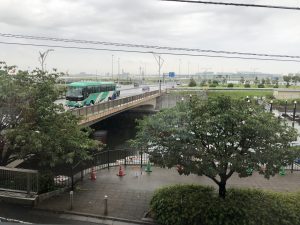
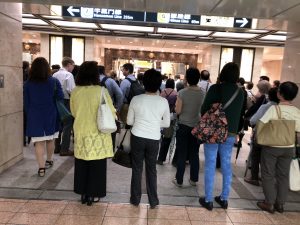
We headed first to the Mitsukoshi department store in Nihonbashi. We arrived four minutes before opening and found people already waiting outside. The view from the Mitsukoshi-mae subway entrance.
We made straight for "Julie's Tearoom" in the basement of the main building. This is a branch of Julie's Tearoom in Winchcombe in the Cotswolds, and one of the rare places in Tokyo where you can enjoy Julie's exceptional scones. We simply have to visit every time we come to Tokyo — we can't resist Juri Miyawaki's scones.
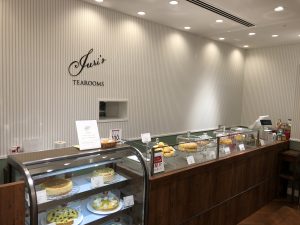
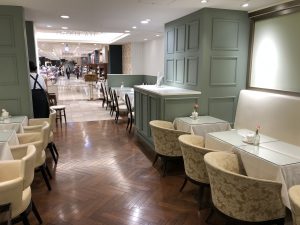
The interior has a calm, relaxed atmosphere. The Laura Ashley wallpaper at the entrance is lovely.
The menu cover features a photograph of Julie's in Winchcombe.

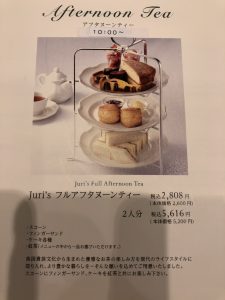
Even a couple who ordered the full afternoon tea the moment the doors opened!
A rose on every table — roses really do suit all things British.

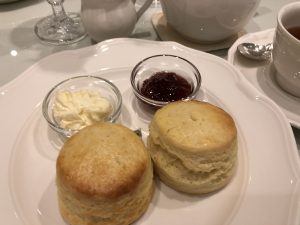
We enjoyed fragrant tea and freshly made scones — crisp on the outside, moist within. We spread on generous amounts of clotted cream and strawberry jam. Absolutely delicious! Thank you for the feast!
Tokyo's Last Remaining Tram
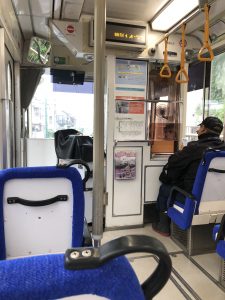
Afterwards, we rode the tram (toden) from Yamanote Line's Otsuka Station to meet someone for work. Tokyo still has a tram running! It's apparently the last remaining line in the city — the Toden Arakawa Line, running between Waseda and Minowabashi. It rumbles along with a delightful "clang clang clang!"
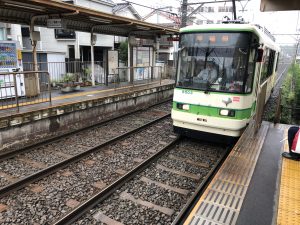
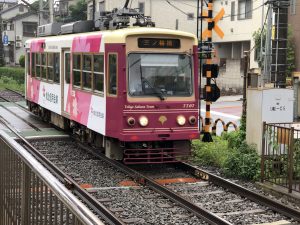
You can board with a tap of your Suica card — very easy to use. Each tram is a different colour, which is rather fun. Our journey was only about 10 minutes, but it felt wonderfully leisurely and enjoyable!
Hinoya Curry
On the way back, we stopped at Hinoya Curry near Otsuka Station's tram stop. A tiny counter-only restaurant seating no more than 7 or 8 people — there appear to be a few branches near stations in Tokyo. The curry is thick, rich and savoury — the quintessential Japanese curry. Living in London, where "curry" means Indian-style, our home-cooked curries had gradually become thinner over time, so it was a long-awaited taste of authentic Japanese curry.


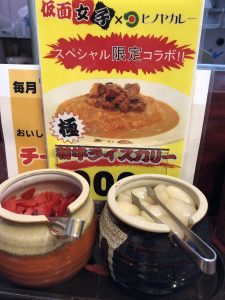
The most popular dish: minchi katsu curry.

Curry + minced meat cutlet = 100% satisfaction. Absolutely delicious. Thank you for the feast!
Sukiyaki at the Venerable "Imahan"
The following day, we had business near Tokyo Station in the evening. On the way back, we decided to have dinner, and while browsing the restaurants at Gran Roof inside Tokyo Station, we spotted a branch of Imahan, the famous sukiyaki restaurant from Asakusa. We hadn't eaten sukiyaki at a specialist restaurant in quite some time, so we decided to give it a go.

Imahan of Asakusa was founded in 1895 — 123 years ago this year.

We ordered the sukiyaki course at 4,500 yen per person.
First, two appetisers were brought out, followed by the sukiyaki beef and vegetables, which were brought to the table.

Raw eggs, warishita (sukiyaki sauce), and hot water.
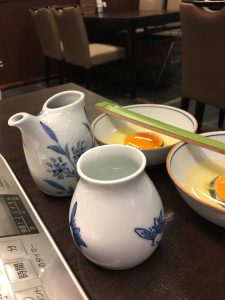
The iron pot in the centre of the table is placed on an IH cooker.

Chinese cabbage, leek, shungiku (chrysanthemum leaves), grilled tofu, shiitake mushrooms, shirataki noodles, and Imahan's own special wheat gluten.

Look at the magnificent marbling on this beef! Only the finest selected domestic black wagyu females are used, apparently.

The staff first pour the warishita into the pot, warm it, then add two slices of beef and lightly cook them on both sides before placing them in your bowl. The fat in the marbling melts into something wonderful, the richness smooth and never cloying, sliding effortlessly down the throat. Wagyu — world-famous for very good reason!

The juices released by the beef combine with the warishita, and the wheat gluten is added to absorb them, with the remaining ingredients going in one by one. When about half the ingredients had been added, the staff advised us to continue adding them in order, and to add hot water to the pot when the warishita reduces.
https://www.youtube.com/watch?v=Pyno71LG4Ow
Growing up in Osaka, sukiyaki to me meant adding sugar and soy sauce directly to the pot. But I think the warishita method allows the natural flavour of the ingredients to come through more clearly. Sukiyaki with premium wagyu was undoubtedly a special occasion meal when we were small in the Showa era — and even now, as we approach the end of the Heisei era in the 21st century, it remains absolutely a dish to celebrate. We would love to come back again. Thank you for the feast!
(This site is a participant in the Amazon.co.jp Associates Program, an affiliate advertising program.)
Other books you might like
You're welcome to take a look.
EAST TO WEST: The Heart of Haiku, the Light of Scripture
A flavour handed down across generations, seen through the lens of haiku. This was my father-in-law's final work.
View on AmazonCataract Surgery-A Memoir: Double cataract surgery in Osaka, Japan
Another new experience at 66, told honestly.
View on AmazonSushi Business in Britain: the complete four-volume series
A novel series following thirty-five years in the British sushi trade, from apprentice to factory manager to a small sushi school.
View on Amazon