Dusit Thani Manila — Stay Report
Date: 2020-01-29
About Dusit
Dusit International is a Thai hotel group with five brands across Asia and beyond. Dusit Thani is the flagship 5-star brand, first established in 1949. The name itself comes from a concept created by King Rama VI of Thailand in the early 20th century: Dusit refers to the fourth of the seven heavens in Thai mythology — a paradise — while Thani means "city." Together: City of Heaven, the king's aspiration for an ideal society.


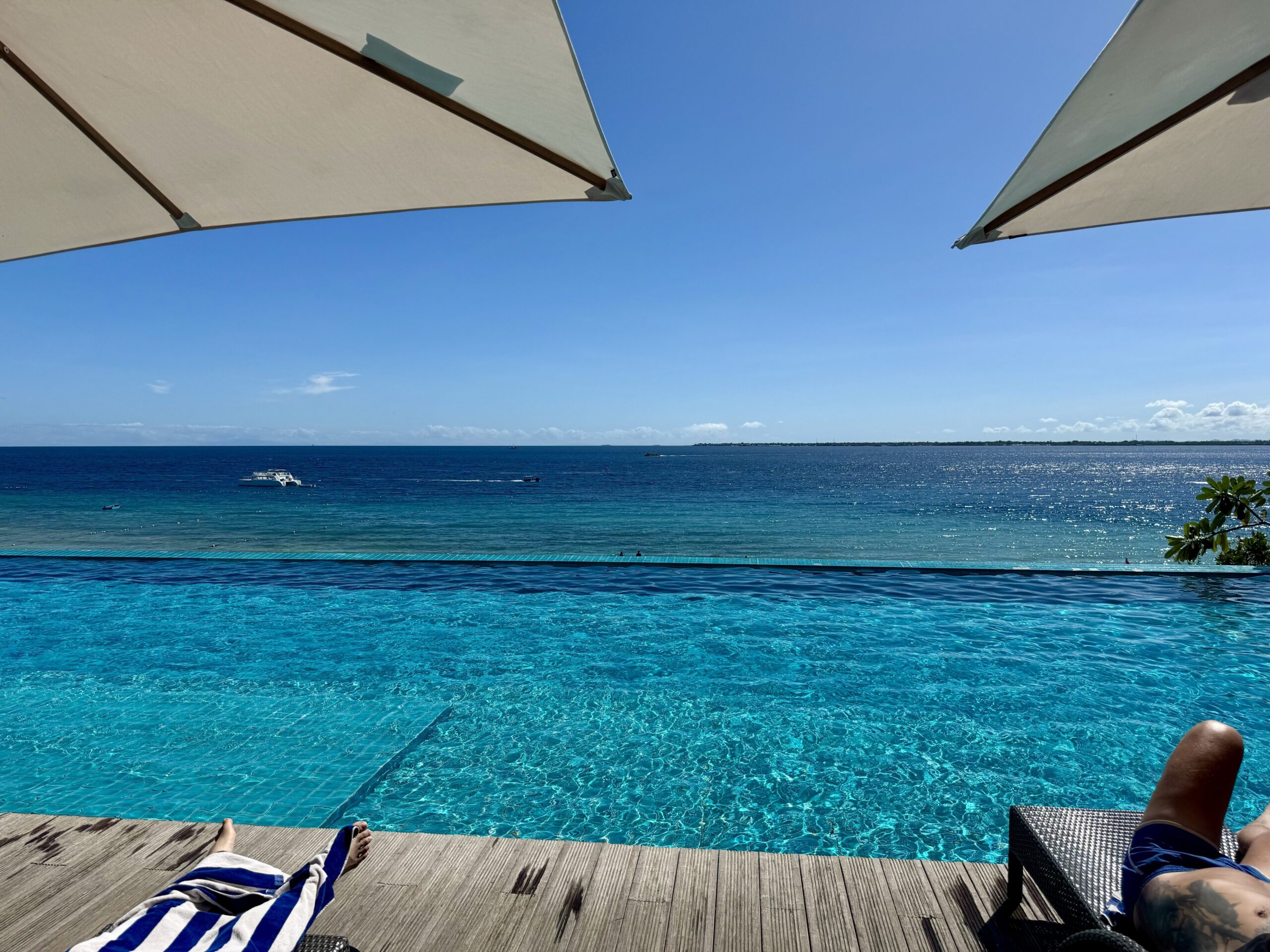
This was our second Dusit Thani stay, following the excellent Dusit Thani Mactan Cebu Resort the previous year. The Manila property offered a very different experience.

The Hotel and Its History
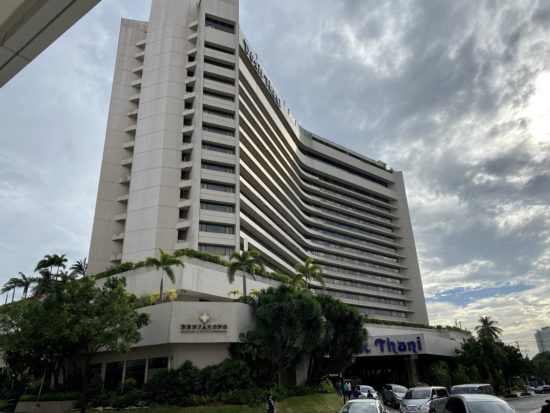
The building has an interesting lineage. It was constructed in the late 1970s as Makati was first developing as a commercial district — originally built as the Nikko Manila Garden Hotel, the Japan Airlines hotel in Manila. In 1995, the Dusit group acquired the property and began operating it in partnership with JAL as Dusit Thani Manila.
The building is now approximately 45 years old, and in certain areas, that age is visible.

Address: Arnaiz Ave, Ayala Center, Makati 1223, Philippines
Scale: 538 rooms
Rate: £110/night (¥16,000) per night for two, booked via Hotels.com, twin room 30 sqm, including breakfast. Stayed 5 nights: January 5–10, 2020.

Getting There
From NAIA Airport: No hotel shuttle. Grab is the recommended option — fast, metered, and reliable. Airport pickup can be pre-arranged through the hotel, but at a significantly higher price than Grab.
- Pre-arranged hotel pickup (outbound, no SIM available): 1,250 pesos
- Grab on departure (hotel → NAIA Terminal 4): 352 pesos
Travel time without traffic: 20–30 minutes. Manila traffic can multiply this significantly.
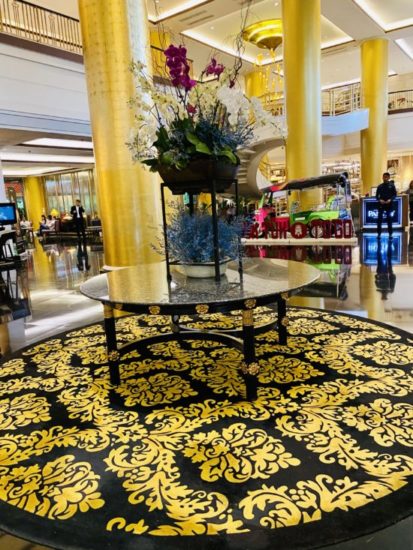
The Lobby
The entrance lobby is the hotel's strongest feature. A double-height atrium evokes a Thai temple — gold columns, warm lighting, and a sense of grandeur that genuinely delivers on the 5-star promise. The reception area is the most impressively designed space in the building.

The Room: Twin, 30 sqm
Entry hallway: closet on the left (safe, drawers), bathroom immediately on the right.
Closet: Hangers, bathrobe, slippers, iron and board.
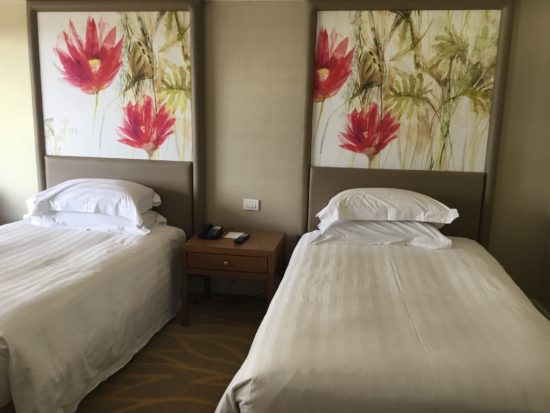
Beds: Two standard single beds. Adequate for the size of the room.

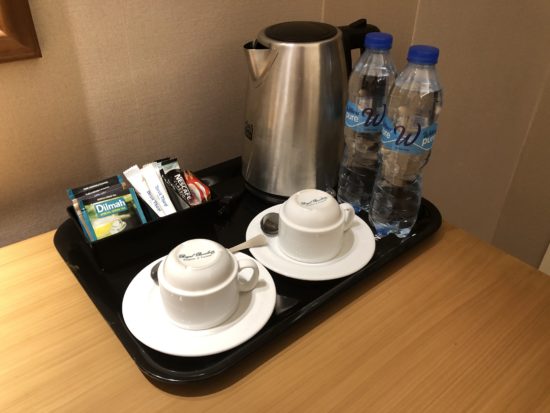
Desk: Kettle, instant coffee, tea bags (black, green, herbal), cups, 2 complimentary water bottles (replenished daily). In the Philippines, all drinking water comes from bottles — tap water is not safe to drink, though brushing teeth is generally fine.


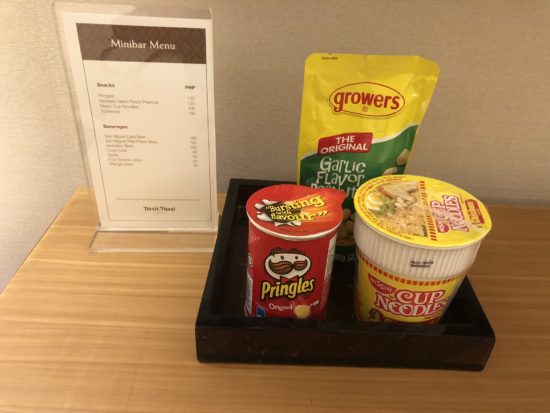
TV and fridge: Standard set. The minibar is stocked with juice and beer at hotel prices; the SM Mall supermarket one building away is the practical alternative.

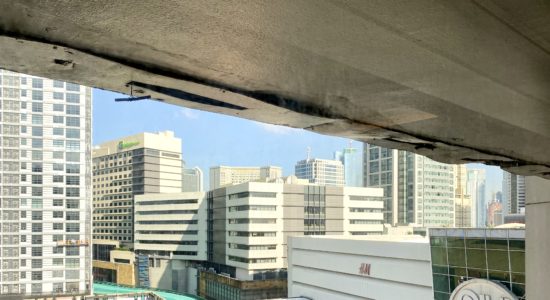
View: On one side, the Ayala luxury condominium towers under construction, with SM Mall and the Shangri-La visible beyond. On the other side (facing west): Manila city and, at sunset, the sun dropping behind the skyline.

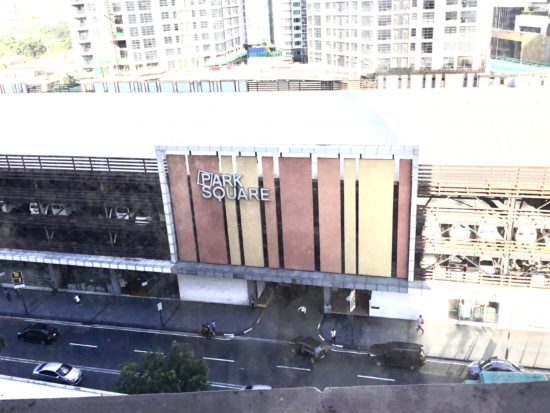
Opposite: Park Square, a mixed-use building directly in front of the hotel — ground floor retail around the perimeter, jeepney stop inside, parking on floors 2–4.
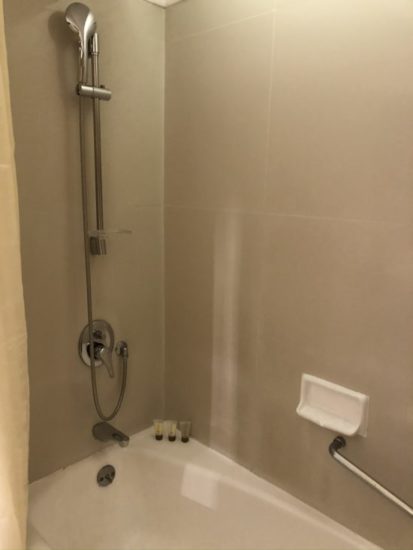
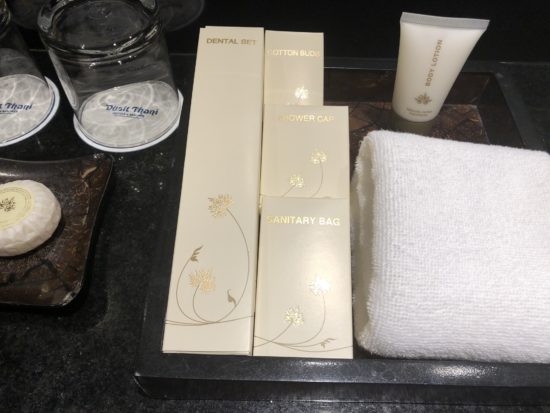
Bathroom: Functional but showing age. The basin and bathtub appear to be original 1970s-era Nikko Hotel fittings — repaired and maintained, but with visible surface wear and cracks (no water leakage). The bathtub is shallow, functioning more as a shower tray than a soaking bath. Amenities: Dusit International original brand, citrus scent.


Air conditioning: A persistent damp odour when the AC was running prompted us to switch it off when in the room. This is a building issue rather than anything easily resolved.
What's Around the Hotel
Park Square (directly opposite):
Mont Albo Massage Hut — a well-established budget massage chain beside the red LBC courier shop. Oil massage: 550 pesos/hour + 50 pesos tip. Filipino Hilot traditional massage: 650 pesos/hour + 50 pesos tip. Open 11am–midnight; quieter before 7pm.

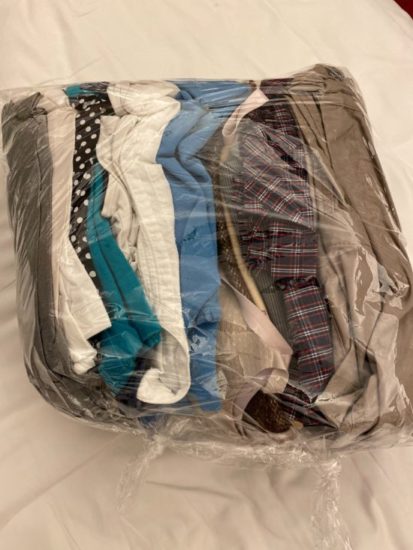
Royal Clean — laundry service behind Park Square. 90 pesos per kilogram. Bring items, they weigh and charge upfront, ready the following day. Ironing available for extra charge. Outsourced laundry is standard in the Philippines.
Kuya J Restaurant — a popular Filipino chain, good for an accessible local meal.
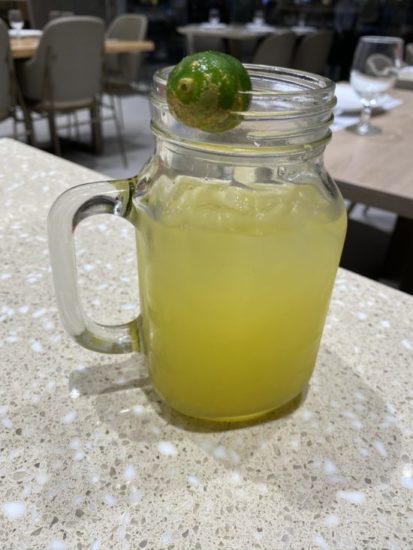
- Kalamansi juice: The Filipino citrus — small, intensely fragrant, sour and bright.
- Buko juice: Fresh young coconut water, served in the coconut. When finished, ask the staff to split the coconut — the flesh is scraped from the inner wall with a spoon. Two experiences for one order.
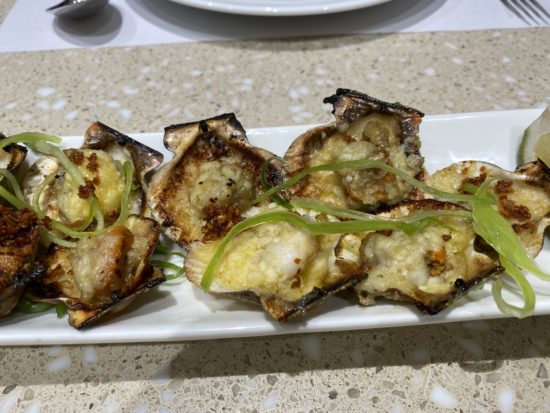
- Garlic cheese baked scallops: Ideal with cold beer.
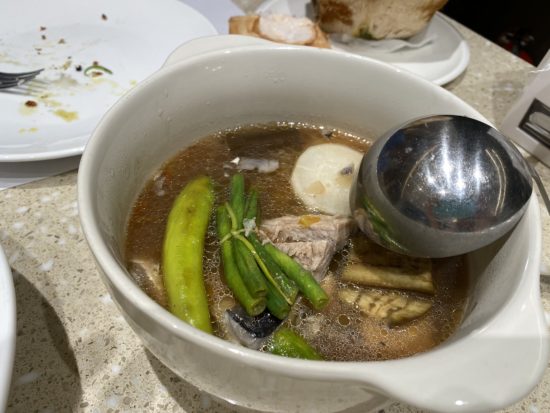
- Sour white fish soup: Tamarind-based broth with white fish and vegetables. Sour, clean, and restorative in Manila's heat.
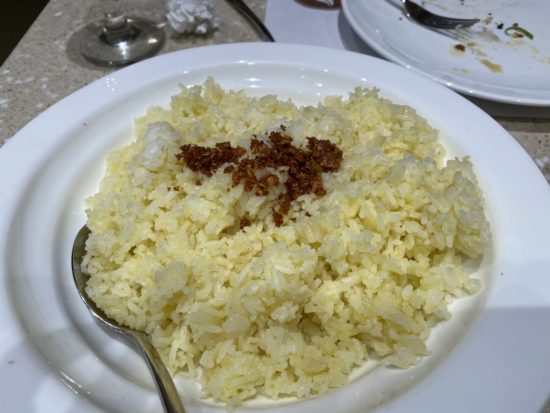
- Garlic rice: Buttery, moist, and fragrant — the better option over plain white rice.



Breakfast: The Pantry
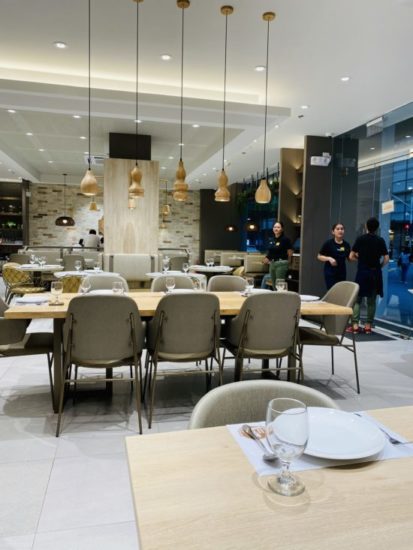
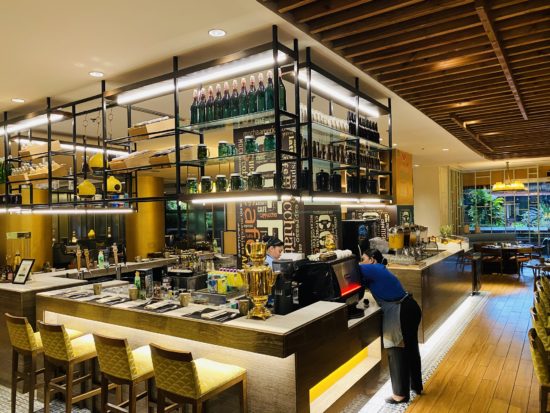
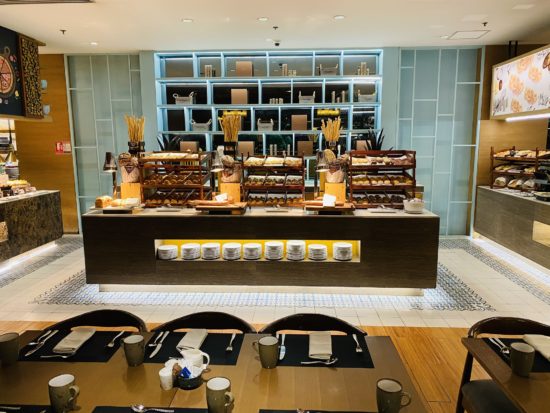
Ground-floor buffet restaurant. Wide range from European continental to Asian.
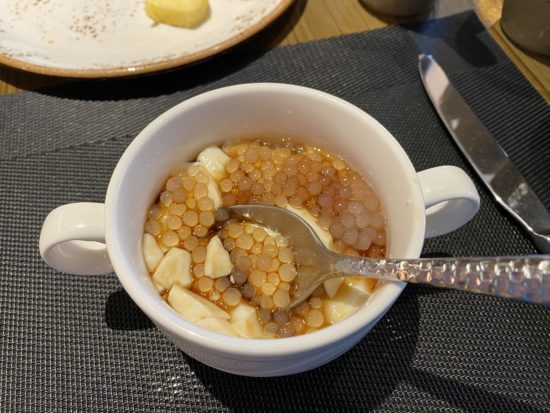
Taho: The quintessential Filipino breakfast street food. A man in a traditional straw hat, carrying two large buckets suspended on a shoulder yoke, moves between tables serving warm fresh silken tofu, tapioca pearls, and brown sugar syrup. In the streets, the call of "Tahoooo! Tahoooo!" announces his arrival in the neighbourhood. Gentle, warm, and surprisingly good. Recommended for anyone who enjoys tofu.

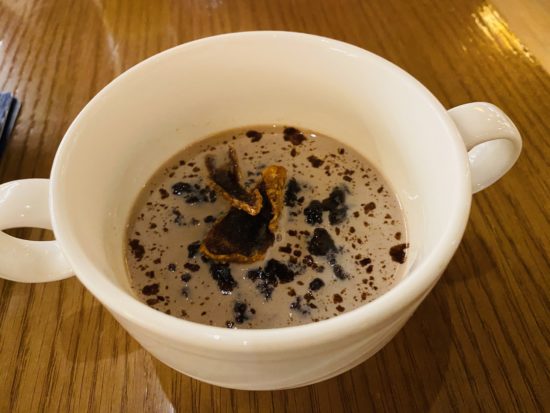
Chocolate congee: Rice cooked in unsweetened cacao sauce. The Filipino chef explained it is what Filipinos eat on rainy mornings. Served with milk and dark Philippine sugar; optionally add a small piece of sun-dried squid for contrast. The result is like savoury chocolate rice pudding — unusual but energising. The cocoa compounds wake you up.


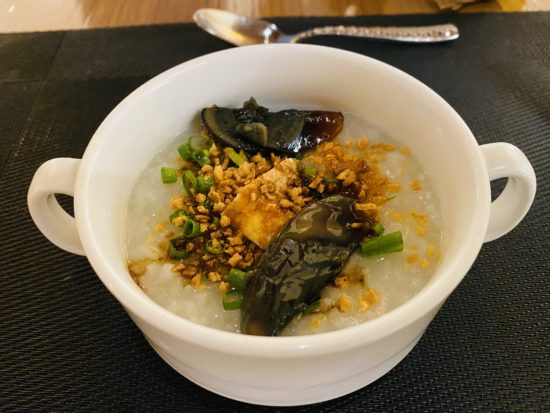
Chinese-style congee: With fried garlic, spring onions, century egg, chilli oil, and coriander available. A gentle option after a heavy evening.
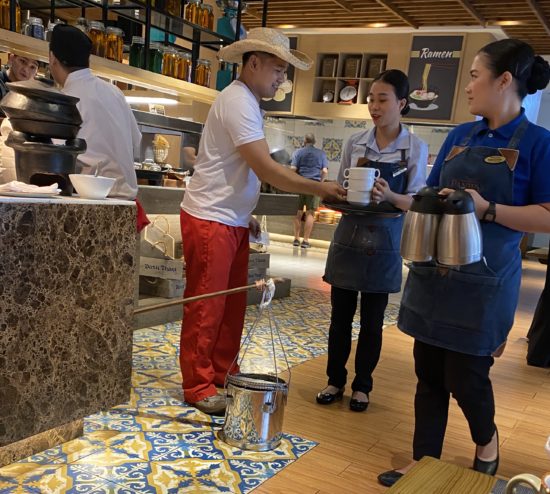
Coffee: Ask the staff directly for cappuccino — it's made to order and not at the self-service station.
Pool and Gym
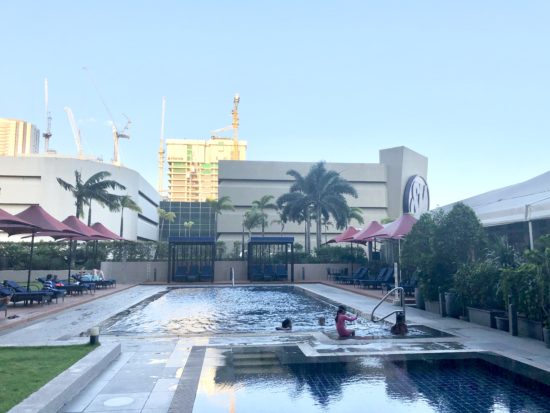
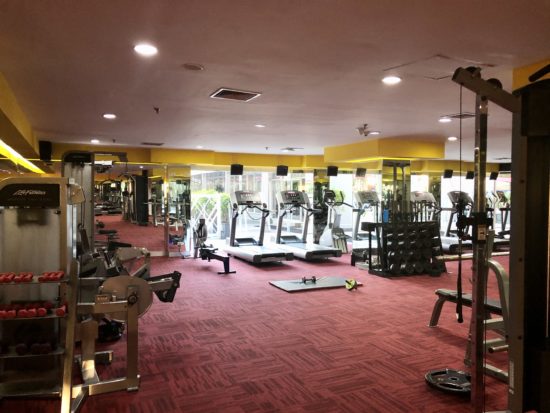
4th floor. Pool with an adjacent bar. Air-conditioned gym. Sauna and showers beside the changing rooms. Usable year-round given Manila's permanent warmth.

Staff and Service
Breakfast service was attentive and good throughout. Front desk service was inconsistent — excellent with some staff, perfunctory with others. After five consecutive nights at Japanese 5-star hotels immediately beforehand, the contrast was stark. The hospitality standard in the Philippines is different from Japan, and the comparison is perhaps not entirely fair — but the inconsistency between staff members was noticeable regardless.
Rating: 3 out of 10
We would not book this property again. The room allocated was the entry-level category — the cheapest available — and this level of room clearly has not benefited from the renovation work that the higher categories have received. The 45-year-old bathroom fittings, the AC smell, and the general wear on the room made the price feel poor value for a property billing itself as 5-star.

The lobby, the breakfast, and the location are all genuinely good. If budget extends to a Club Room or higher category — where renovation has been completed — the experience would be substantially better. But a 5-star property should maintain consistent standards at all room levels. The cheapest room tells you the most about a hotel's real standards.


Other books you might like
You're welcome to take a look.
EAST TO WEST: The Heart of Haiku, the Light of Scripture
The honest gap between expectation and reality, looked at without flinching — the kind of clarity this collection finds through haiku. This was my father-in-law's final work.
View on AmazonCataract Surgery-A Memoir: Double cataract surgery in Osaka, Japan
Another new experience at 66 — an honest account of the cataract surgery I went through.
View on AmazonSushi Business in Britain: the complete four-volume series
A novel series following thirty-five years in the British sushi trade, from apprentice to factory manager to a small sushi school.
View on Amazon