Two-Base Living Begins: Part 5
Date: 2024-12-28
Moving into Our Cebu Condominium
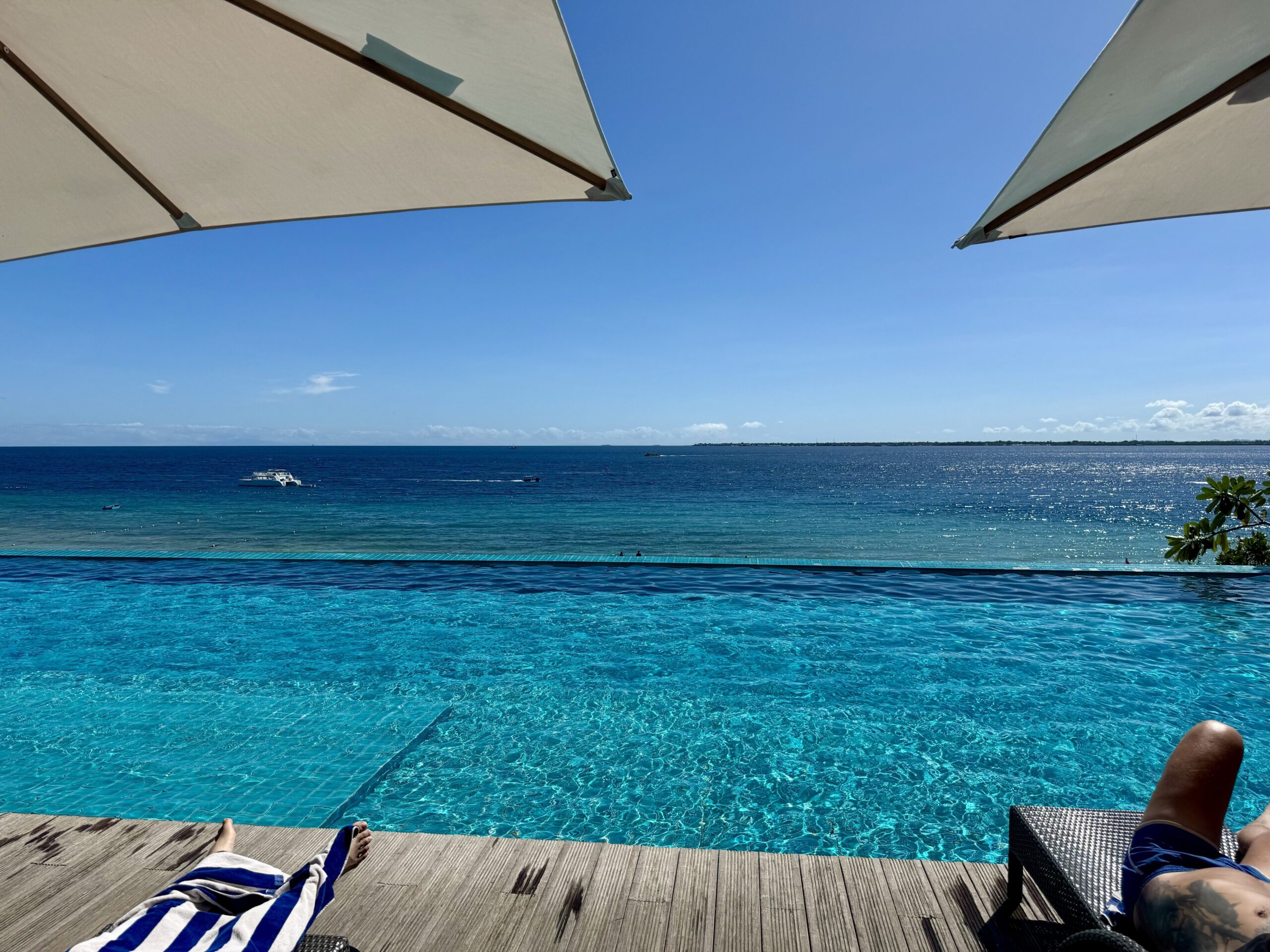
After three comfortable nights at the resort hotel, our bodies had gradually adjusted to the heat and humidity. The jet lag from the UK was stubborn — waking at odd hours — but daily sunbathing by the pool had helped reset our internal clocks.
Today we moved to our condominium in Mandaue City, Cebu, and began proper life here.
Living in a Philippine Condominium
In the Philippines, foreign nationals cannot purchase freehold land or houses. Most long-term foreign residents live in condominiums — high-rise apartment towers where typically 30–40% of units are designated for foreign ownership.
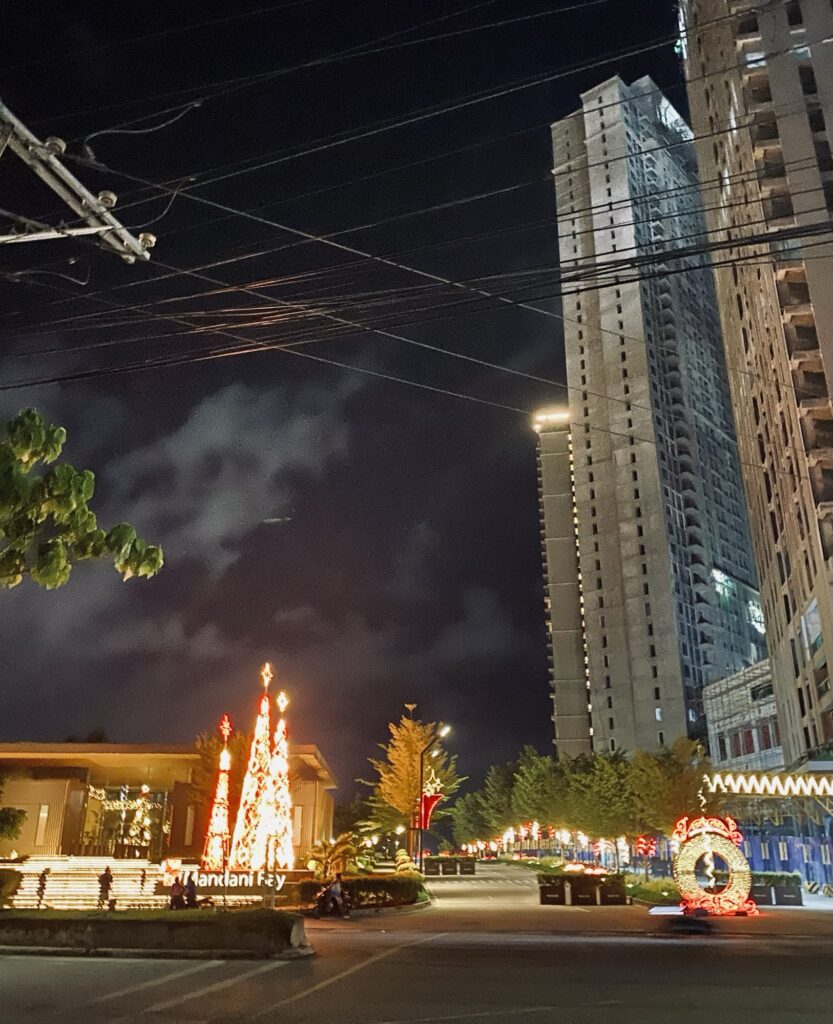
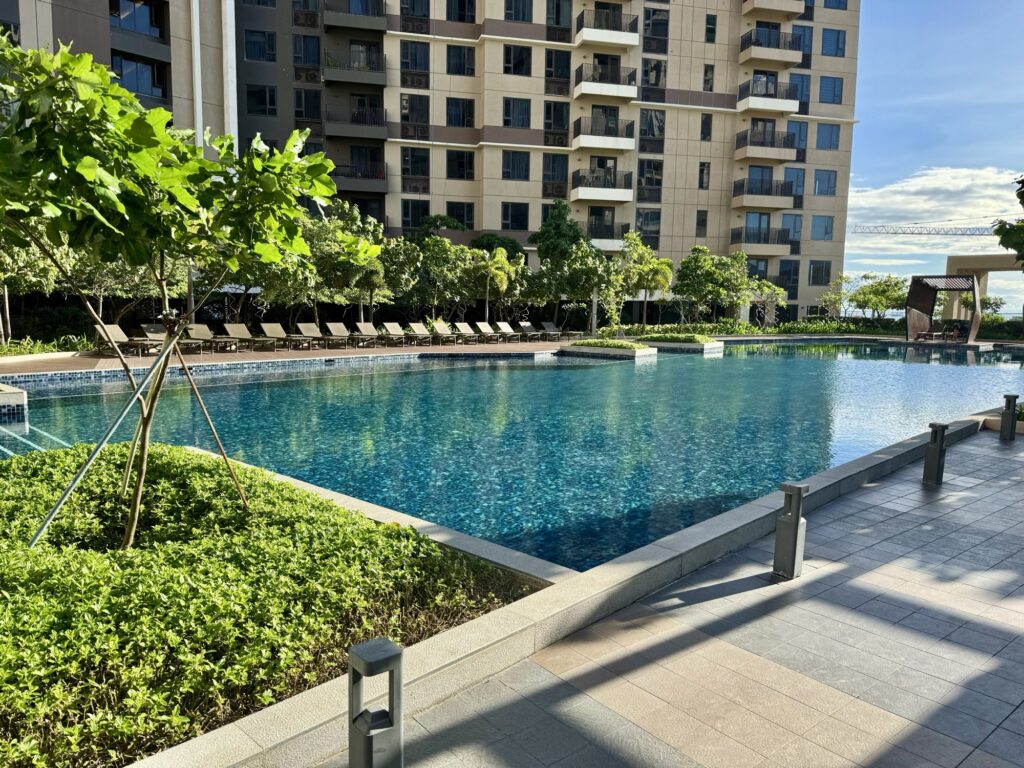
Our building has security guards at the site entrance and at each tower entrance, plus a staffed reception desk in every lobby — handling resident queries, monitoring visitors and accepting deliveries. The shared facilities include a gym, residents' lounge, a children's play area, a tree-lined walkway and a large pool, all kept immaculately clean by on-site staff. It is a secure and comfortable environment.
Our Unit
We are on the 26th floor: a one-bedroom layout with separate bedroom, kitchen and living area, bathroom and balcony — approximately 50 square metres, well-suited for two people.
The unit faces east, which means no direct afternoon sun — an important consideration in a hot climate. South-facing apartments heat up severely; north and east aspects are preferred and more sought-after. From our windows: a view of the bridge to Mactan Island and the sea beyond.
The building was completed about two years ago. We had rented it out through a Japanese real estate agency in Cebu for the first year; the tenants vacated ahead of our arrival. The interior was designed by the agency director's wife, who is an interior designer — sensitively furnished and finished, and we love it.
Drinking Water
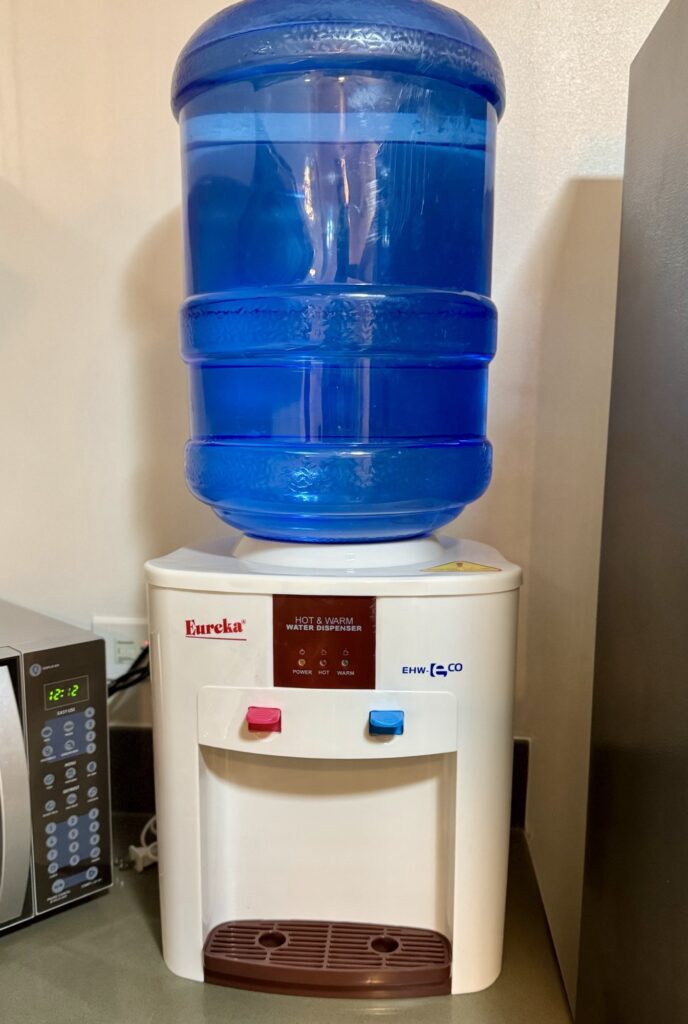
The first practical necessity of daily life in the Philippines: the tap water is not safe to drink. Residents use large 20-litre water bottles delivered to the door.
We asked the front desk to recommend a water delivery company, called them, and initially bought two bottles (200 pesos each, approximately ¥500). If you call in the morning, delivery comes that evening, straight to your door.
A water dispenser (the stand-up type where you invert the bottle into the top) must be bought in advance from a department store — without it, the delivered water is unusable. Subsequent deliveries are just the water refill: swap your empty bottle for a full one, 35 pesos per 20 litres (approximately ¥90). The delivery person comes almost every day on a building circuit; we order one bottle at a time as needed.

We brought a Mitsubishi Cleansui water filter from Japan; we run the bottled water through it again before using it for coffee, barley tea and cooking. One bottle lasts about three days.
Amenities
The building's facilities are on the 5th floor, on a large outdoor deck bridging Tower 1 and Tower 2 — a sky garden of sorts.
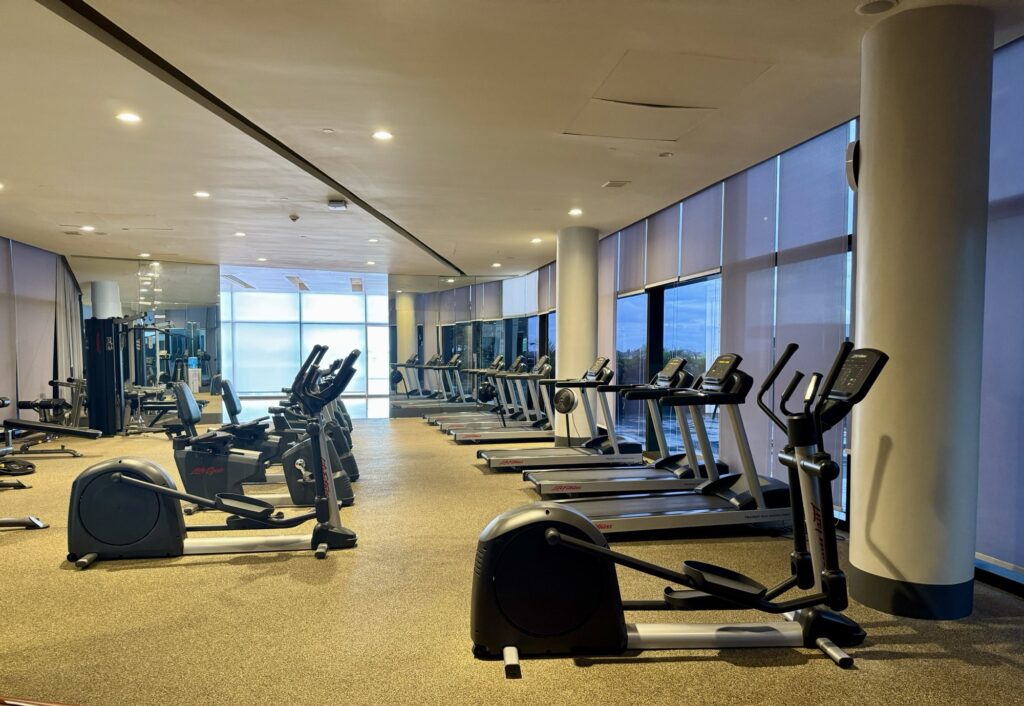
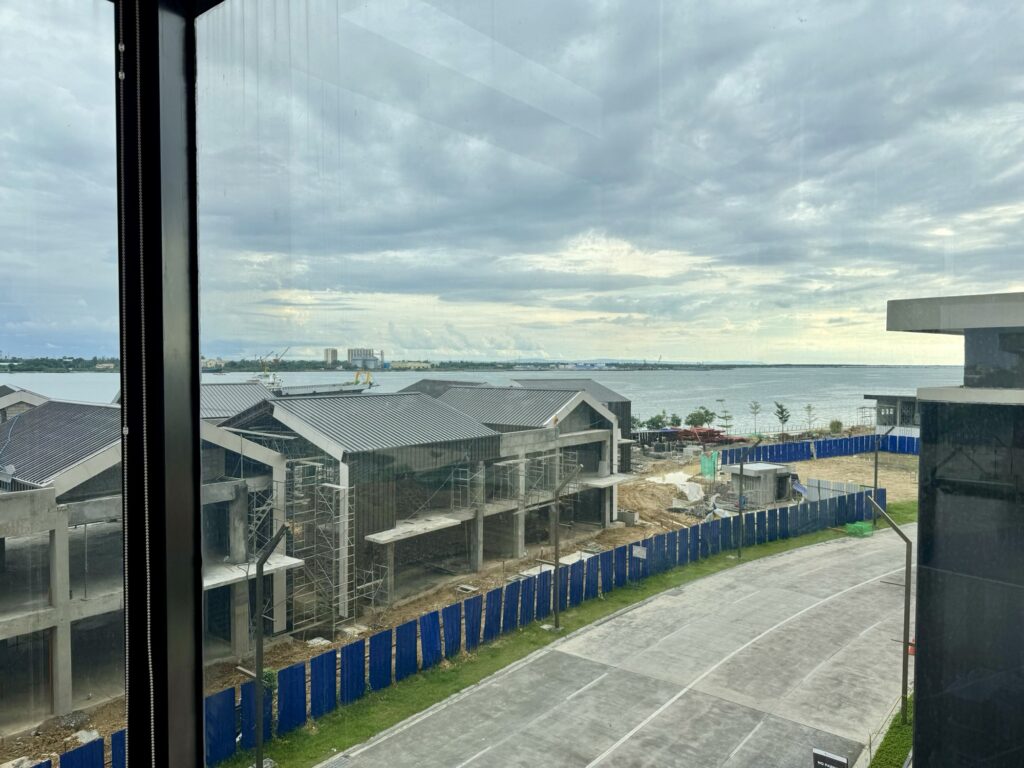
Gym: Basic but sufficient. The real attraction is the view — the gym faces the sea, looking directly across to Mactan Island and the waterfront construction beyond it.

Pool: A 25-metre lap pool (deep) and two smaller shallow pools near the lounge. Cebu's year-round temperature of 25–32°C makes pool swimming possible every single day — even on overcast days.
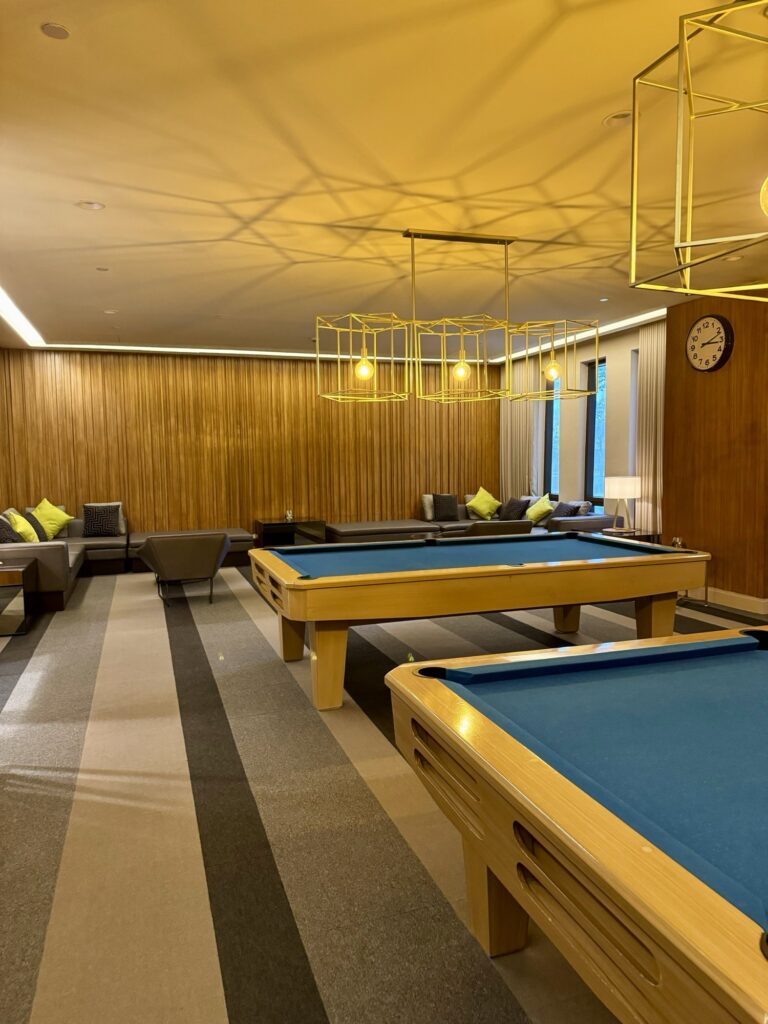
Residents' Lounge: Billiard tables, two private cinema rooms with large screens, and scattered sofas and seating areas throughout. Use is logged by room number and name.
Essential Apps
The most practical improvement since our last extended stay in Cebu: the Grab app.
Grab is a Malaysian-founded ride-hailing and delivery platform that dominates Southeast Asia. Register in advance with a credit card and all payments are handled automatically — no cash handling, no negotiation. Grab cars are generally cleaner and better-maintained than local taxis, and crucially, the fare is fixed and displayed before you confirm the booking. In a region where overcharging of foreigners is common — and where there is almost no public transport — this system is invaluable.

Grab also operates food delivery (similar to Uber Eats). Order from the app, track the rider on the map, and collect from the building entrance when they arrive. Hotels accept it too, as long as you eat in your room. Japanese chains like CoCo Ichibanya and Botejyu are listed, which is handy when Japanese food cravings strike.

Food Panda is a second delivery app (German-founded), covering restaurants, local diners, supermarkets and market stalls. We use it for regular grocery deliveries — note that as it's motorcycle delivery, don't order too much at once. In quiet daytime hours, deliveries arrive within about an hour; at busy evening times, up to two hours.
Mandaue City
Mandaue used to have a reputation as an industrial district — furniture workshops, container ports, light manufacturing. The past decade has changed it significantly.
Many of Cebu's Japanese residents live in Mandaue, and there are several Japanese restaurants and businesses here. The main A.S. Fortuna Street has a Toyoko Inn (the Japanese business hotel chain), with advance-booking airport transfers available — very convenient for new arrivals.
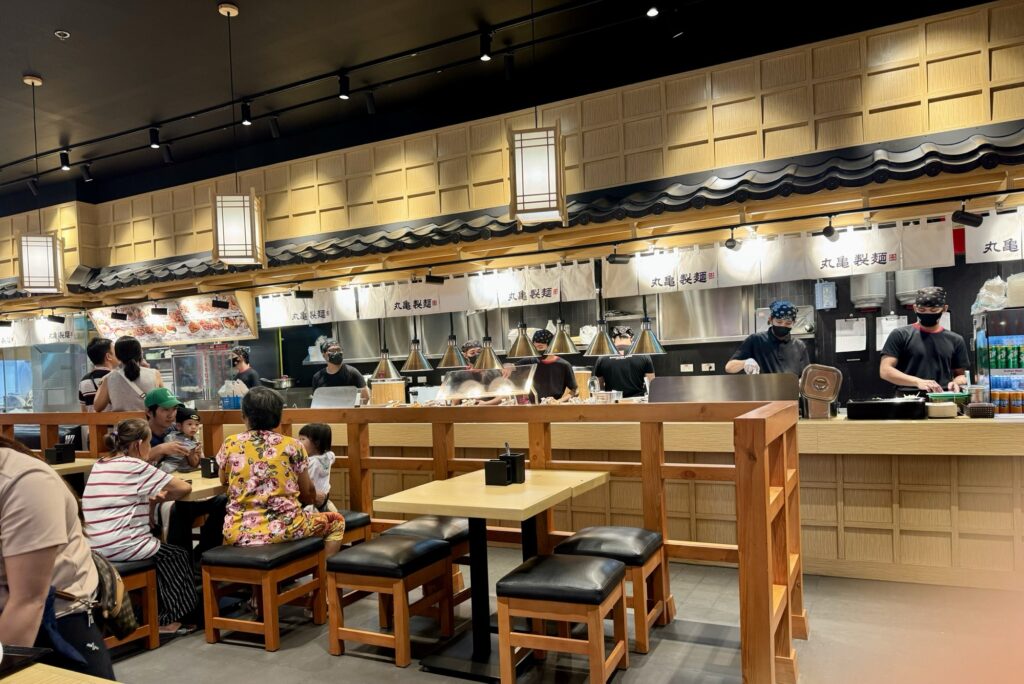
Next to the Toyoko Inn is J Mall — recently acquired and completely renovated by SM Malls, the Philippines' largest shopping mall group (Chinese-Filipino owned, with BDO Bank among its subsidiaries). The renovation was impressive. The mall's theme appears to be decidedly Japanese — the food court includes Botejyu, Yakiniku Like, and Marugame Seimen (udon). We wandered in and found Marugame had just opened: young Filipino staff with great energy, freshly made udon. My usual bamboo-ring tempura was on the menu. Delicious.

Uniqlo is also in the building, which is genuinely convenient.
Co-Working Space
My husband made regular use of a co-working space a ten-minute walk from the condominium: 200 pesos per day (approx. ¥500) for a private desk, high-speed internet, and water. Bring your own drinks beyond water.
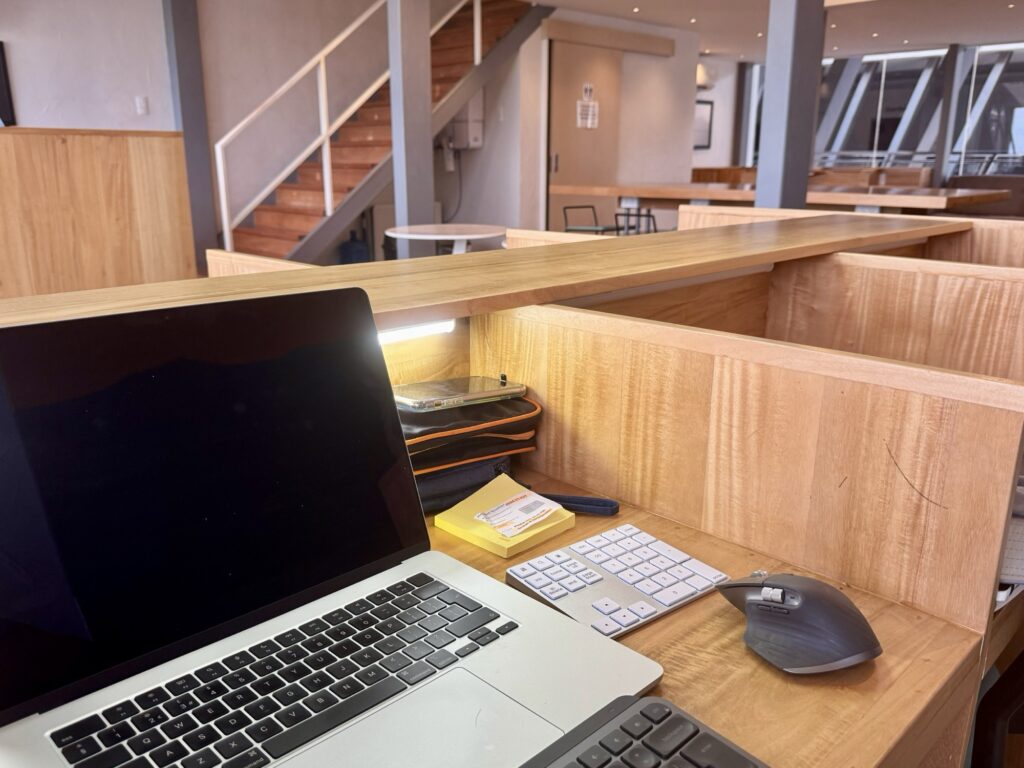
The building is a commercial complex, with food stalls and fast-food options on the ground floor for lunch. Cebu attracts digital nomads and remote workers from around the world — young people who come for the low cost of living and warm weather. The co-working space was full of them, alongside medical students from the university across the street.
Other books you might like
You're welcome to take a look.
EAST TO WEST: The Heart of Haiku, the Light of Scripture
People from all corners of the world, each with their own reasons, sharing the same small space — the kind of quiet coincidence this collection finds through haiku. This was my father-in-law's final work.
View on AmazonCataract Surgery-A Memoir: Double cataract surgery in Osaka, Japan
Another new experience at 66 — an honest account of the cataract surgery I went through.
View on AmazonSushi Business in Britain: the complete four-volume series
A novel series following thirty-five years in the British sushi trade, from apprentice to factory manager to a small sushi school.
View on Amazon