About the flowers in our garden
Beyond the vegetables and herbs, I'm also growing five kinds of flowers in the garden: borage, nasturtium, roses, lilies and geraniums. There aren't many varieties, but each one adds its own bit of colour to the place. Here I'd like to introduce the five, one by one.
Borage
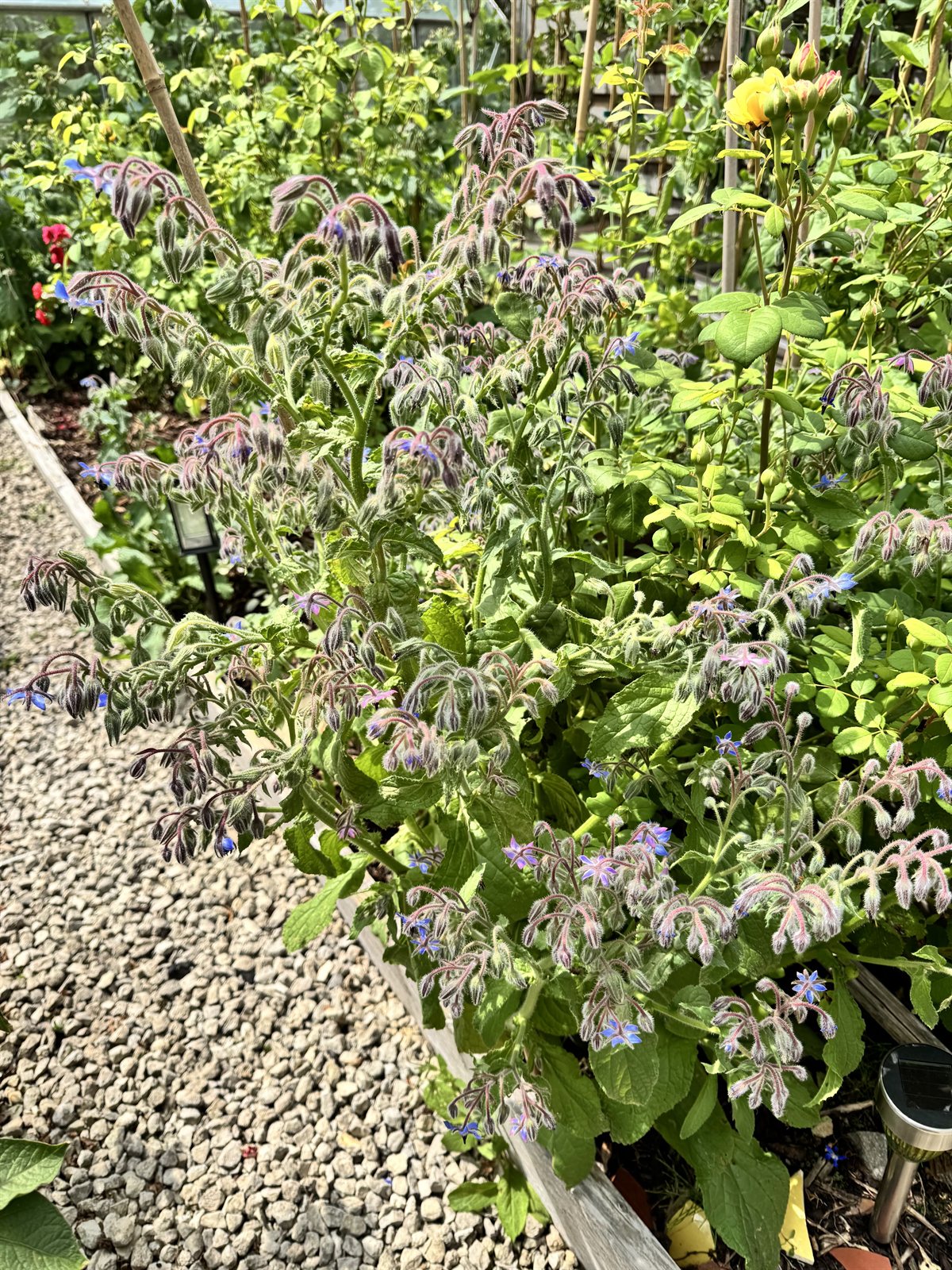
- It's not fussy about soil, as long as it gets plenty of sun
- It self-seeds freely, so keep an eye on it if you don't want it spreading
- Plant it near other vegetables and fruit, since it draws in pollinators that help everything nearby
I try to keep these three things in mind, but honestly, borage is one of the least demanding flowers in the garden. The star-shaped blue flowers are edible, and best of all, they bring in the bees. Today, too, a few big bumblebees were hard at work sipping nectar, and just watching them go about their business is oddly calming.
Nasturtium
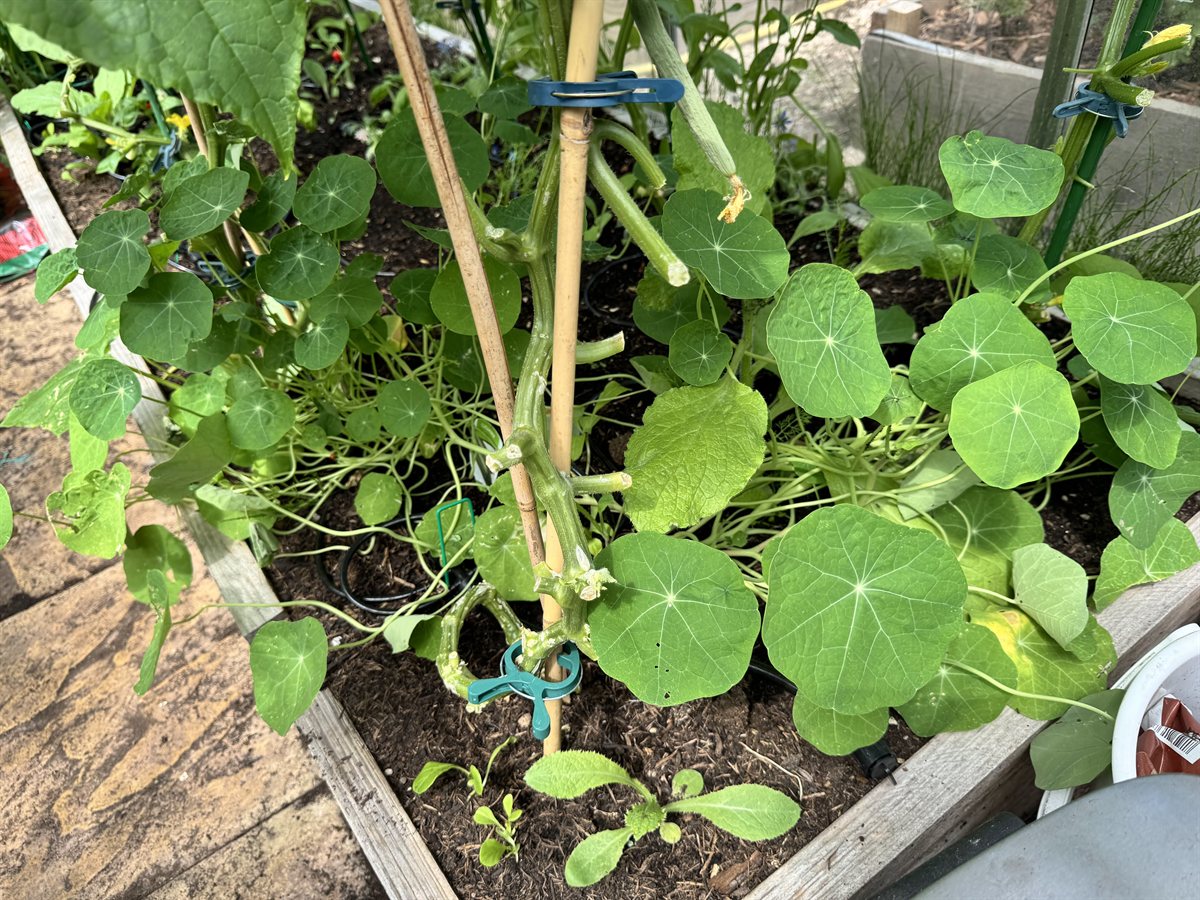
- Grow it in fairly poor soil — anything too rich just produces leaves at the expense of flowers
- Make sure it gets plenty of sun
- It self-seeds readily, so collect the seeds once they form to sow again next year
Stick to these three, and it comes back reliably every year. Nasturtium is one of my favourite flowers, and among the round leaves it's just about ready to open its pretty flowers. I've heard both the flowers and leaves are edible, so I'm looking forward to adding them to a salad.
Roses


- Choose a spot with good sun and airflow, to help prevent fungal issues like black spot
- Deadhead regularly and feed on a schedule to keep the blooms coming
- Prune during winter to tidy up the branches and keep the whole plant healthy
I try to keep these three things in mind, and the roses we're growing are English Roses, bred by the Englishman David Austin. They start flowering in early June every year, and from July into August the blooms just keep coming. Part of the charm is that each plant has its own colour — yellow, orange, pale pink — and lining the photos up side by side really shows the difference. They're also more disease-resistant and lower-maintenance than I expected, which I appreciate. The David Austin Plant Centre and Rose Gardens, where these roses originate, is in the English Midlands, and mid-June is the best time to visit.
Lilies
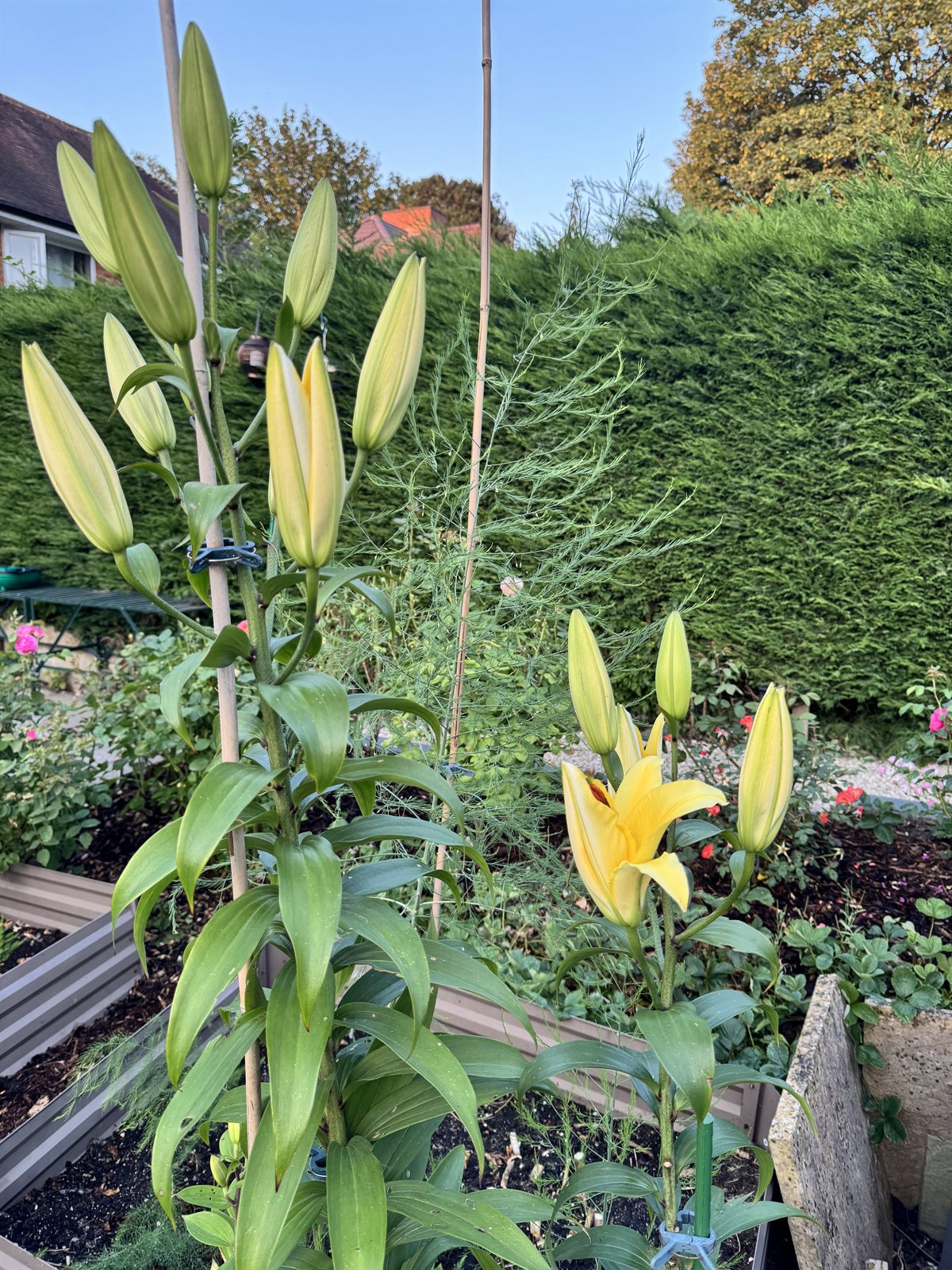
- Choose well-drained soil and avoid letting it get too wet
- Plant the bulbs reasonably deep, keeping the base cool while the flowers get plenty of light
- Stake them, since the large blooms are heavy and prone to toppling
I try to keep these three in mind, though honestly, I don't do much for the lilies at all. And yet, year after year, they put on a show of huge blooms with barely any attention from me — it never fails to impress.
Geraniums
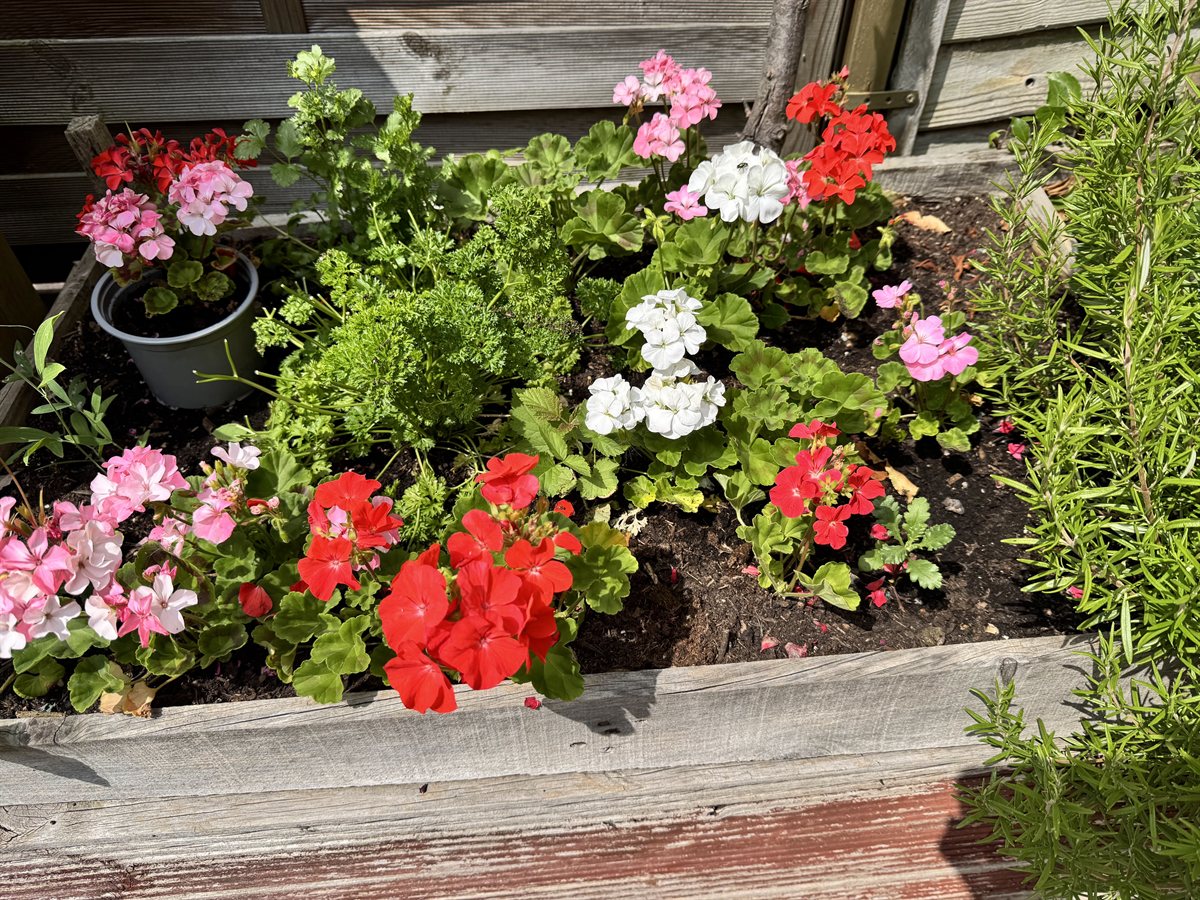
- Give it well-drained soil and plenty of sun — choose your potting mix carefully if it's in a container
- Avoid overwatering; let the surface of the soil dry out between waterings
- Deadhead regularly to encourage more flowers
I keep these three in mind, and geraniums are another one of my favourite flowers. What I love most is the lovely scent — I catch a whiff of it every time I walk past the pot.
Other books you might like
You're welcome to take a look.
EAST TO WEST: The Heart of Haiku, the Light of Scripture
The small pleasure of catching a scent while walking past a pot in the garden — the kind of moment this collection finds through haiku. This is a book my father-in-law left behind.
View on AmazonCataract Surgery-A Memoir: Double cataract surgery in Osaka, Japan
Another new experience at 66 — an honest account of the cataract surgery I went through.
View on AmazonSushi Business in Britain: the complete four-volume series
A novel series following thirty-five years in the British sushi trade, from apprentice to factory manager to a small sushi school. The complete edition offers all four volumes at a better price.