Island Hopping: Pandanon Island & Hilutungan Marine Reserve
Date: 2018-12-09
This is an account of our island-hopping day during our ten-day trip to Cebu in the Philippines. We left Mactan Island by boat at 8:40 am, snorkelled in the marine reserve off Hilutungan Island, then enjoyed a barbecue lunch and the white sand on Pandanon Island, known as "the island closest to heaven". We were back at the hotel on Mactan soon after 2 pm. We booked and paid online in advance, so we needed no local currency, and I recommend it to anyone visiting Cebu, even if you are not used to the sea.
If You Are Going to Cebu, I Recommend Island Hopping
After breakfast at our hotel in Cebu City, we went back to the room, changed into our swimsuits with our clothes on top, and waited in the lobby downstairs. At 7:15, the time we had arranged, the taxi driver arrived to collect us. He was a cheerful young Filipino man who chatted with us in a little Japanese.
Today we were heading out from Mactan Island by boat for a day of island hopping. "Island hopping" means taking a boat out to the coral reefs to snorkel, then going on to another beautiful island for lunch, spending some time there, and returning by boat. It is rather like a picnic on the sea.
Because it lets anyone enjoy Cebu's beautiful sea with very little effort, it is hugely popular with visitors. We had tried island hopping for the first time on an earlier visit to Cebu and enjoyed it so much that this time we wanted our son to see the fish swimming around the coral too. So before the trip, we booked it through VELTRA, a website for booking tours and activities abroad.
Today's trip was run by All Blue, a marine sports company based inside the Vista Mar Beach hotel on Mactan Island. The price was $82 (about ¥9,334) per person, including lunch and unlimited soft drinks. We added transfers to and from our hotel (about 40–50 minutes each way) for an extra 2,000 pesos (about ¥4,285). The tour was called "Island Hopping: Pandanon Island & Hilutungan Island – Trial Diving or Snorkelling at the Island Closest to Heaven and a Marine Reserve".
From Our Hotel in Cebu City to Vista Mar Beach on Mactan Island
To cross from Mandaue in Cebu City to Mactan Island, you use one of two bridges. The main one was built by a Japanese company as part of Japan's official development assistance.
Once over the bridge, you enter Lapu-Lapu City on Mactan Island, which is full of local character. Some of the roads are still unpaved in places. The local market felt like too much of a challenge for us to shop in, but it was very busy and clearly well used by local people. On Cebu Island, the areas with lots of people and businesses are quite developed and had a slightly worn feel that somehow reminded me of a regional city in Japan. But the scenery on the outskirts of the city and in the residential parts of Mactan looked like the old photographs of Japan I have seen.
The gap between rich and poor seemed very clear, and the city still felt as though it was very much on its way. The infrastructure is still developing too, and there was no public transport we felt we could use. Taxis were our main way of getting around.
As the taxi made its way through the local streets to the sea on the other side of the island, the gates of the seafront resort hotels came into view. Each hotel has security guards at the gate, and only guests and people with business there are allowed in.
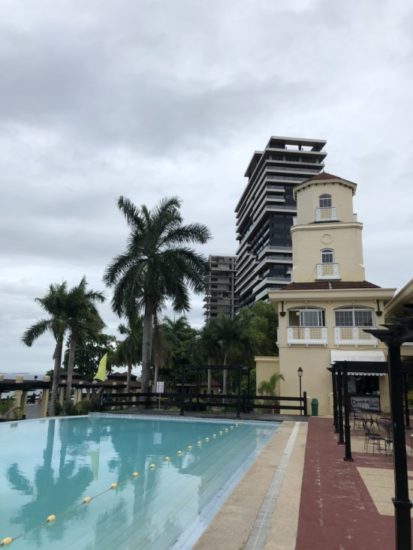
We wrote our names at the entrance, paid the day-use fee (which lets you use the pool and other facilities for the day) of 400 pesos per person (about ¥860) at the counter inside the hotel, had day-use wristbands put on, and went in. We checked in at the All Blue counter beside the pool at the back. The four-storey cream-coloured building next to the pool is the tour company. The tall building behind it was a new hotel, "Reef 2", which was under construction and due to open the following year (at the time of writing).
Setting Off on the Bangka Boat
We had already paid online when we booked, so there was no need to have local currency ready, which was convenient.
There were eleven of us on the boat that day, all Japanese, from young couples to couples in their fifties. We set off at 8:40 in the morning. We went down to the beach and first got into a small boat, then transferred to the bangka boat that would take us to the islands. Early in the morning the tide is out and the water is very shallow, so the larger boat cannot come right up to the hotel jetty.
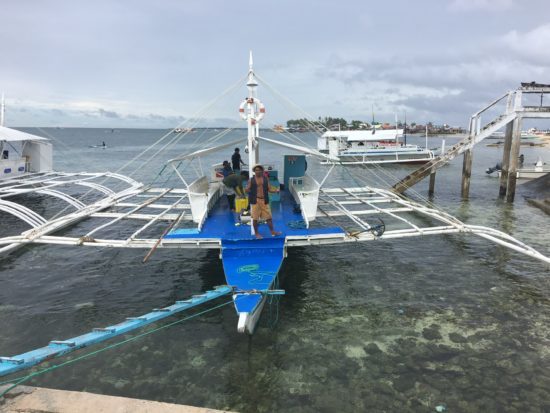
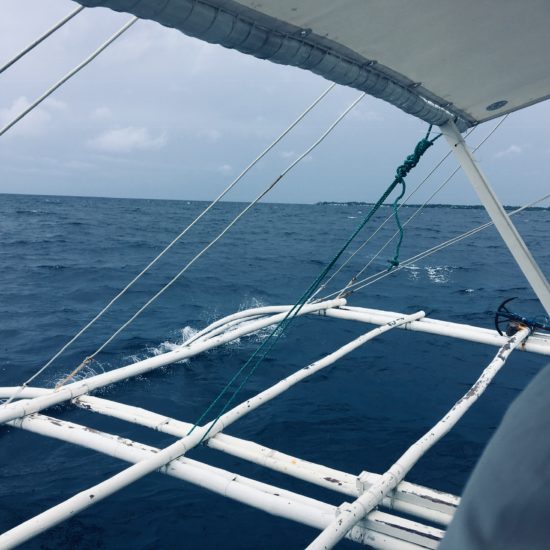
We boarded the bangka boat safely and set off. A bangka is a type of boat seen in the Philippines and elsewhere in Southeast Asia, with outriggers on both sides that look like the legs of a pond skater. These outriggers stop the boat from rolling from side to side and make it less likely to capsize, even in big waves.
The outriggers on the bangka boat used for our trip were made of bamboo, which apparently works well because it is flexible and hard to break. The photo below shows the outrigger. The bamboo is painted white, and the crew walked along it with remarkable ease.
Arriving at the Marine Reserve off Hilutungan Island
After about 20 minutes, we arrived at the marine reserve off Hilutungan Island, where we were to snorkel. We put on snorkelling masks, along with buoyancy vests to make it easier in the water, and got in. This time we were asked to stay close to the boat for safety, so we did not wear fins. Unfortunately, I did not have a waterproof camera, so I have no underwater photos.
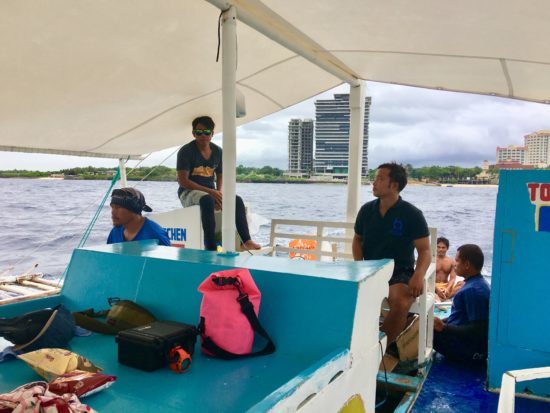
Here are the crew, real men of the sea. Once in the water, they all swam about as easily as fish.
The water was a pleasant temperature, not at all cold, and the visibility seemed good. As soon as I put my face under, there were fish all around and below me: striped ones, bright blue ones, yellow ones and shiny white ones. The instructor gave us some small pieces of sausage. When I crumbled them up in my hand under the water, the fish came right up in front of me to eat! We swam in the sea together with the tropical fish. To dive, you need to study and take lessons and a test, but snorkelling lets you experience the wonders of the sea easily, even if you are not used to the water, so I recommend it.
Pandanon Island, "the Island Closest to Heaven"
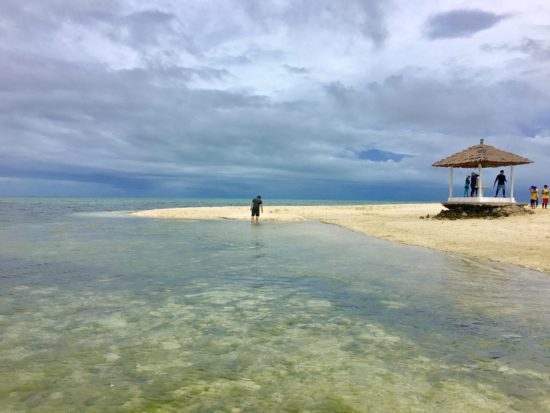
We spent about 40 minutes enjoying the sea. When I climbed back onto the boat, the first thing that surprised me was how heavy my body felt. Then I felt refreshed and tired at the same time, so I drank water and juice while watching the scenery as we moved on to the next island. On the way, one of the crew started grilling chicken and pork over charcoal at the very back of the boat! It seemed to be lunch being prepared. After about an hour, the next island, Pandanon, came into view. Local people apparently call Pandanon "the island closest to heaven", and it has white sandy beaches and shallow emerald-green water stretching far out.
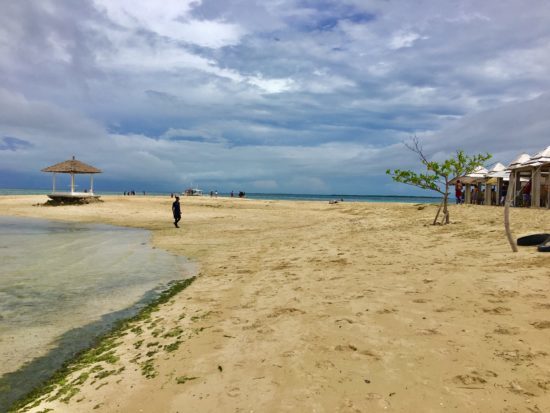
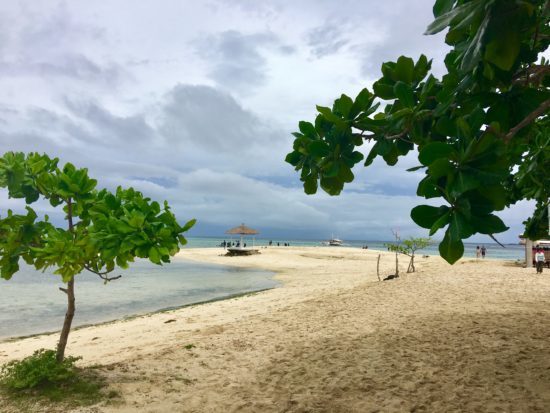
The island's landing place is in the middle of the island. The right-hand half is where the islanders live, and the left-hand half is the area for people visiting on island-hopping trips. Everyone who lands on the island pays an entrance fee of 150 pesos (about ¥320) per person. (This was included in the tour price.) In the middle of the beautiful white sand beach there were several open-sided shelters with palm-leaf roofs, tables and chairs, and the crew prepared our group's lunch in one of them. The fee for using a shelter was of course included in the tour price, but I was told it was 250 pesos (about ¥530) each.

As soon as we all sat down in the shelter, islanders gathered around with all kinds of seafood: various kinds of large shellfish, scallops, prawns, crabs and sea urchins that they had caught in the sea, brought over to sell. If you buy something, they grill it straight away over charcoal and bring it to your table. The islanders called out in Japanese, "This one, 300 yen!" and "This is razor clam, this is scallop, delicious!", with the prices given in Japanese yen for some reason (ha). We were told that prices could be negotiated, and just one couple in our group bought some crab.
After a walk along the beach for about 20 minutes, lunch was ready. The menu was a Filipino classic of BBQ chicken and pork with rice, and pineapple and mango for dessert. By the time I remembered to take a photo of the BBQ, it was almost all gone, so I only have the dessert...

The tour included unlimited soft drinks or alcohol, so some people were getting through quite a lot of beer (ha).
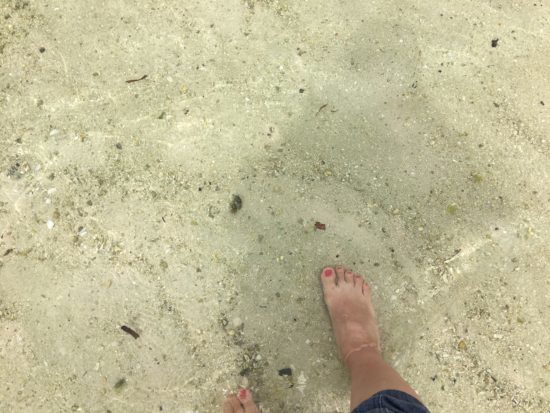
For about an hour after lunch, everyone played in the sea or went for a walk, enjoying the view of the island closest to heaven. In the photo below, I am standing with my feet in the sea. The water is clear and beautiful.
Our group had arrived on the island fairly early, but more and more boats kept arriving after us. The groups around us were very lively. Our group drank a lot of beer but stayed quiet (ha). In any case, everyone was enjoying themselves on this coral island in their own way.
Heading Back to the Hotel on Mactan
At 1 p.m. we got ready to leave the island and boarded the boat. The journey back took a little over an hour. On the way back there were some patches of bigger waves, and spray would come splashing over us, so we all shrieked and laughed the whole way back. Since everyone was in swimwear, some people even sat right at the front on purpose and happily got soaked (ha).
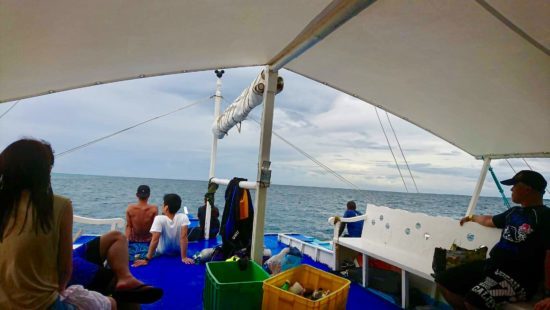
We arrived back at the hotel on Mactan just after 2 o'clock. In the afternoon the tide was higher, so the boat could come right into the hotel jetty. With that, the tour came to an end. Swimming in the emerald-blue sea and visiting a white sand island, doing all the things we cannot normally do, it was a truly enjoyable day, a real break from everyday life.
From the Hotel on Mactan Back to Our Own Hotel
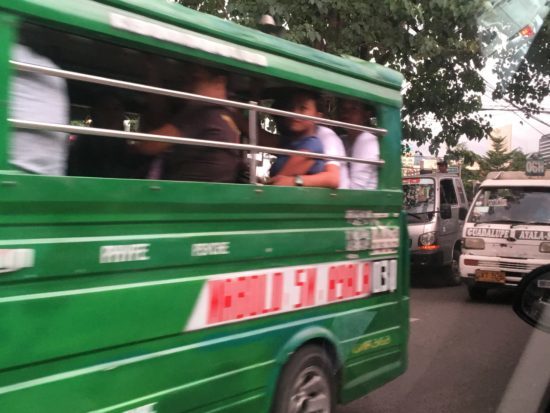
The young man who had brought us to the hotel that morning was waiting for us in front of the counter. We got back in the car and headed back to our hotel. The traffic on the roads between Mactan and Cebu is always terrible. Because there are no trains, everyone gets around by car or motorbike. Local people travel on jeepneys, a kind of shared minibus. They are made from small trucks (probably second-hand ones from Japan) that have been modified and lengthened, with the cargo bed at the back turned into seating. Each one is driven by its owner. The destinations are written on the side and there seem to be set routes, but you cannot tell exactly where they will go, so they look difficult to use until you are used to them. (The jeepneys passed us quite fast, so my photos are not very clear, but I have included them anyway.)

Our driver wove smoothly through the congested roads. I thought, "Wow, it is much better to leave the driving here to them. It would be too difficult for us." And taxis are cheap too...
We got back to the hotel just before 4 o'clock. The first thing we did was shower off our sticky bodies. Our son, who had just been snorkelling for the first time in his life, practically collapsed into sleep afterwards. At around 7 p.m., we woke him, as he looked as though he might sleep right through until morning, and went out for dinner. When we got back to the room, we were all tired out from the sea and fell fast asleep. On days when you have used your body, you really do sleep well. Today's sea was a beautiful emerald green, and the sparkling fish were so lovely... The sea around Cebu is famous around the world for its beauty. If you go, do try island hopping.
Other books you might like
You're welcome to take a look.
EAST TO WEST: The Heart of Haiku, the Light of Scripture
The deep sleep that follows a day spent fully in the sun and sea — the kind of moment this collection finds through haiku. This is a book my father-in-law left behind.
View on AmazonCataract Surgery-A Memoir: Double cataract surgery in Osaka, Japan
Another new experience at 66 — an honest account of the cataract surgery I went through.
View on AmazonSushi Business in Britain: the complete four-volume series
A novel series following thirty-five years in the British sushi trade, from apprentice to factory manager to a small sushi school. The complete edition offers all four volumes at a better price.