Liverpool: The Beatles Heritage Tour
Date: 2019-05-17
The National Trust Beatles Tour
This is a record of the National Trust Beatles tour we joined in Liverpool — a chance to actually step inside the childhood homes of John Lennon and Paul McCartney, homes that a regular tour only lets you view from outside the gate. We made the trip in mid-May, once British Summer Time had kicked in and the weather had warmed up, just under two hours by car from where we live in the West Midlands.
From where we live in the West Midlands, Liverpool is just under two hours by car. We'd recently become National Trust members, so we decided to join a tour of the childhood homes of John Lennon and Paul McCartney, both owned by the Trust.
We only decided to go about two days beforehand, but we were lucky enough to get a booking for the tour. Normally, entry to National Trust properties is free for members, but since both houses are on the outskirts of Liverpool, this particular tour includes a coach that takes you out there, and that had its own charge: £9.50 per person (about ¥1,300), or £15.50 (about ¥2,100) including two guidebooks. You don't need to be a National Trust member to join if you can get a booking — non-members pay £25 per person (about ¥3,500), or £31 (about ¥4,300) with the two guidebooks. (These are 2019 prices.)
We left home around 8:30am, stopped for breakfast at McDonald's along the way, and arrived at a car park near our hotel in central Liverpool at about 11am. We dropped our bags at the hotel and headed straight out to explore on foot. It was a lovely day, around 16–18°C — warm enough to work up a bit of a sweat walking, though a pleasant breeze off the Mersey kept things comfortable.
Most people picture Liverpool as a city right on the sea, but it actually sits a few kilometres up the River Mersey, which flows out into the Irish Sea between England and Ireland. What Liverpool actually faces isn't the sea — it's the Mersey.
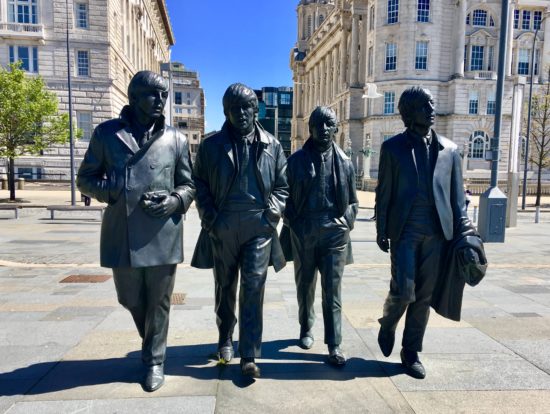
The Beatles Statue
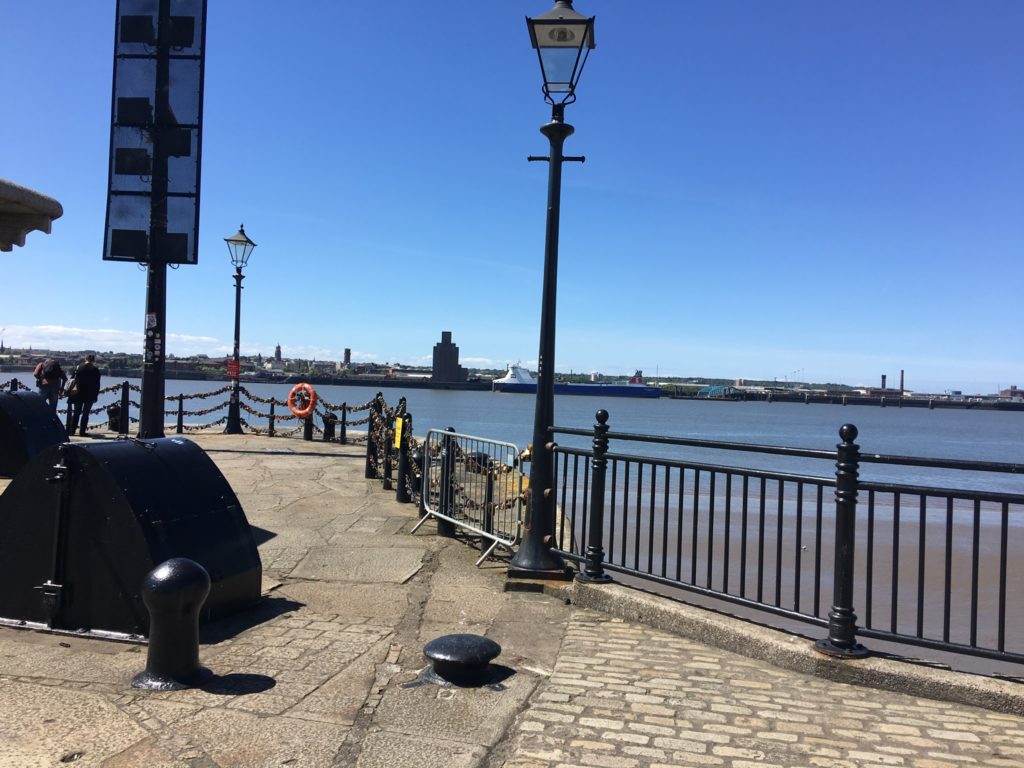
The stretch of the city centre that faces the water is known as Merseyside. We walked down toward the three great buildings that gave Liverpool its status as a UNESCO World Heritage maritime city, then along the Mersey waterfront. It was a sunny Sunday afternoon, so there were plenty of visitors about. In a spot with a good view over the river stood the Beatles statue — everyone was posing for photos in among the four figures. It was larger than life-size.
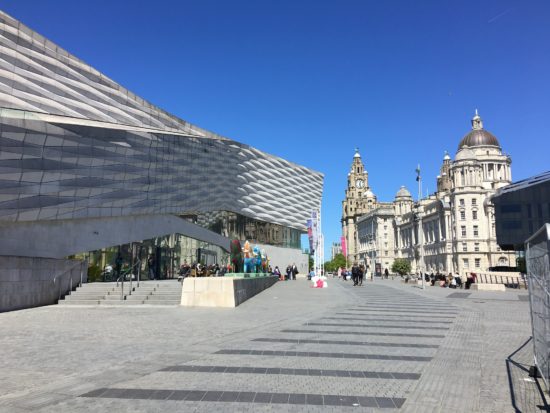
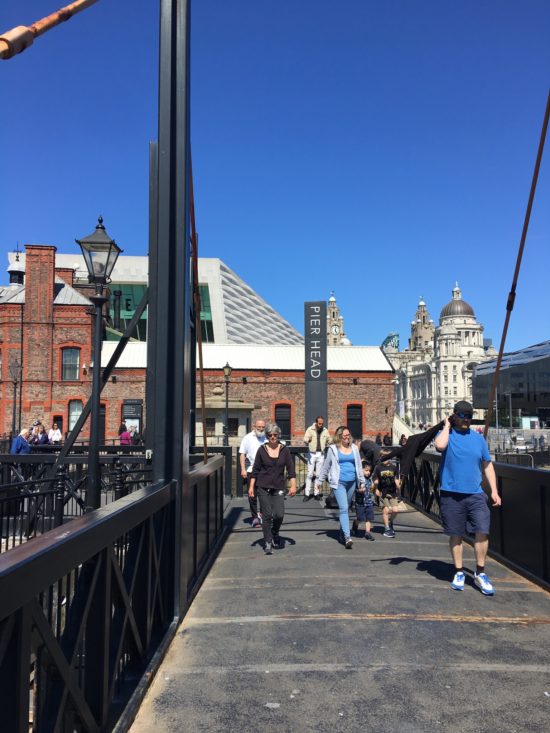
Walking further along the pleasant riverside path, an unusually shaped building came into view. The one on the right is one of the World Heritage buildings.
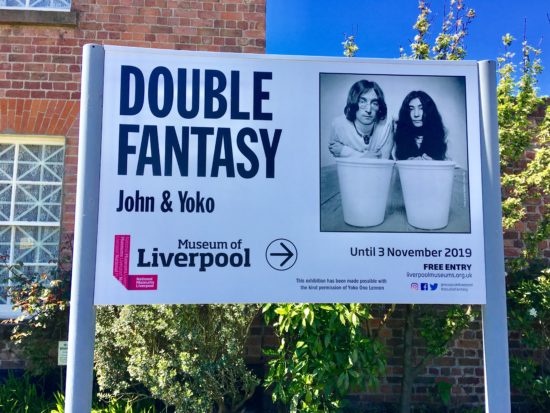
Double Fantasy: John & Yoko
This is the Museum of Liverpool. It's currently hosting a special exhibition, "Double Fantasy: John & Yoko," running until 3 November 2019.
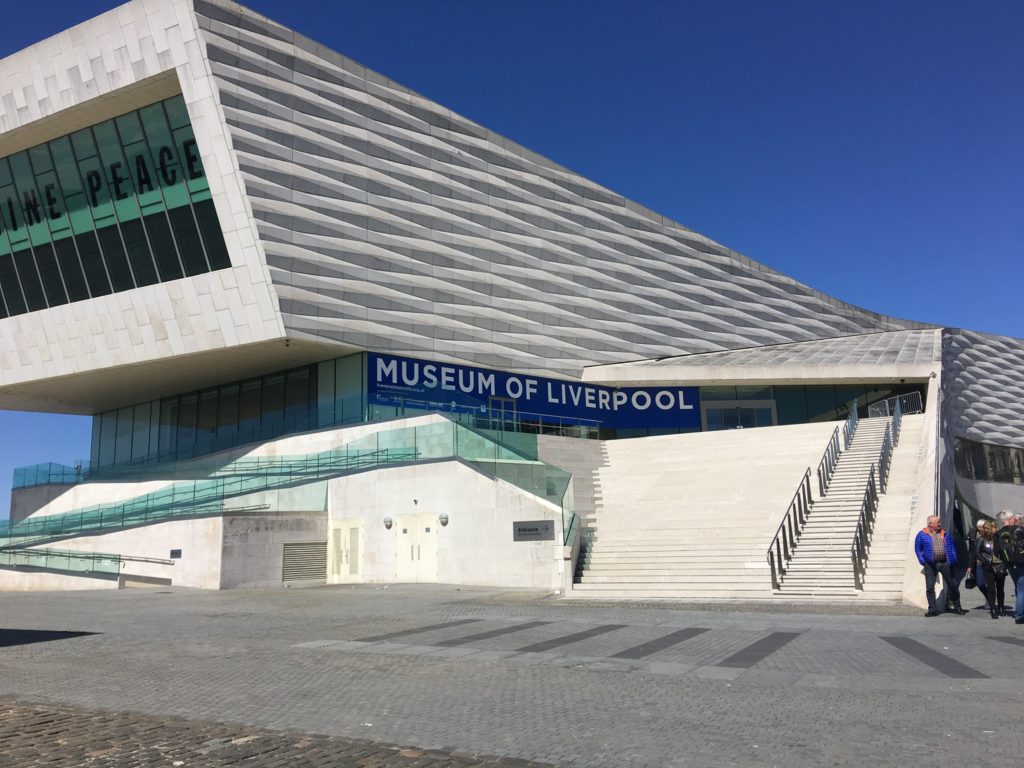
Entry is completely free!
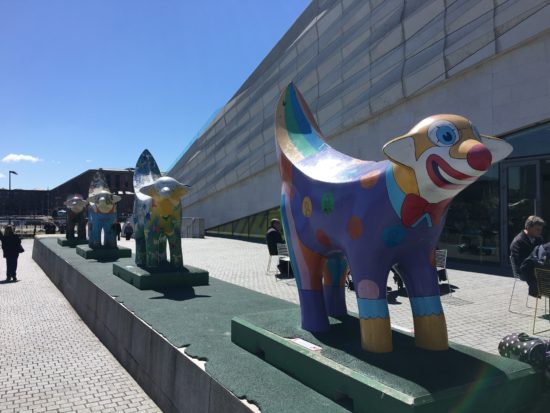
A row of charming cows greets visitors outside the museum.
The John & Yoko exhibition is on the second floor (third floor by Japanese counting). Photography wasn't allowed inside, so we only took a photo outside the entrance.
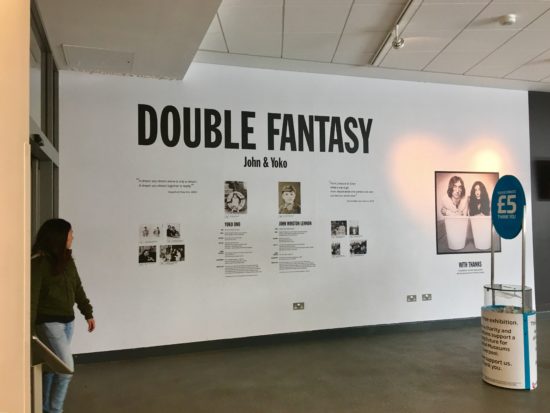
The exhibition traces the couple's life together, from when they first met until John's death — their various activities and everyday life together. On display were the outfits they wore at their wedding, posters from their famous "Bed-In" during their honeymoon, and the guitar John played at the time.
My favourite part was the "Imagine Theatre," where you could watch the music film for Imagine, with John and Yoko on screen, on a big screen with great sound. Each section played a song John had written around that period, so you'd listen to it while looking at the exhibits. There was even a corner for "Woman," one of my favourites. For any John Lennon fan, this exhibition is simply unmissable.
I'm not quite of the Beatles generation myself, but my parents were, so their music was often playing at home when I was growing up. I imagine a real fan could happily spend the whole day here, having lunch at the café inside and never wanting to leave.
Lunch at the Museum Café
Outside the exhibition hall, they were selling merchandise exclusive to this special exhibition, including items featuring John's own drawings. We went down to the ground floor and, since it was just about lunchtime, ate at the café inside the museum. We ordered fish and chips. The green side is "mushy peas" — peas cooked down and mashed with a hint of mint — a classic accompaniment to fish and chips. The proper way to eat it: douse it generously in malt vinegar, then add salt and pepper. Those three are non-negotiable. Some people add mayonnaise or ketchup too, if they like.
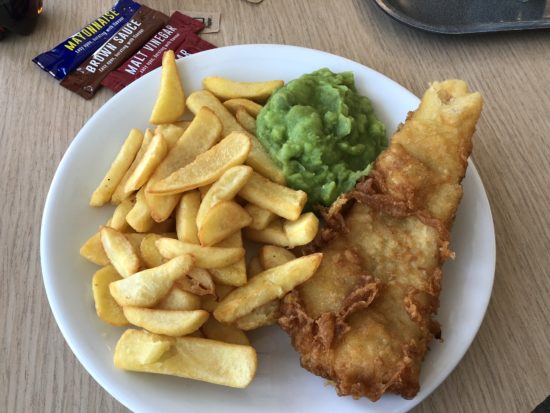
We weren't especially hungry, so we split one portion between the two of us. We ordered, and it was brought straight to our table. Freshly fried, with a wonderfully crisp batter around the cod — it was delicious.
I first learned about fish and chips from my English textbook back in secondary school. There was a chapter about the Beatles' story, which mentioned that as children, John and Paul would douse their fried cod in vinegar whenever they were hungry. I remember being genuinely shocked at the time — "wait, the British put vinegar on their tempura?!" There was even a fish and chip shop near Abbey Road Studios in London that John and Paul used to visit. They must have been genuinely fond of it. The chippy (the affectionate British term for a fish and chip shop) here, in the city where the Beatles were born, turned out to be excellent — even though it was just a museum café. Thank you for the meal. Once we were full, we headed back outside to keep walking.
Around the Albert Dock
In the days of the British Empire, Liverpool was the busiest port in the world. Goods and people from all over the globe passed through here, and set off from here too — even the Titanic, famous from the film, departed from Liverpool. The Albert Dock was once where cargo ships were loaded, unloaded, and stored; today it's been redeveloped into a lively tourist area full of museums, restaurants, and shops. It's also home to Tate Liverpool, the well-known modern art museum, and The Beatles Story is here too.
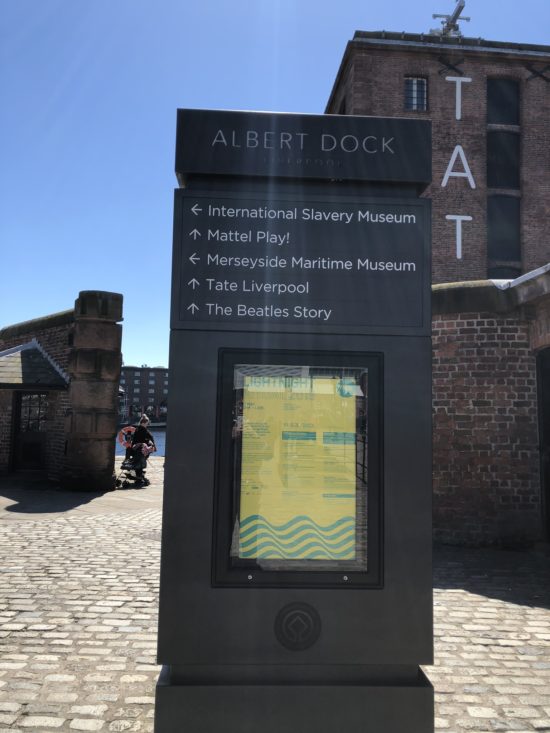
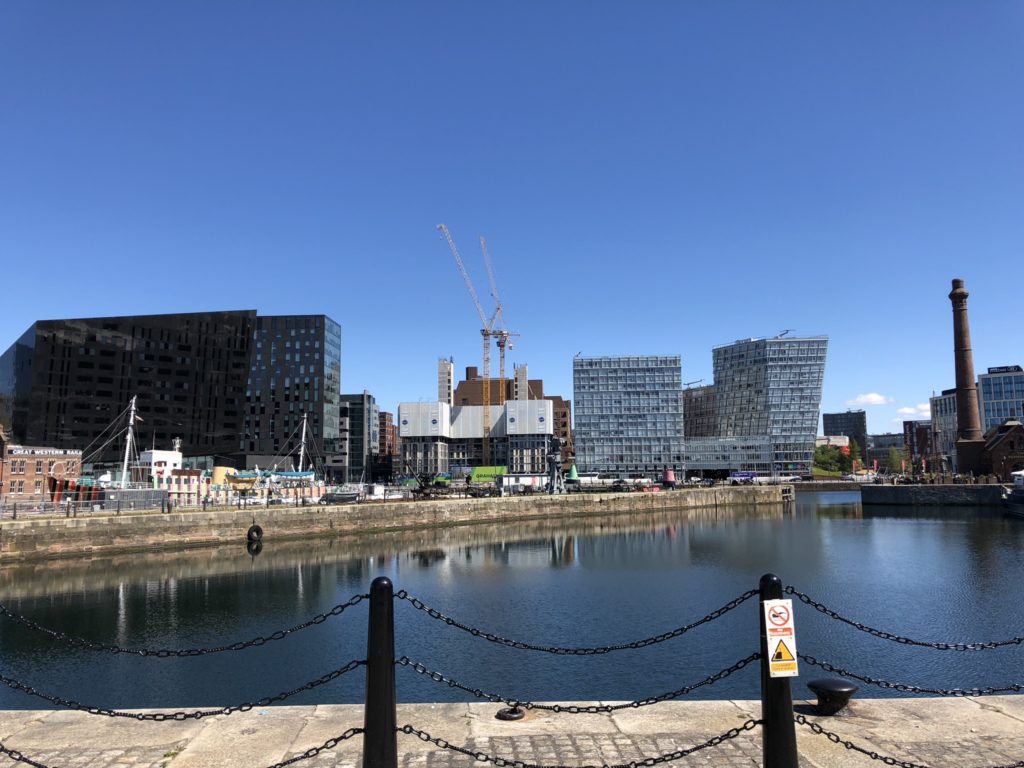
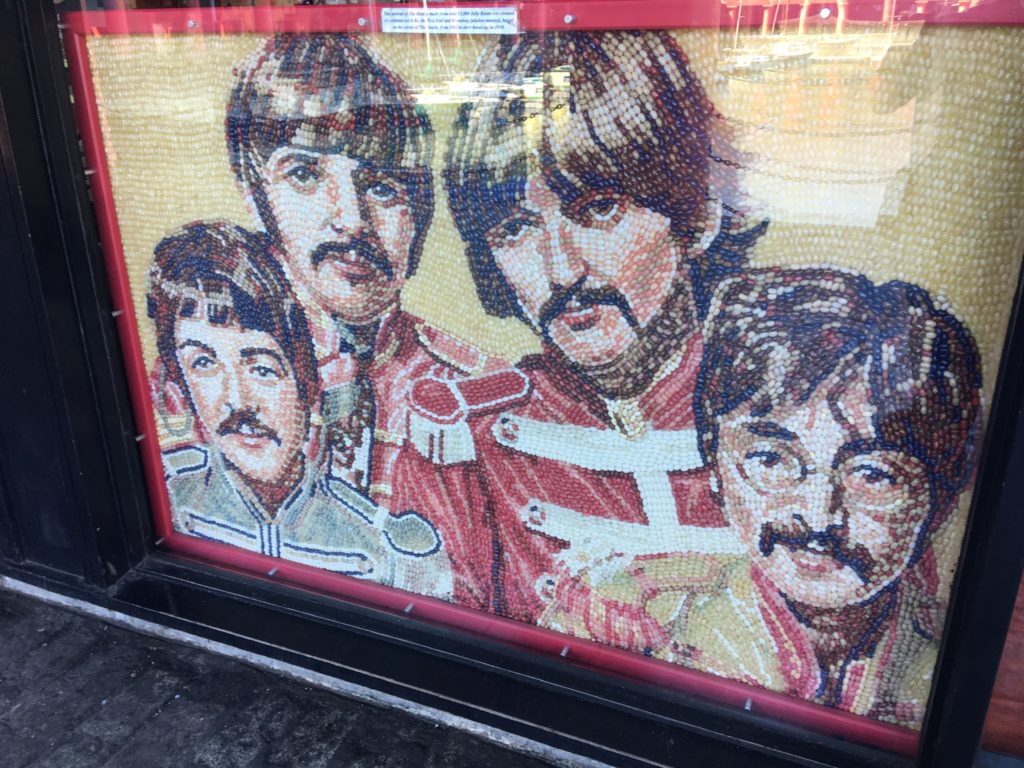
A sweet shop inside the Albert Dock had a shop window display of the Beatles made entirely out of 1,500 jelly babies!
The National Trust Beatles Tour Begins
The National Trust tour bus picks up from a hotel nearby — the lobby of the Jurys Inn, right next to the Echo Arena, a big venue for concerts and sports events. Our driver arrived right on time.
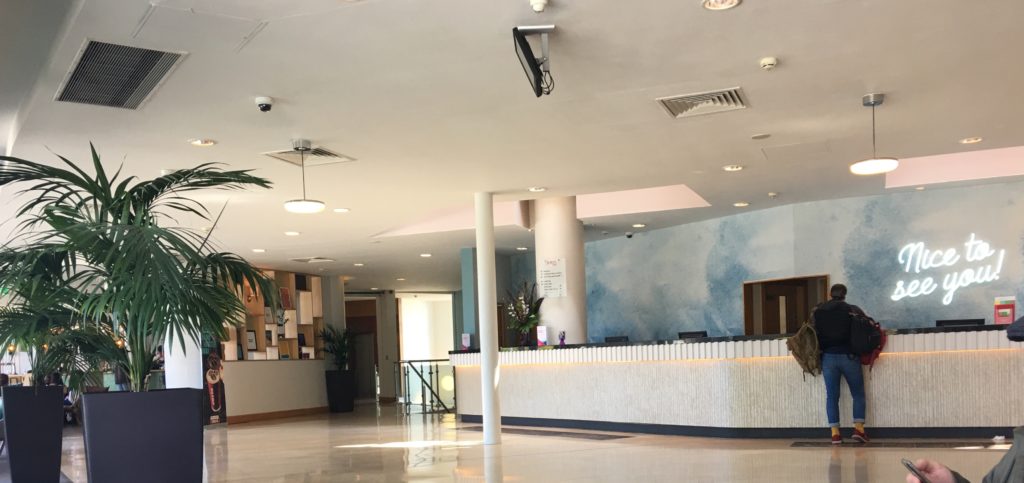
There were ten adults and two children in our group. After a quick name check, we boarded a minibus.
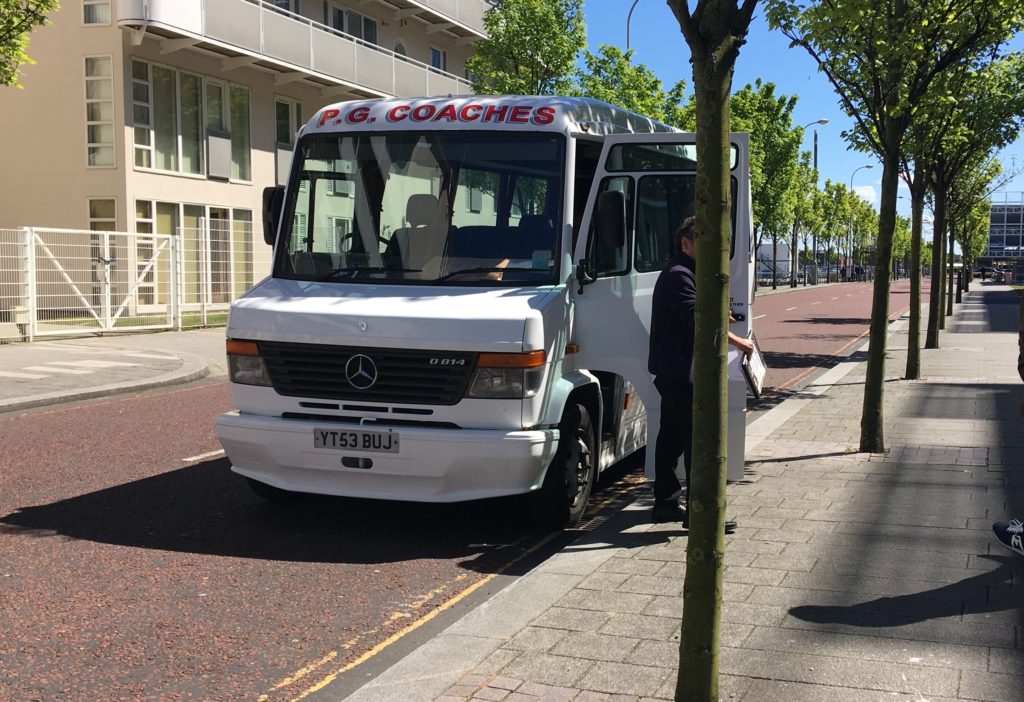
The House Where Paul McCartney Grew Up
The National Trust tour takes you to the two houses — owned by the Trust — where John Lennon and Paul McCartney lived from childhood until roughly when they started making music. Both houses are in the same suburb of Liverpool, only a three- or four-minute drive apart — practically neighbours. After about 20–25 minutes on the minibus, we arrived first at Paul McCartney's house. It's a completely ordinary-looking English suburban street. We got off the bus wondering exactly where it was, and then noticed a small plaque tucked into the hedge in front of one house.
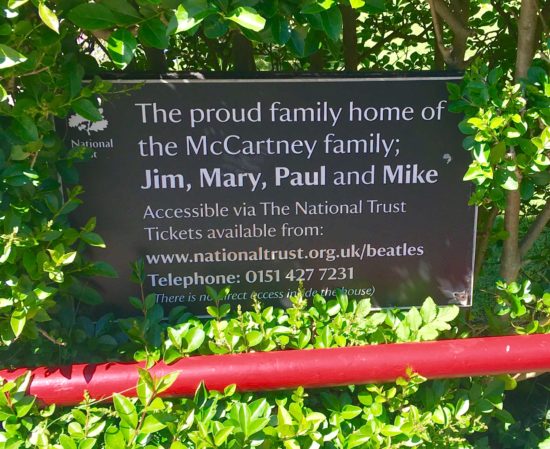
On a regular tour, this is as close as you'd get — looking over the front garden from outside the gate.
But our National Trust tour group was the only one allowed through the iron gate and into the house itself. As soon as we'd all gone in, it was locked again behind us — apparently, if it's left open even briefly, tour groups and passers-by will wander straight in uninvited. Everything, right down to the window frames, has been sourced to match the period and kept as it was when Paul and his family lived there. Of course the interior was original too. The National Trust guide-cum-custodian took a photo of each group of visitors in front of the door, and as soon as you stepped inside, phones, bags and coats all went straight into the cloakroom.
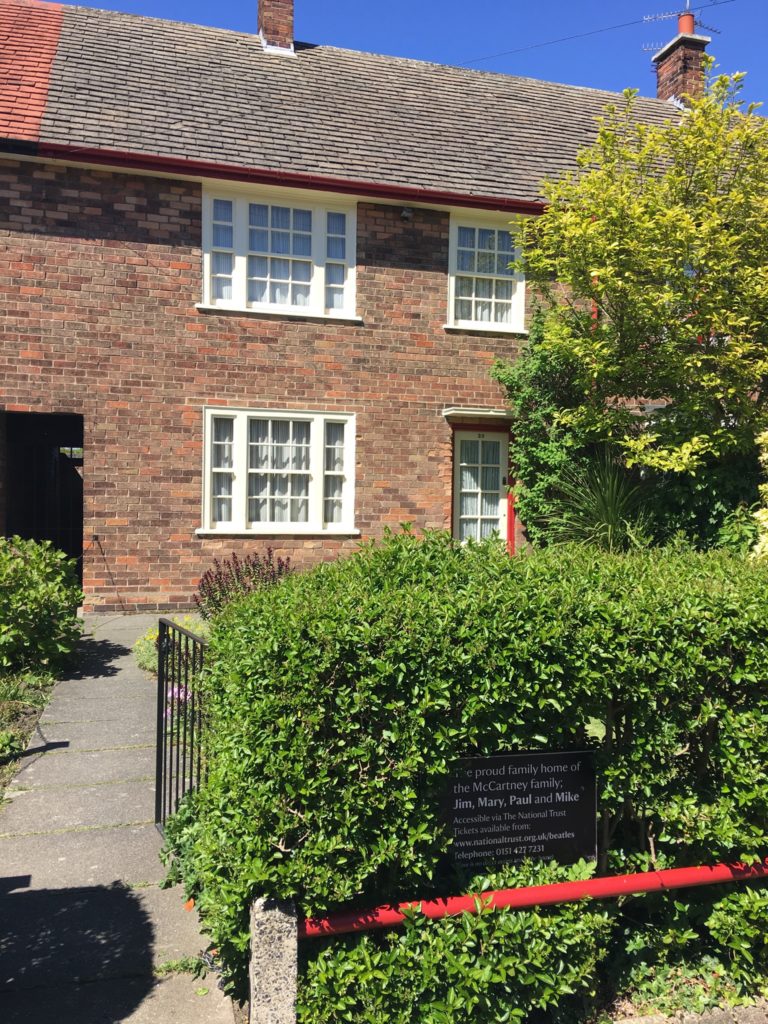
In the living room, just to the left of the front door in the photo above, sat the record player, television, and piano that the family used. When John Lennon first came to this house, this is the room where they talked and played music together. The small window directly above the front door was Paul's room — a simple room with just a single bed. On the bed lay the pastels and books Paul used to use for drawing.
This house is a terraced house — essentially a row-house style of home. It was while living here that Paul and his family lost his mother, Mary, to cancer. Our guide seemed to know everything there was to know about Paul — she and her husband run this house as custodians and guides together, and of course, being National Trust staff, they're volunteers! You'd have to be genuinely passionate about the Beatles to keep this up. We're grateful they do. Apparently the couple have met Paul himself in person three times.
The House Where John Lennon Grew Up
Next, we headed to the house where John Lennon lived with his mother's sister and her husband.
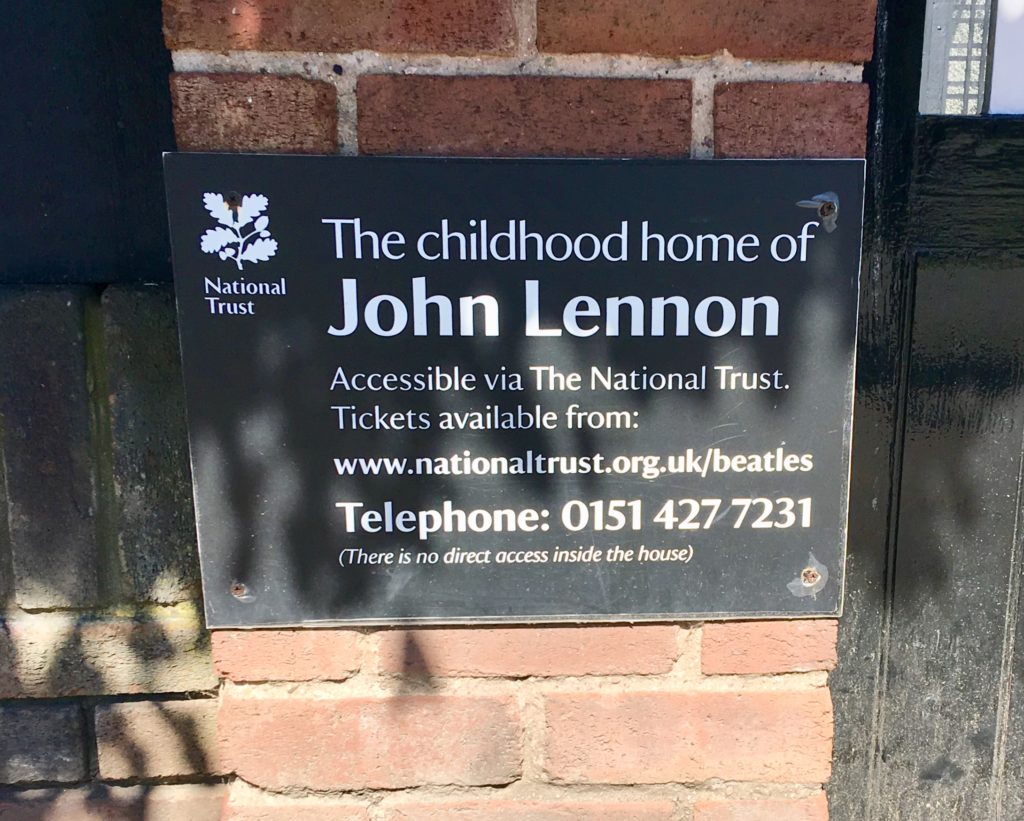
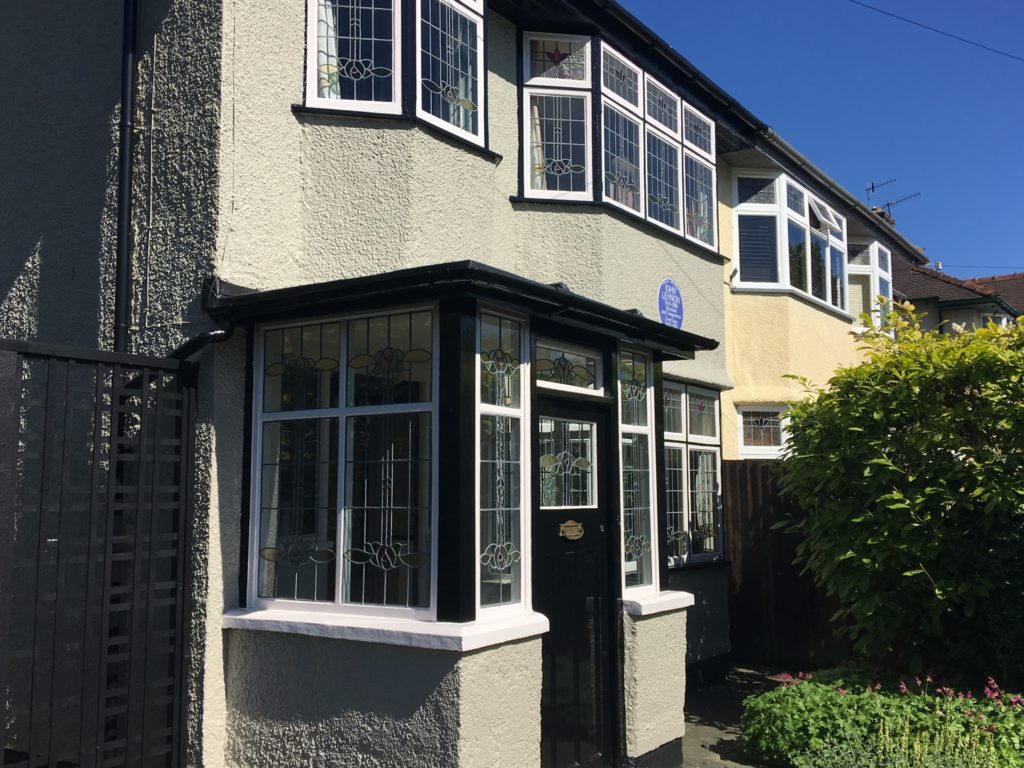
John's father was a merchant seaman and was rarely home. With things as they were, his mother eventually found a new partner and left, and at the age of five, John went to live with his uncle George and aunt Mimi, who had no children of their own. This is that house.
The area is considered one of the best residential neighbourhoods in the Liverpool suburbs — solidly middle-class. The house itself is a three-bedroom semi-detached property: downstairs there's an entrance hall with the staircase, a living room, a dining room, a kitchen, and a small breakfast room; upstairs, three bedrooms plus a toilet and bathroom.
A semi-detached house — two mirror-image houses sharing a party wall — is the most common style of housing in England. This one also carries an English Heritage blue plaque, marking it as the former home of a notable figure.
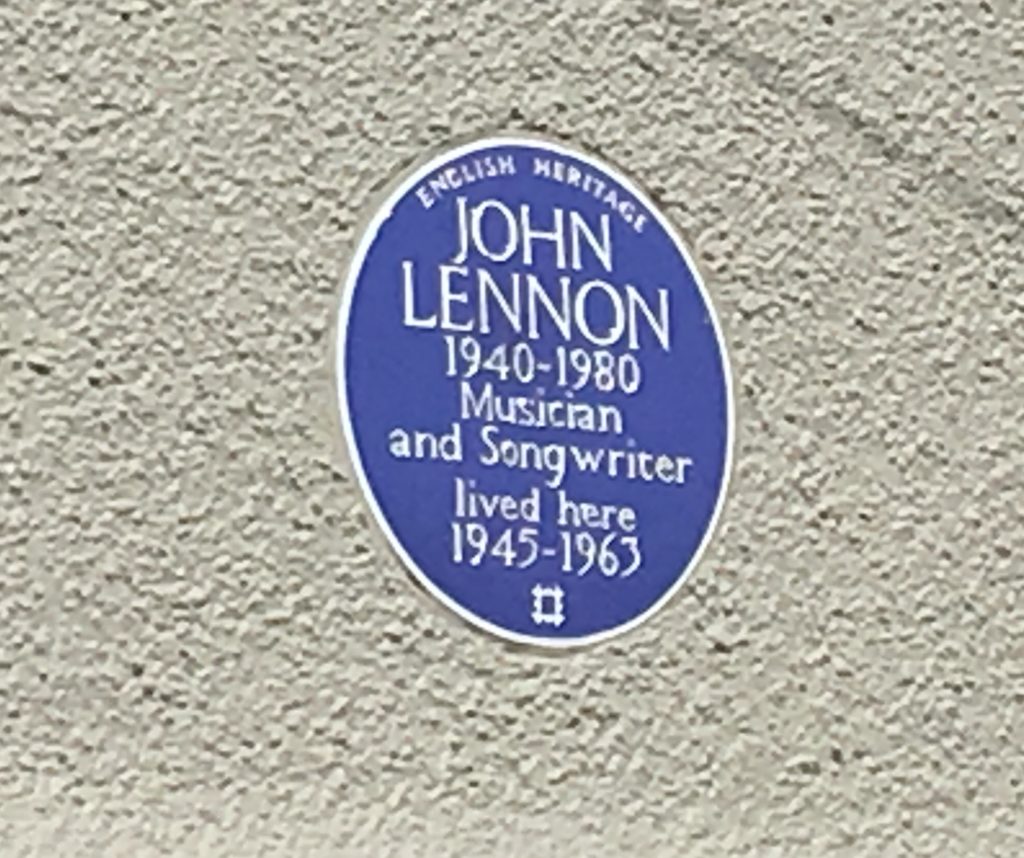
Fittingly for a middle-class home, the front garden is generously sized, and the back garden beyond it is spacious too. Behind this back garden once stood a large-gardened orphanage called "Strawberry Field" — the place that later gave its name to the Beatles song.
Unlike the strict Aunt Mimi, Uncle George doted on John as if he were his own son — but sadly he passed away when John was just fifteen. After that, Aunt Mimi took in student lodgers to help make ends meet.
The house holds so many memories for John, and after the Beatles found success, he bought Aunt Mimi a bungalow in Dorset as a gift. (Bungalows — single-storey homes — are popular as houses to retire into.) After she moved there, she gave up this house. It passed through a few other owners over the years, until Yoko Ono bought it back after John's death and donated it to the National Trust. According to the National Trust's own guidebook, which Yoko herself contributed to, John often spoke to her about his time living in this house. Apparently the two of them even came back once, while other owners were living there, just to see it from outside. That's how much this house meant to him.
John's room upstairs was, like Paul's, a small single bedroom. The walls were covered in cut-outs from Elvis Presley magazines — every inch the room of a teenage boy. What I personally found most interesting in both houses, quite apart from the Beatles connection, was the kitchens — the period gas stoves, pots and pans, washing machine, and even old boxes of PG Tips (the everyday British tea brand) were all still there, just as they'd been used. Our guides talked about Paul and John as though they were their own children (their Liverpool accents were a little tricky to follow at times, admittedly!), and it made the two of them feel remarkably close and real. It's a completely different experience from the standard tour, where you only see the outside of the houses. I'd thoroughly recommend it.
Visiting The Beatles Story
The other major Beatles attraction in Liverpool is The Beatles Story, also at the Albert Dock.
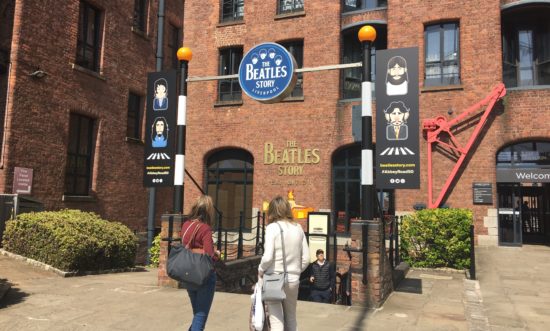
Recommended Tickets for The Beatles Story
Since we'd decided to focus this Liverpool trip purely on Beatles-related sights, we looked into The Beatles Story and found tickets at £17 per person. There's also a hop-on hop-off tourist bus called "City Sights Liverpool," which offers a combo ticket including entry to The Beatles Story. With this, you get 48 hours of unlimited use of both the bus and The Beatles Story, all for £25. (For reference, the bus ticket alone is £16, which works out to The Beatles Story costing just £9 — £8, about ¥1,100, cheaper than buying the two separately.)
This sightseeing bus runs two routes. The red route is a city-centre loop (about every 30–40 minutes). The blue route heads out to the suburbs on a Beatles-themed circuit. This blue-route "Beatles Live Guide Tour" turned out to be really good. It runs three times a day only — departing at 11am, 1pm, and 3pm.
Our Recommended Route for Enjoying "Beatles Liverpool" to the Fullest
Having now done this trip, here's the route I'd put together for anyone wanting to make the most of "Beatles Liverpool."
Doing this route independently takes a bit of English, but it'll leave you with far more vivid memories than joining a group tour out of London — so give it a go.
For timing, I'd strongly recommend British Summer Time, from April through October, with May to July as the very best window. Liverpool in winter is cold, and daylight hours are short (roughly 9–10am to 3pm), which really cuts down your sightseeing time. Liverpool isn't a particularly unsafe city, but it's still unfamiliar territory, so I wouldn't recommend wandering around outside for long once it gets dark.
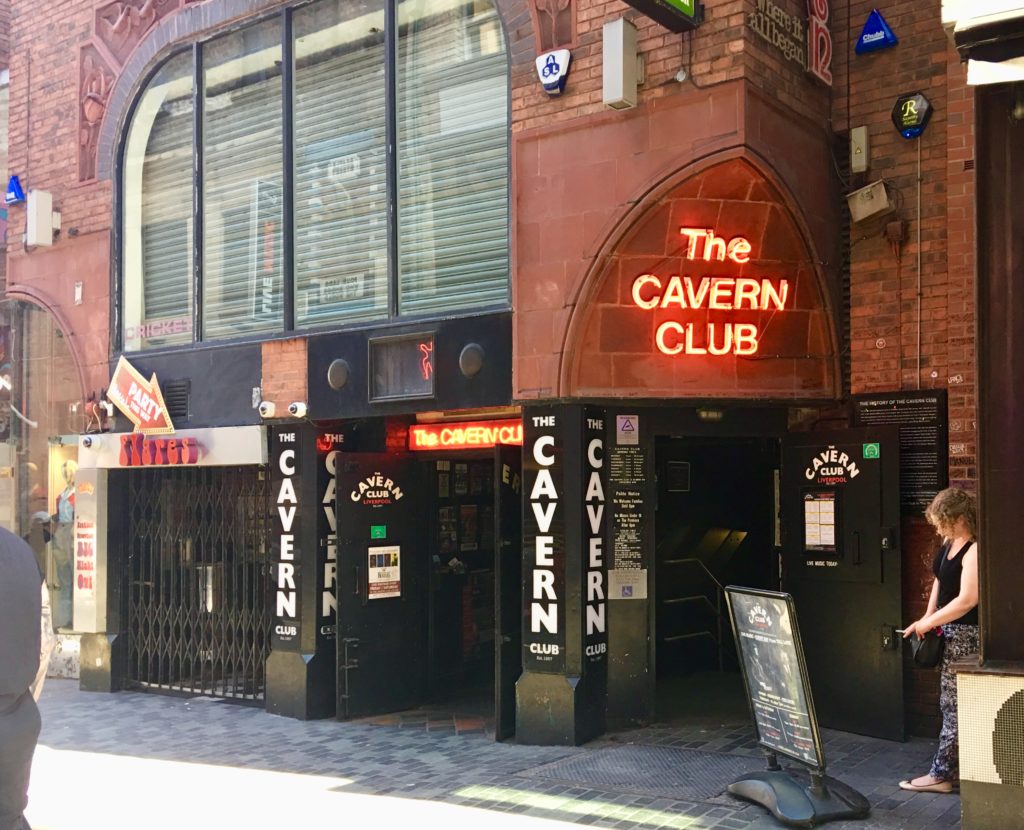
If you're travelling from London, set aside three days for Liverpool — two nights there. For a hotel, you could stay near Lime Street station, where trains from London arrive, but if you don't have a car and plan to cover most of your sightseeing on foot, somewhere near the Albert Dock is more convenient. We're Marriott members, so we stayed at the Aloft — the building itself is a renovated property from the British Empire era, which was a nice touch. It's also right by the City Hall, where the Beatles once waved to crowds from a first-floor balcony during a Liverpool parade, and only a 3–4 minute walk from the Mersey and the Albert Dock. The famous Cavern Club is directly behind the hotel. Hotels range from budget to fairly upscale, so you can pick something to suit your budget.
https://www.marriott.com/hotels/travel/lplal-aloft-liverpool/
- Once your Liverpool dates are set, book the National Trust Beatles tour on their website. Ideally book it for your second day, though the first afternoon works too. Book as early as you can — summer weekends sell out fast, so a weekday visit to Liverpool is your best bet if you can manage it.
On the National Trust site, search "Beatles" and a page called Beatles Childhood Homes will come up. Click on "opening times" to see which days it's running.
The Beatles' Childhood Homes | Liverpool
From London to Liverpool, the direct train takes 2 hours 14 minutes; with a change, it's more like 2 hours 30–50 minutes. The direct Virgin Trains service is the fastest and simplest option — no risk of getting lost along the way. For example, take the 9:07am Virgin Trains service from London Euston, and you'll arrive at Liverpool Lime Street at 11:21am with no changes. For the return leg, book an afternoon train around 2–3pm so you get two full days in Liverpool.
Once you arrive at the station, take a taxi or walk straight to your hotel and drop your bags. Then, travelling light, head on foot toward the Mersey. Aim for the three white, historic World Heritage buildings — the Mersey flows just beyond them, and the famous Beatles statue is right there too. Near the statue you'll find two open-top double-decker buses — that's the ticket office for the sightseeing bus tours. There are two companies running these tours, so look for the red City Sights Liverpool bus. Buy the Beatles Story combo ticket there. When we went, in 2019, it was £25 per person. You'll get a bus ticket, a Beatles Story ticket, and a map with the tour information — the tickets are small, so don't lose them.
The blue-line sightseeing bus, the Beatles guide route, departs daily at 11am, 1pm and 3pm, from near the exit of The Beatles Story at the Albert Dock. The red city-centre loop leaves from the same stop, so double-check before boarding. Once you've bought your ticket, it's worth visiting The Beatles Story first, then joining the 3pm tour afterwards.
Once inside The Beatles Story, queue at the ticket counter and hand over the ticket from earlier — they'll give you a receipt in exchange. Show that receipt and you can re-enter The Beatles Story as many times as you like within 48 hours, so keep it safe. Inside, you make your way round listening to an audio guide through headphones — Japanese is available, so just ask for "Japanese, please." You can trace the Beatles' history all the way back to their earlier incarnation as The Quarrymen. Photography is allowed inside, so take plenty of pictures to remember it by.
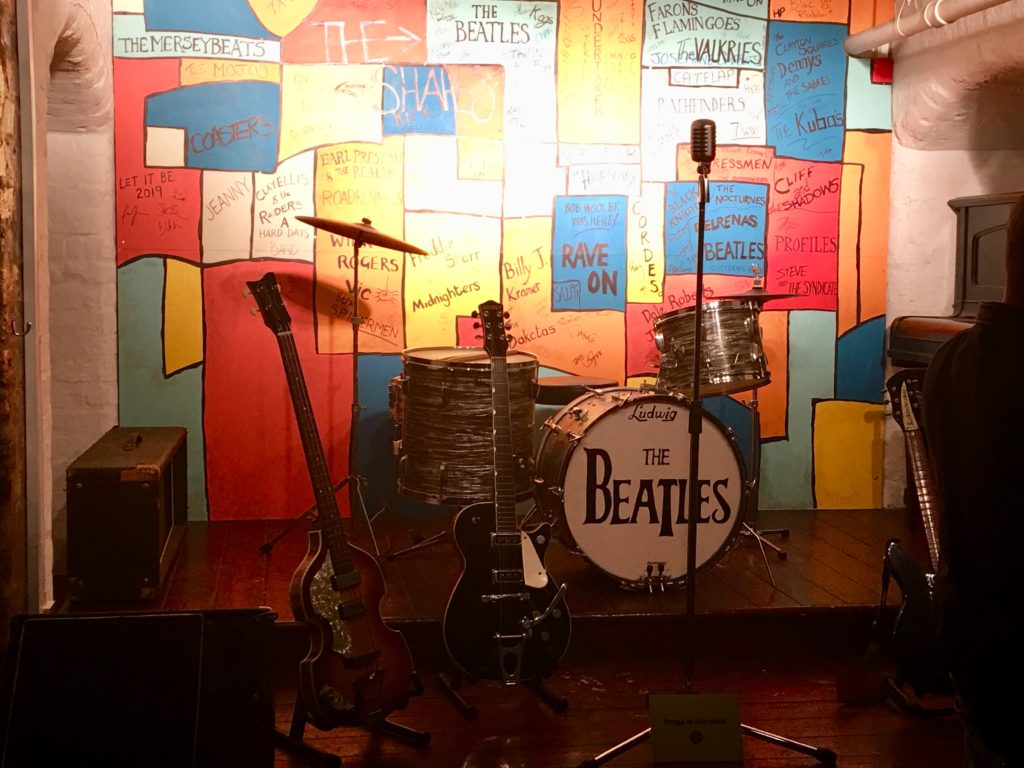
(The Cavern Club)
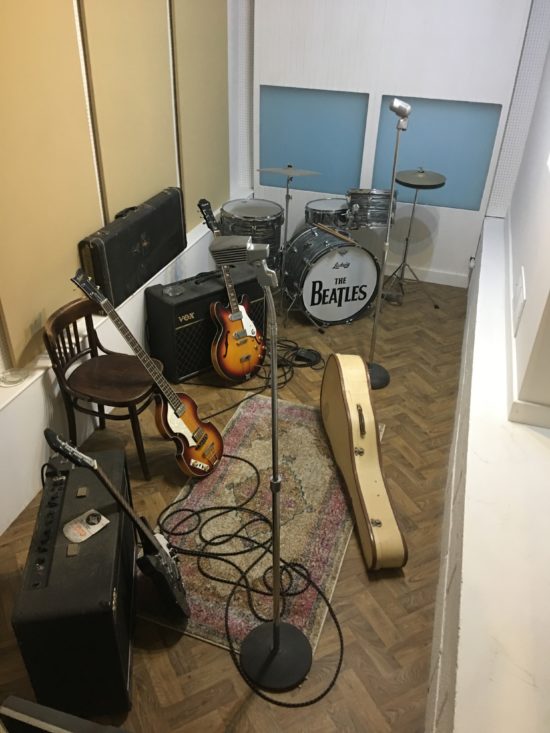
(Abbey Road Studios)
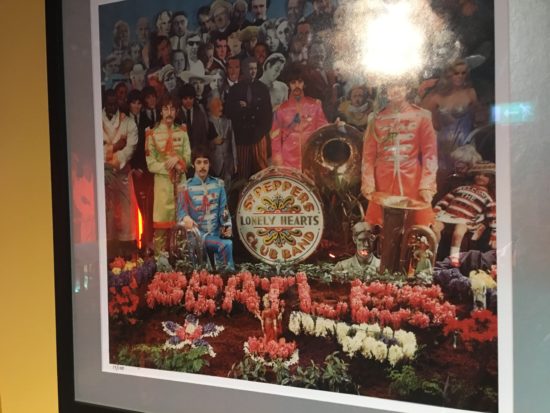
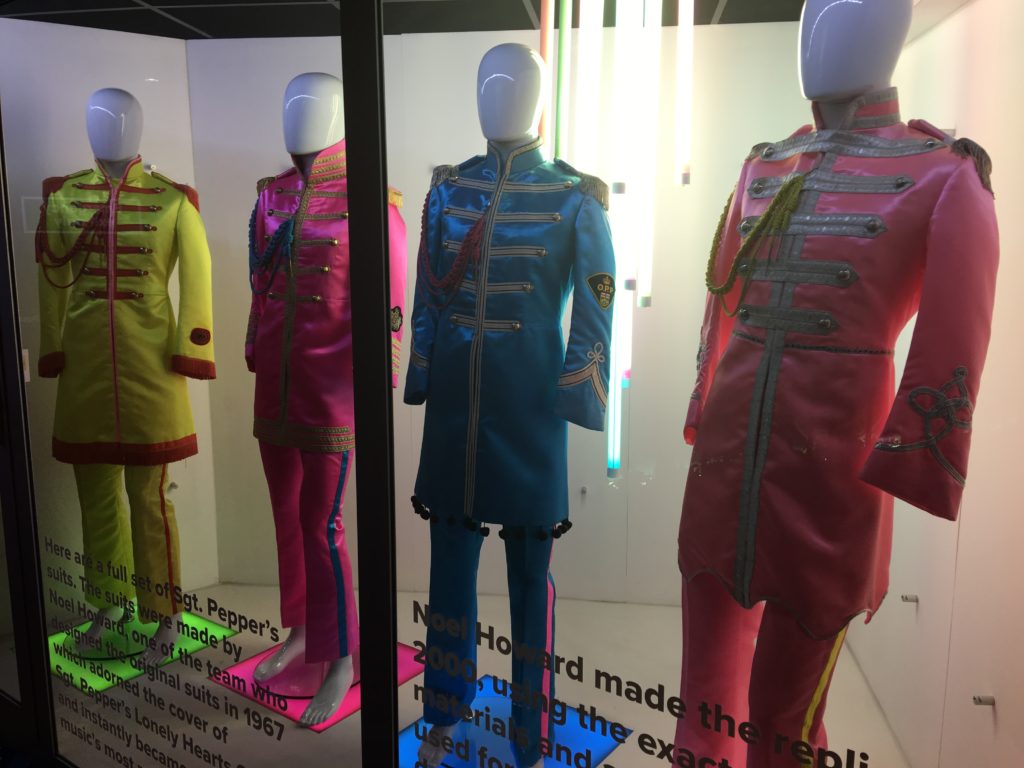
(Costumes worn on album covers)
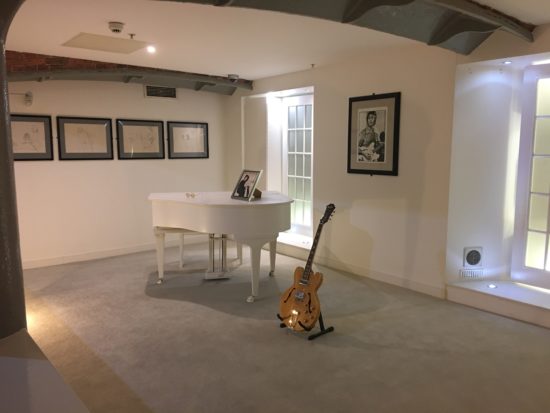
(The white Imagine room)
A quick visit takes about an hour; a proper look takes closer to two. The shop by the exit after the exhibition is well stocked too — if you're a real fan, budget another 30 minutes or so for that.
- The blue-line Beatles Live Guide Tour takes about an hour and a half. Our guide that day was also a genuinely good guitarist. As we drove around near where all four members had lived, she told us all kinds of stories. Along the way, we stopped so we could get off the bus and take photos at Penny Lane and Strawberry Field.
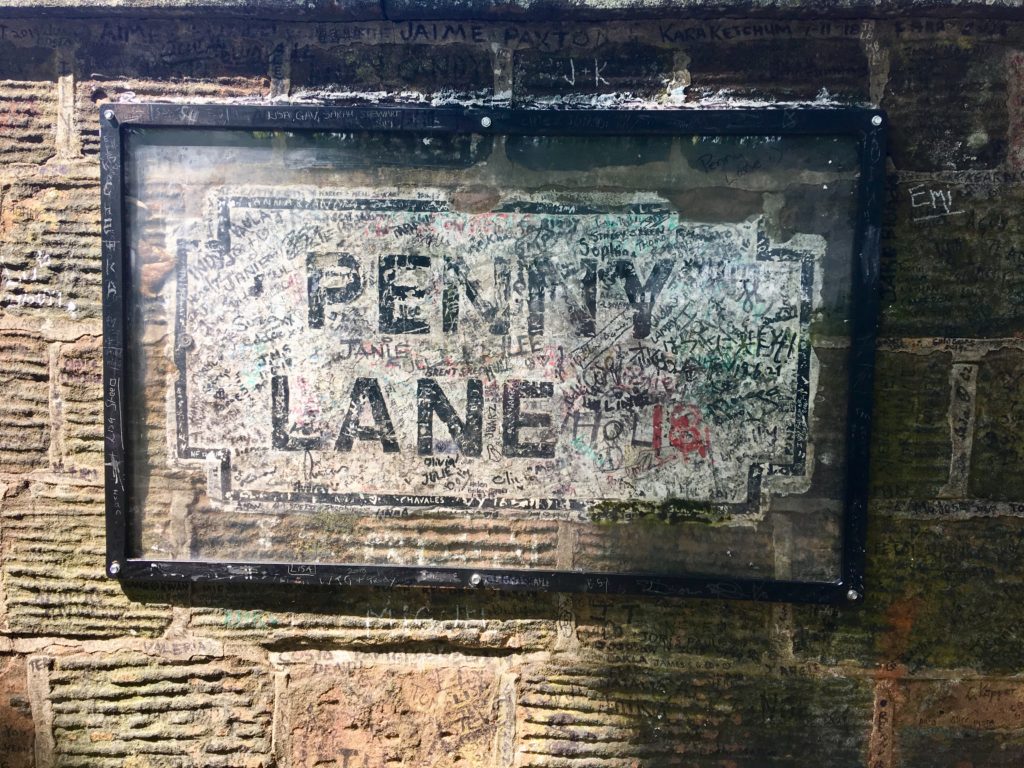
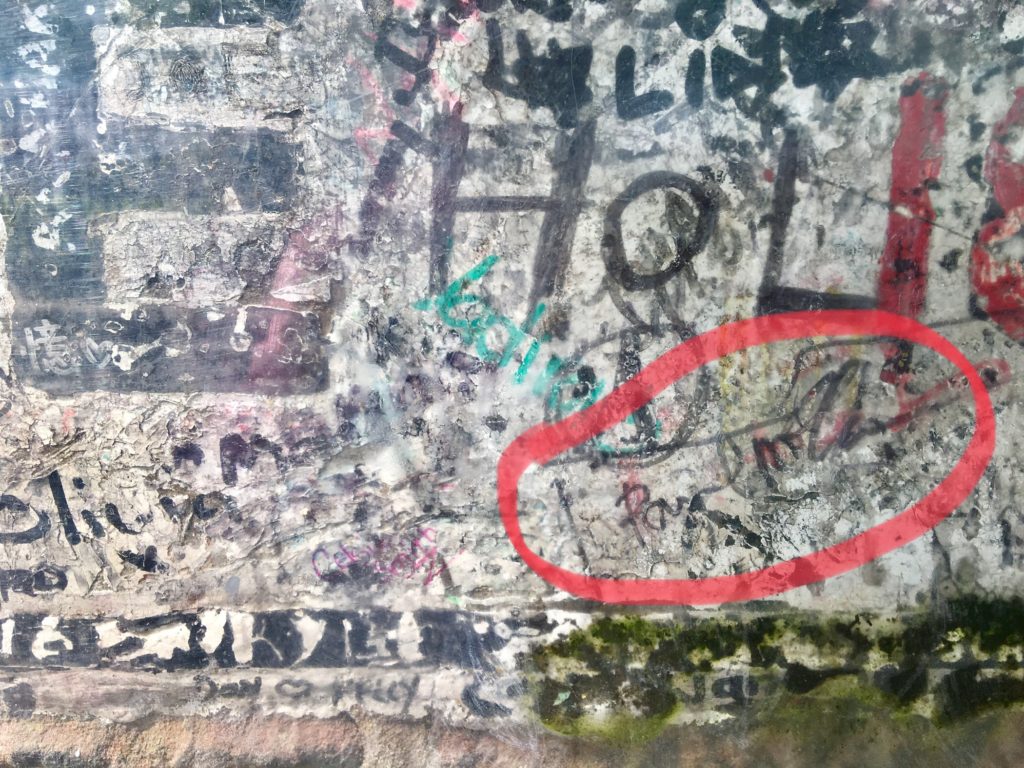
The Penny Lane street sign is so weathered from souvenir-hunters that it now has a protective cover. The red circle at the bottom is Paul McCartney's signature.
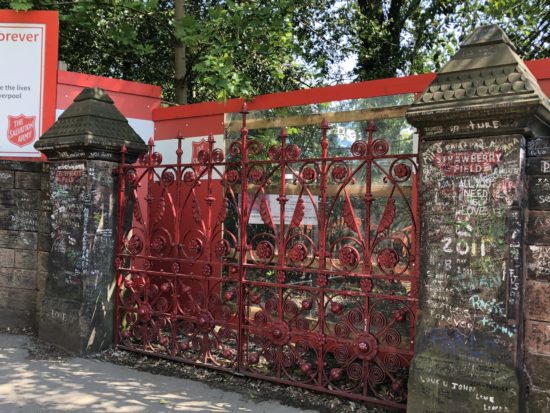
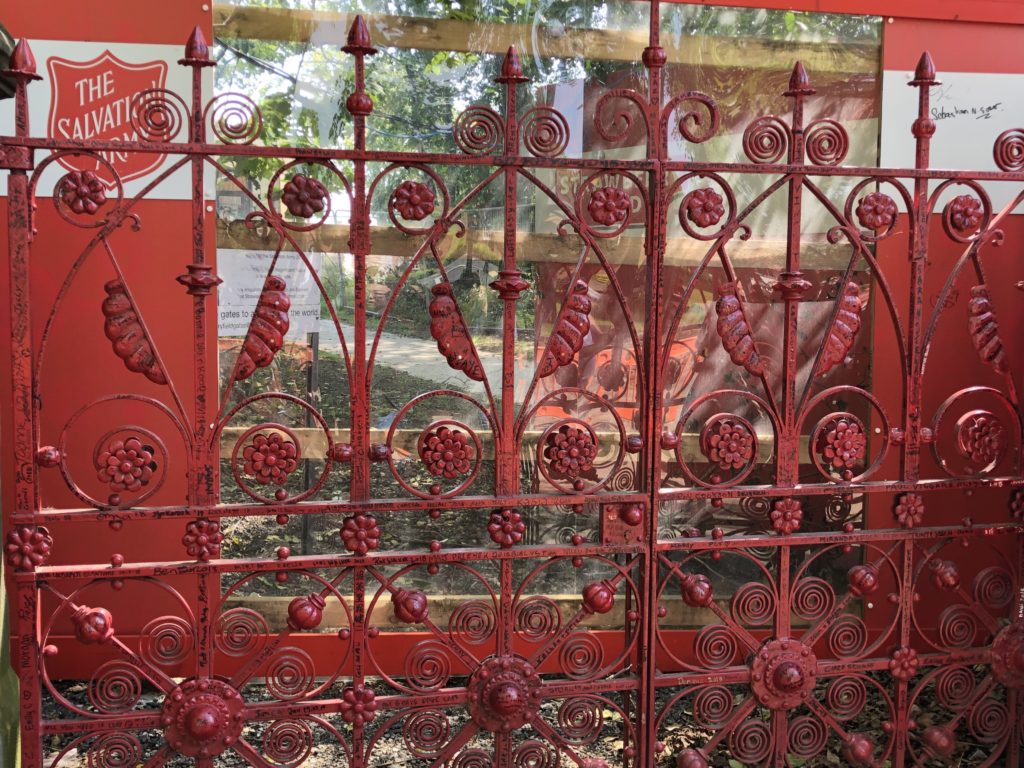
Strawberry Field, meanwhile, was surrounded by construction work when we visited. Even so, you could still see the gates.
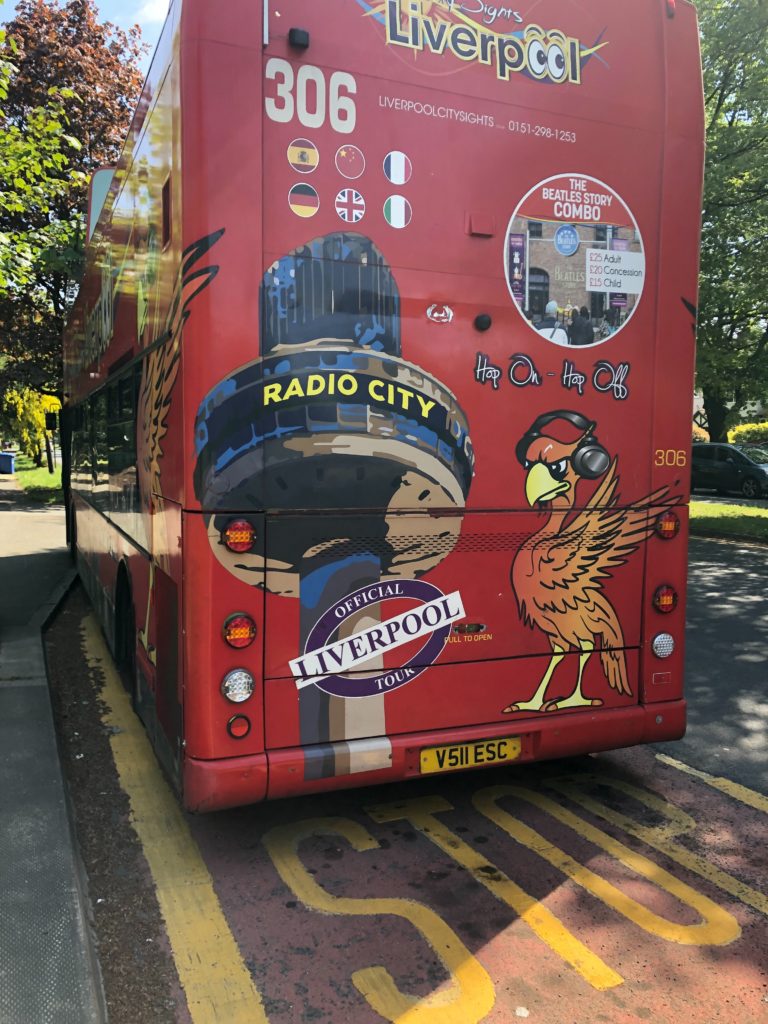
Here's the back of the bus we rode in. Quite the design.
It struck me how an entirely unremarkable English street had become a tourist destination purely because of the Beatles. Here's John's house, taken as we drove past.
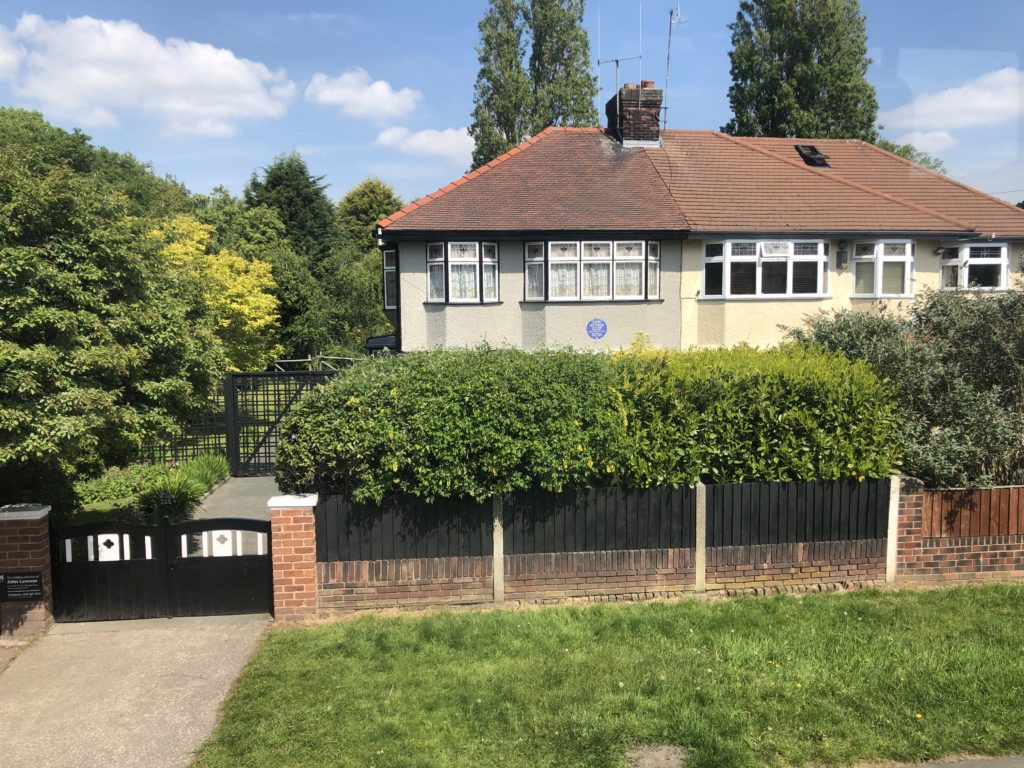
I'd always pictured Liverpool as a "port city," but the suburbs turned out to be quiet, green, and genuinely pleasant — the kind of place that would be nice to actually live in.
The red-line bus, meanwhile, does a loop of central Liverpool. The first bus of the day leaves at 9:50am and the last one at 4:50pm (during British Summer Time — an hour earlier outside it). Each loop takes about 50 minutes, so hop on whenever you have a spare moment.
My personal recommendation is Liverpool Cathedral — apparently the largest cathedral in Europe. For shopping, try Liverpool ONE — it's huge.
Until this trip, I only knew the Beatles through their famous songs, but visiting Liverpool made the band feel remarkably close and real. If you're a Beatles fan, I'd genuinely recommend going once — you'll have a wonderful time!
Other books you might like
You're welcome to take a look.
EAST TO WEST: The Heart of Haiku, the Light of Scripture
Something once distant suddenly feeling close, on the road — the kind of moment this collection finds through haiku. This was my father-in-law's final work.
View on AmazonCataract Surgery-A Memoir: Double cataract surgery in Osaka, Japan
Another new experience at 66 — an honest account of the cataract surgery I went through.
View on AmazonSushi Business in Britain: the complete four-volume series
A novel series following thirty-five years in the British sushi trade, from apprentice to factory manager to a small sushi school.
View on Amazon