The Langley, a Luxury Collection Hotel, Buckinghamshire — The Food
Date: 2019-07-27
This is the third and last part of my stay at The Langley, a five-star hotel near London that had only just opened in June 2019. The hotel stands in a large park, so we had dinner and breakfast in its own restaurant, Cedar. Dinner was a seven-course tasting menu at £75 per person (at the time), with lobster, veal sweetbread, snow crab risotto, lamb chops and even a dessert with sesame and miso cream. It was a taste of gourmet cooking quite unlike everyday home cooking. This post also covers the Churchill Bar and breakfast.
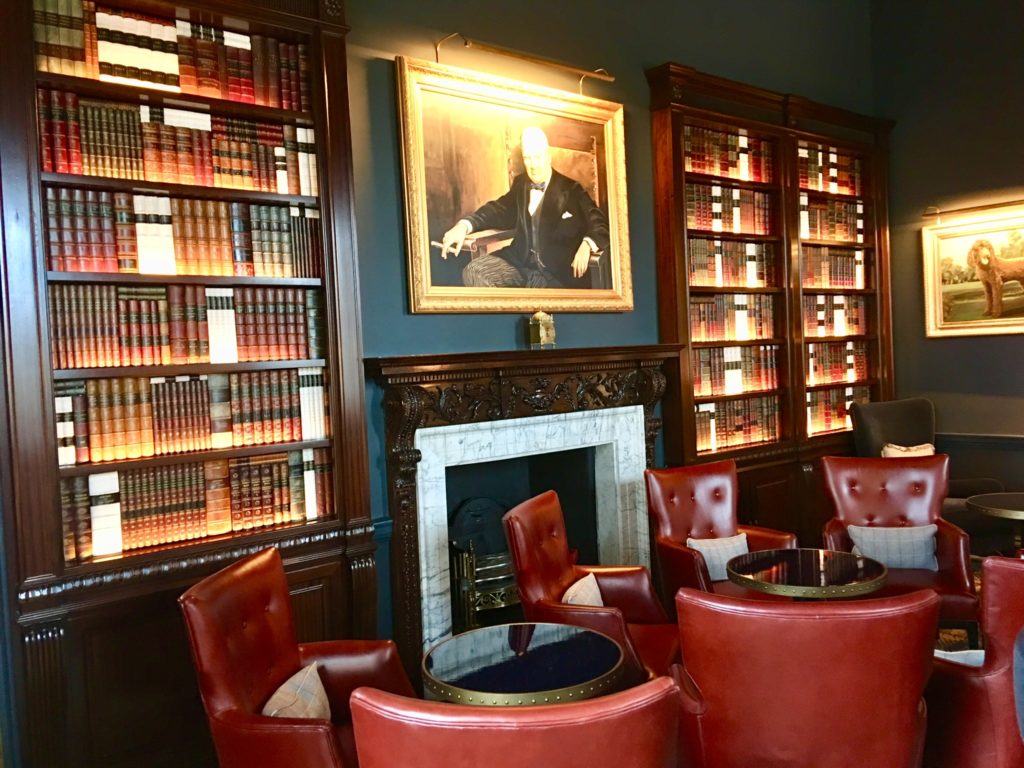
Before Dinner: Churchill Bar
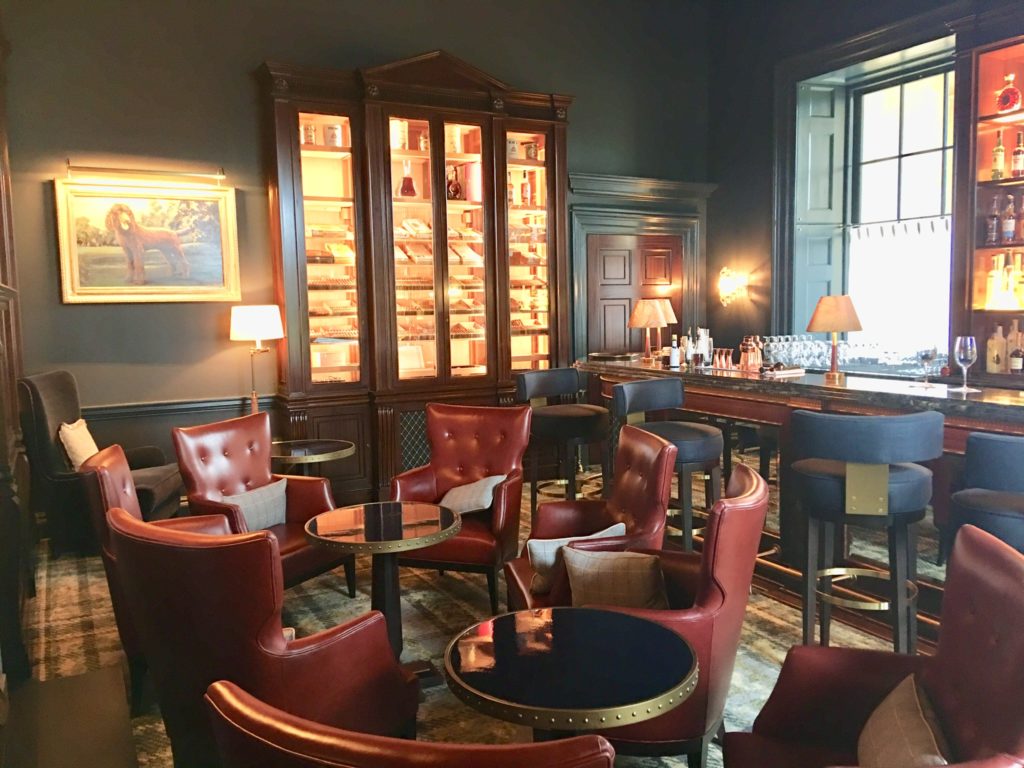
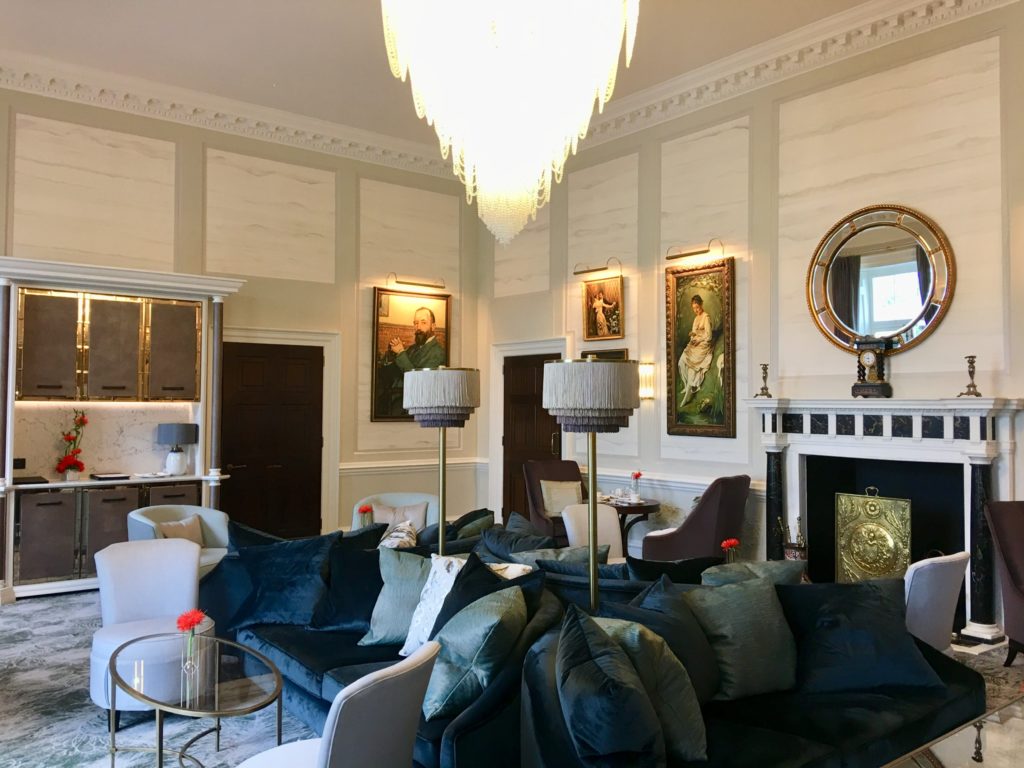
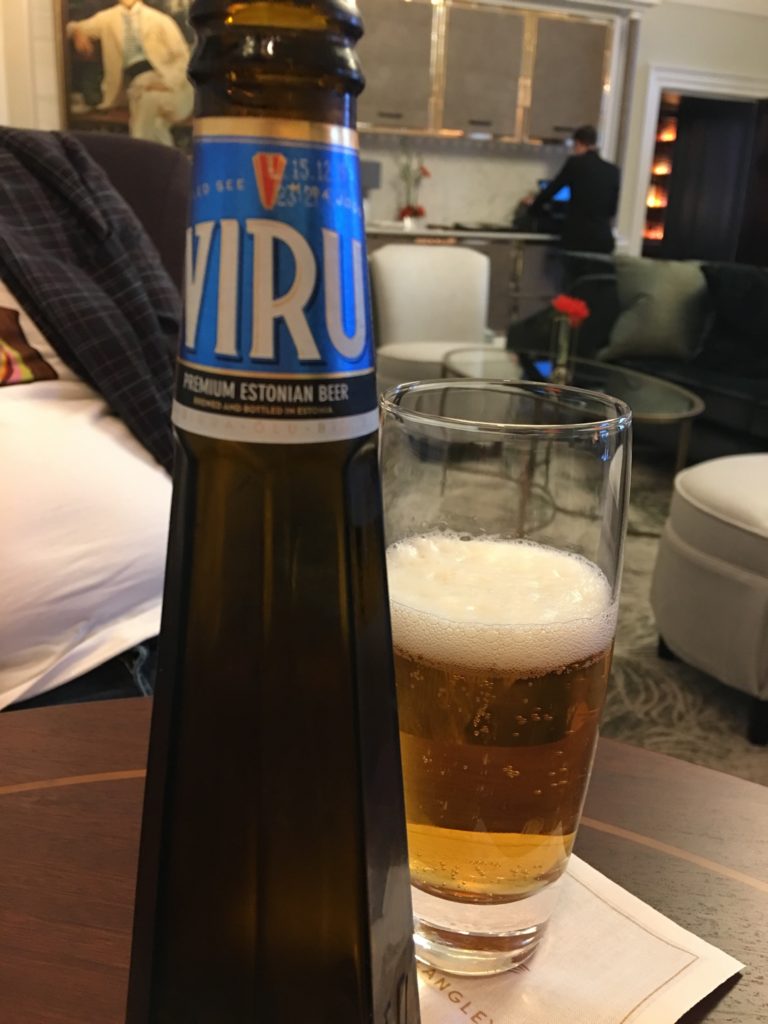
Pre-dinner drinks in the lounge and Churchill Bar. The bar serves Viru — a lager from Estonia, one of the Baltic states. The bottle design is unusual enough to be worth photographing.
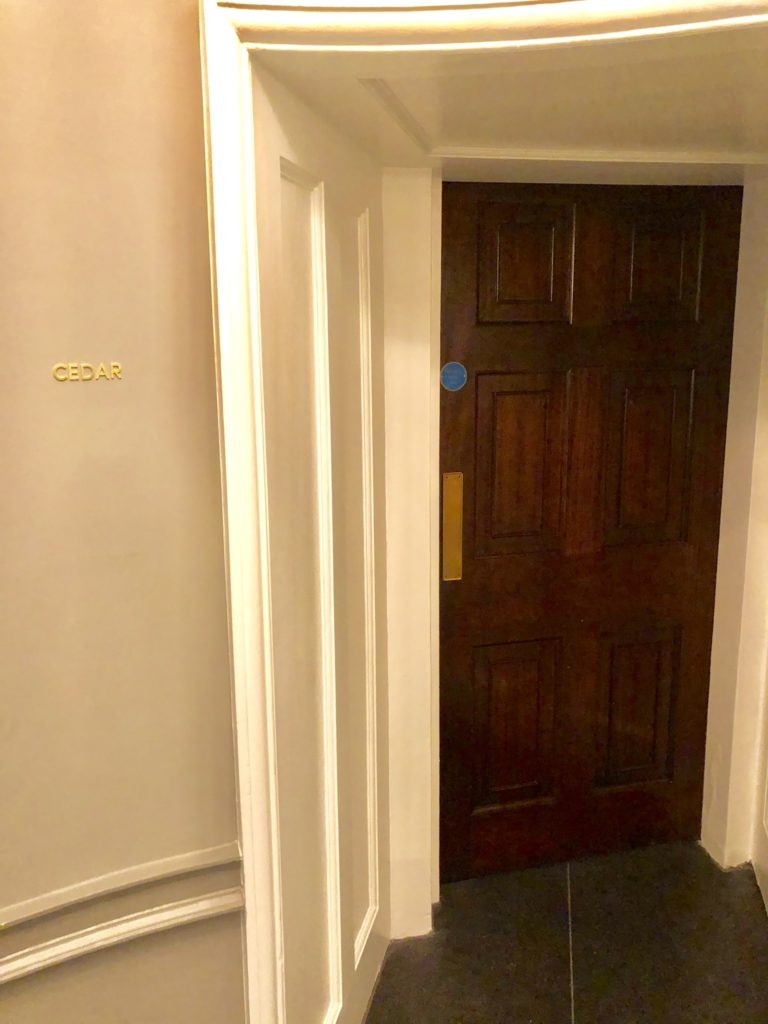
Restaurant Cedar
The hotel has one restaurant: Cedar, on the ground floor off the entrance hall. No other dining options nearby — the hotel is in open parkland, nothing within walking distance.
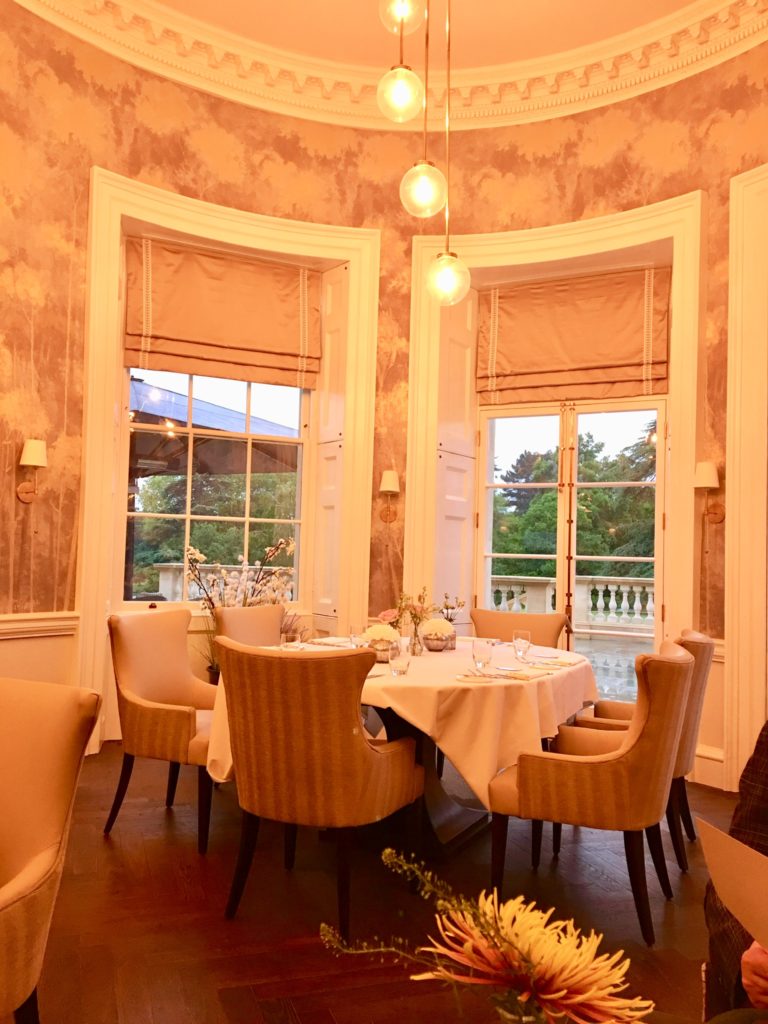
We arrived at the restaurant around 8pm. June evenings in England: the sun doesn't set until 10pm, so the room was still half-lit by natural light.
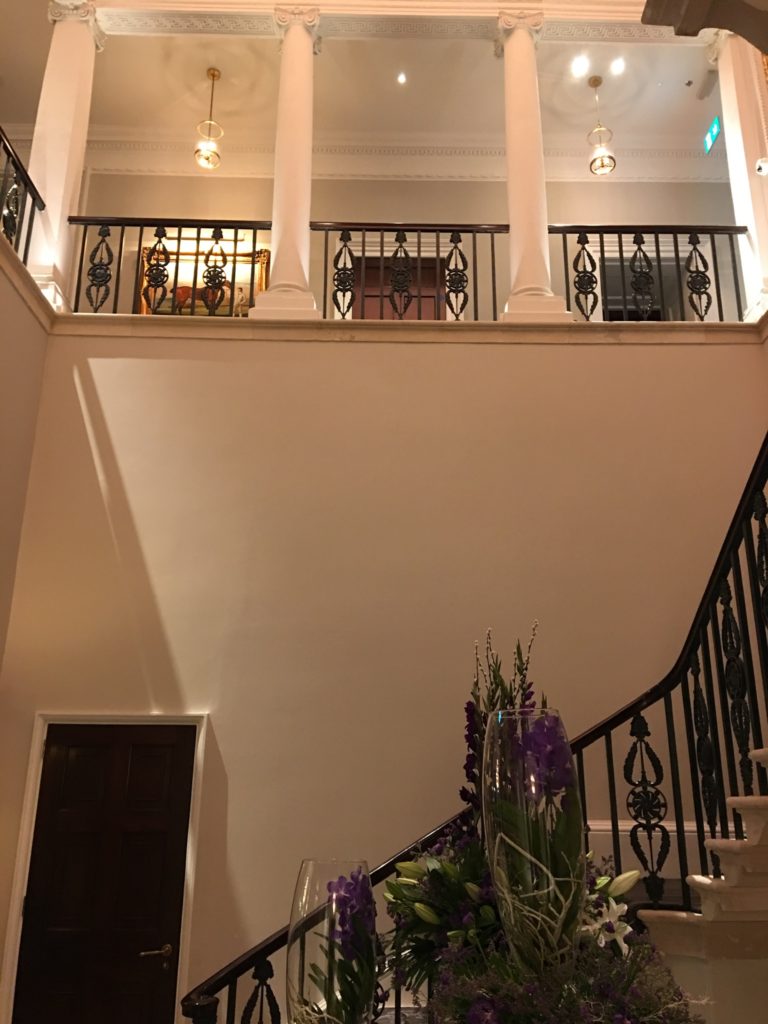
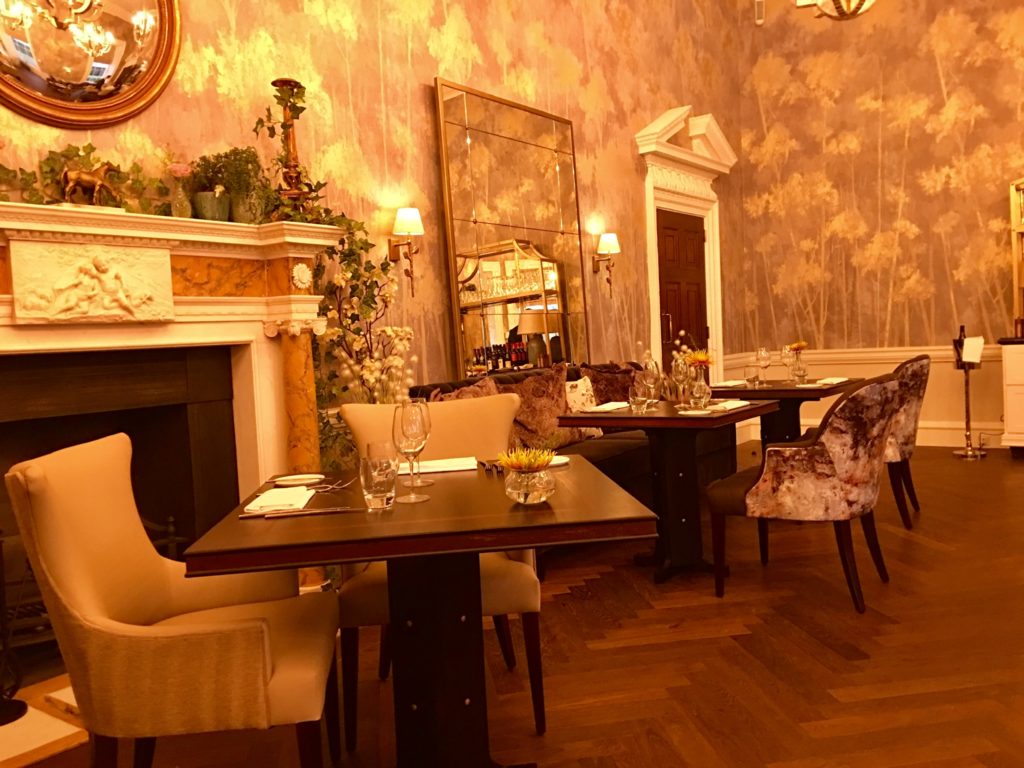
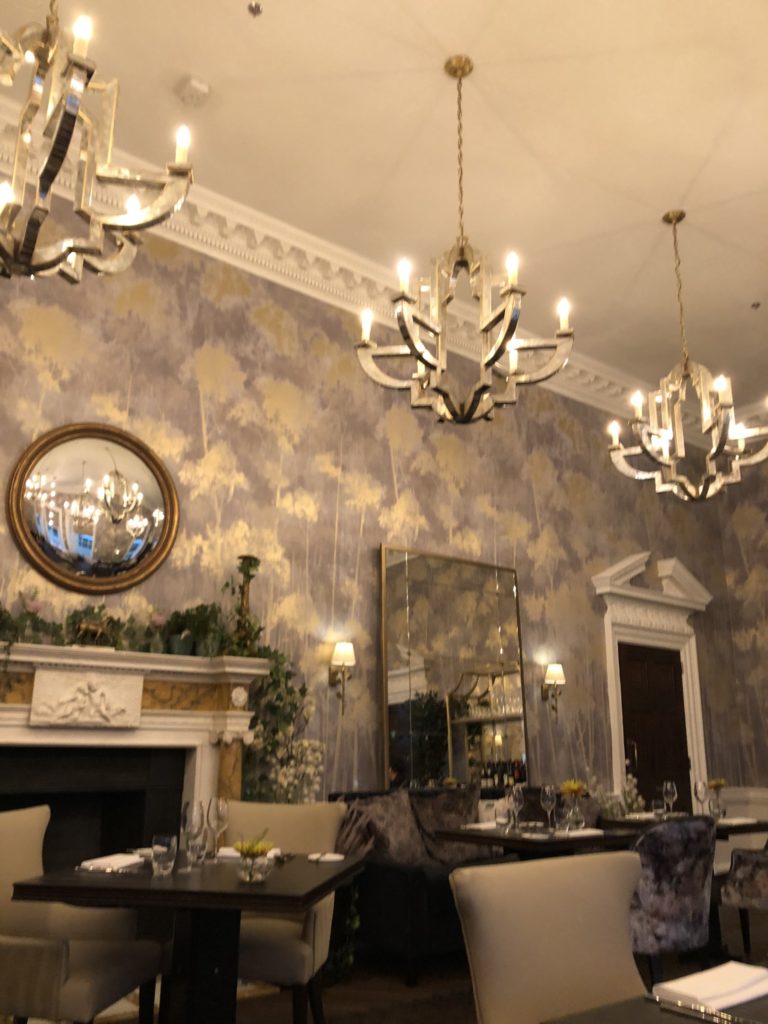
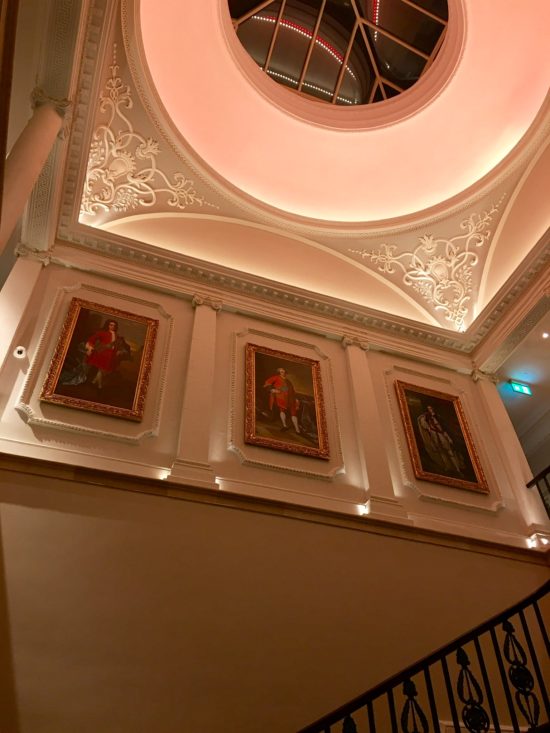
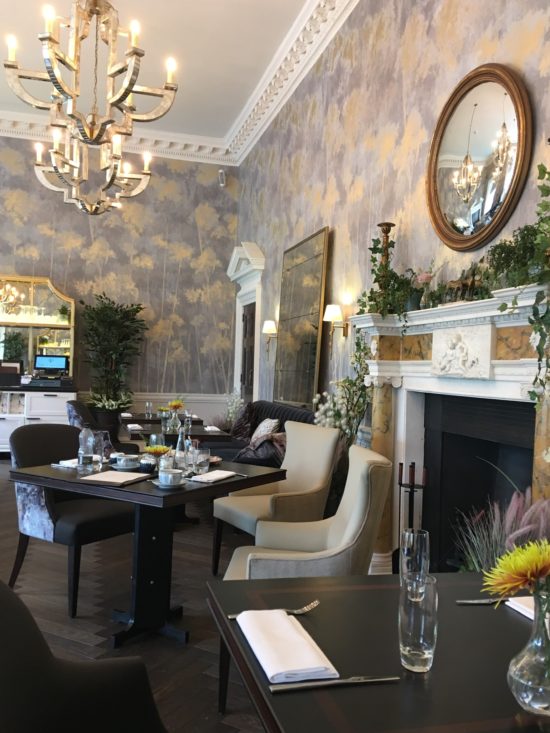
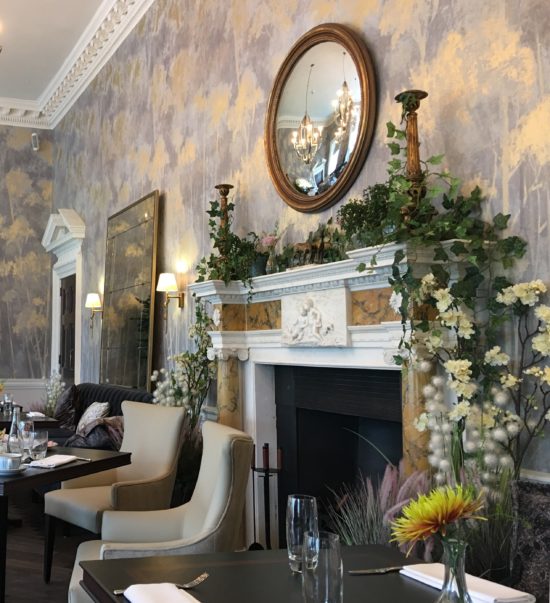
The space is intimate. Original fireplaces and door panels remain; the colour scheme is calm, slightly grand, not gilded. The right balance.
The Tasting Menu
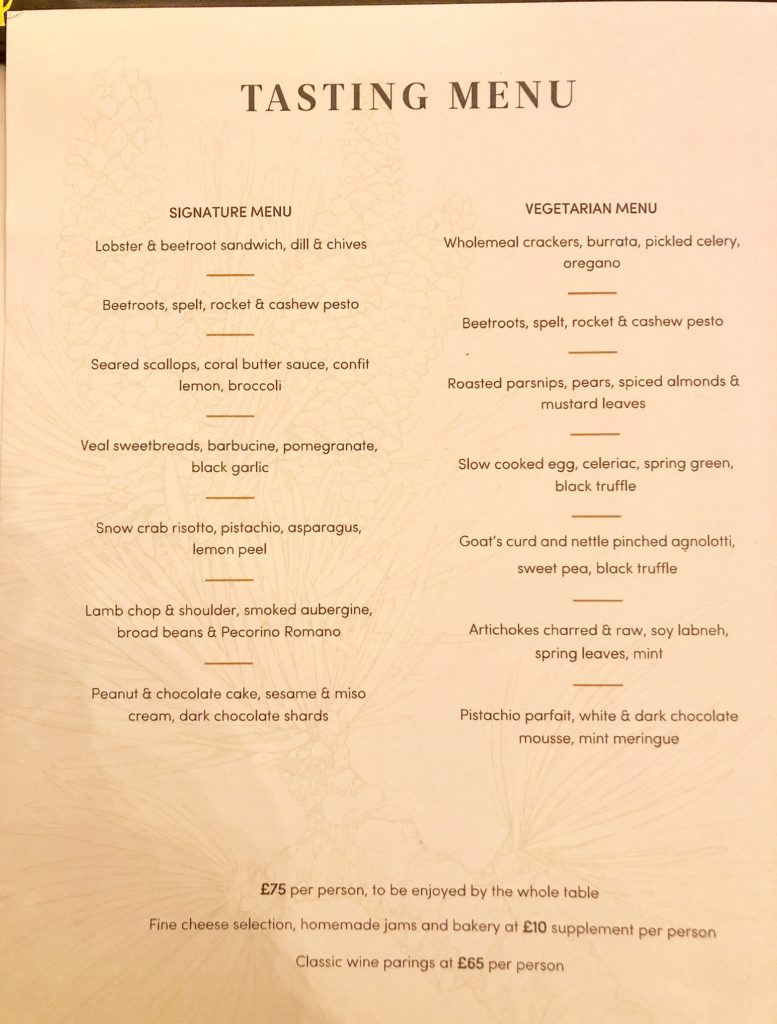
The menu offered à la carte alongside a 7-course tasting menu at £75 per person (plus tax and service). We chose the tasting menu — for a kitchen at this level, in a setting like this, ordering the full experience is the only sensible decision.
Asked whether we could order one signature and one vegetarian tasting menu between two, the answer was no — each takes too long to produce for mixed orders. We both chose the signature menu.
Drinks: One glass each of red and white wine; still water. After the dinner we'd already had, anything more would have been too much.
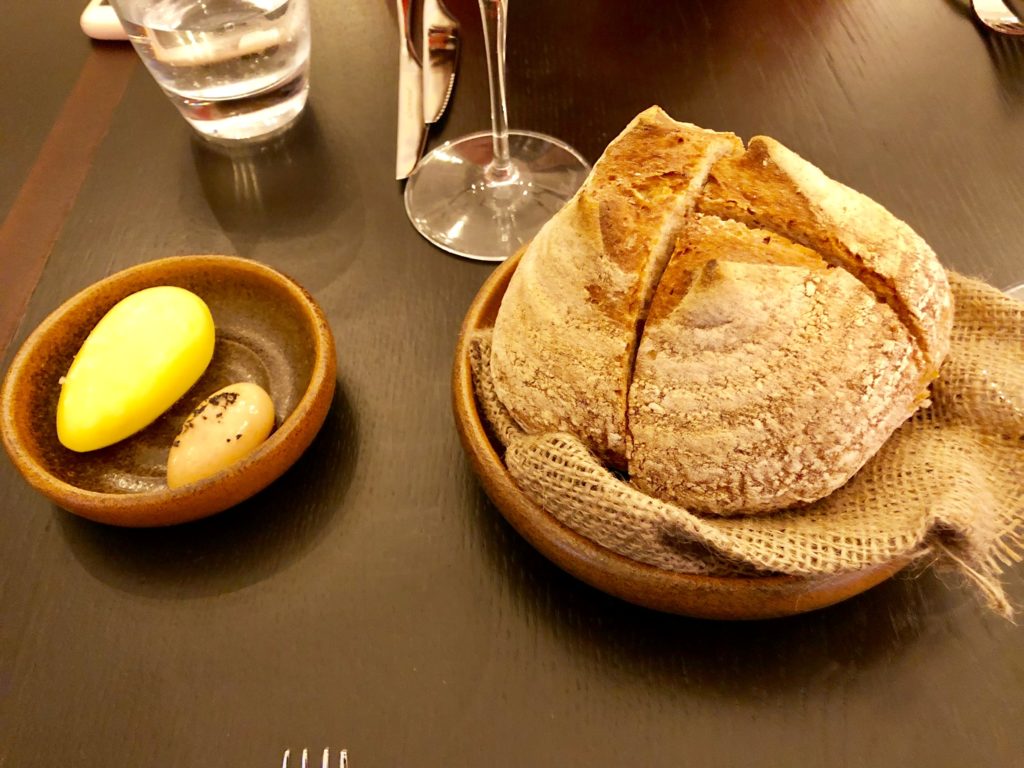
Bread: Warm sourdough with whipped butter and red onion butter
Sourdough uses a live culture fermented with lactic acid bacteria — the result is a dense, deeply flavoured loaf with characteristic acidity. London bakeries charge three to four times the price of standard bread. Good with whipped butter; excellent with extra olive oil when available.
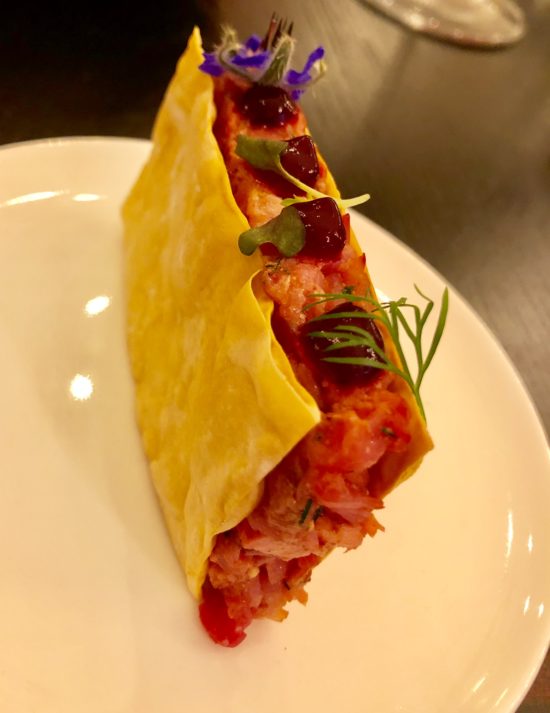
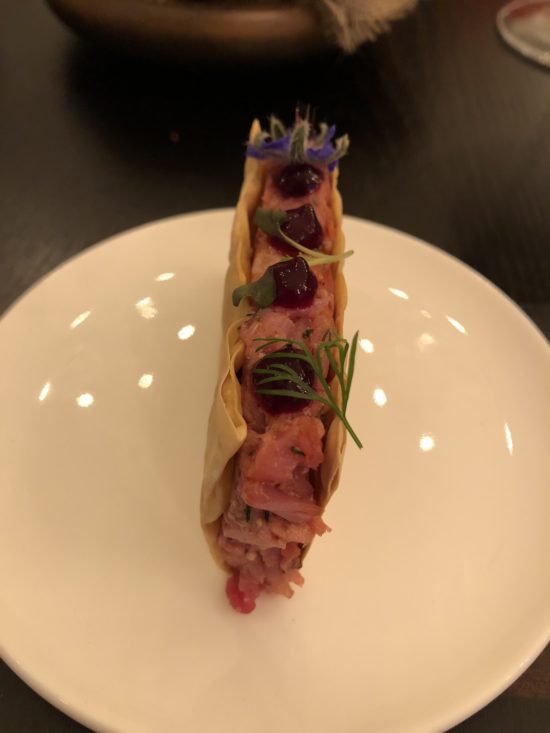
1st course: Lobster & Beetroot Sandwich, Dill & Chive
Generous lobster meat folded into a pink beetroot mayonnaise, pressed between paper-thin crispy crackers. Finished in seconds.
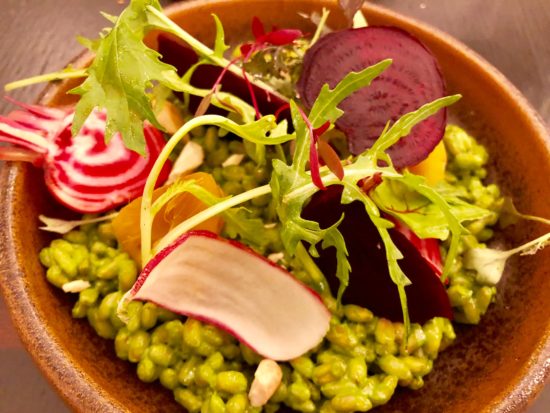
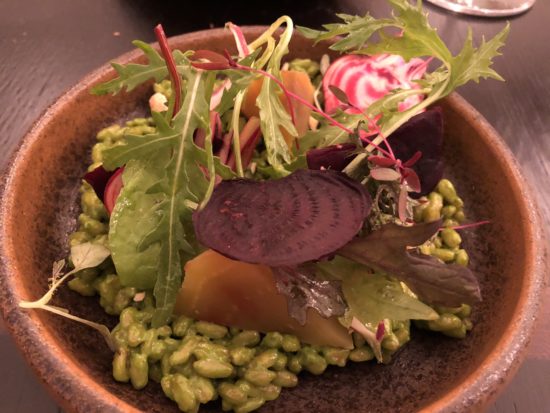
2nd course: Beetroot, Spelt, Rocket & Cashew Pesto
Spelt is an ancient grain variety, cultivated in Europe for over 9,000 years and favoured by those avoiding genetically modified crops. The cooked spelt has a chewy, substantial texture. Dressed in a pesto made from rocket (arugula) and cashew nuts — a departure from the standard basil-pine nut recipe. Topped with beetroot roasted low and slow until crisp, sliced radishes in several colours, and mizuna. Each element restrained; the whole plate surprising.
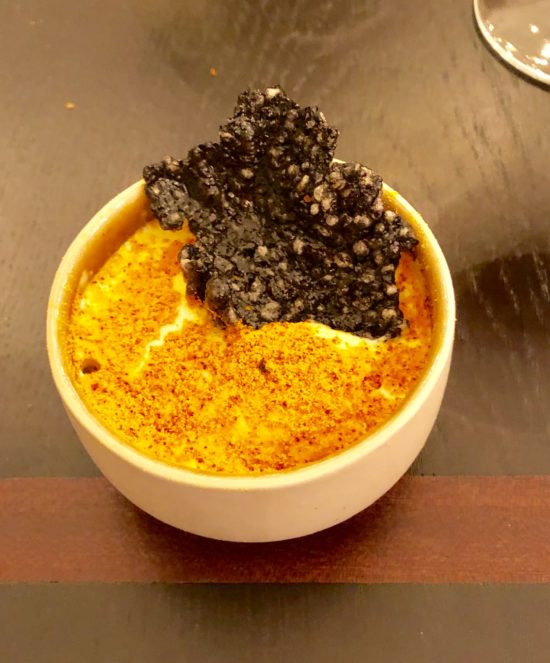
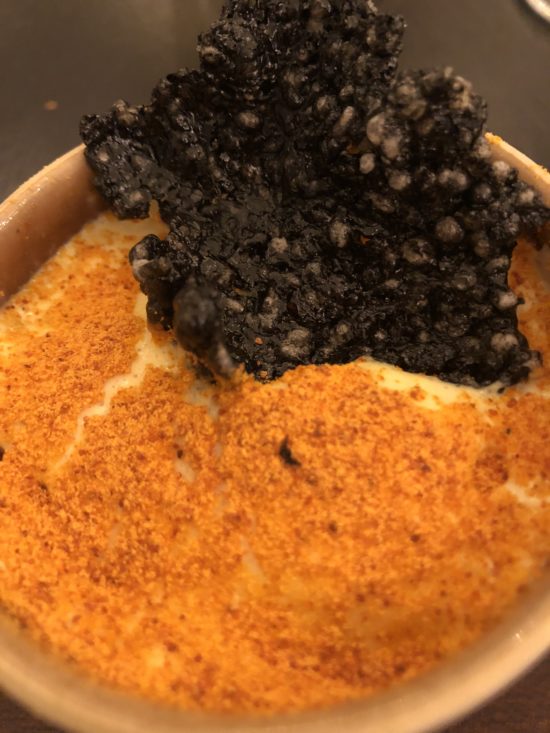
3rd course: Seared Scallop, Butter Sauce, Lemon Confit, Broccoli
Lightly seared scallop with stem broccoli, in a hollandaise made with confit lemon rather than fresh lemon juice — a noticeably different, rounder acidity. Bottarga (Italian cured mullet roe — the same product as Japanese karasumi) grated over the top, briefly flashed under the oven. A black rice cracker on the side: fried with the flavour of Japanese senbei, cutting through the richness of the sauce. The chef had clearly eaten Japanese crackers and found a use for them.
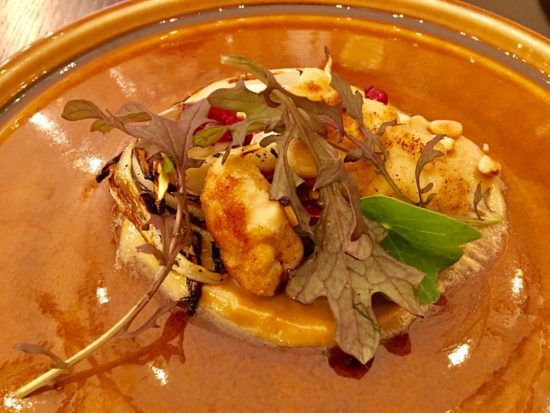
4th course: Veal Sweetbreads, Endive, Pomegranate, Black Garlic
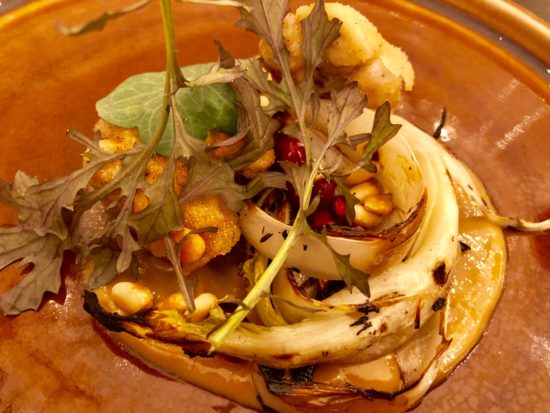
Our first encounter with veal sweetbreads (the thymus gland — a luxury ingredient in French cuisine). Texture: soft and slightly yielding inside, floured and crisply seared outside. Chargrilled endive in the background, its bitterness working against the rich sweetbreads. Pomegranate seeds and pine nuts bursting intermittently. Black garlic — fermented until sweet and almost jammy — in the base purée. Black garlic has become fashionable in European cooking in recent years.
5th course: Snow Crab Risotto, Pistachio, Asparagus, Lemon Zest
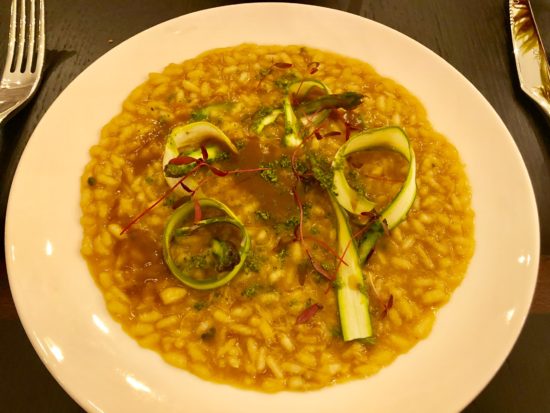
Snow crab (a white-bodied species, sweeter and more delicately flavoured than the brown crab common in British supermarkets) cooked into the risotto with crab tomali (brown meat) in the stock for deep umami. Lemon zest cutting through the richness. Pistachios for crunch; raw asparagus slivers for freshness. Every spoonful different in texture.
6th course: Lamb Chop & Smoked Aubergine, Broad Beans & Pecorino Romano
The lamb chop: rack cut with the rib bone attached, the most premium part of the animal. Cooked rare to just warm through the centre. No gaminess at all. The outer fat deliberately charred black in one section — bitter by itself, but cut with the broad beans and the melted Pecorino Romano (sheep's milk cheese from Rome) beneath, the bitterness became a counterpoint rather than a flaw. A lesson in how burning can be a technique rather than a mistake.
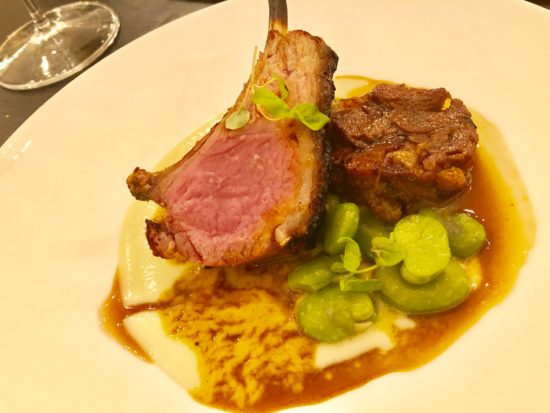
The smoked aubergine: extraordinary. The texture after smoking was that of long-braised meat — firm, fibrous, nothing like aubergine normally tastes. Asked to identify it blindly, the answer would be chicken. How smoking alone achieves this is not obvious.
By the sixth course, we were full. The waiter offered to delay dessert; it was nearly 10pm by then. We asked for it anyway — sweet food has its own capacity, separate from the rest.
7th course: Peanut & Chocolate Cake, Sesame & Miso Cream, Dark Chocolate
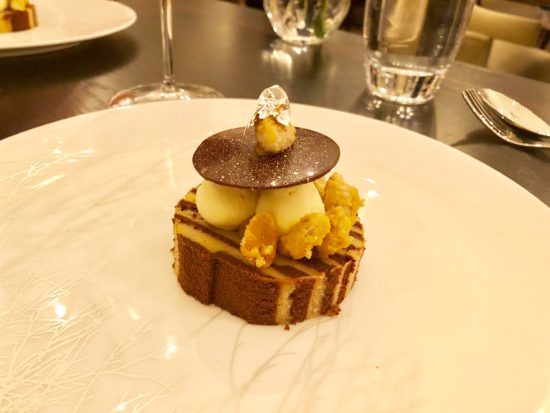
A striped sponge in peanut and chocolate — not a fluffy sponge but a denser, slightly sticky texture. Miso and sesame cream between the layers: sweetly savoury, Japanese in concept. Dark chocolate shard on top; salted caramel peanuts around the plate. The dominant flavour is savoury rather than sweet. A strange cake to eat after a meal; the right cake to eat after this particular meal.
The chef visited the table at the end. Unpretentious, local-looking, quietly pleased that it had gone well. He had produced dishes that used ingredients from across the world — Japanese crackers, Italian bottarga, Estonian beer at the bar, ancient spelt — combined into something with its own coherent identity. Very good.
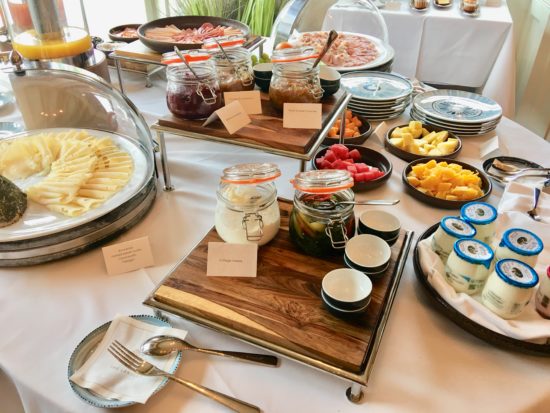
Breakfast
Back in Cedar at 9am the following morning. Sunlight through the windows. The same room, a completely different feeling.
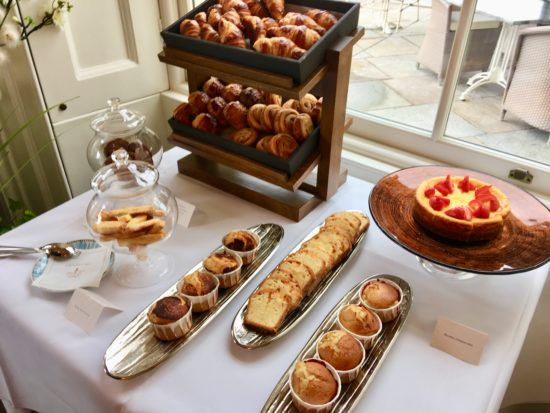
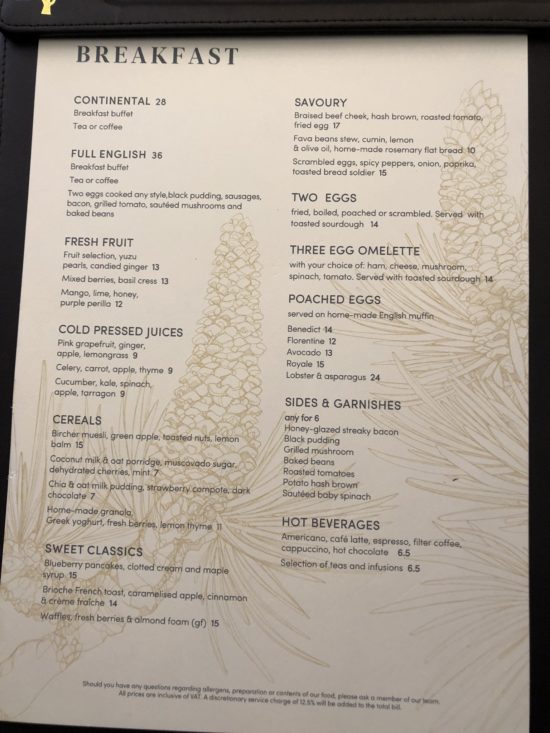
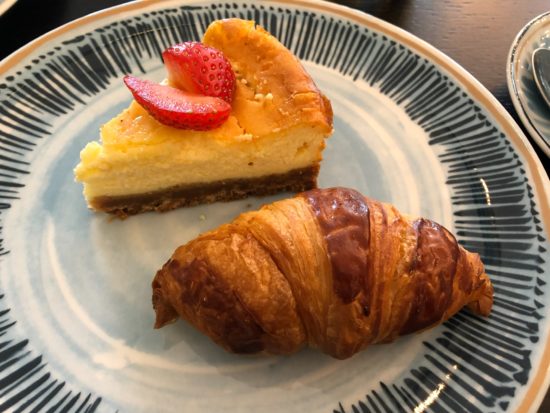
A hot egg menu was available to order (including Eggs Benedict — usually a favourite). After the previous night's seven courses, ordering anything cooked felt wrong. Continental only: a croissant and a cappuccino. Both excellent.
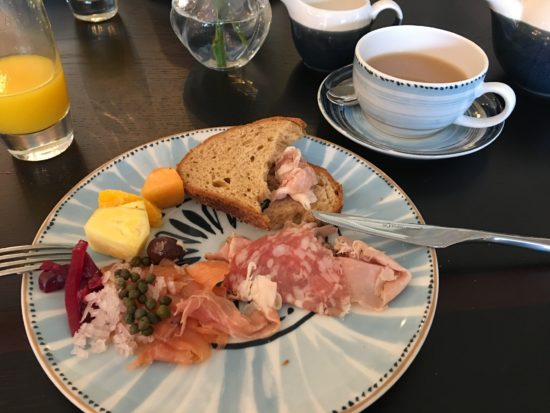
The crockery throughout dinner and breakfast was folk-style earthenware — simple, unpretentious, slightly rustic. The correct choice. Gold-rimmed china in a room like this would tip into vulgarity. The Langley understood the distinction.
Other books you might like
You're welcome to take a look.
EAST TO WEST: The Heart of Haiku, the Light of Scripture
Finding real luxury in restraint rather than excess — the kind of sensibility this collection traces through haiku. This is a book my father-in-law left behind.
View on AmazonCataract Surgery-A Memoir: Double cataract surgery in Osaka, Japan
Another new experience at 66 — an honest account of the cataract surgery I went through.
View on AmazonSushi Business in Britain: the complete four-volume series
A novel series following thirty-five years in the British sushi trade, from apprentice to factory manager to a small sushi school. The complete edition offers all four volumes at a better price.