National Trust: Snowshill Manor and Garden, Cotswolds
Date: 2019-04-03

A Cotswold stone manor beside neatly clipped topiary — the collector's house and its enclosed garden rooms.
This time I'd like to take you to Snowshill Manor and Garden, known as "the Cotswolds Treasure House" among the National Trust properties in the Cotswolds. High on a hill, the manor holds some 24,000 items collected by Charles Paget Wade, and the display of Japanese samurai armour surprised me most. At the National Trust café we also enjoyed plain, everyday local food of the kind local people eat all the time. It is a place for garden lovers, but also for children and anyone who likes antiques, and I'd recommend it for a family day out.
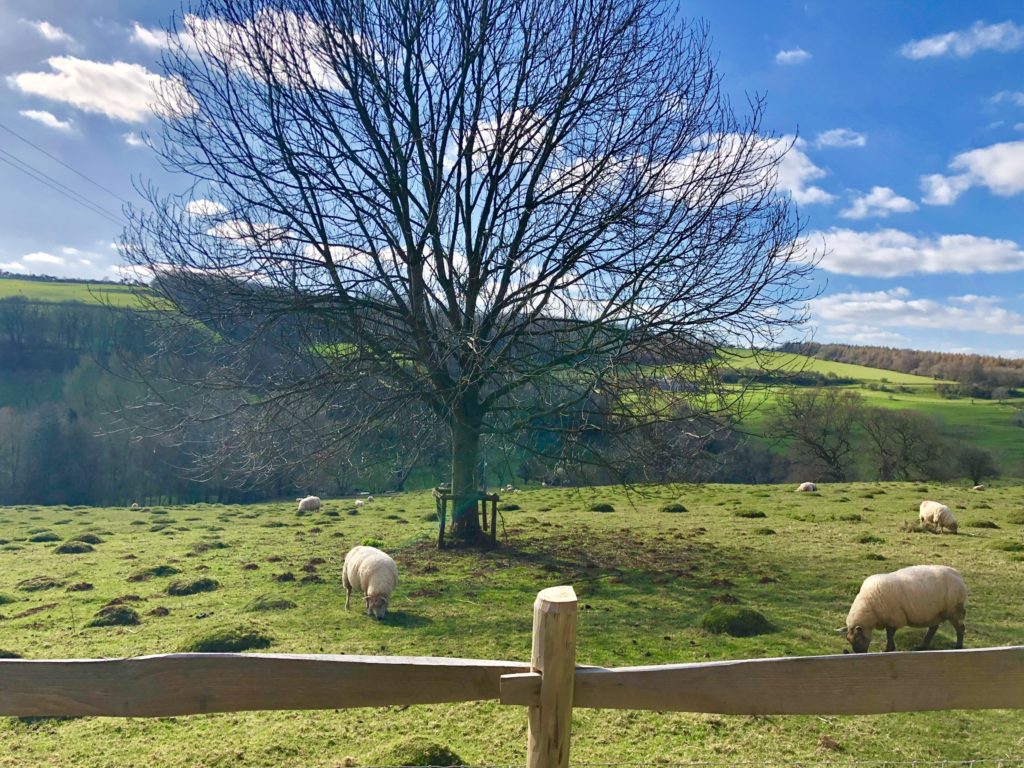
It was the last week of March, just before the clocks went forward for summer time. The weather was lovely from the morning, so we jumped in the car and headed to the Cotswolds. Our destination was Snowshill Manor, "the Cotswolds Treasure House". It displays the collection gathered by Charles Paget Wade, a man who is very well known in Britain. We drove through countryside where lots of sheep were grazing peacefully in the sunshine, and there was the entrance to Snowshill.
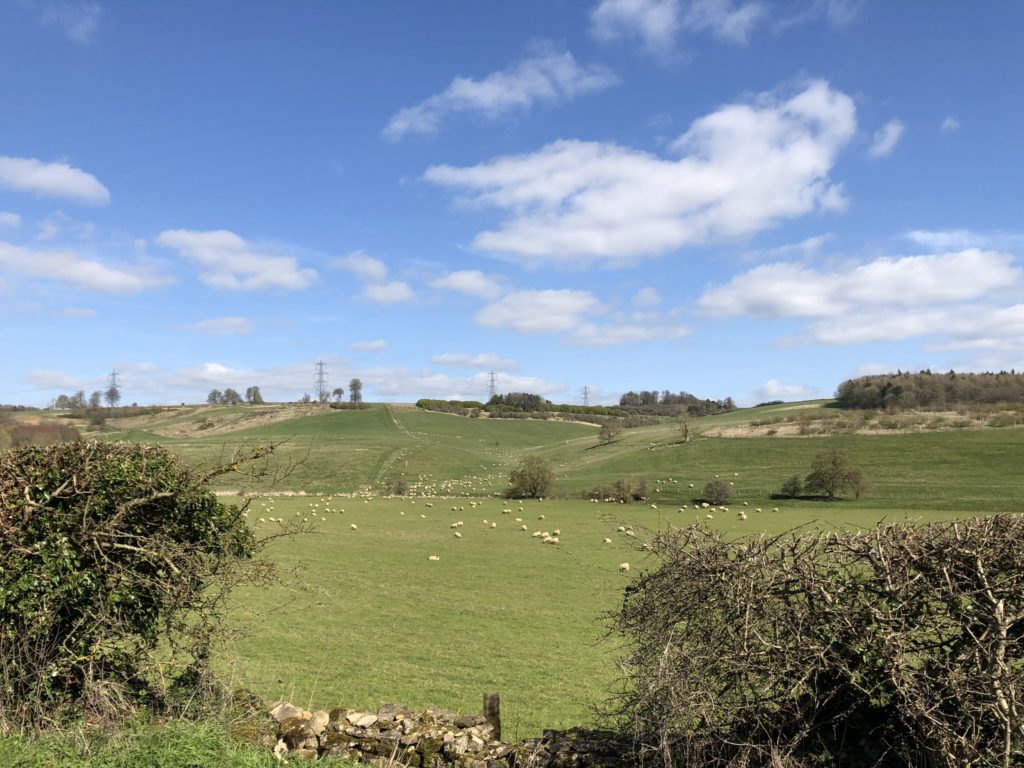
All the white dots are sheep!
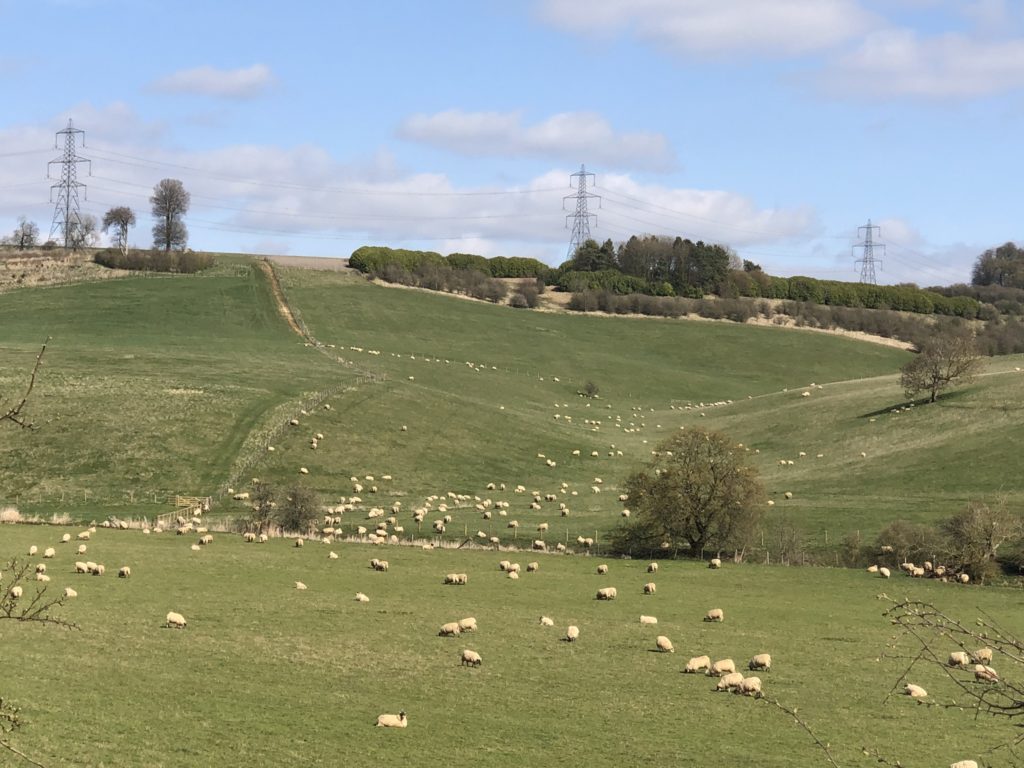
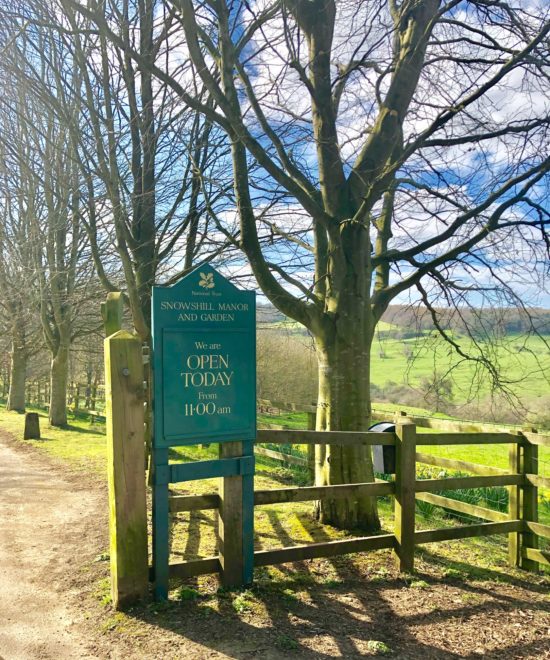
We parked the car and headed for the manor house.
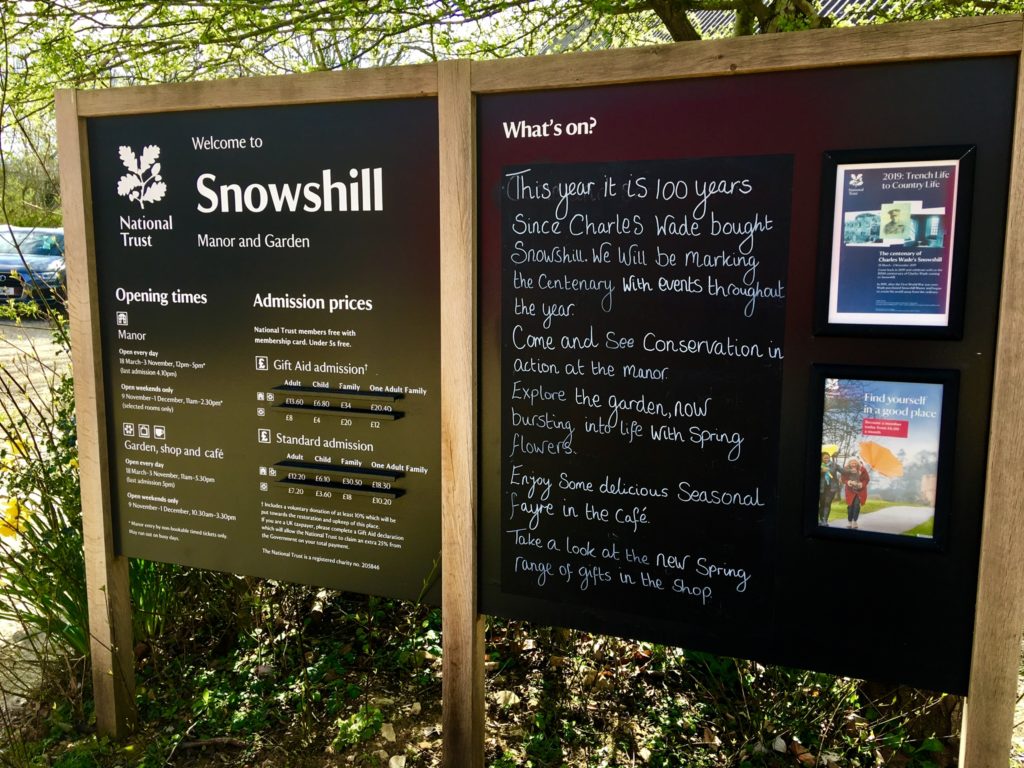
The blackboard at the entrance said that 2019 was the 100th year since Charles Wade bought this manor house. Because of that, there seemed to be more special events than usual in 2019.
It was open every day from 18 March to 3 November, from 11 am to 5.30 pm (manor house entry from 12 noon to 5 pm). From 9 November to 1 December it was open at weekends only, from 10.30 am to 3.30 pm (manor house entry from 11 am to 2.30 pm). So it was closed from December until 17 March. We visited shortly after it opened on 18 March.
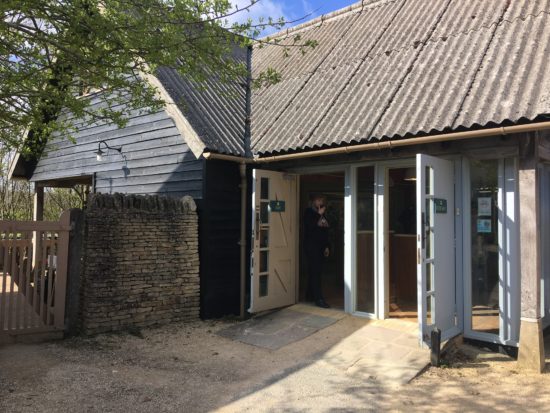
At the ticket office near the car park, they scan your membership card and you go in. If you want to go into the manor house, don't forget to say so here. The person at reception then puts a sticker on your leaflet with your time slot for entering the manor house and the number of people.
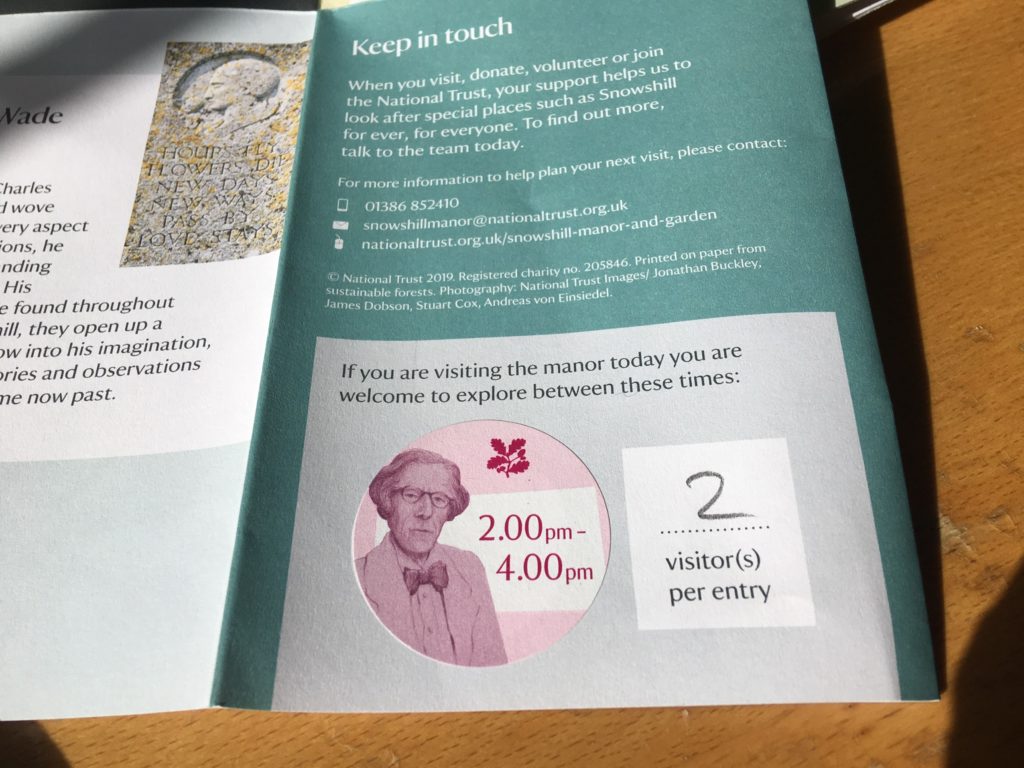
For non-members, admission to the garden and manor house was £12.20 (about 1,700 yen) per person. There was also a £13.60 (about 1,900 yen) ticket that included a donation to the National Trust. (Admission prices are as of 2019.) In our case, we were given a sticker for entering the manor house between 2 pm and 4 pm. On days with more visitors, I think the slots would be every hour or so.
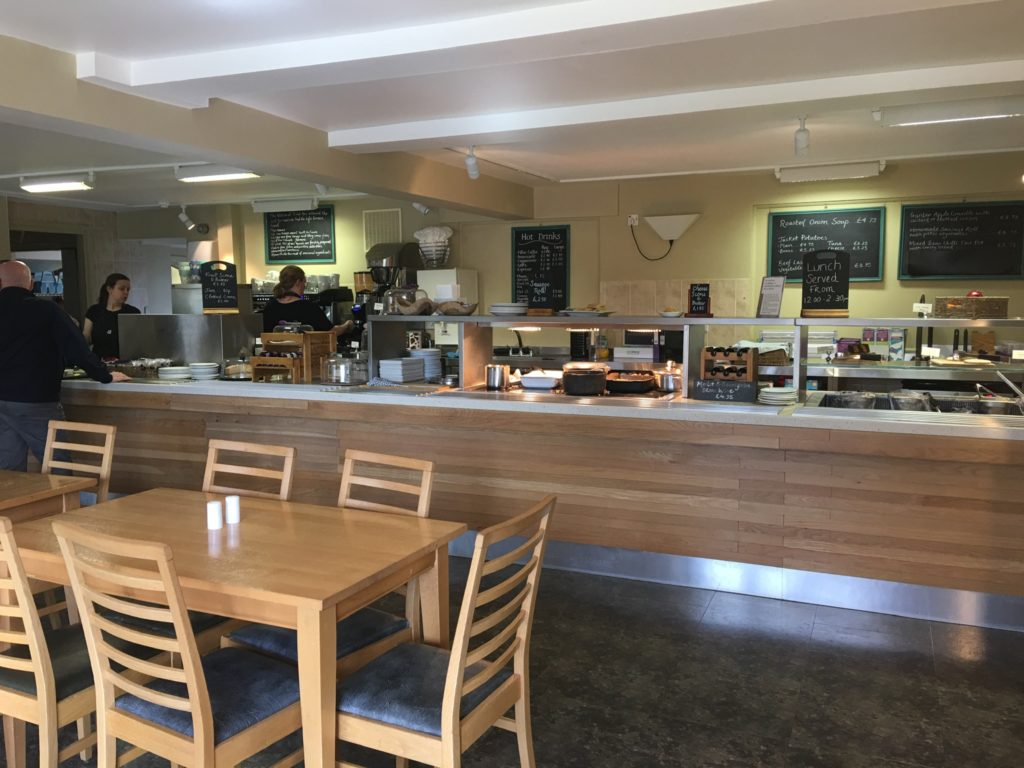
We had time to spare before our entry to the house, so we decided to have lunch first. The café was down the slope behind the ticket office.
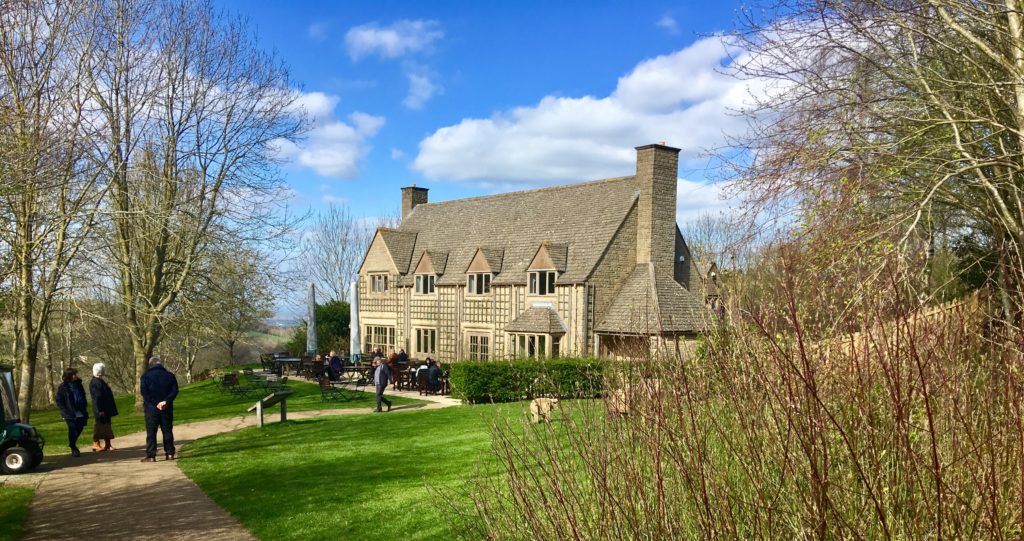
This is the Cotswolds, so the buildings are made of lovely honey-coloured stone!
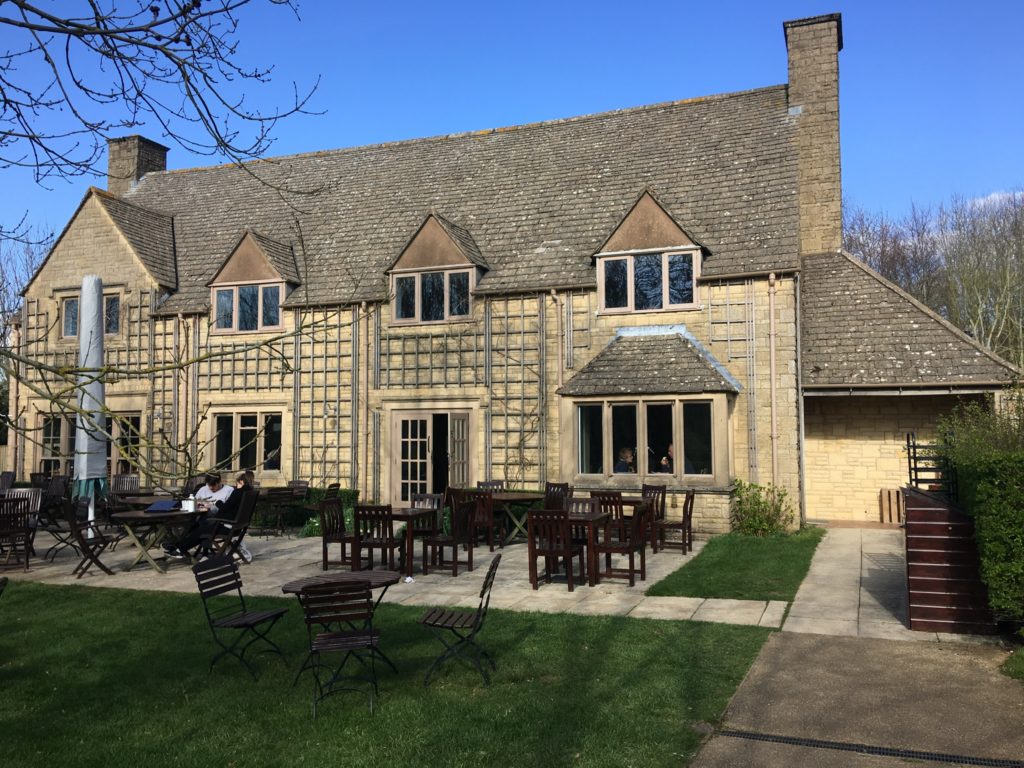
Lunch was served until 2.30, and we arrived at 2.25!
The young woman at the café said, "Lucky you made it just in time!" ^_^ Yes, we were lucky. We very nearly missed lunch.
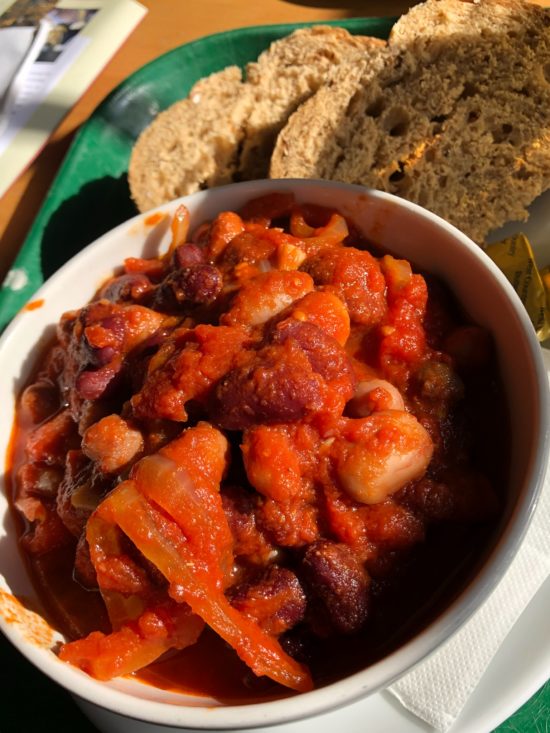
Our late lunch today was beans stewed in tomato sauce with bread...
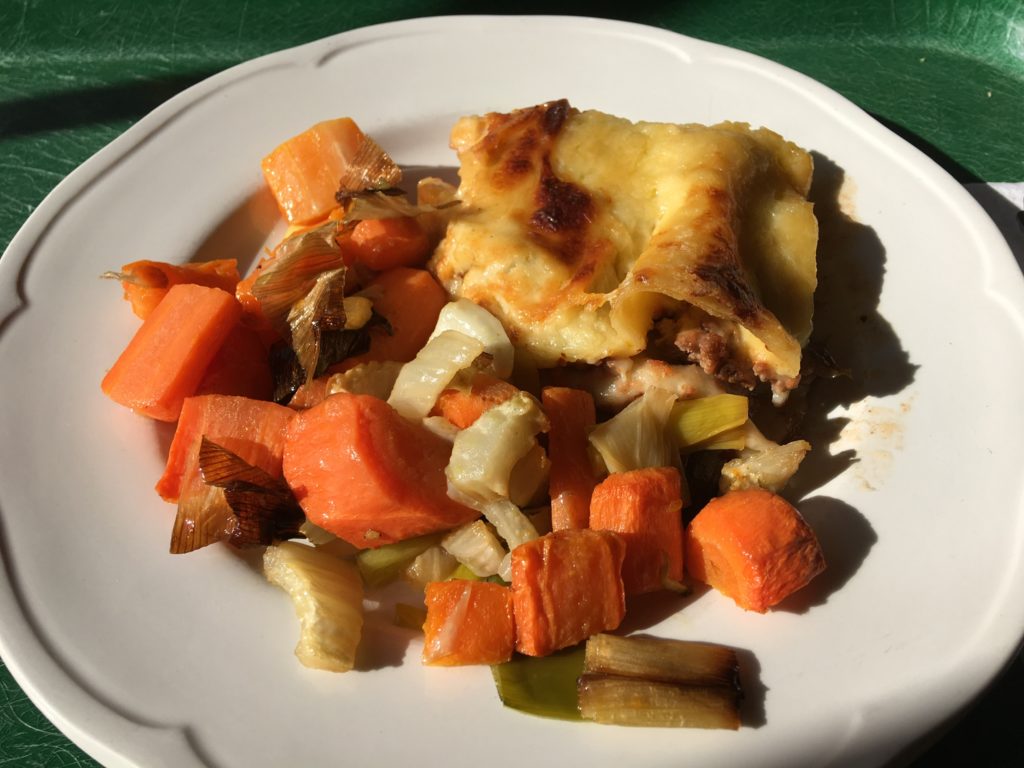
...and beef lasagne with oven-roasted vegetables. The ingredients are organic, from farms on National Trust land and from local producers.
To drink, we had organic cider. Cider is an alcoholic drink made from apples, lightly sparkling. In Japan it is sold under the French name, cidre. This one was made in the Cotswolds, from growing the apples through making the cider to bottling. This cider was absolutely delicious! I don't like dry drinks, so I often order cider in pubs, but this was a completely different thing from the mass-produced cider I had had before. It was not too sweet either, so it went perfectly with food.
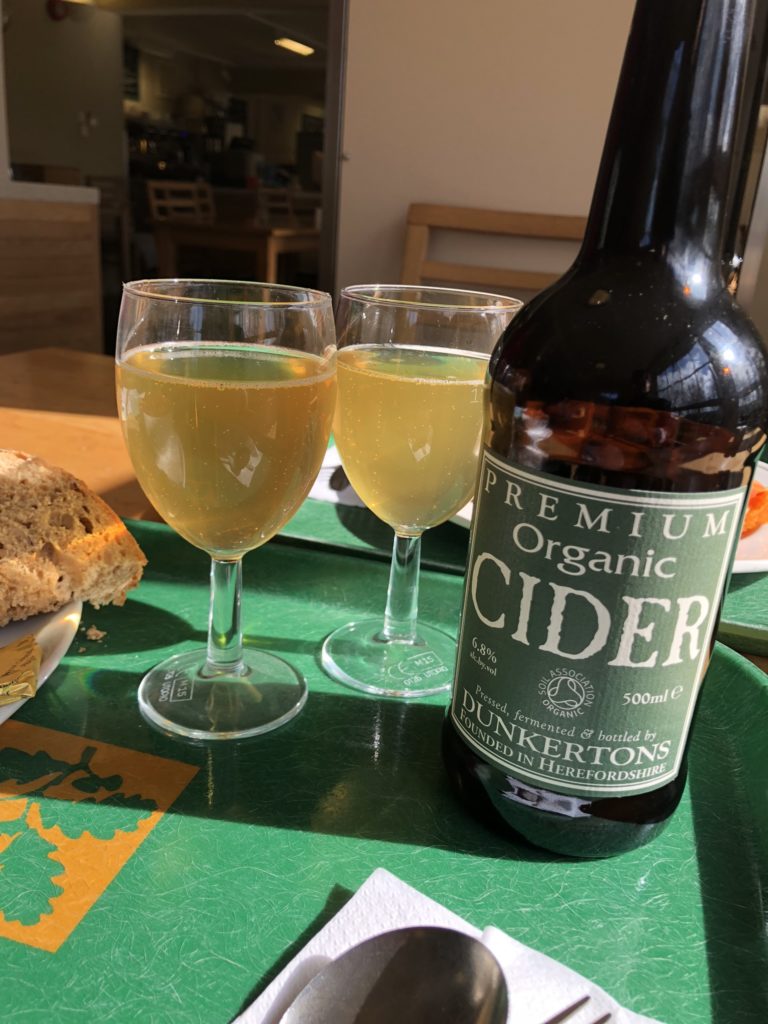
As an aside, this cider was also in the catalogue of the organic vegetable box delivery we always use, so I ordered some straight away. ✌️
After the meal we fancied something sweet... It was nearly 3 o'clock, so why not have tea at the same time! We bought a Victoria sponge and tea.
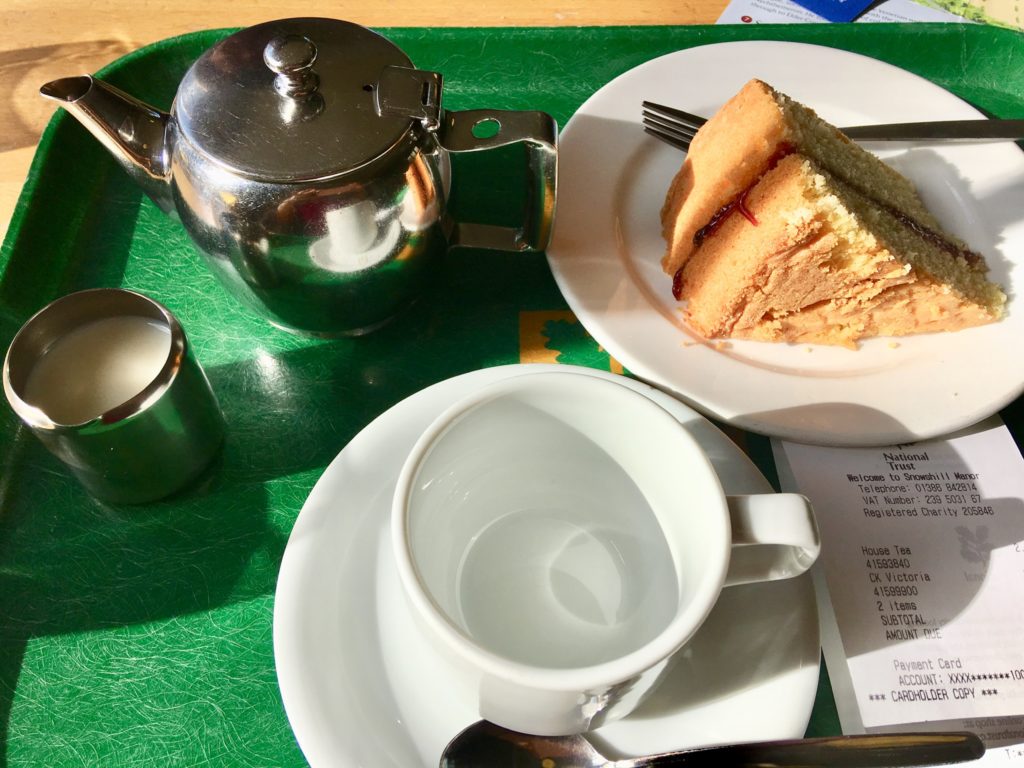
The Victoria sponge is one of Britain's classic cakes. It is a simple cake: just sponge with raspberry jam spread in between. The sponge must not be moist, fragrant and springy like the Japanese kind (haha). It is a little dry, with a texture that breaks into crumbs when you cut it with a fork. And the tea, a "house blend" without much aroma but that brews strong, goes well with the very sweet cake once you add milk. ^_^ Both the meal and the cake were delicious.
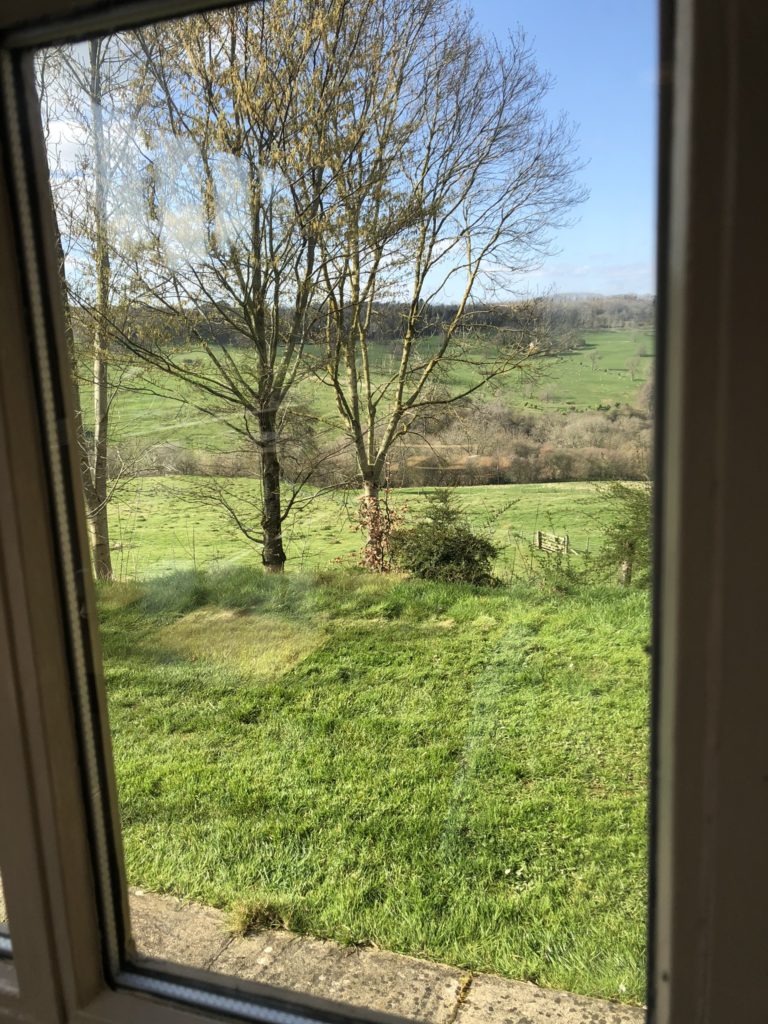
The view out of the window is wonderful. The hills roll on into the distance.
The food and cakes served in National Trust cafés are plain, everyday dishes, seasoned and presented the way local people eat every day. If you are interested in the everyday food British people eat, do try a National Trust café.

A simple National Trust café spread — tea, cake, and no fuss.
Happy and full, let's take a walk to the manor house.
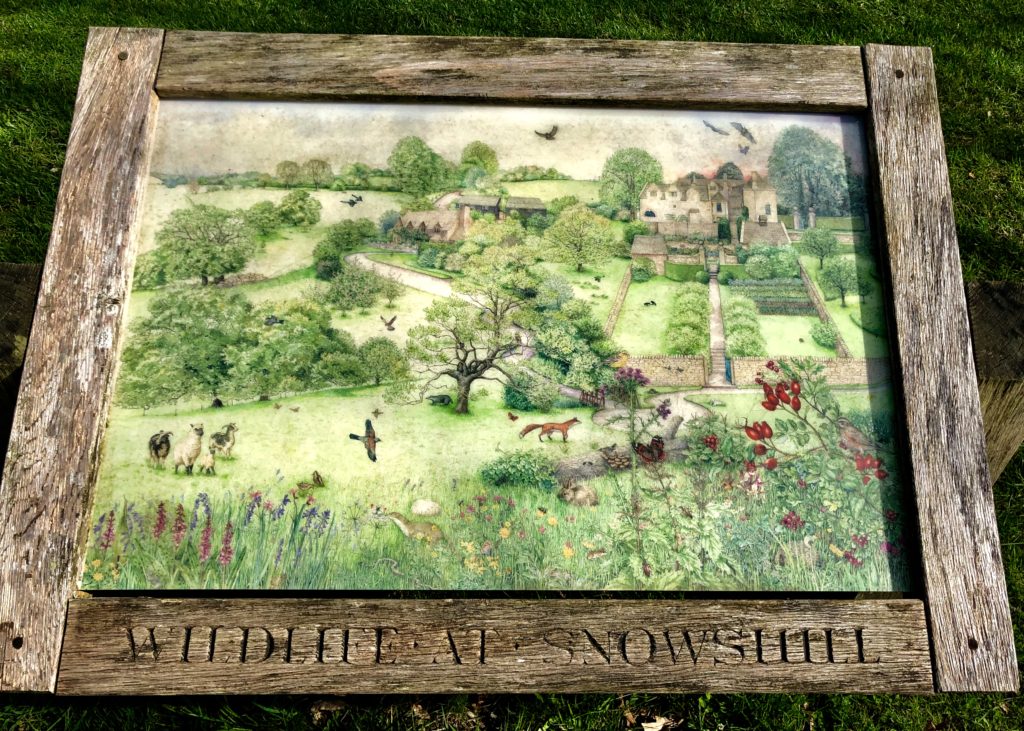
Near the café there was a picture of Snowshill. A charming picture, isn't it?
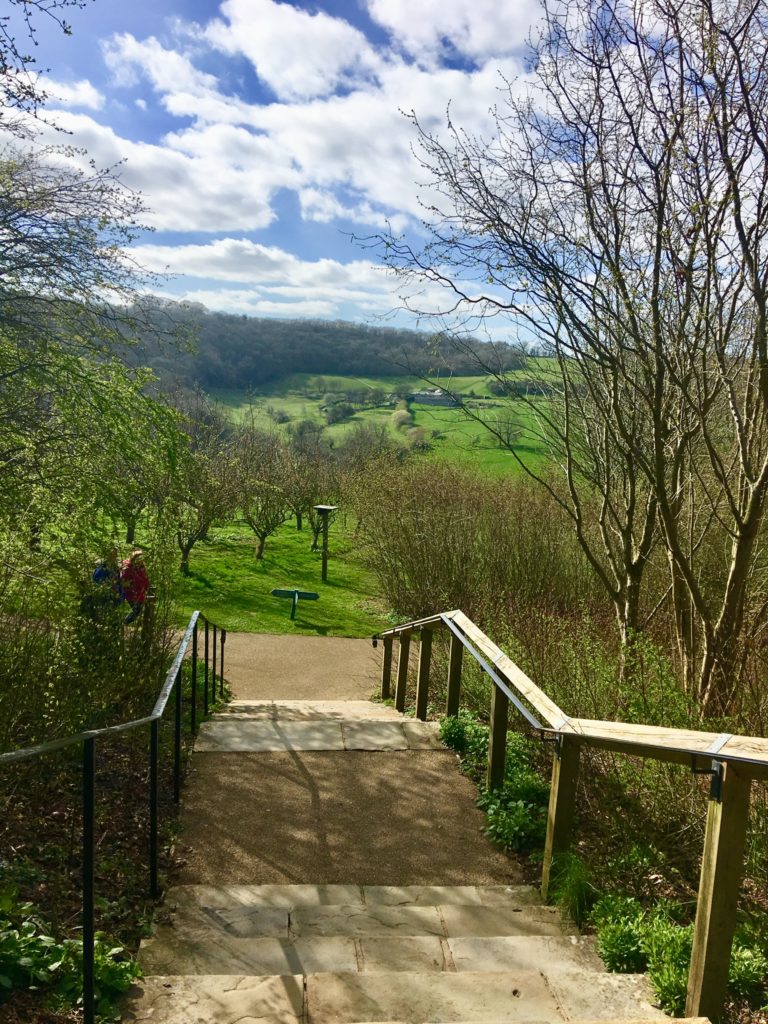
As at every manor house, the grounds here are large. You walk to the manor house past fields with sheep and through orchards of apple and pear trees. It takes about 10–15 minutes. If your legs are not strong, there is also a service that takes you by electric buggy (it looked as though it could carry four or five people) from beside the café to beside the manor house.
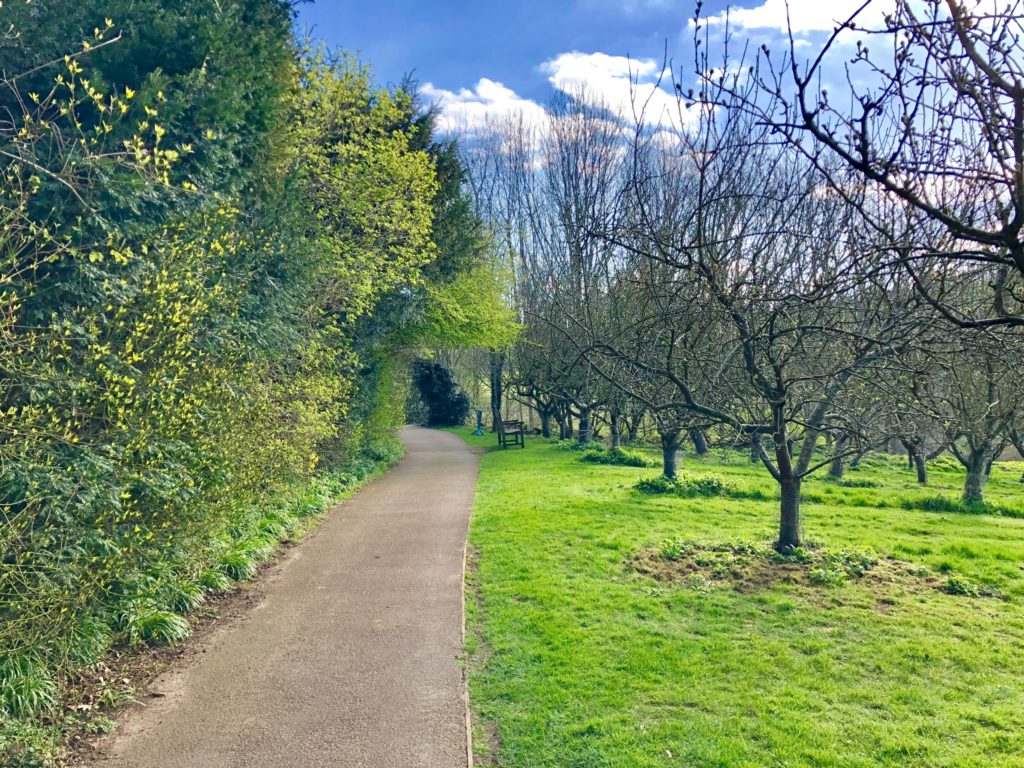
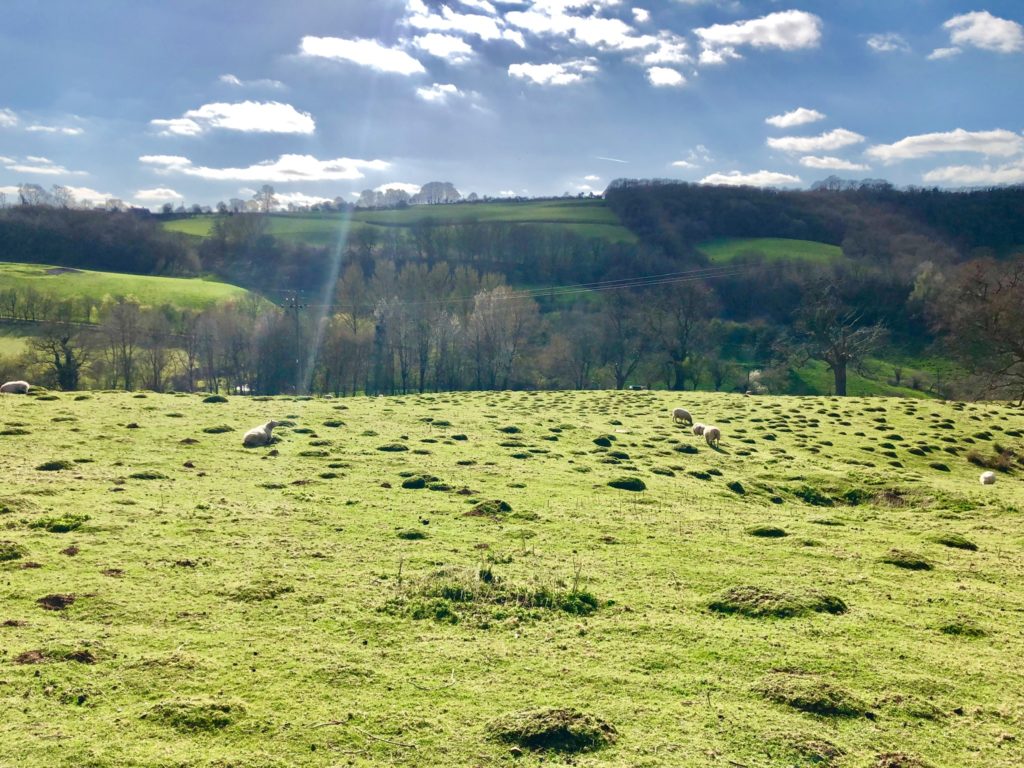
We walked along looking at the early spring flowers.
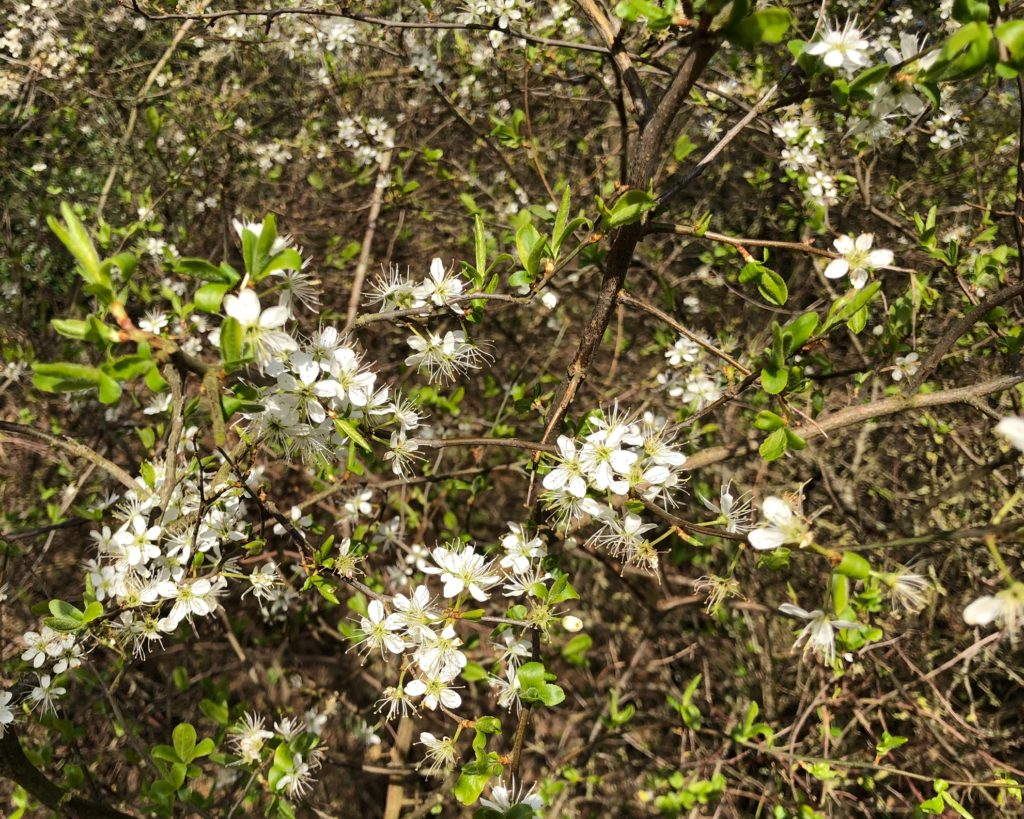
Let's look at Charles Wade's collection!
The manor house stands high up on the hill, so the view was excellent.
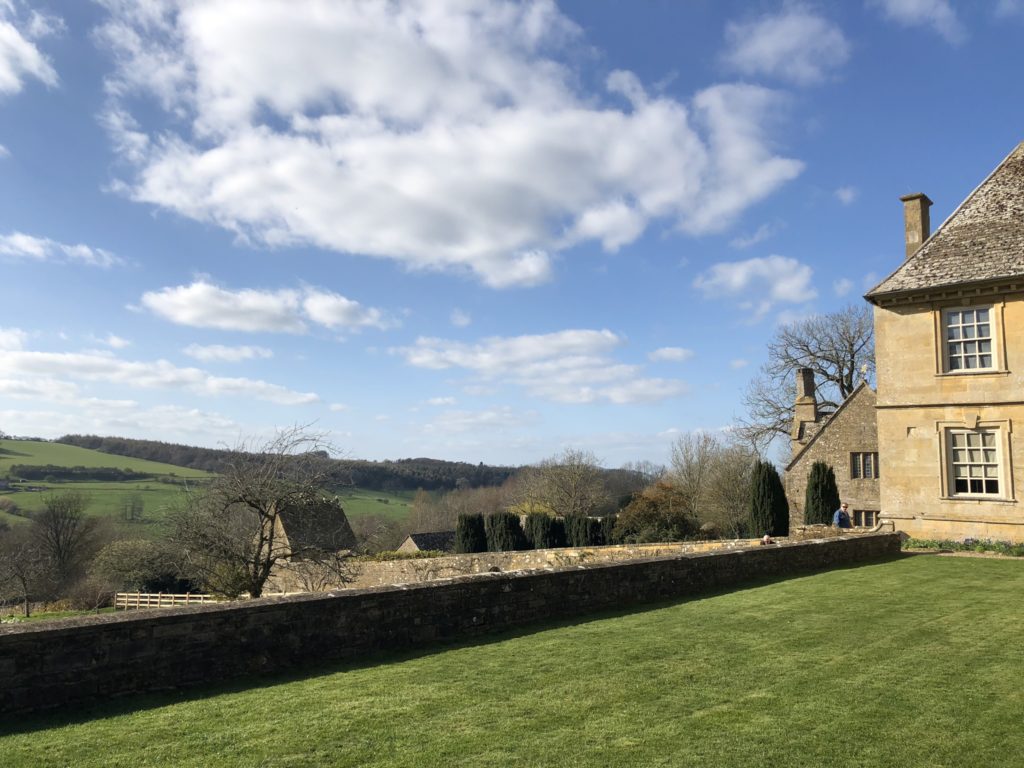
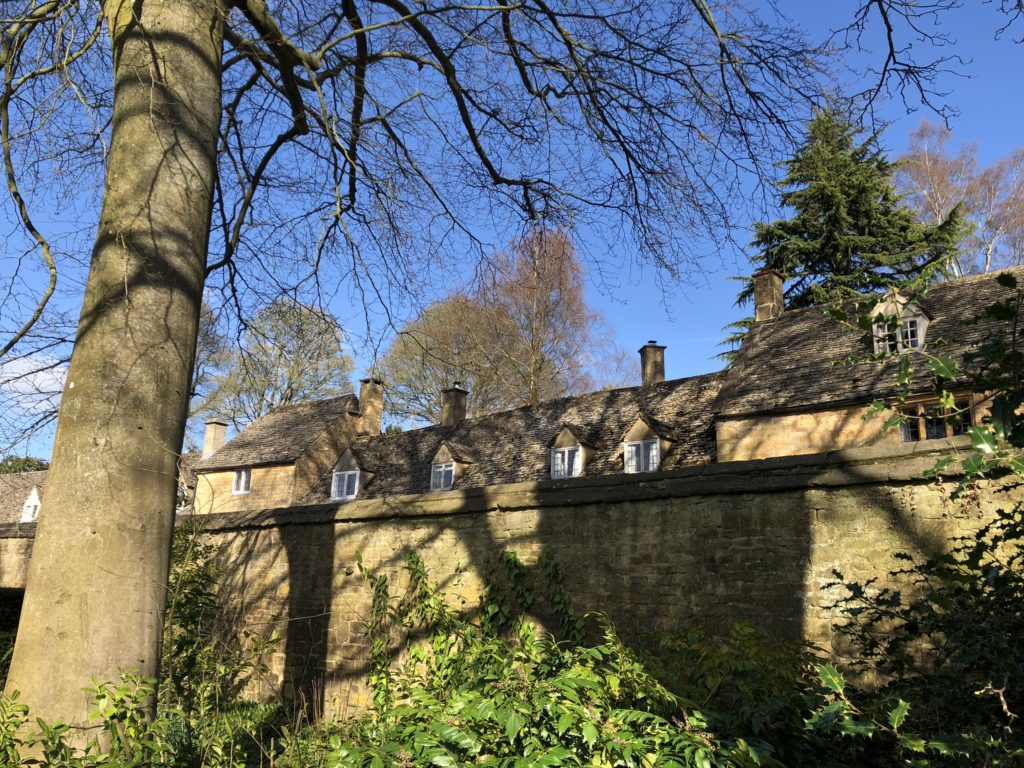
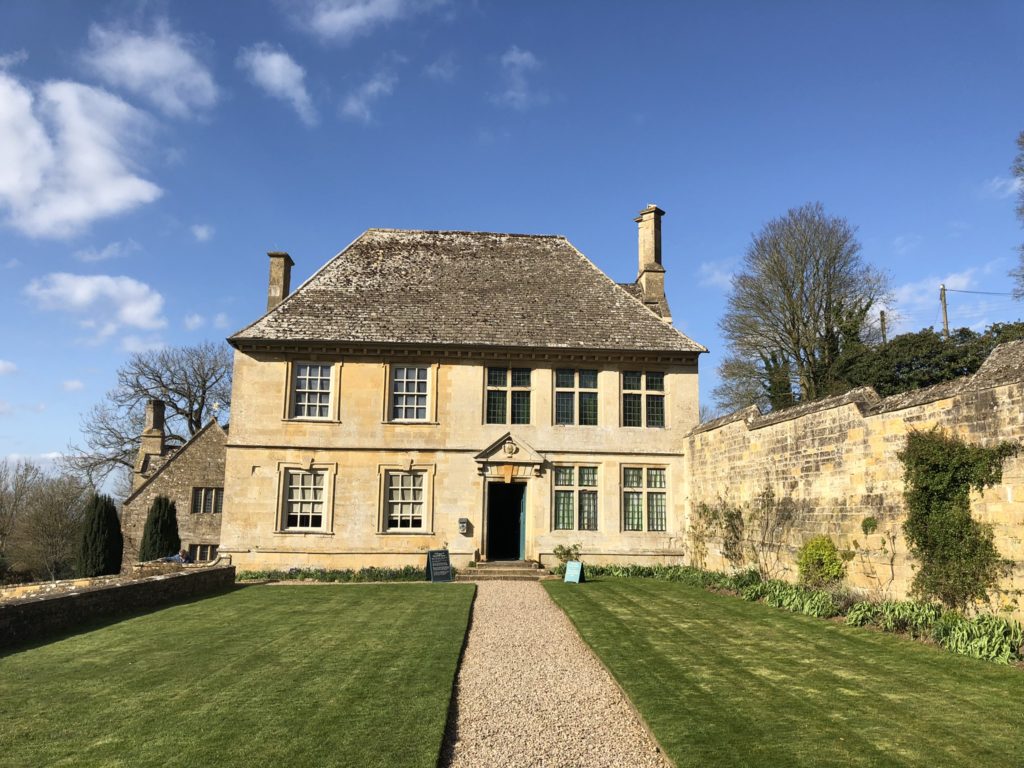
This is the manor house that Charles Wade bought in 1919 to house his collection. This is a portrait of Charles Wade.
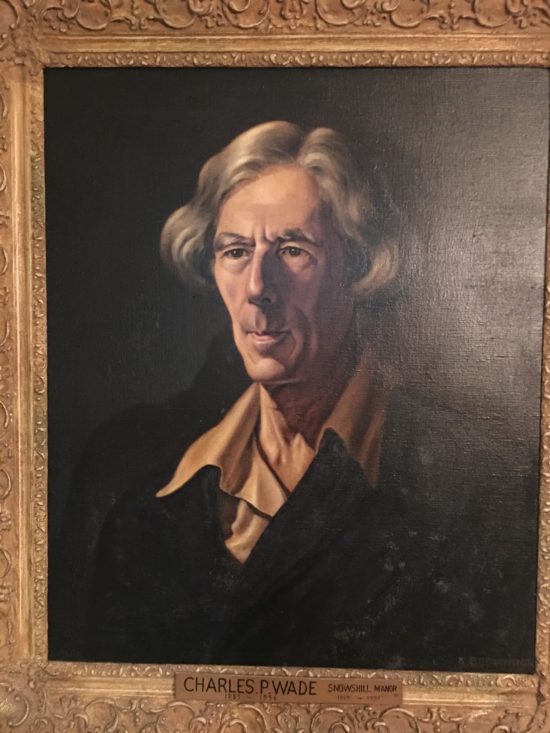
His family made their fortune over generations, in the days of the British Empire, by running sugar plantations in the colonies and selling the sugar. In those days sugar was unimaginably expensive compared with today.
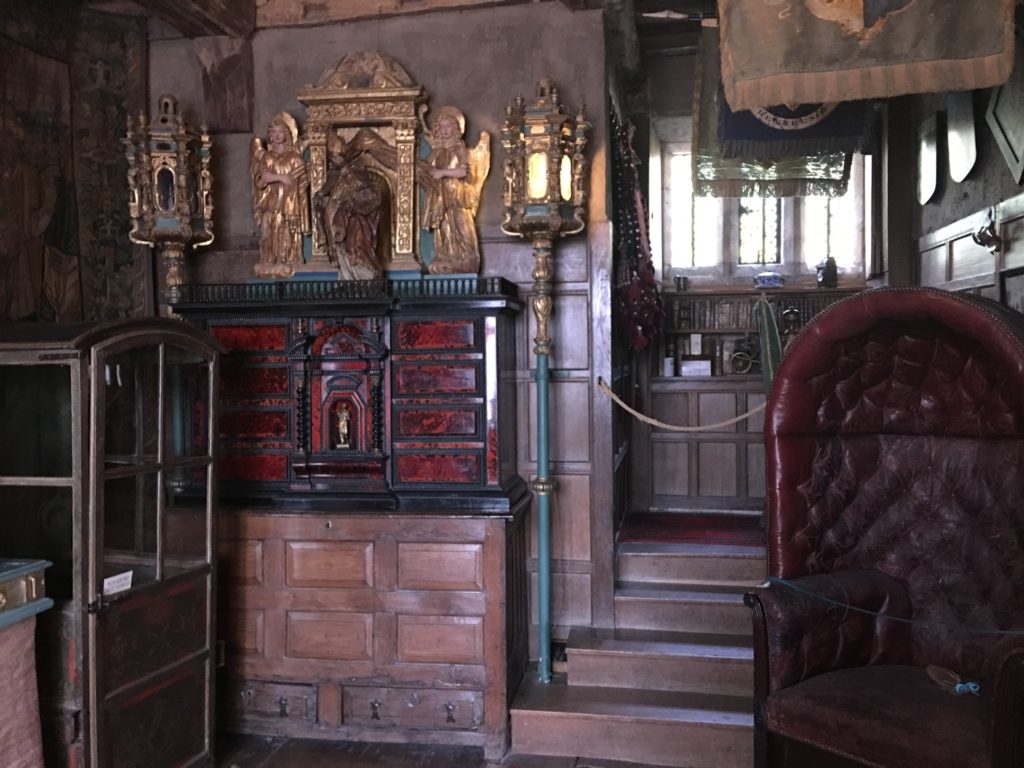
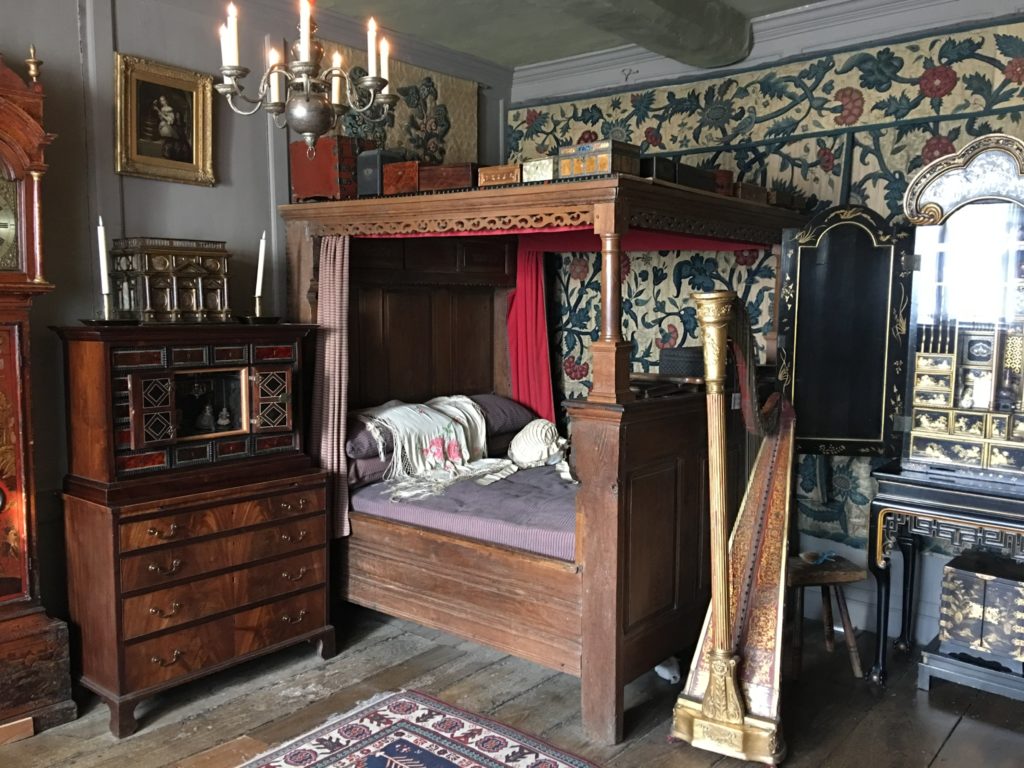
What he collected covers absolutely everything: children's toys, bicycles, large model ships, musical instruments from around the world, masks, ornaments, weaving machines and tools, clocks large and small, and things used in war such as pistols, shields and swords! Every single one is an antique, and valuable, we were told.
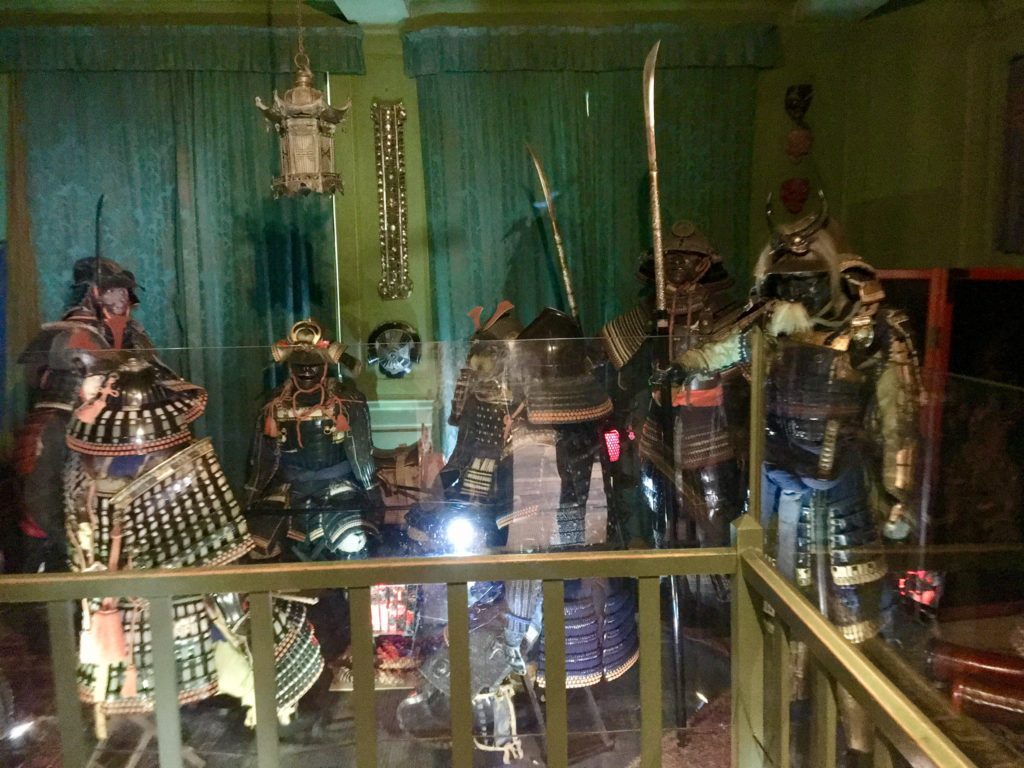
What surprised me most of all was the collection of Japanese samurai armour. There are said to be 26 suits, displayed as if the warriors were at the front, holding a council of war around a fire at night. There were sound effects too, so it felt so real that it was almost a little frightening.
Throughout the house, shelves have been built here and there, and they are crammed with things. We were told the collection numbers 24,000 items in all... (@_@)
With so many things from all over the world, I asked one of the guides, "Did he travel all over the world?" Amazingly, he only travelled abroad two or three times in his whole life. All the items in the collection were found by dealers in London and elsewhere who looked for things to his taste, and he bought the ones he liked from among them. It made me realise that, in the days of the British Empire, rare things from all over the world really did gather in London.
And at the very far end of the collection rooms there was a room of all kinds of costumes. There were shoes and accessories too.
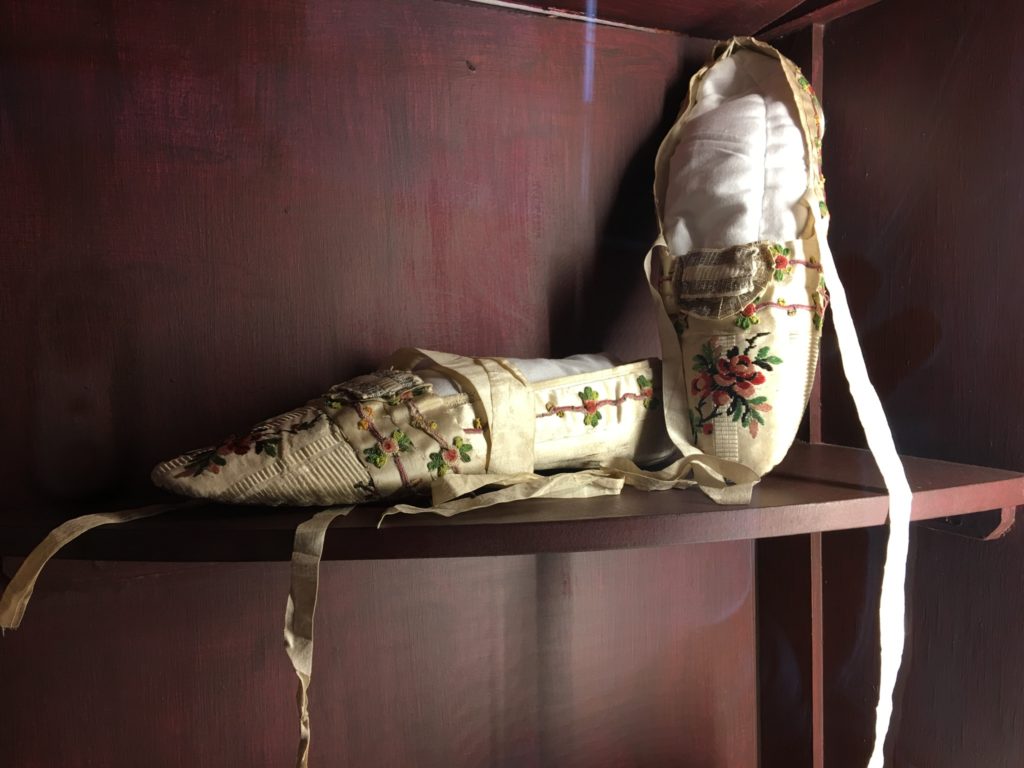
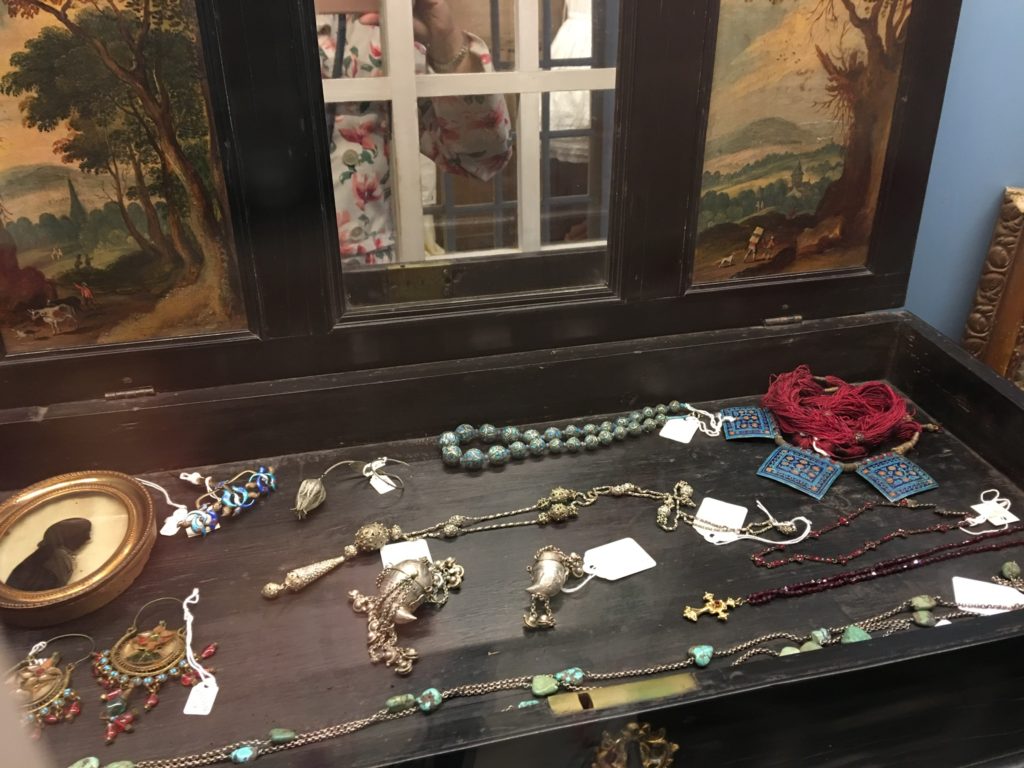
And there were photos of him wearing them.
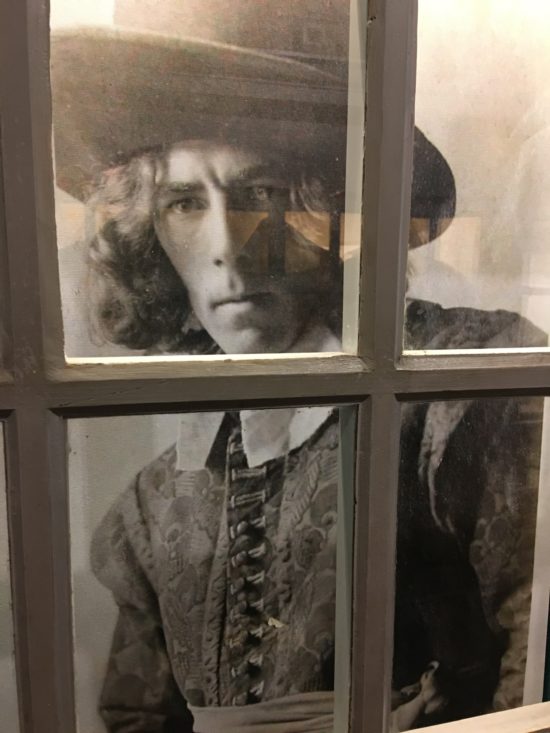
Wait... this is him dressed as a woman, isn't it?!
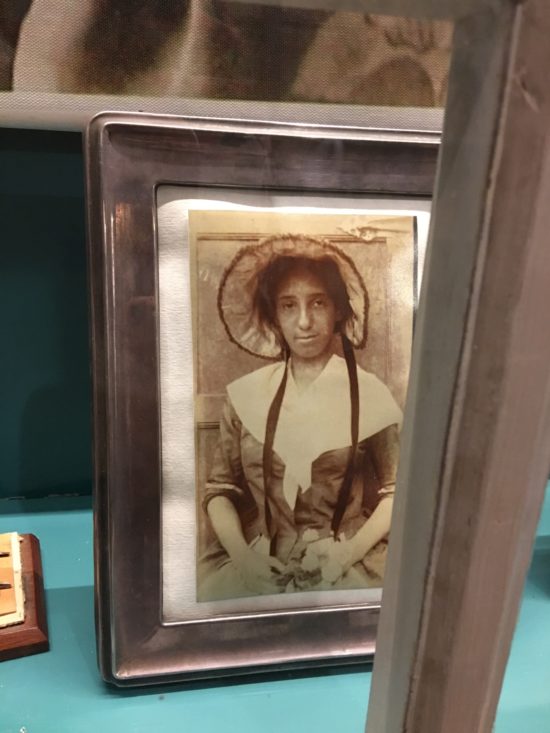
In today's terms, he was a cosplayer! Besides these, there were many more costume photos of him as a pirate, a jester and more. Taking photographs in those days took time, and of course cost money, didn't it? I could feel how particular he was about it.
The staff told us that there is an even larger quantity of the costumes and shoes he collected, kept in another place.
This large manor house is only for displaying the collection; there is no living space for him in it. He lived in a small cottage in a separate building. Inside the cottage, the ground floor had a kitchen and a dining room with his workshop next door, and upstairs a bedroom and bathroom. You can visit this too. What struck me was the bathroom: it had a proper boiler, not so different from today's, and hot water came out of the taps for the bath and washbasin. I could feel a wealthy man's attention to detail in things like this.
After the manor house, the route lets you walk through the garden too. The garden was apparently designed by Wade's friend, the architect M. H. Baillie Scott. There was also a sweet little kitchen garden (a home-grown vegetable and herb plot).
My impression after the visit was...
"A very rich man's King of Geeks Manor House". I think this manor house is a place that not only garden lovers but also children and antique lovers can enjoy visiting. I recommend it for a visit with the whole family.
Other books you might like
You're welcome to take a look.
EAST TO WEST: The Heart of Haiku, the Light of Scripture
A walk through a quiet English garden, worth holding onto — the kind of moment this collection finds through haiku. This is a book my father-in-law left behind.
View on AmazonCataract Surgery-A Memoir: Double cataract surgery in Osaka, Japan
Another new experience at 66 — an honest account of the cataract surgery I went through.
View on AmazonSushi Business in Britain: the complete four-volume series
A novel series following thirty-five years in the British sushi trade, from apprentice to factory manager to a small sushi school. The complete edition offers all four volumes at a better price.