Philippines: Bai Hotel Cebu Stay
Date: 2018-11-19
This is my report on a three-night stay at Bai Hotel Cebu, part of our ten-day trip to Cebu in the Philippines. The hotel opened in Cebu City in September 2017. What we liked most were the pool and bar on the 21st-floor roof, the very wide choice at breakfast, and Park Mall just across the junction. The shower floor became slippery when wet and the air conditioning was noisy, so we rated the hotel 4 out of 5. I think it suits anyone with business in Cebu City who wants a convenient base between the beaches of Mactan Island and the Ayala business district.
Cebu City, the Philippines' Second City
Cebu Island lies roughly in the middle of the Philippines. Its neighbour, Mactan Island, is surrounded by beautiful coral reef waters and is well known to divers from all over the world. Mactan is also home to Mactan-Cebu International Airport, the area's gateway by air, and the two are connected by two bridges.
Bai Hotel Cebu: Exterior and Lobby
We stayed at Bai Hotel Cebu, which opened in Cebu City in September 2017. It stands in Mandani Bay, near the bridges linking Mactan Island and Cebu City.

(The photo above is borrowed.)
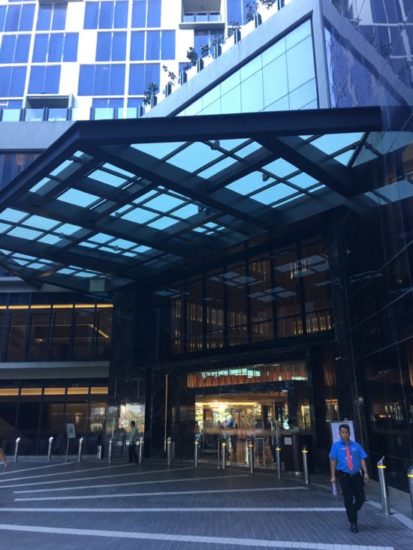
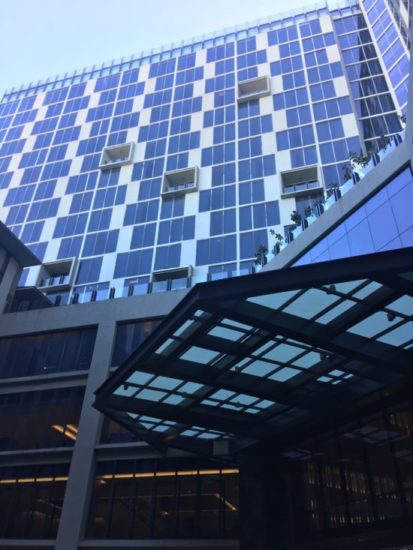
The building has 23 storeys arranged around a central atrium. On the 21st-floor rooftop there is a fashionable infinity pool and a bar; floors 6 to 17 are guest rooms, floors 18 to 21 are Executive Club rooms, and the 22nd floor has the Executive Lounge. With 668 rooms, it is the largest hotel in Cebu, and it is rated four stars.
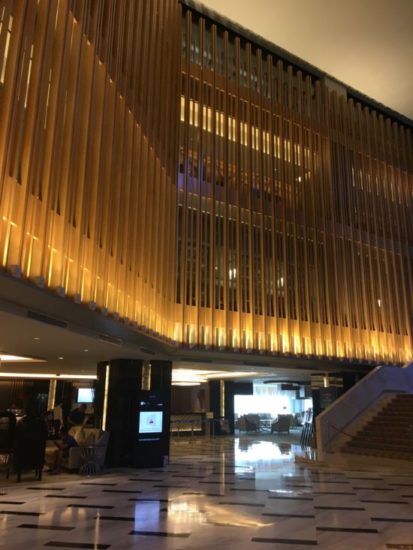
This is the lobby just inside the entrance. It rises four storeys high, so it feels very spacious.

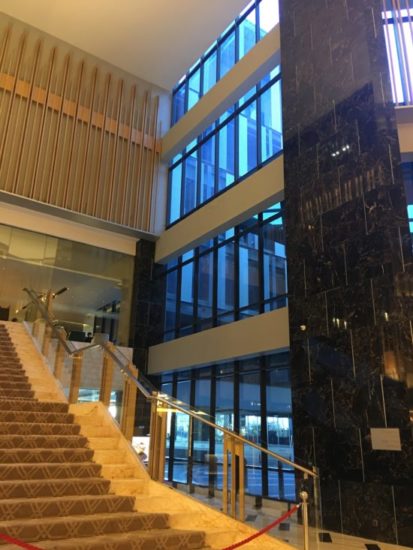
Along the passage beside this staircase are a Japanese restaurant and a steak grill.
Our Room
We stayed in a Deluxe Room, number 1722 on the 17th floor. A folding bed was added next to the king-size bed so that three of us could share it.
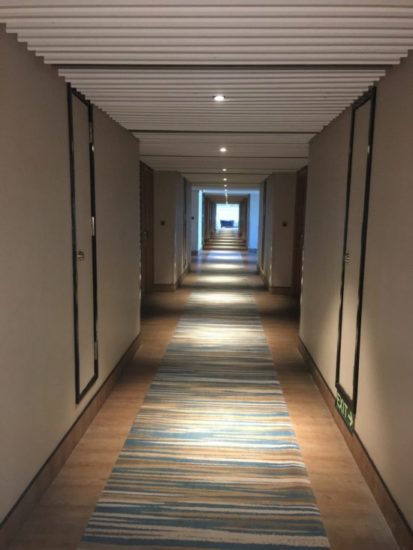

The room faced north, towards a shopping centre called Park Mall and the hills. In the Philippines, where it is summer all year round, north-facing rooms that get no direct sun are apparently the most popular, and ours was pleasantly slow to heat up. The king-size bed gave two people plenty of room to lie side by side, and it was very comfortable to sleep in. The extra bed beside it had a firm mattress and seemed comfortable too.

The bathroom has a toilet, a washbasin and a shower cubicle.
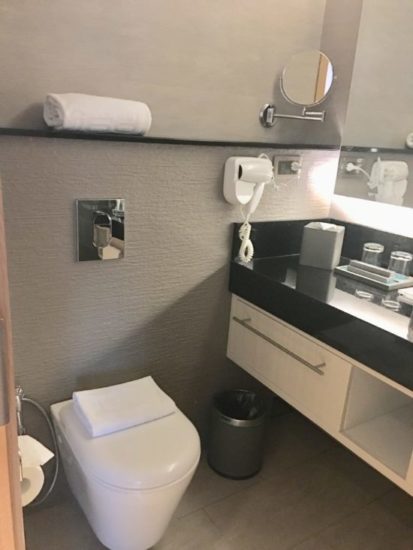
The shower has both an overhead and a handheld head. There is no glass door, and the entrance is left open, so you need to take care not to splash water outside when showering. The floor is smooth granite, which becomes very slippery and dangerous when wet. We always had to lay down a rubber shower mat before turning on the water. I don't think this applies to every room, but in ours the floor tiles had not been laid properly, so water collected at the entrance instead of flowing into the drain. It did not overflow, but the floor was always wet and soggy.


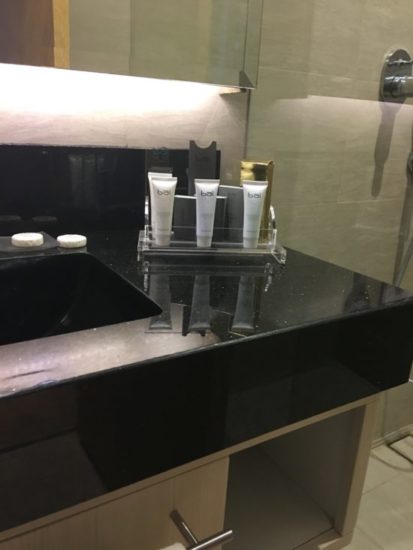
The toiletries are Bai Hotel's own brand, with a fresh citrus scent that anyone would find easy to use. There were shampoo, conditioner, body lotion, soap, a razor, a toothbrush, a comb and a shower cap. The bedding was high-quality cotton and lovely against the skin, and the mattress and pillows were very good, so we slept soundly. The sheets and covers were all replaced with fresh ones every day, and the room was kept clean without any problems.
Eating at Park Mall
We stayed three nights at this hotel. You have to cross a busy junction, but Park Mall is diagonally opposite, so shopping and meals are easy. It was convenient. There is a large Jollibee, the Philippines' best-loved restaurant chain, open 24 hours with a drive-through.

There is also Chowking, a Chinese-style restaurant from the same group. All the restaurants in this group are very cheap. For about 150 pesos (around 320 yen), you get a dish and a drink.
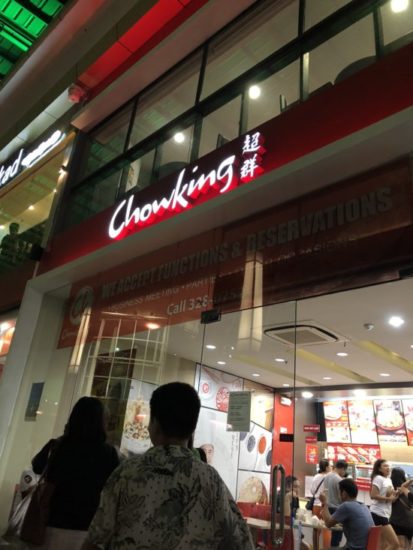
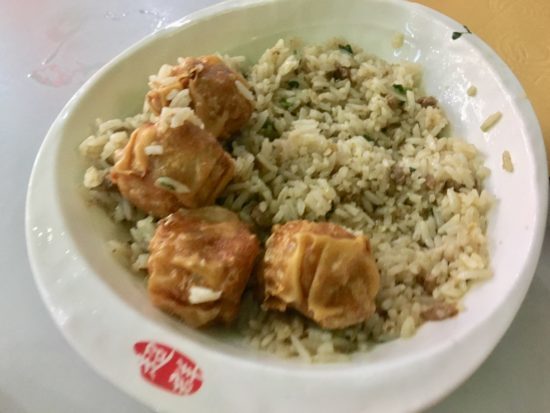
The menu is fairly small, and most dishes are very simple. This one, for example, is fried rice topped with shumai dumplings.
There was also wonton noodles topped with braised beef cubes, among others. I wouldn't call the food delicious, but it was perfectly edible.
What We Recommend at Bai Hotel
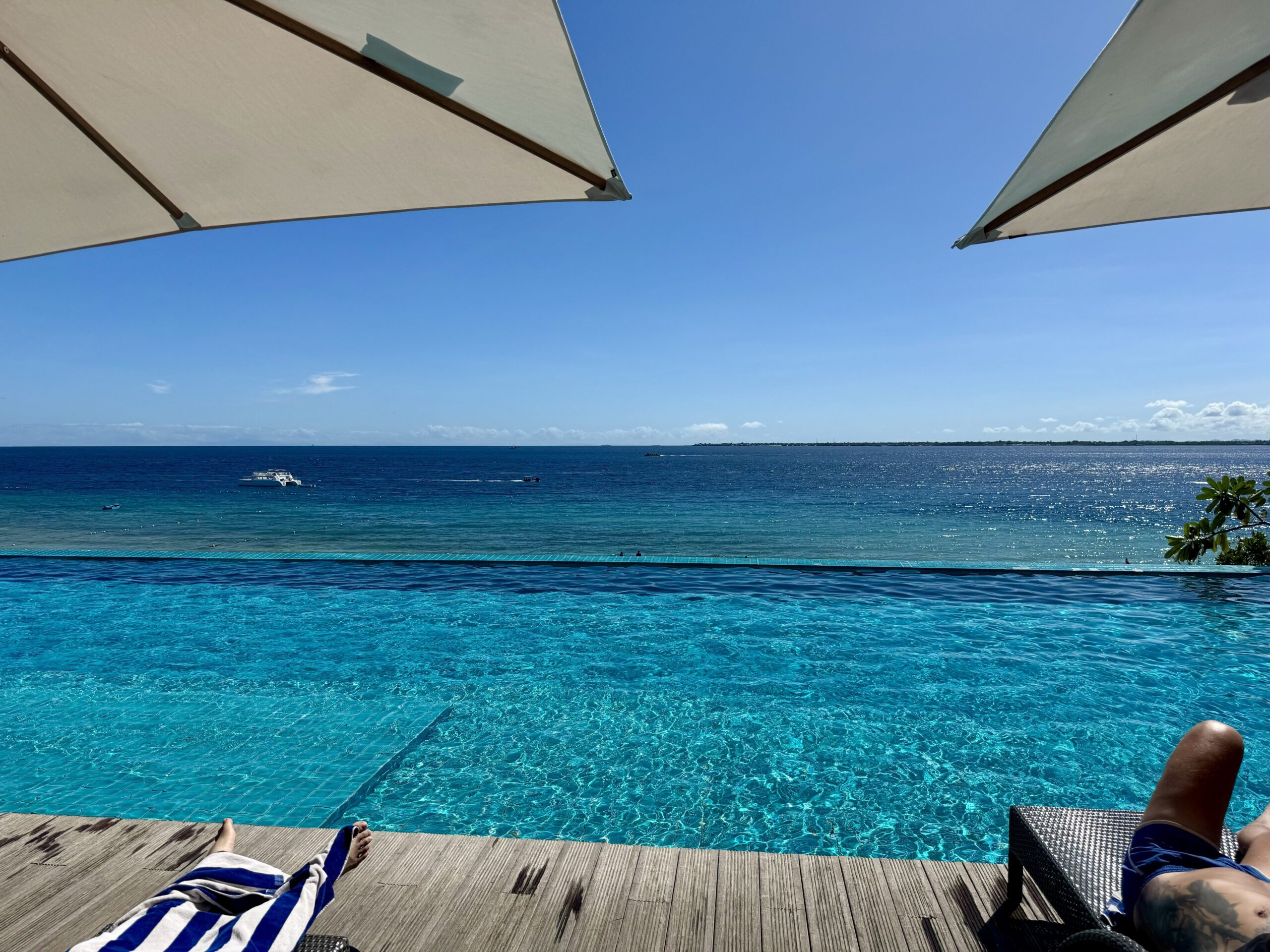
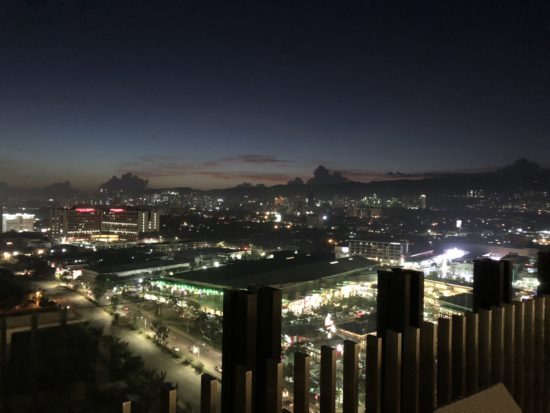
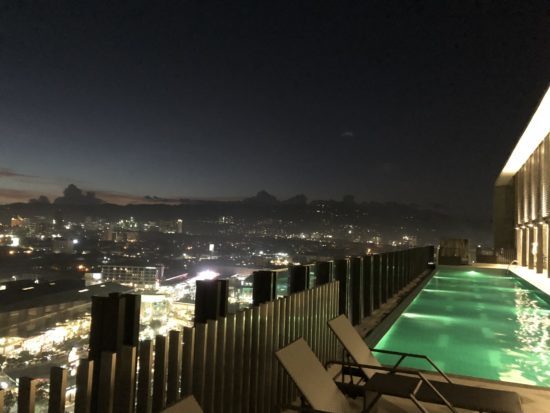
The hotel's main attraction is probably the pool and bar on the 21st floor, and I especially recommend going at night. During the day it is likely too hot, but in the evening it is cool and the night view is beautiful. Hotel guests can get in simply by writing their room number and name at the entrance, but there seems to be a charge for non-guests.
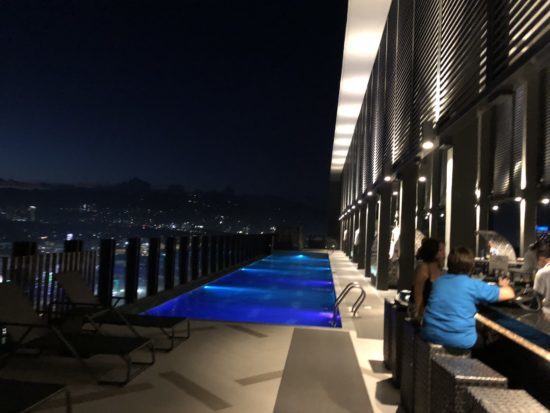
The bar area has a roof, but the ceiling is high, so it feels open and airy.

Bai Hotel's Breakfast and Its Wide Choice
The breakfast here gets high marks in reviews. It is served at Café Bai on the 2nd floor from 6am.

With over 600 rooms, the hotel has a large breakfast restaurant too. When we checked in, a poster in the lobby said that breakfast gets very crowded from 8am, so on all three days we went at 6am, when it opens. At that time we could eat at a leisurely pace. When it is busy, it seems you may have to wait for a table. If you have plans after breakfast, I recommend going early.
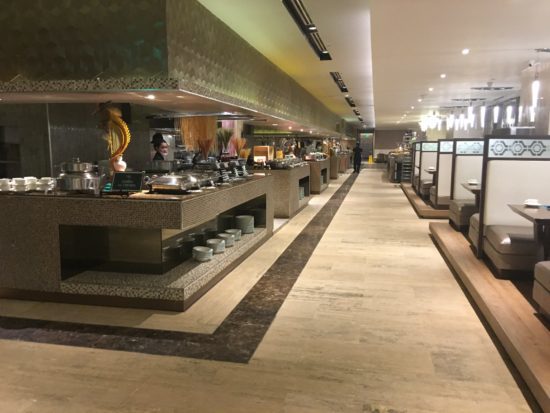
There is a very long counter laid out in the shape of the character "日", lined with a great many foods and drinks. Western, Asian and Filipino dishes are all there, and the choice is so wide that you would struggle to try everything even over two or three nights.

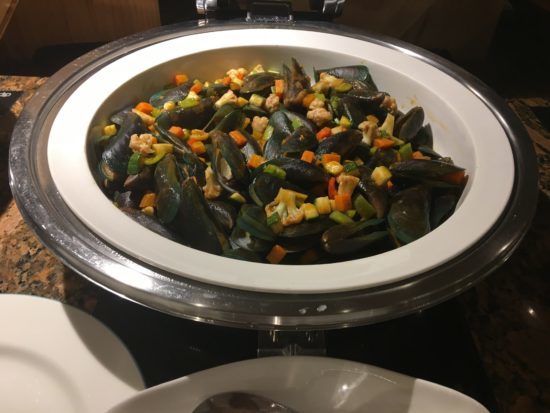
Mussels first thing in the morning?
The beef that Filipinos eat in large quantities is corned beef! It is stir-fried with onion and carrot and eaten with rice, Filipino style. Sometimes a fried egg goes with it.

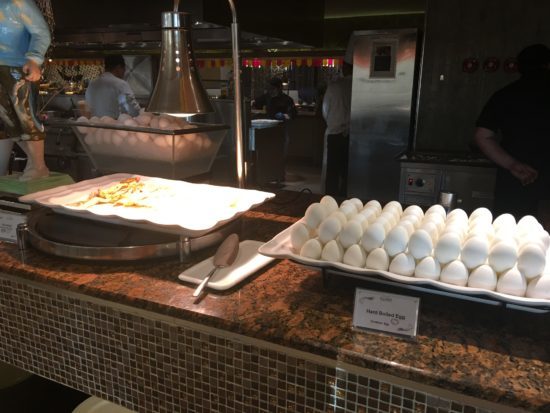
There were five or six egg dishes every day.
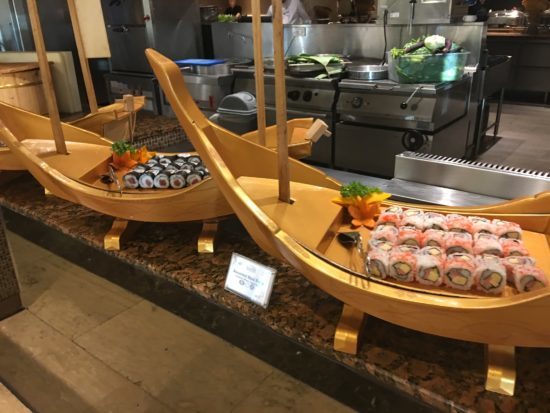
There was even sushi! The inside-out rolls with cream cheese, pineapple, Spam and cucumber were surprisingly tasty. There was also soba, and small chawanmushi (savoury egg custard) cups without any fillings.
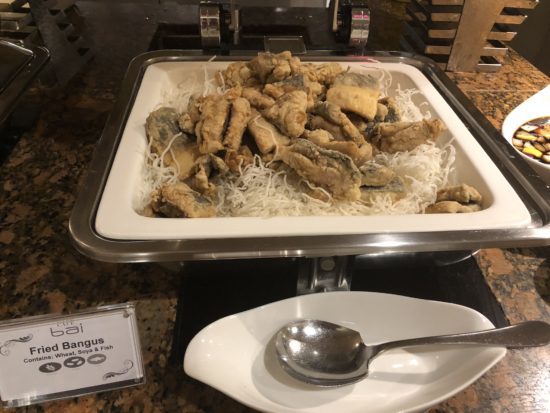
Filipino-style fried white fish. The Philippines is an island nation, so fish seems to be eaten fairly often.
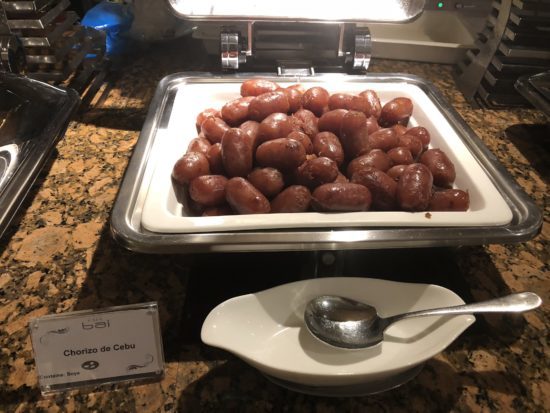
Filipino-style sausage: soft, round sausages with a sweet and savoury flavour.
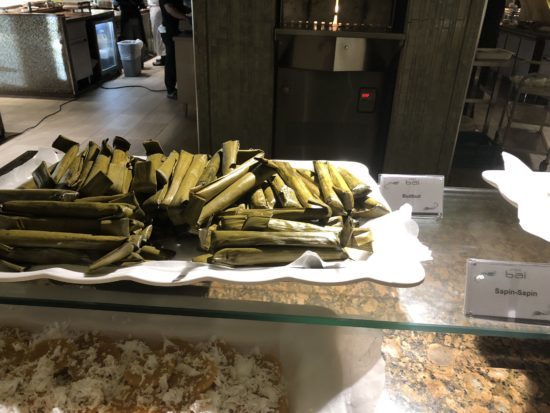
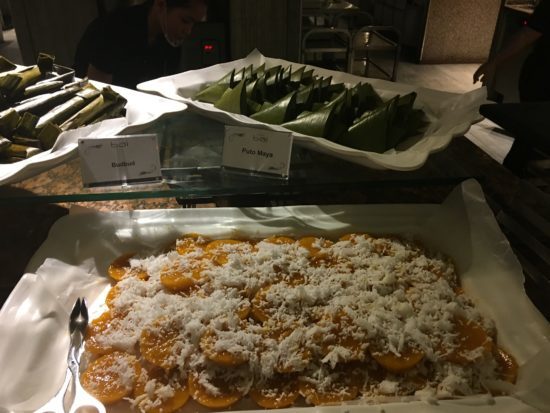
Sweetish rice cakes made with glutinous rice and coconut. What look like bamboo leaves are all banana leaves, which are sometimes used in place of plates as well.

For me, the noodle soup corner was a real treat. You choose your noodles and toppings, put them in a bowl and hand it to the man behind the counter, who heats them in hot water and pours over the soup. There are all sorts of noodles: ordinary thin Chinese-style noodles and thick ones, glass noodles, pho, udon and more.

I had mine topped with fried garlic!

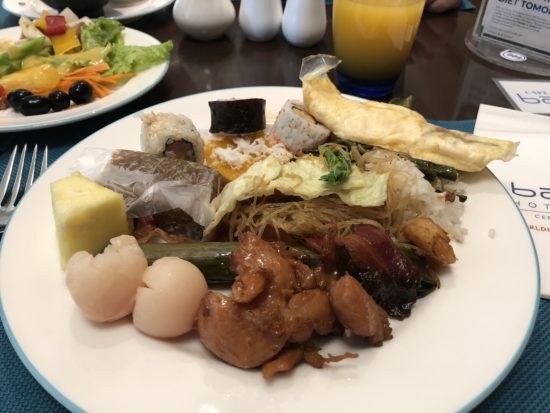
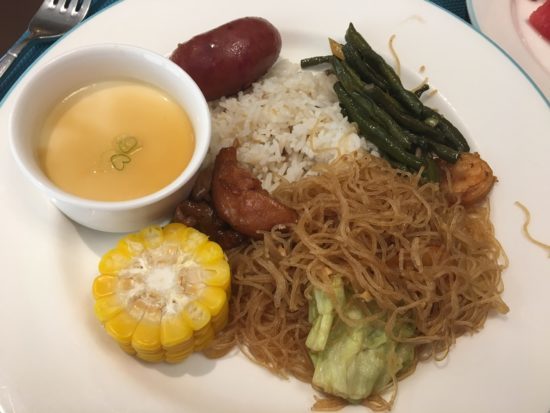
Here is how each of us in the family filled our plates. Everyone's tastes show, don't they?

How Highly Do We Rate Bai Hotel?
Rating: 4/5 We didn't use it ourselves, but there is also a massage room in the hotel run by a Japanese company. Apart from the noisy air conditioning in our room and the shower drainage problem, we were not bothered by noise from the rooms next door, above or below, and overall I thought it scored rather well.
Mandani Bay, where the hotel stands, faces the sea, and a project to build a whole new district is under way there. Many condominiums, office buildings, upmarket shopping centres and malls are apparently planned, and construction was going on all around the hotel. In five to ten years the area will no doubt be completely different. We had also visited Cebu three years earlier, and we noticed a great deal of change in many places. Seeing the city develop with our own eyes is, I think, what makes visiting Cebu so interesting right now.
The area lies between the resort island of Mactan and the business district around Ayala Mall. If you go to Cebu not only to enjoy the sea but also have things to do in Cebu City, Ayala Mall is only about 10 to 15 minutes away by car, so I found it a convenient location.
Other books you might like
You're welcome to take a look.
EAST TO WEST: The Heart of Haiku, the Light of Scripture
Watching a city quietly reshape itself, visit after visit — the kind of realization this collection finds through haiku. This is a book my father-in-law left behind.
View on AmazonCataract Surgery-A Memoir: Double cataract surgery in Osaka, Japan
Another new experience at 66 — an honest account of the cataract surgery I went through.
View on AmazonSushi Business in Britain: the complete four-volume series
A novel series following thirty-five years in the British sushi trade, from apprentice to factory manager to a small sushi school. The complete edition offers all four volumes at a better price.