RHS Garden Wisley Visit
Date: 2024-07-15
RHS Garden Wisley
In the UK there is a charitable organisation called the RHS — the Royal Horticultural Society. Founded in 1804, it has over 215 years of history and is dedicated to promoting horticulture and gardening to the public. As its name suggests, its patron is Her Majesty the Queen.
The RHS currently has around 500,000 members. It owns and operates five large gardens across the UK and maintains a library in London housing ancient botanical manuscripts and books.
The Chelsea Flower Show
As part of its work, the RHS organises around 14 flower shows across the country each year, publishes a monthly magazine sent to members, and runs the "Britain in Bloom" competition — a nationwide greening initiative in which teams of gardeners work to increase greenery and flowers in their local communities. The RHS also sends teams into schools to introduce children to plants and gardening, and offers courses at its official gardens ranging from beginner home gardening to professional horticulturist training.
The most famous flower show is the Chelsea Flower Show, held every May in London, which celebrated its 100th anniversary in 2013. Chelsea is a prestigious area of London close to Buckingham Palace and Kensington Palace, home to celebrities and wealthy visitors from around the world.
About Wisley
Today we'd like to introduce Wisley — the oldest and largest of the RHS's official gardens, often called "Britain's most beloved garden."

Wisley sits within approximately 100 acres of grounds and holds what is considered one of the world's finest plant collections. Every plant is displayed in an environment suited to its needs, making this a true paradise for gardeners. Whether you love gardening at home or work as a professional horticulturist, Wisley is unmissable.
Around one million people visit every year. The garden employs 75 gardeners and 25 students on gardening courses, supported by 100 volunteer members at any one time, all ready to welcome visitors from around the world.

Wisley is located just outside the M25 motorway — the ring road circling Greater London — in the Surrey town of Woking, in what is known as the Garden of England.

We arrived on a Sunday morning in June, around 11am. From the M25 junction it was only a 3–5 minute drive to the entrance. As the garden opens at 9am, car parks one and two were already full when we arrived, and four or five tour coaches were parked in the coach bay. Staff stationed throughout the site directed us to car park three.
We walked from there to the entrance. Being a Sunday in peak bloom, the crowds were considerable.

Wisley Opening Hours

In British Summer Time (BST): Monday–Friday 10am–6pm; weekends and bank holidays 9am–6pm. In winter: Monday–Friday 10am–4:30pm; weekends and bank holidays 9am–4:30pm. Last entry is one hour before closing. The garden is open every day except Christmas Day.
At the entrance there are gates on both sides. The right-hand gate is for general visitors, who pay the entry fee (adult £14.50, approximately ¥2,000) at the ticket desk in the centre. The left-hand gate is for RHS members, who enter by having their membership card barcode scanned.
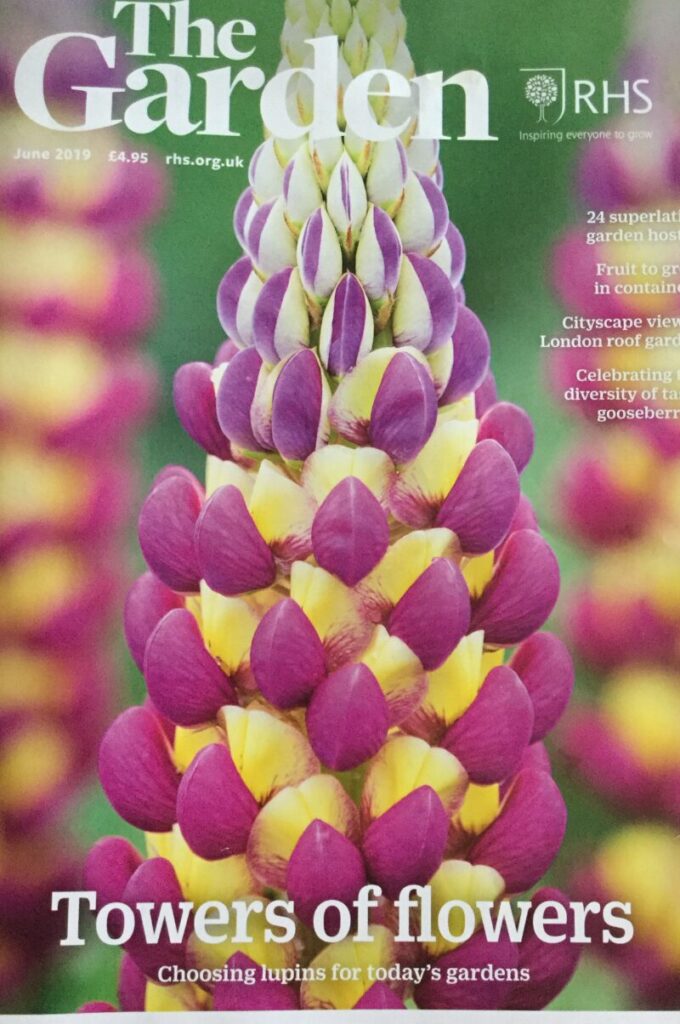
My RHS membership card is renewed annually. Individual membership costs £47.25 (approximately ¥6,500); joint membership for two people is £69 (approximately ¥9,500) — as of 2019. Both memberships allow one guest or two to four children to enter with you.
RHS membership also grants access to over 200 partner gardens across the UK, discounted tickets to RHS flower shows, and the ability to buy Members' Day tickets — the special opening day for members only.
The temperature was a pleasant 19°C — not too warm, not too cold. We set off to explore.

The site is enormous! You could not possibly cover it all in a single day.
The Laboratory
The first building we came to was an old Tudor-style structure called the Laboratory, where plant research and experiments are conducted. It is a beautiful building that blends naturally into its surroundings.
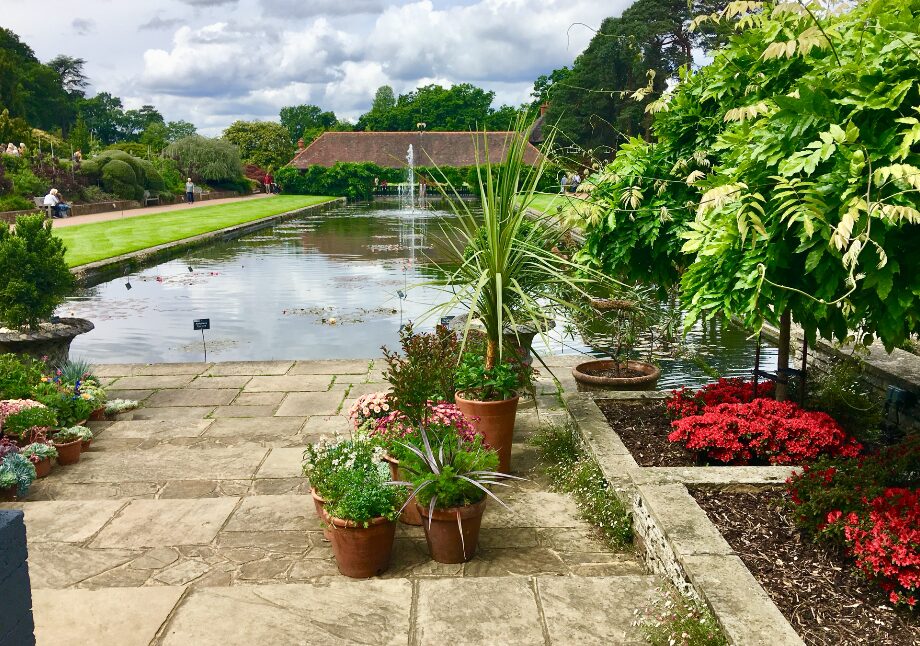
In front of the Laboratory is a waterlily pond. A water canal was created at Wisley in the 1960s, and the waterlily collection dates from that era.

Every plant on display has a label giving its name and classification.
The Walled Garden
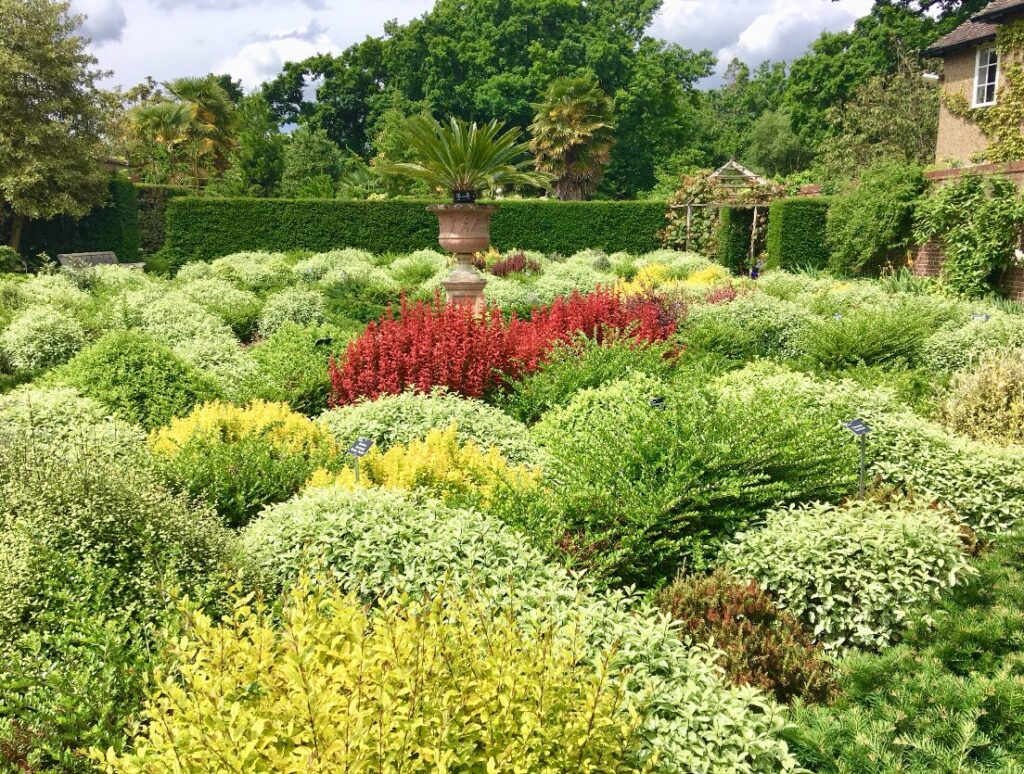
Behind the waterlily pond was the Walled Garden — a garden composed entirely of low-growing trees and shrubs, knee- to waist-height. Unusually, not a single flowering plant was used. Yet the varying shades of green, accented by touches of red-tinged foliage, created a striking effect.

Oak Wood — Wisley's First Garden

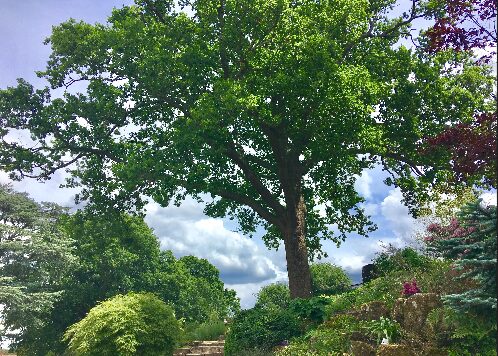
The garden known as "Oak Wood" is the oldest section of Wisley, featuring an enormous oak tree. The British love oak trees. In addition to planting them in parks and gardens, oak timber is prized for making furniture. The variety of plants gathered from around the world included many we had never seen before. All the plants were maintained in excellent condition, looking vibrant and healthy.
The Glasshouse
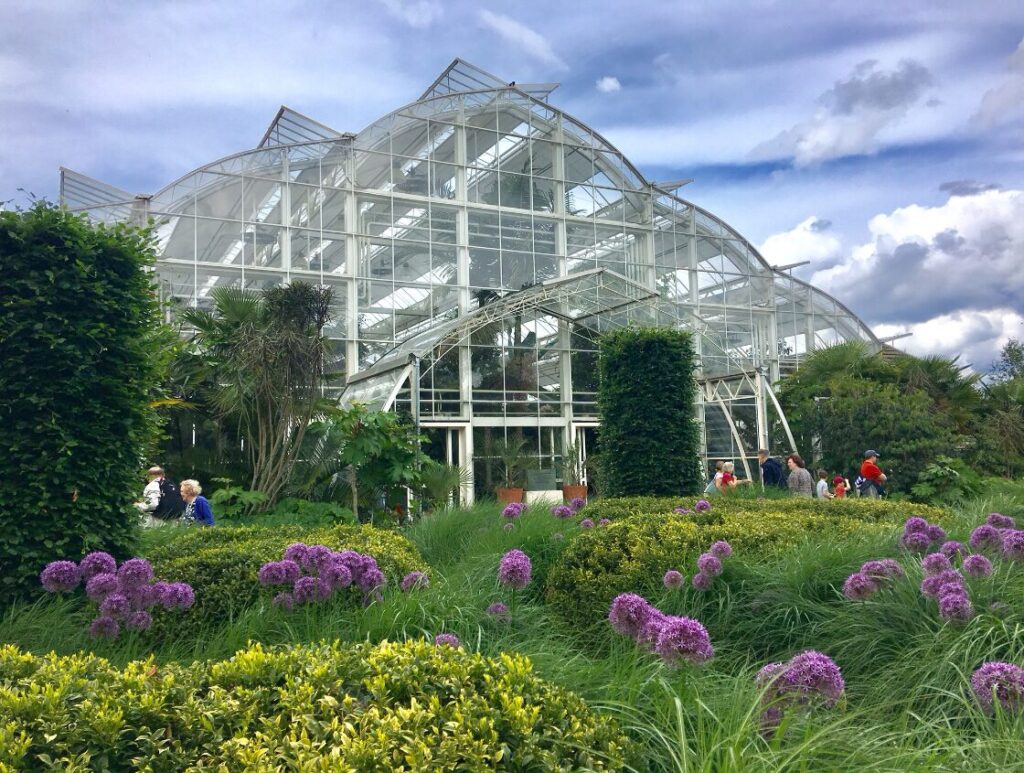
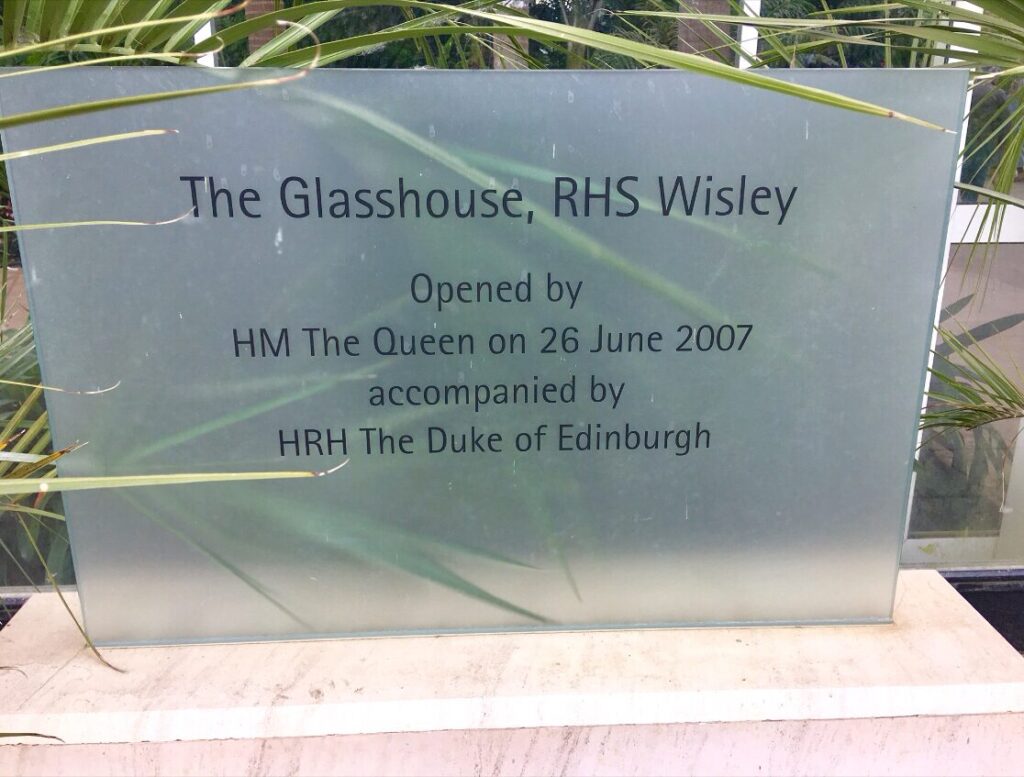
Walking further in, we came upon a large glasshouse surrounded by a lake — the "Glasshouse," covering the area of ten tennis courts and rising 12 metres high. The opening ceremony in June 2007 was attended by Her Majesty Queen Elizabeth II and the Duke of Edinburgh.
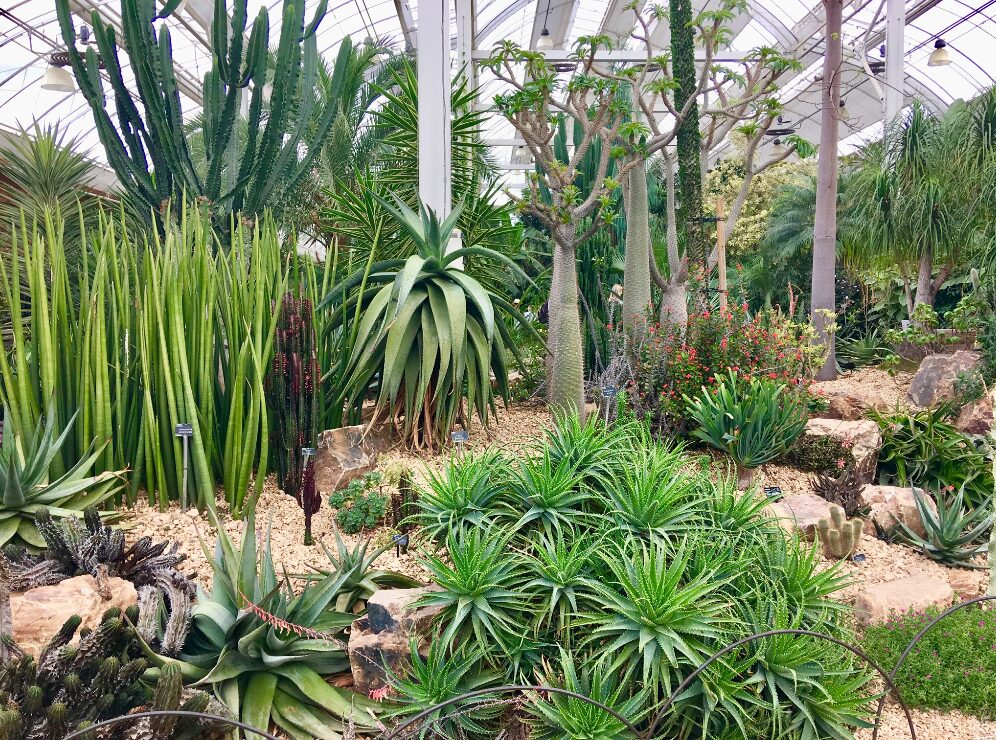
Inside, the Glasshouse is divided into two climate zones: a dry desert climate and a humid subtropical climate. Brightly coloured flowers bloomed in abundance, and there was even a small waterfall. The circular ceiling-mounted heaters, shaped like coils of incense, warm the interior.
We saw cacti of extraordinary size and shape, and tiny, delicate flowers blooming among them. The subtropical zone — warm and humid, much like a Japanese summer — held unusual flowers and trees of all kinds.

Outside the Glasshouse, flowers were everywhere too. June in England really is wonderful: no rainy season, long days and refreshingly mild weather.
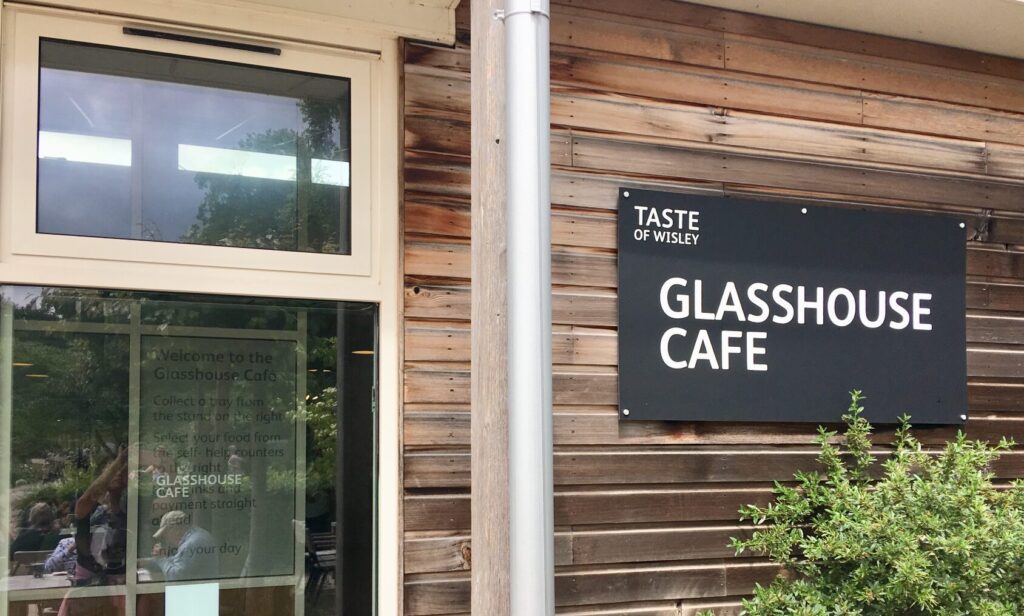
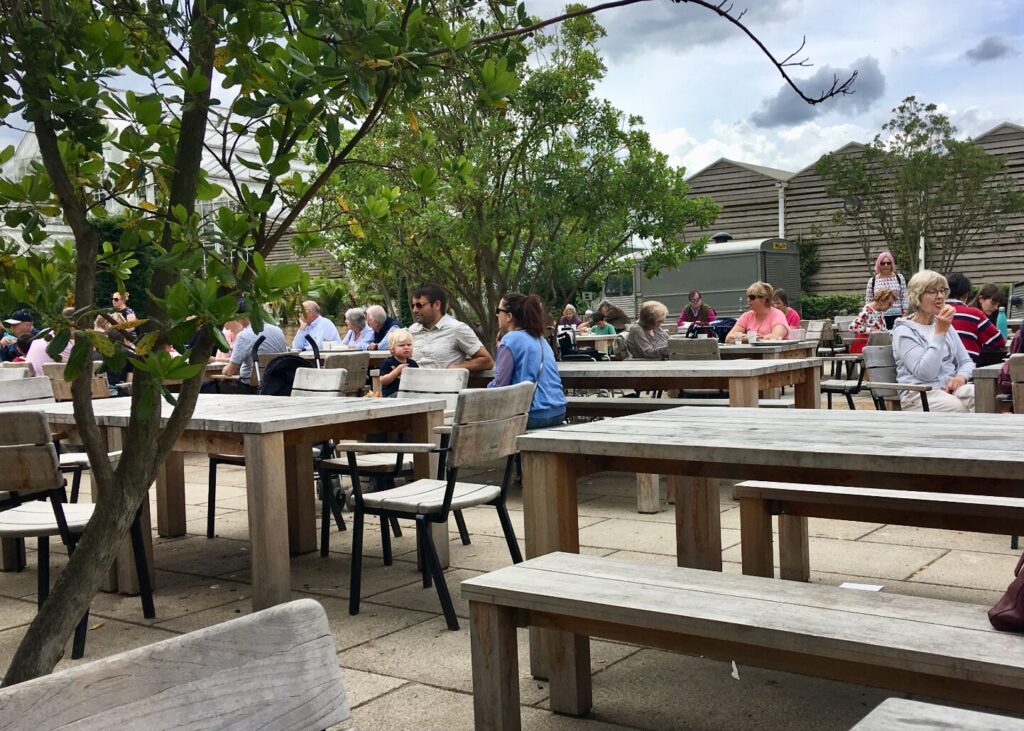
After so much walking, we stopped at the café beside the Glasshouse for lunch.

The Glasshouse Café
Wisley is so large it has six cafés and restaurants, plus a "Terrace Room" available exclusively for pre-booked groups of 15–50 people for breakfast, lunch or afternoon tea. All cafés and restaurants at Wisley use vegetables and fruit grown in the garden itself, alongside locally sourced ingredients wherever possible.

We chose jacket potato with chilli beef, red cabbage coleslaw, a carrot sandwich (filled with almost nothing but lightly salted grated carrot — surprisingly delicious!) and an apricot cake. Everything was lightly seasoned, letting the natural flavours shine through. Wonderful.
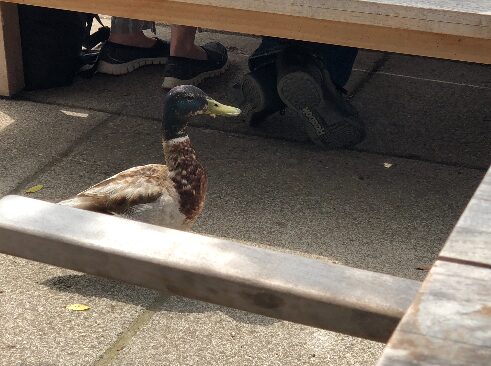
A bold duck was waddling between the tables soliciting food — it had clearly wandered over from the lake beside the Glasshouse.
The Rock Garden
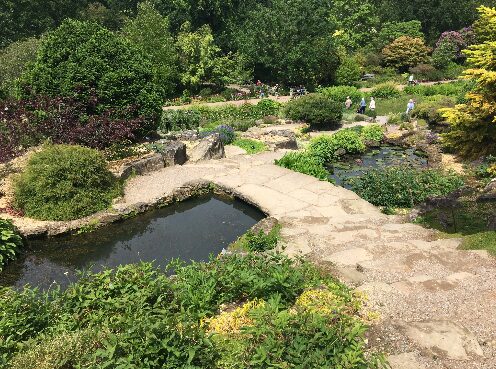
After lunch we headed to the famous Rock Garden. A rock garden is a garden constructed using stones and rocks. This particular one was built in 1919, but as part of the RHS 200th anniversary project, Japanese landscape architect Shigeo Fukuhara undertook a new stonework and planting project. The theme of the new Rock Garden is "The Japanese Landscape," and the opening ceremony was held on 24 March 2005.
The Rock Garden is built on a hillside, with a waterfall at the top that flows down to a pool at the bottom. Japanese plants such as rhododendrons, azaleas and maple trees have been planted throughout, with species from northern Japan — Tohoku and Hokkaido — chosen for their suitability to the English climate.
Maple trees are extremely popular garden trees here in the UK. Every garden centre has a dedicated section for them — their compact size, perfect for a garden, and their beautiful red foliage make them a favourite. There was also a great oak tree in the Rock Garden.

The Bonsai Walk
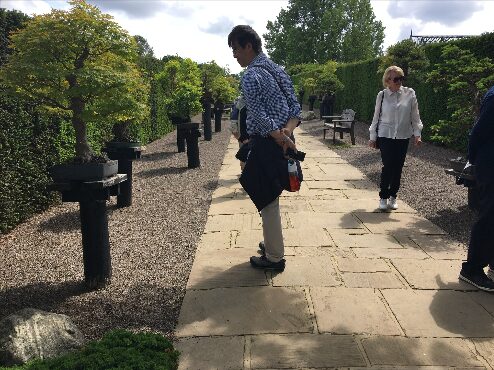
Climbing the slope from the Rock Garden, we came across a small path dedicated entirely to bonsai — the "Bonsai Walk." Even planted in shallow, modest-sized containers, these trees looked for all the world like full-sized ancient trees. There were miniature pine trees with tiny pine cones, and tiny apple trees with perfect little apples. The word "Bonsai" is well known here among gardening enthusiasts. Having grown up thinking of bonsai as an old person's hobby, we found ourselves genuinely impressed.

The Honest Sausage
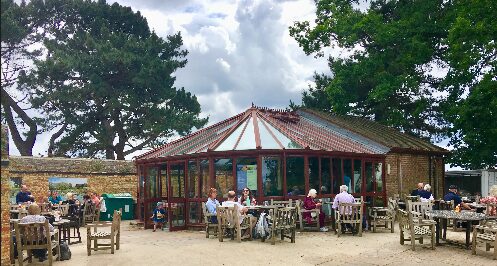
After wandering through the world-class fruit tree collection — apples, pears, cherries and plums from across the globe — a wonderful smell reached us from somewhere ahead. A crowd had gathered around the Conservatory. We found "The Honest Sausage," a hot dog stand open only during summer (April–October), serving sausages and bacon made from free-range pork raised on a local farm. The sausage rolls come in three varieties: sausage, bacon, or both, piled with fried onions in a brioche bun. One large English banger is quite enough — we shared one between us, topped generously with Heinz ketchup and mustard. £5.25 (approximately ¥720). Delicious.
Facilities like RHS and National Trust are run on member fees, donations and retail sales, so we always try to buy something when we visit — even if prices are a little higher.
The Rose Garden
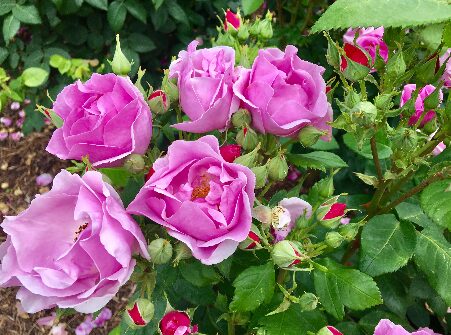
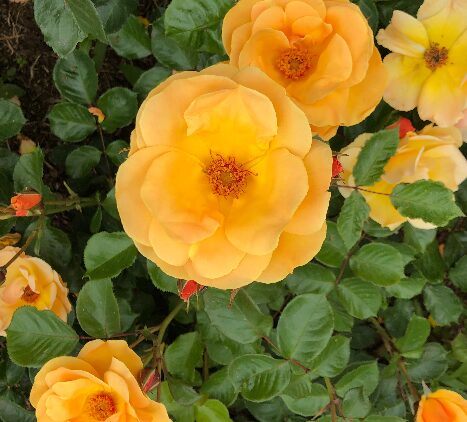
The rose garden was breathtaking. Roses really are the queen of flowers — magnificent in both appearance and fragrance.

A Dream Garden
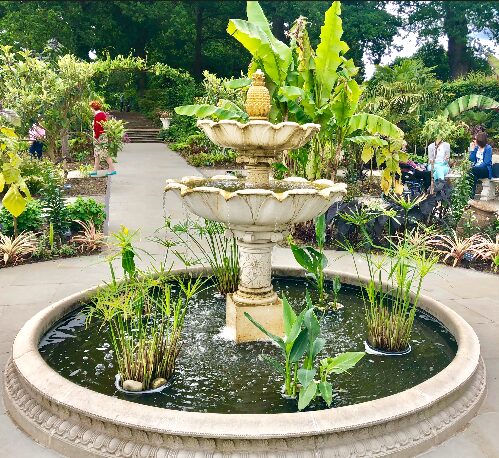
Just as we thought it was time to head back, we stumbled upon an utterly enchanting miniature garden — a textbook example of English garden design at its finest. In the garden next door, a charming pineapple fountain caught our eye — perhaps a tropical garden?
As the sky suddenly clouded over, we made our way to the exit.

"England's weather has all four seasons in a single day," they say — and it's true. Sunshine, clouds, a sudden shower, then sunshine again. Most people don't bother with umbrellas; a hooded waterproof jacket is the English answer to unpredictable weather.

Near the exit is a wonderful shop. We found Chelsea Flower Show 2019 merchandise, Emma Bridgewater ceramics (from Stoke-on-Trent, with cheerful summer vegetable designs), biscuits and chocolates in pretty tins, plant-themed stationery and English rose-scented candles, lotions and room fragrances.
A large new building near the car park had just been completed, set to house a shop, restaurant and plant centre. It was due to open the day after our visit — the entrance may well be moved there on our next visit.

Wisley is so vast that what we've described here is just a fraction of the whole. Even visitors with no interest in gardening will find it a wonderful experience. We highly recommend a visit to this world-famous English garden for a truly memorable day out.
Other books you might like
You're welcome to take a look.
EAST TO WEST: The Heart of Haiku, the Light of Scripture
Even a small corner of a vast garden can catch the heart — the kind of encounter this collection finds through haiku. This was my father-in-law's final work.
View on AmazonCataract Surgery-A Memoir: Double cataract surgery in Osaka, Japan
Another new experience at 66 — an honest account of the cataract surgery I went through.
View on AmazonSushi Business in Britain: the complete four-volume series
A novel series following thirty-five years in the British sushi trade, from apprentice to factory manager to a small sushi school.
View on Amazon