British Pottery: Visiting Burleigh in Stoke-on-Trent
Date: 2019-06-17
In this post, I introduce Burleigh, a British pottery brand founded in 1851. It's said to be the only company in the world still hand-decorating its wares using copper plate transfer printing, and it has a memorable backstory too — rescued from the brink of bankruptcy in 2014 with Prince Charles's backing. Here's what it was like to actually join a factory tour at Middleport Pottery, where Burleigh is made. We followed the pieces from clay to finished, decorated tableware, and it was a very worthwhile experience. I'd recommend it to anyone who loves pottery and tableware.
What Is Burleigh?
Burleigh was founded in 1851, about a hundred years after Wedgwood. At the time, Stoke-on-Trent was said to be the world's leading centre for pottery production.
The area became a pottery hub because the raw materials — good-quality clay and the coal needed to fire the kilns — were both abundant locally.
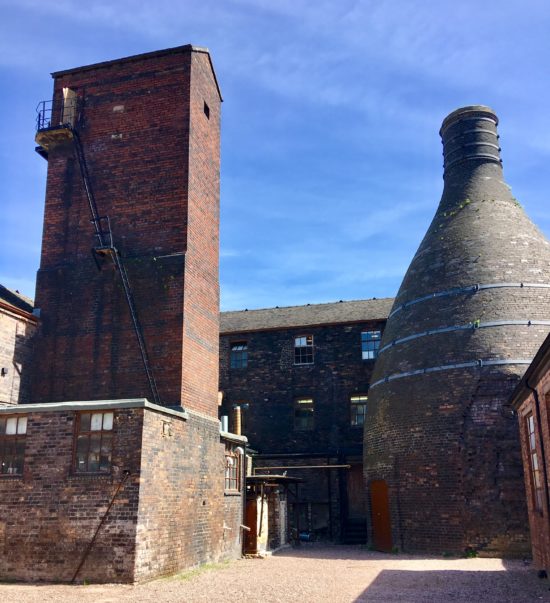
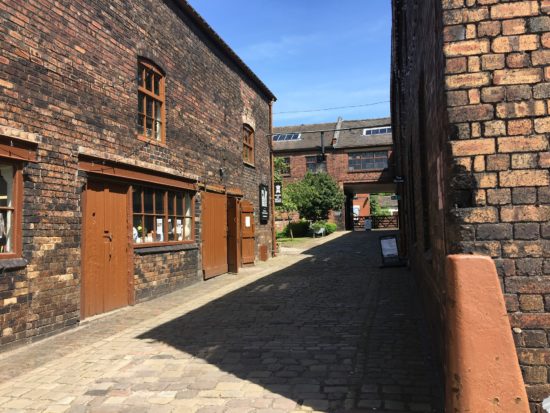
Back then, the town was dotted with bottle-shaped chimneys housing the kilns used to fire pottery, and the coal smoke they produced was so thick that the air quality suffered badly — laundry hung outside would come back covered in ash. That's how much pottery was being produced, and evidently, how much of it was selling. The photo below shows the only bottle kiln chimney still standing anywhere in the area, located on Burleigh's own site.
Burleigh is a much-loved brand among British people. Many people have a set of Burleigh passed down from a grandmother or great-grandmother, and because the patterns use a single colour rather than Wedgwood's more elaborate designs, a lot of people actually use it in daily life.
It's not as widely known in Japan as Wedgwood, but pottery enthusiasts here know it, and plenty of them are fans.
I first learned about Burleigh at a tearoom called "Juri's" in Winchcombe, in the Cotswolds — a Japanese-run tearoom that had been voted one of the best tearooms in Britain. Every time we had cake and tea there, it arrived on the loveliest blue floral china, and I remember thinking how much I liked it. That china was Burleigh.
Heading to the Burleigh Factory Tour
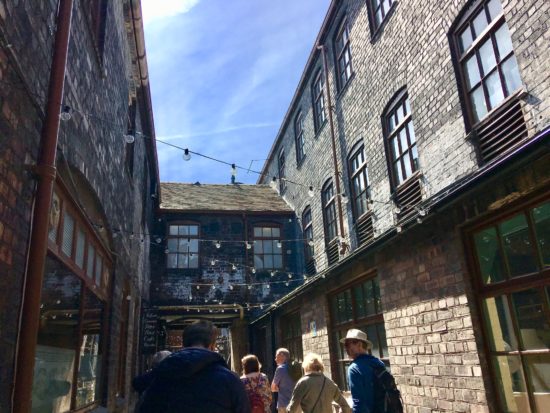
Ever since then, I'd wanted to visit Burleigh's factory outlet in Stoke-on-Trent and do some shopping — and this time, I finally made it happen. I'd booked an 11am factory tour online the day before, £9.50 (about ¥1,300) per person. There's visitor parking right beside the entrance.
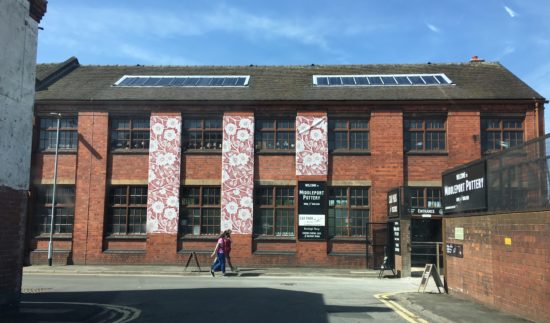
The factory's front wall is painted with Burleigh's signature red "Calico" pattern.
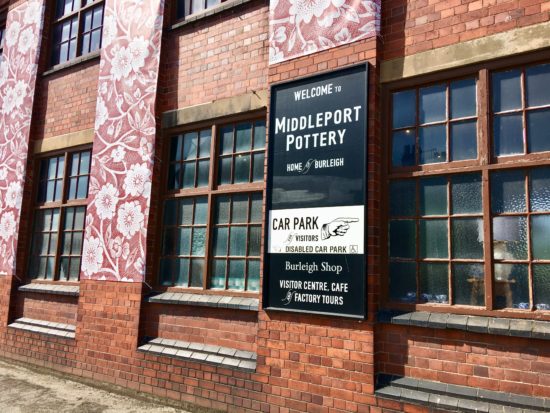
The factory shop entrance is right next to the car park.
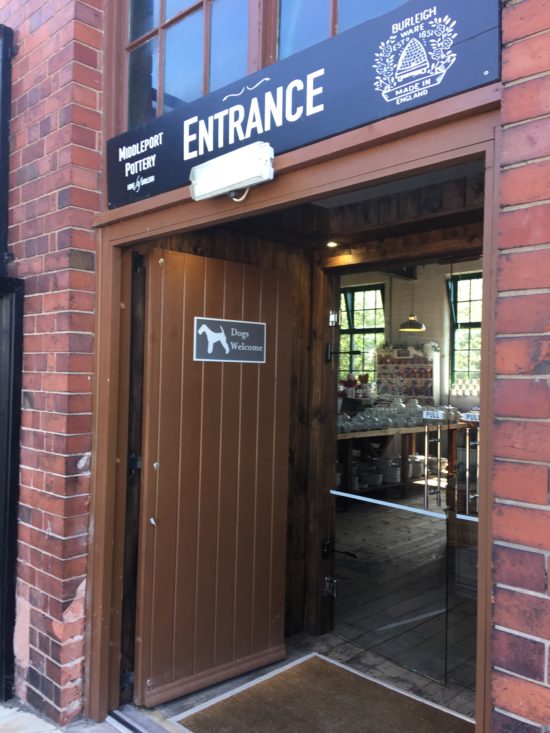
Stepping inside…
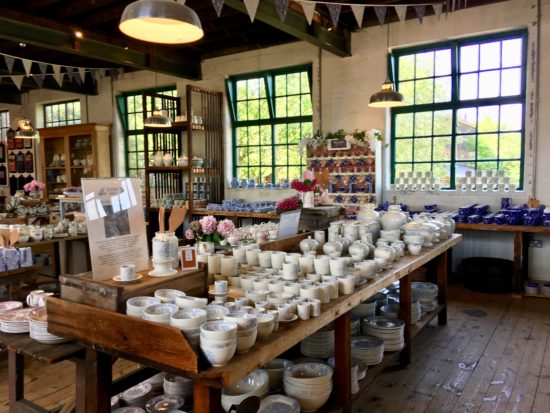
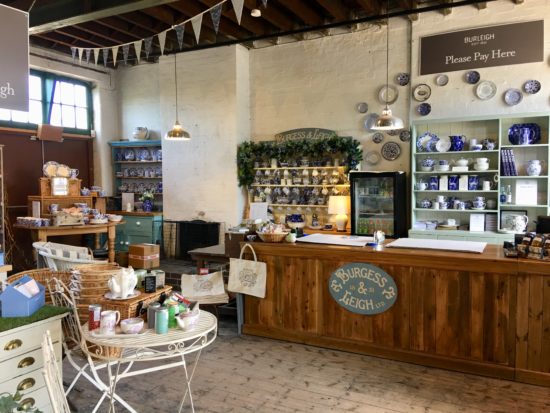
I couldn't help exclaiming, "Wow, it's wall-to-wall Burleigh!" (Well, of course it is.) The displays were lovely.
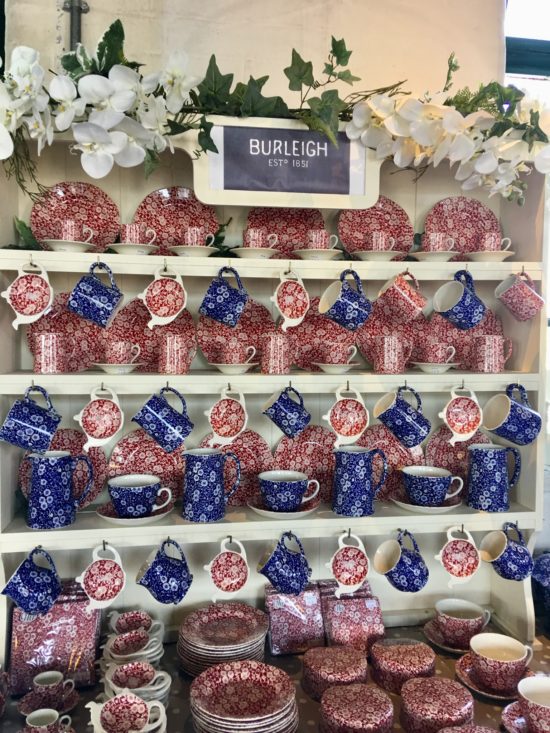
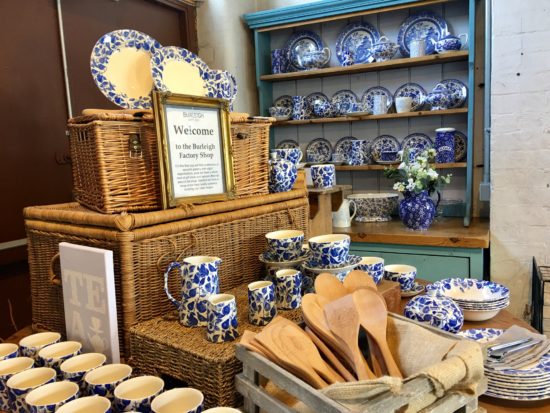
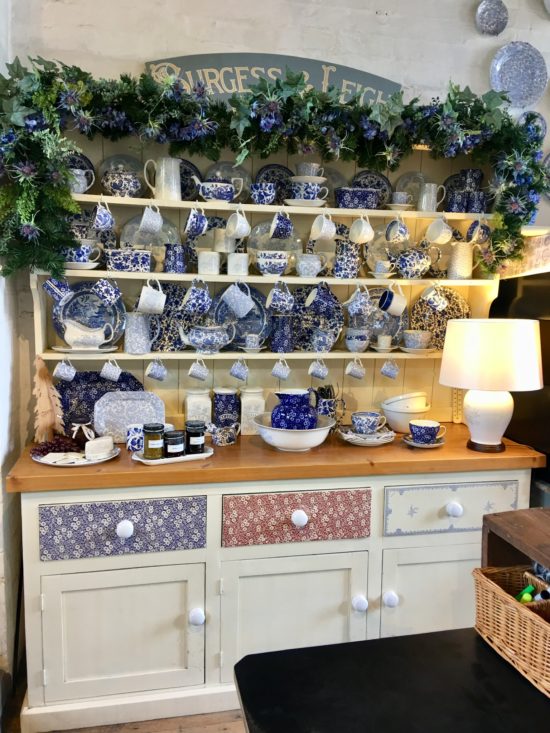
This dresser is the classic old English style, made from oak or pine. I'd love a big, homely country kitchen with room for one of these.
Burleigh and Prince Charles
There was a photo of Queen Elizabeth's eldest son, Prince Charles, the Prince of Wales.
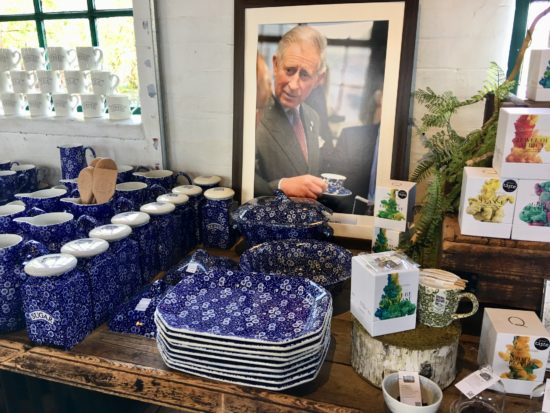
Prince Charles is Burleigh's patron. When the company was on the brink of collapse due to financial troubles and ageing facilities, he stepped in, saying Burleigh was too important to Britain to be allowed to disappear, and secured £9 million (about ¥1.26 billion) through his Regeneration Trust to rebuild the company in 2014.
That's also when the visitor centre, café, and factory tours were introduced for guests.
Whenever I visit a pottery works, I always join the factory tour if one's on offer. Seeing exactly how the pottery is made, and by whom, completely changes how it feels to actually use it afterwards.
At the point of buying, I sometimes think, "that's a little pricey" — but after a factory tour, once I've seen how many people put so much careful work into each piece, it starts to feel like a fair price. And any seconds-grade pieces in the factory shop feel like an absolute bargain by comparison. (Laughs)
The Factory Tour Begins
11am arrived, and the tour began. There were eight of us in total that day. (Each tour takes a maximum of ten.) Since it was a Tuesday morning, everyone else in the group was older and local to the area. There are two tours: the morning one takes you through the factory itself.
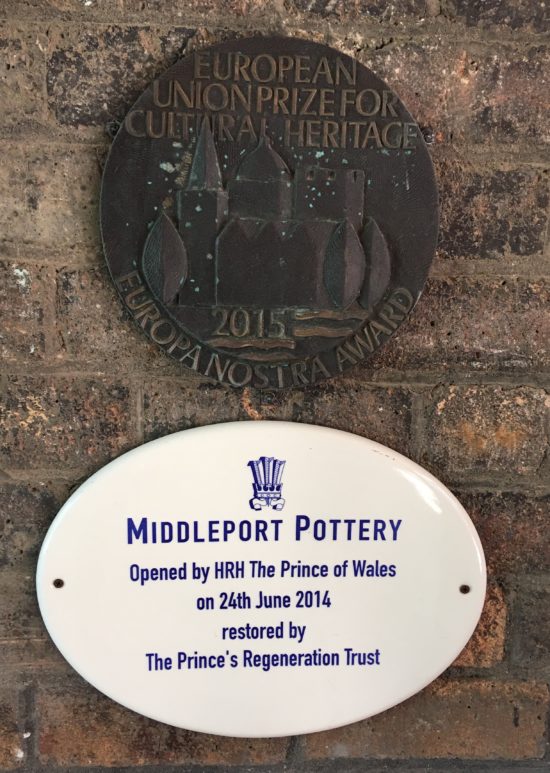
According to a commemorative plaque, Prince Charles held the reopening ceremony here on 24 June 2014. Our guide told us he visits about four times a year, and apparently knows a great many of the staff by name — walking the length of the factory, chatting with everyone along the way. He struck me as something like a beloved boss figure here, not someone who just provided the money and walked away. That's a wonderful thing.
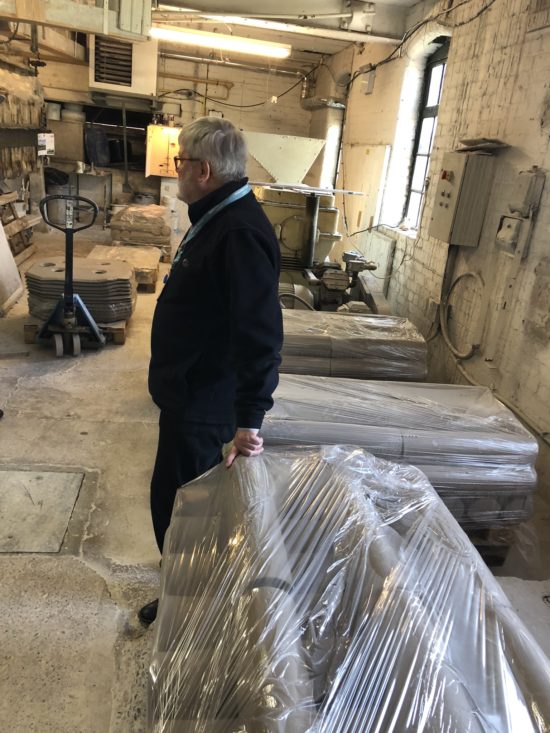
Photography was allowed absolutely anywhere on the tour — remarkably generous of them. Beside our guide, wrapped in plastic sheeting, was the raw material: clay. In the past, clay was cut from the hillside, kneaded and filtered right there on site into these rod shapes, but nowadays it's bought ready-made in this form from a specialist clay supplier. In the factory, they call these "sausages." They really do look like giant sausages.
Here's clay in a different shape.
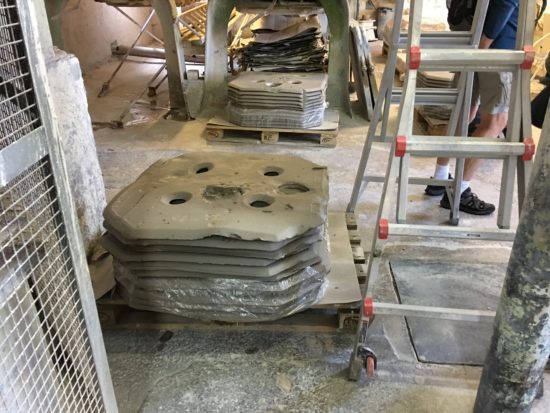
That clay is pressed into all kinds of moulds to form shapes. This one might be a teapot?
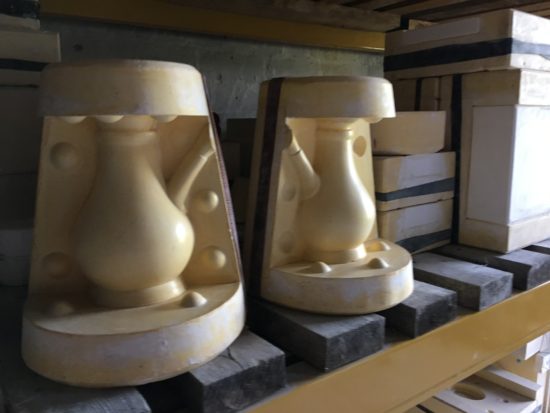
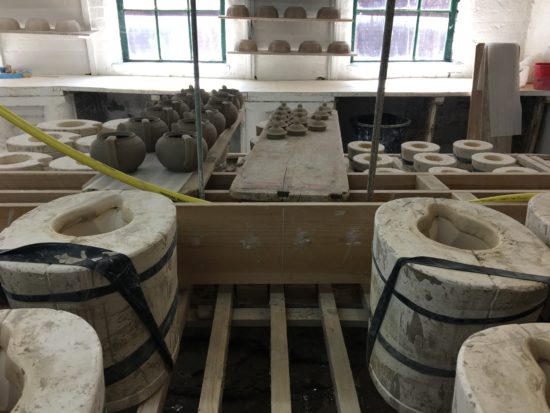
This is a mould where softened clay is poured in and left to set — used for larger vessels and pots.
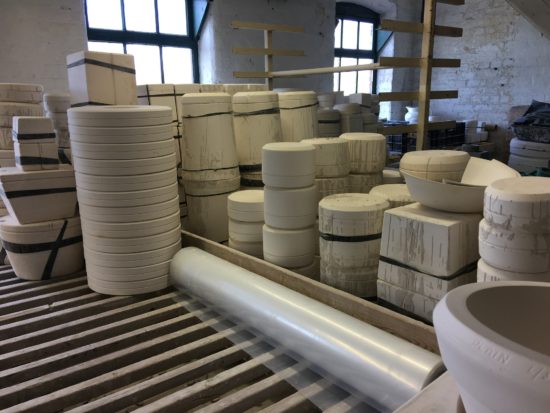
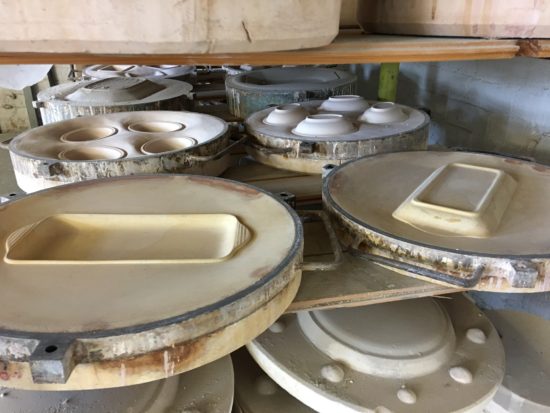
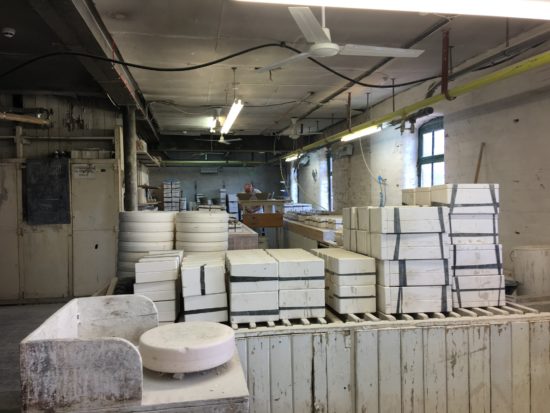
Once the clay is poured in and left overnight, it dries enough to release from the mould.
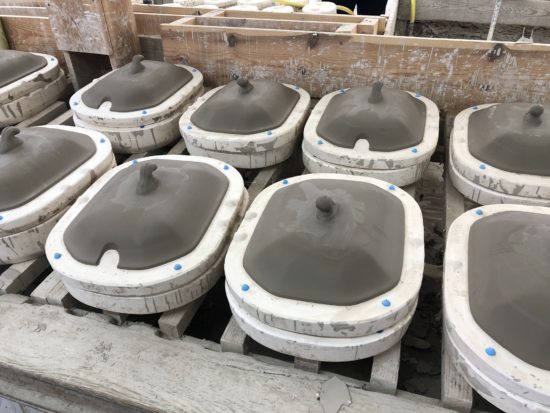
The lid of a large casserole pot, complete with its handle attached.
This is where pieces fresh out of their moulds have their edges and seams smoothed with a damp sponge.
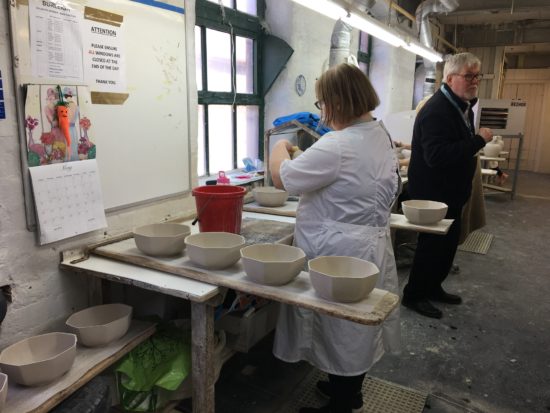
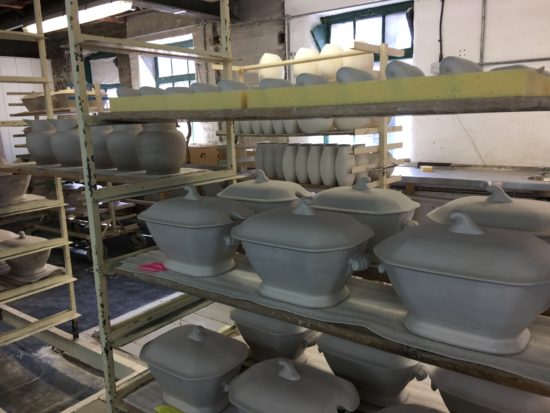
Here, the "sausage" is sliced, rolled flat, and laid over a plate mould to shape it. These are then left to dry in a room with warm air blowing through.
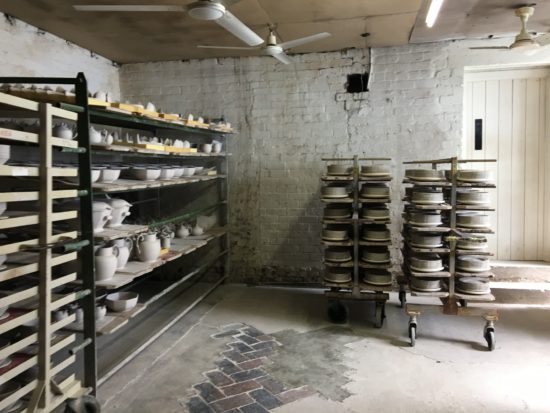
The First Firing
Once the clay has dried, it's ready for its first trip through the kiln. This firing is what makes the piece ready for decoration. The dishes behind our guide are stacked onto the shelving beside them and go straight into the kiln like that.
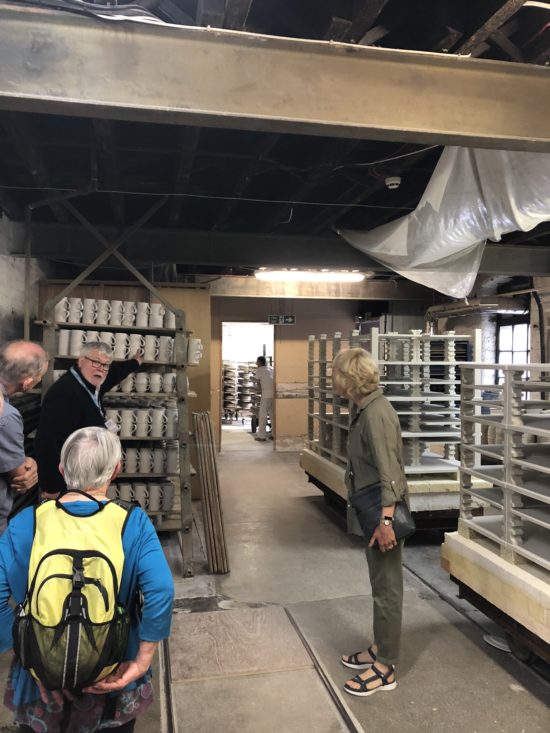
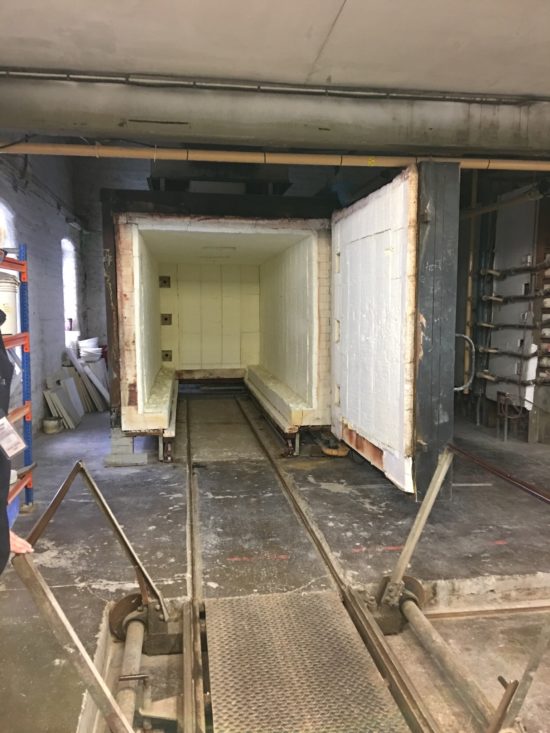
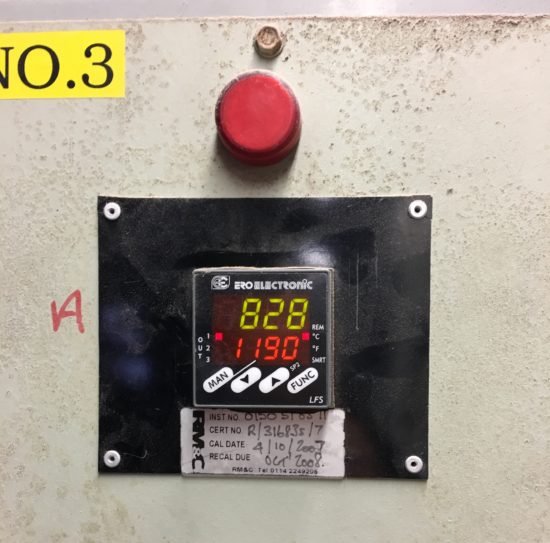
Once fired this first time from raw clay, the piece is called "biscuit." It's apparently rather crumbly and prone to chipping at this stage — hence why this bisque-firing kiln is called the "biscuit oven." Here are pieces fresh from the kiln, sitting on shelves and waiting to be decorated.
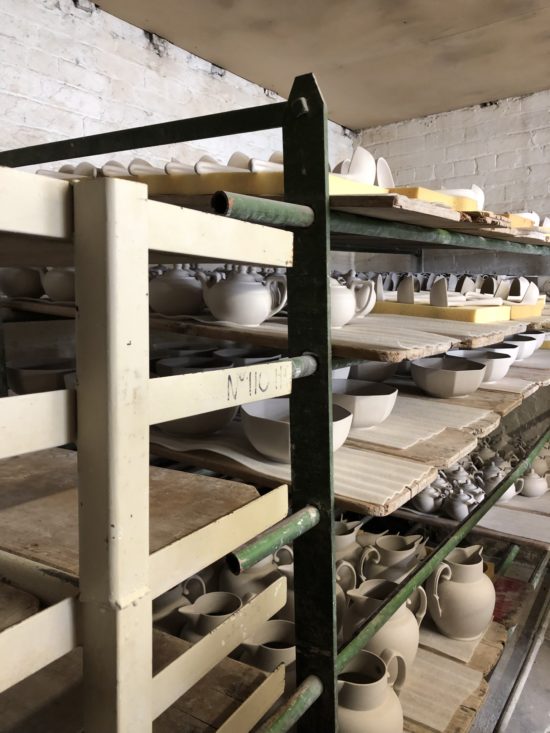
So many jugs, teapots, mugs, and plates! In this biscuit state, the pieces are reasonably hard, but if you tried to use them as they are, water would simply seep straight through.
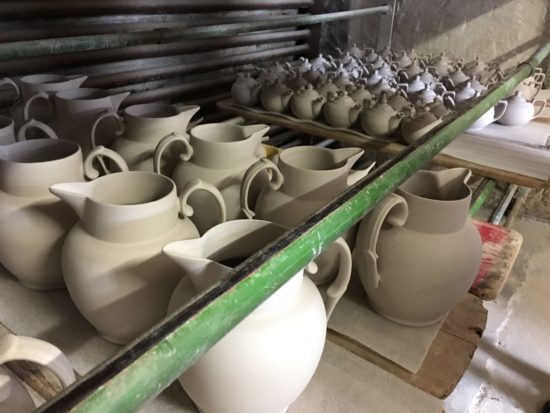
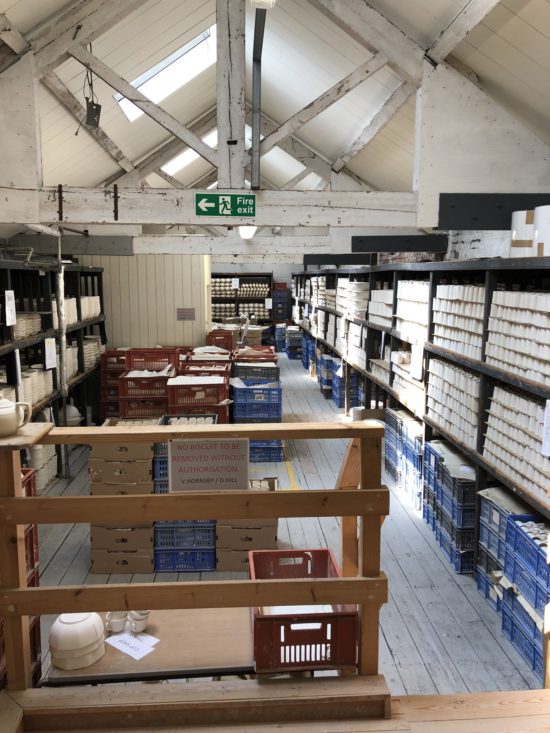
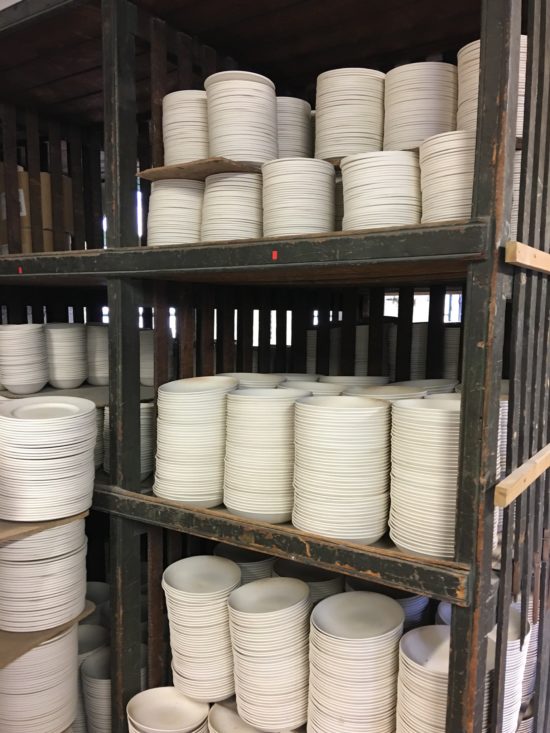
I wondered when these would turn into beautiful Burleigh ware.
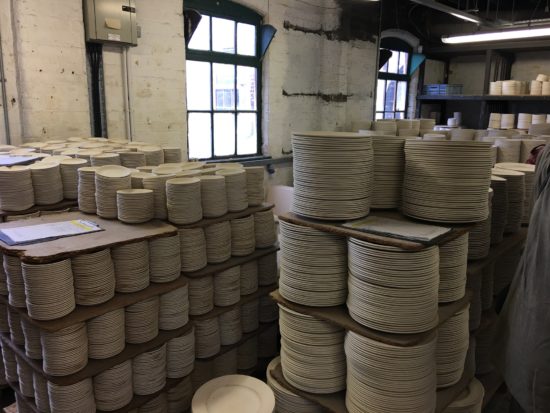
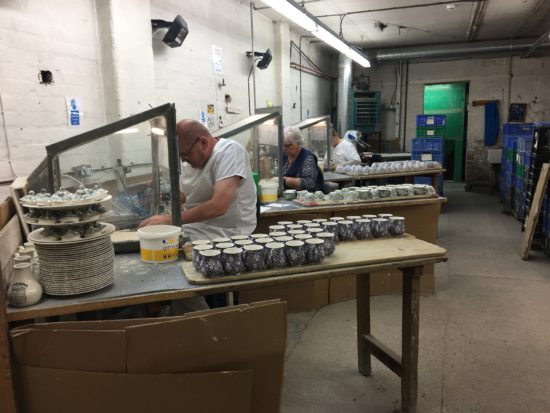
This is where the pattern is applied to the biscuit-fired pieces.
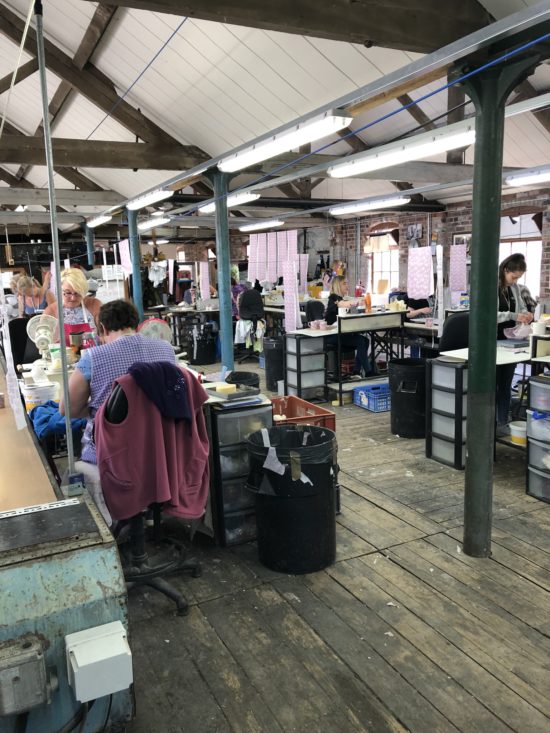
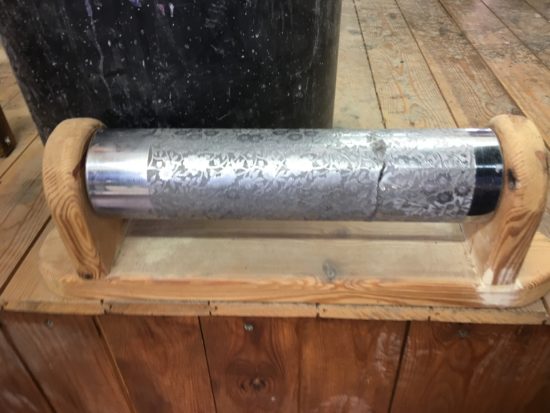
Burleigh uses a technique called copper plate transfer printing for its decoration. The pattern is engraved into a copper plate, tap by tap, with a small hammer, to create the master design. The plate is then rolled into a cylinder shape, inked, and printed onto sheets of thin tissue paper. All around the workshop, sheets of paper printed with these copper-transferred patterns hang everywhere.
The patterned paper is cut to the size of the piece it's going onto and applied by hand. Fitting a flat sheet of paper onto something curved and three-dimensional, like a cup or a pot, is an extremely difficult step. Plates and the maker's mark on the back are relatively straightforward, but teapots are so tricky that only the most experienced workers can manage them.
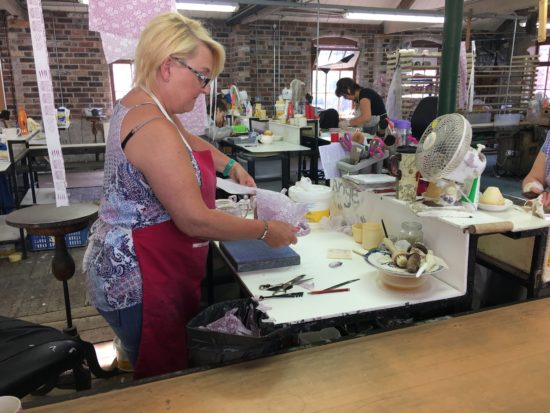
Once the patterned paper is applied, it's rubbed over and over with brushes until the design transfers and bonds to the biscuit surface underneath. It's physically demanding work — the person doing the brushing had a support wrapped around her right wrist.
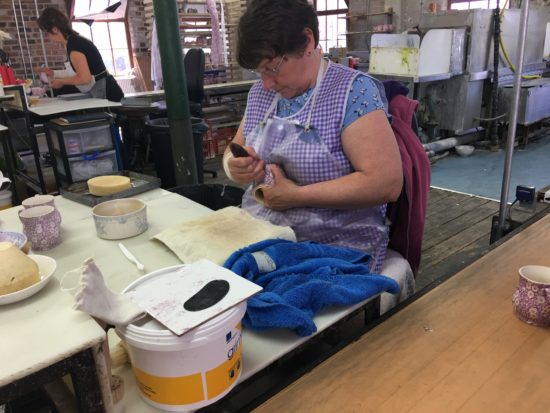
Here's a piece with the pattern paper fully applied and set. The reason every single piece of Burleigh has its pattern positioned and aligned slightly differently comes down to this copper plate transfer method. It used to be a common technique, but because it's so labour-intensive and inefficient, almost everyone else abandoned it long ago. Burleigh is now the only company in the world still making pottery this way.
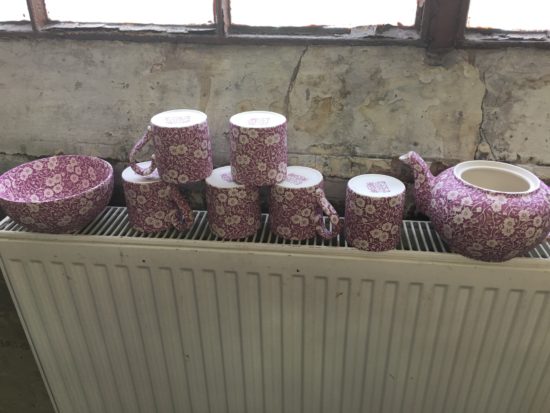
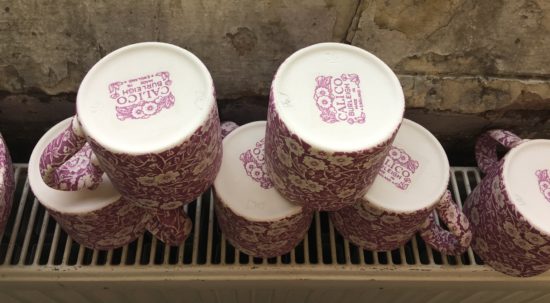
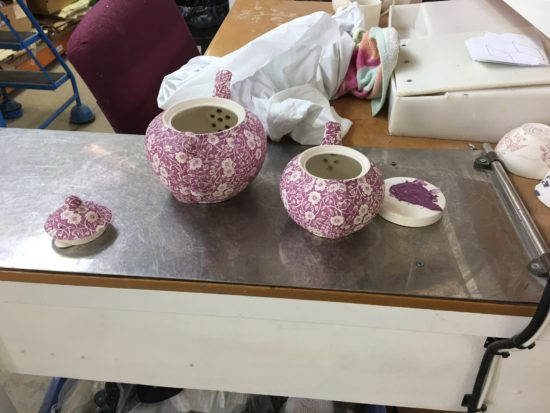
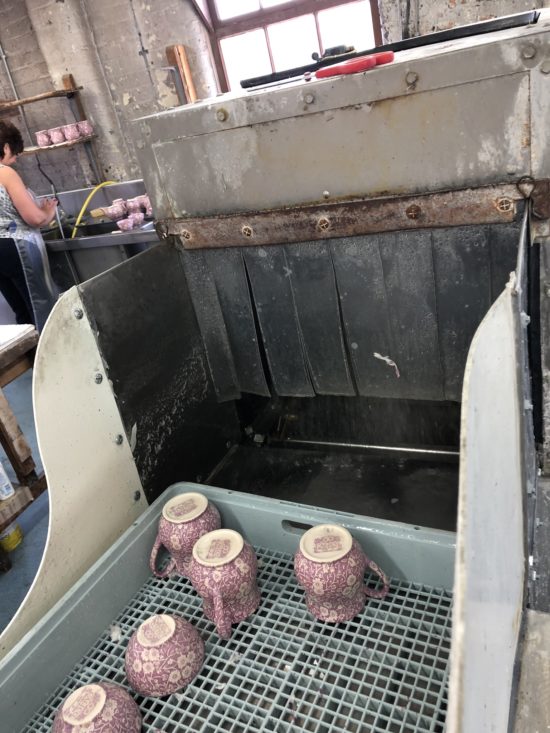
After this, the pattern needs to be fixed permanently with another firing — but first, the paper has to be removed. It looks like an ordinary dishwasher, but it uses a special detergent formulated to lift the paper away cleanly.
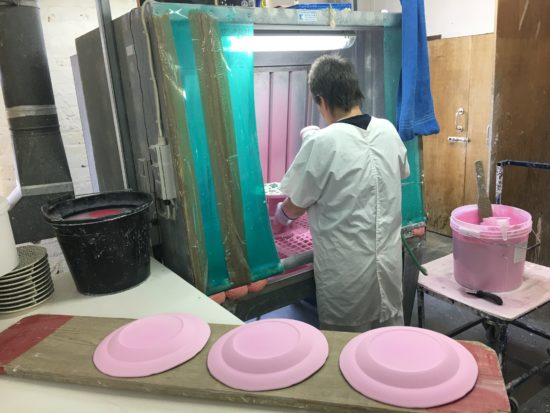
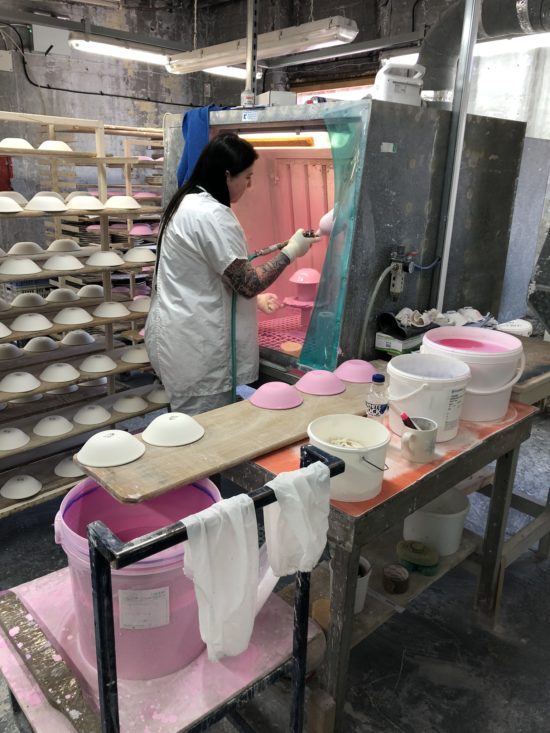
Once that second firing is done, a glaze is sprayed on. A third firing after that is what makes the colours and pattern stay put permanently, resistant to washing and everyday wear, and gives the pottery its durability. The glaze itself is tinted pink, though the colour disappears entirely once fired — the pink lets the workers see exactly how thick a coat they've applied.
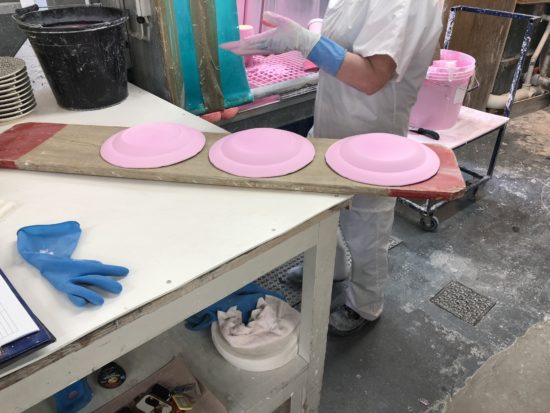
And then, one final high-temperature firing, and the piece is finished!
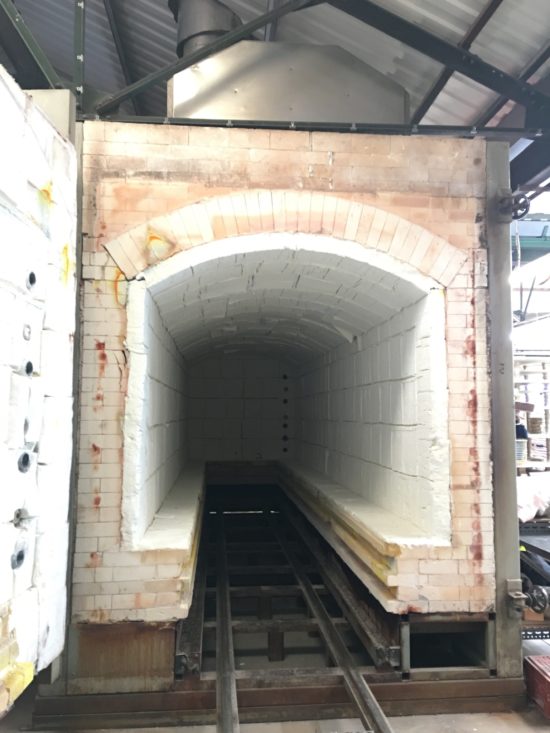
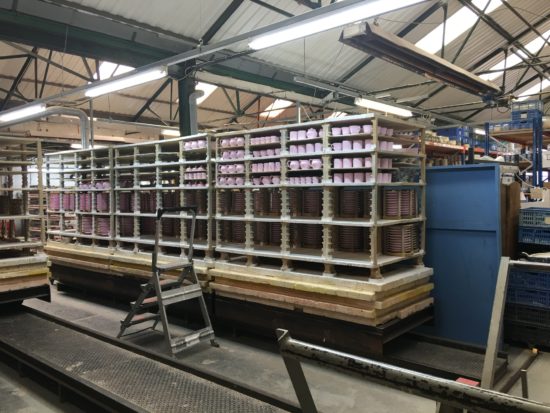
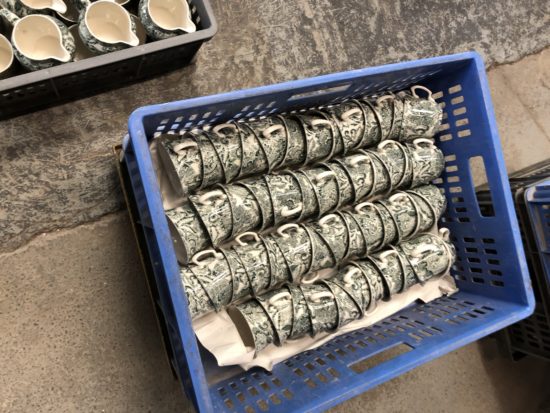
Cups Awaiting the Third Firing
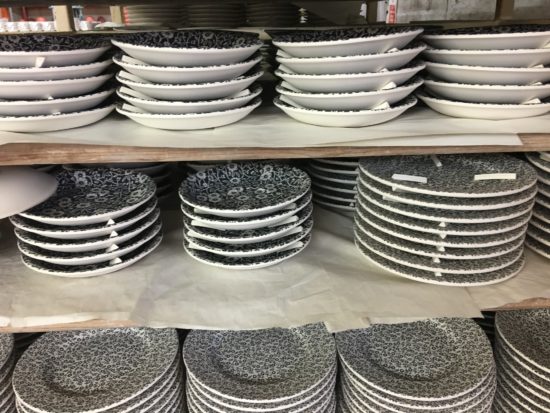
Here, pieces are undergoing final inspection.
That was the end of the morning tour. My legs were a little tired, but our guide — clearly a local who loves Burleigh through and through — packed an enormous amount of knowledge into it. It took about an hour and a half.
Lunch Before the Afternoon Tour
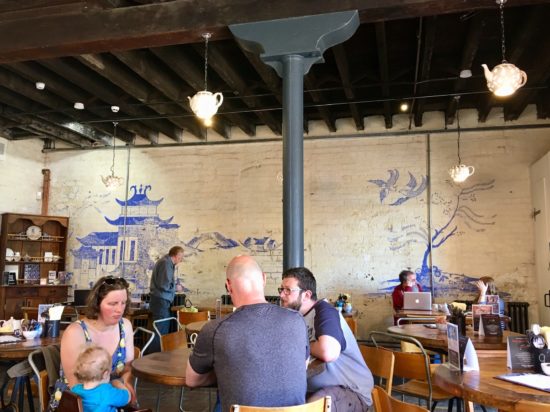
The café inside had a lovely atmosphere too.
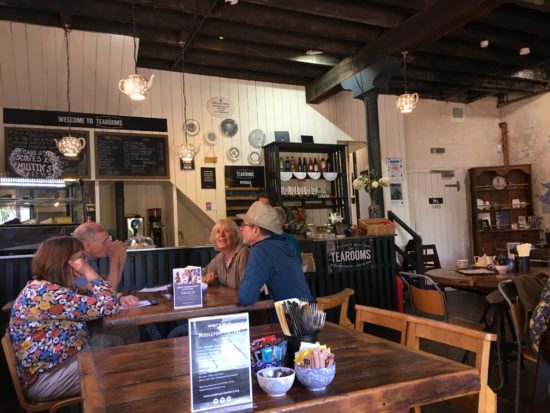
The café's walls are painted with Burleigh's popular Willow pattern — a design based on a Chinese legend. Even the lampshades were shaped like teapots.
We ordered a baked potato with tuna mayo and a scone, with a latte and a pot of tea to drink.
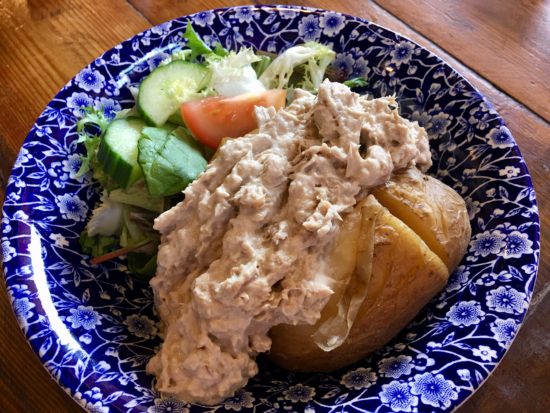
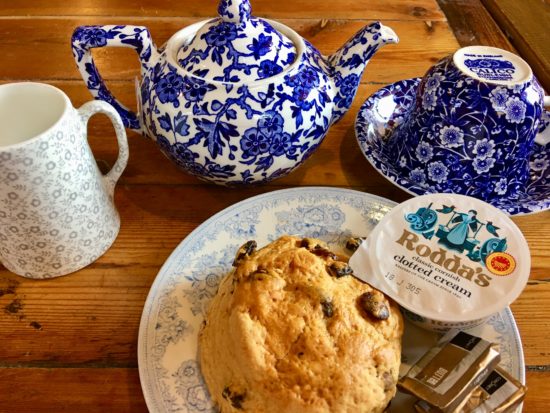
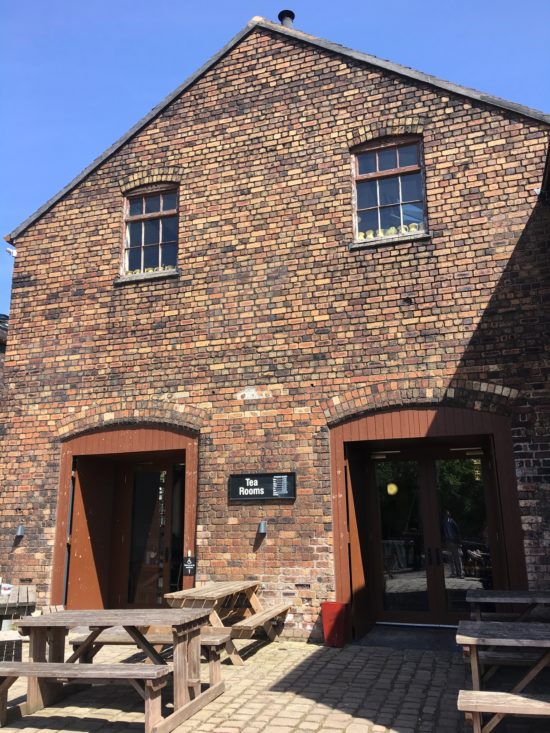
It's true what they say — good tableware really does make a meal taste better. It genuinely feels different. Behind the café there's a garden with seating for everyone, and a canal runs alongside it.
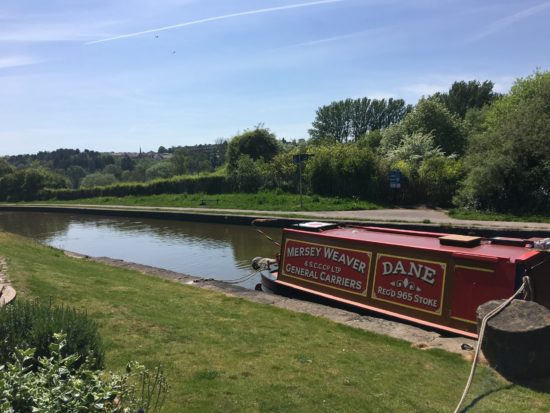
Before lorries took over transport, this canal was how the finished pottery was shipped out to its destinations by boat.
The Afternoon Tour Begins
The theme of the afternoon tour is the systems that keep Burleigh's factory running.
First: Inside the Bottle Chimney
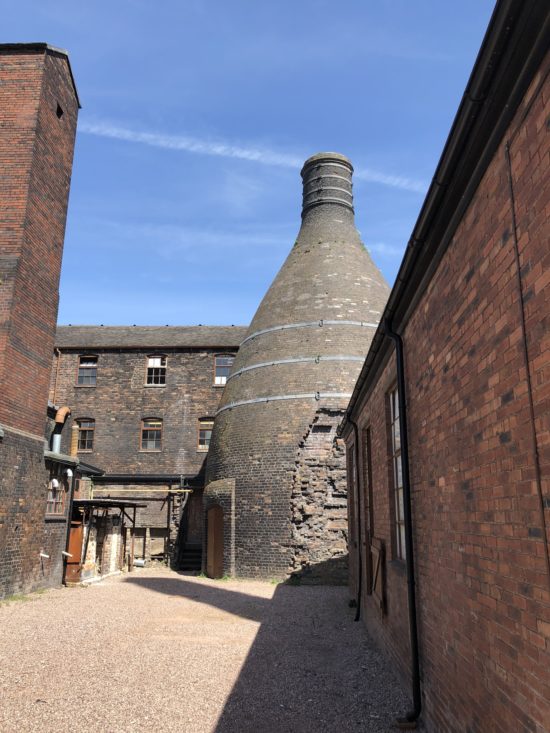
The one surviving bottle chimney is, of course, no longer in use today. It was dark inside so I don't have photos, but at its centre was a chamber for holding the pottery, ringed by a wall with a coal-fired kiln built into it. Loading and unloading heavy boxes of pottery through the narrow kiln opening must have been gruelling work.
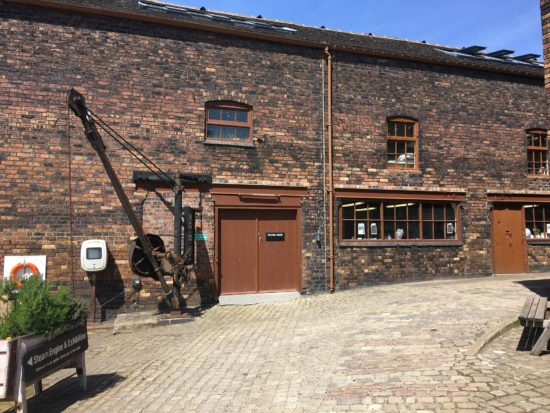
Next: Britain's First Steam Engine System
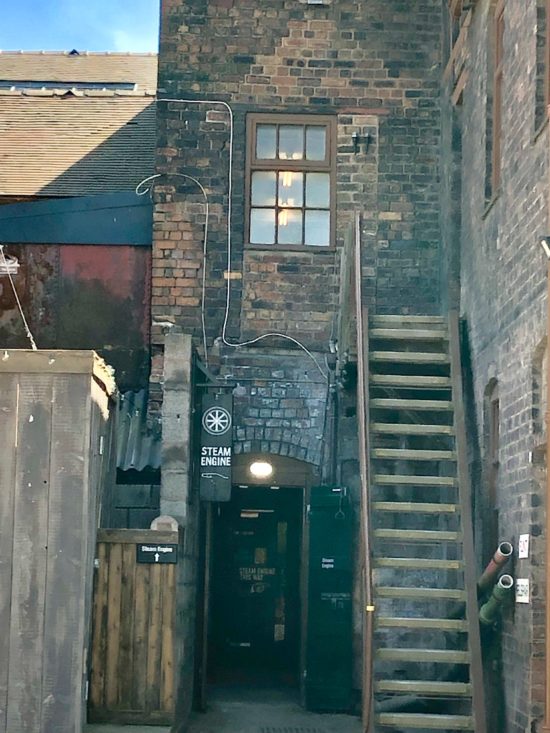
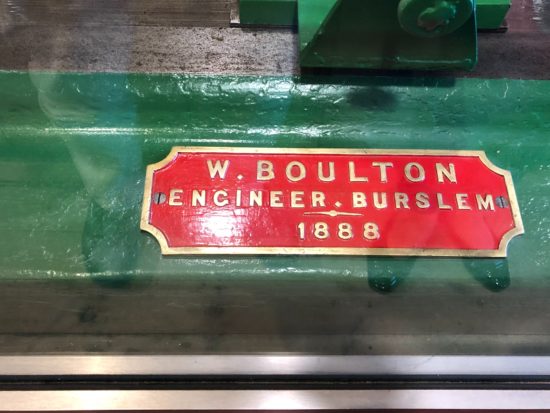
This machine once powered all sorts of equipment throughout the factory. These days it runs on electricity rather than coal, but they actually switched it on and ran it for us. The guide for this part clearly knew steam engines inside out, though he used so much technical terminology that I couldn't follow all of it — a shame!
Next: A Very Recently Discovered Room
The next stop was a facility only found very recently: "The Bath House," opened on 28 November 2017. A bathroom? Really?
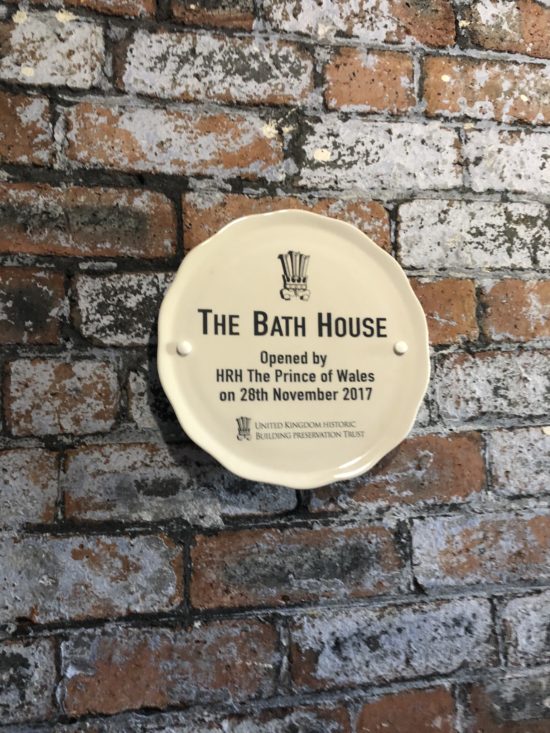
This bathroom sits partly below ground level, and its windows had been bricked over from the outside, so nobody even knew the room was there. It now has proper steps leading down to it.
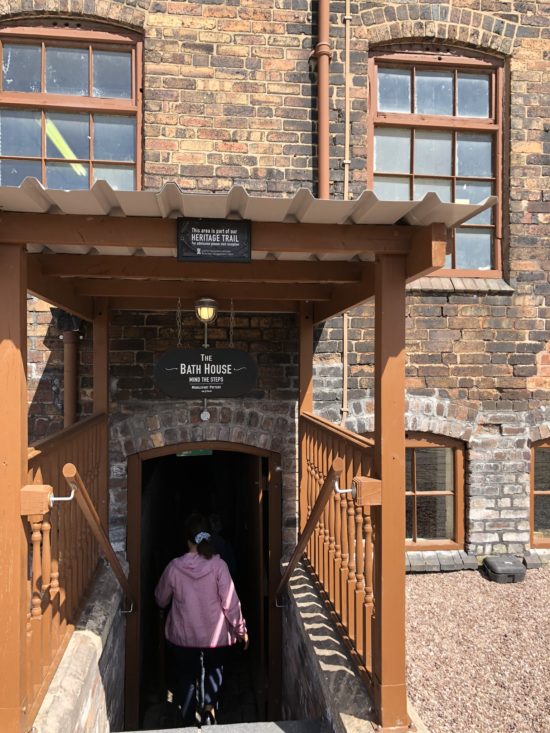
The story goes that a building surveyor noticed something didn't add up about this part of the structure — there had to be a hidden space — and when they broke through the brick exterior, they found windows behind it. Inside, they discovered a washroom and a bathroom.
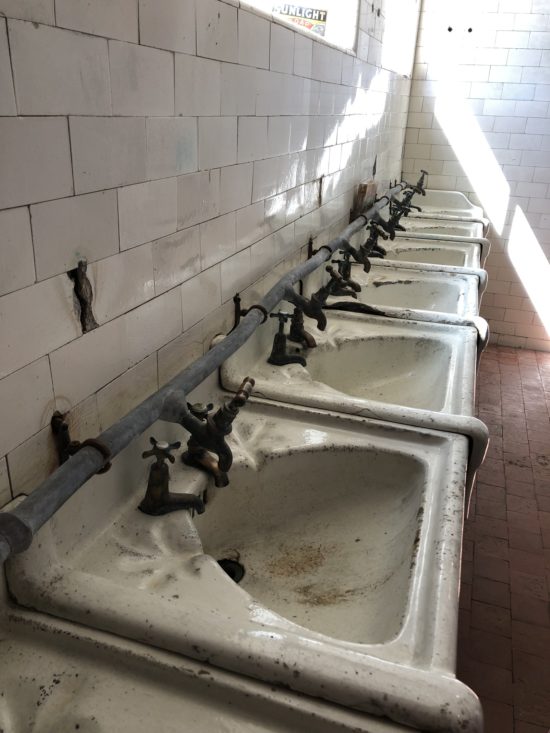
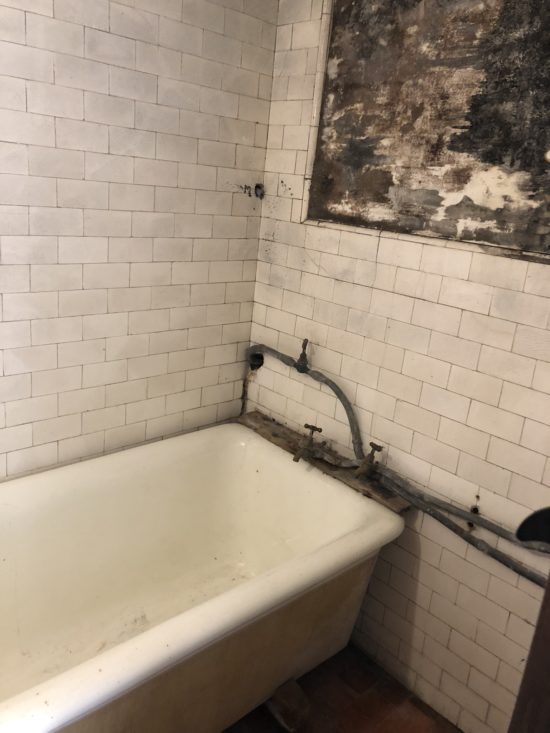
Pottery work gets you very dirty, so facilities like this make a lot of sense. According to the company's old records, on Sundays — the day off — this bathroom was even opened up to employees' families. Homes back then had no shower or bath of their own, so I imagine this perk was genuinely appreciated. Later, during the Second World War, the room was apparently used as an air-raid shelter — which may be why the windows ended up bricked over.
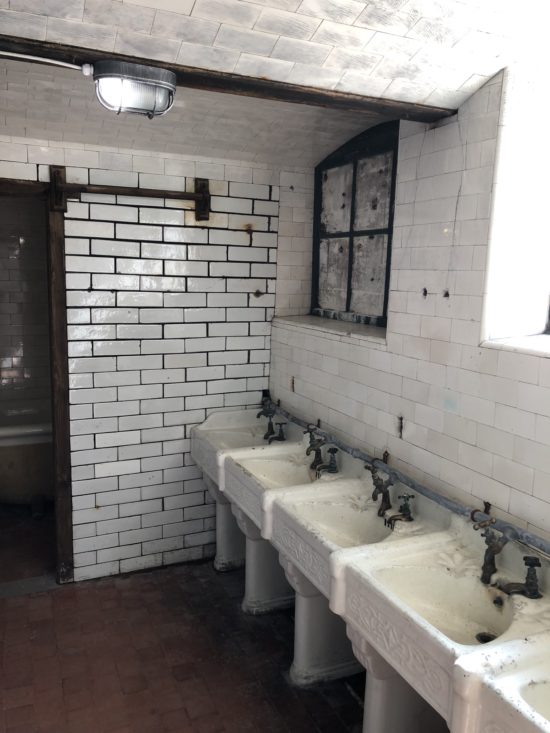
A fascinating glimpse into how people lived back then.
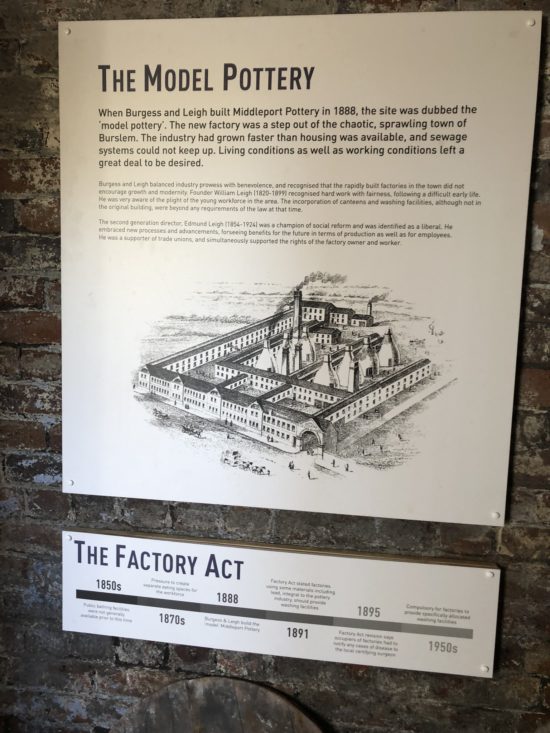
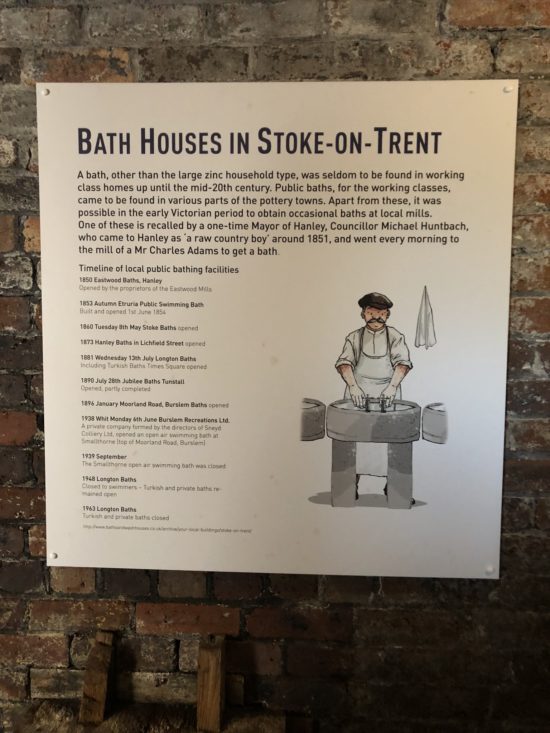
Next: Practically Burleigh's Own History
The next stop felt like walking through Burleigh's history itself: the "Mould Room," where the plaster moulds for every pattern and shape Burleigh has ever made are stored.
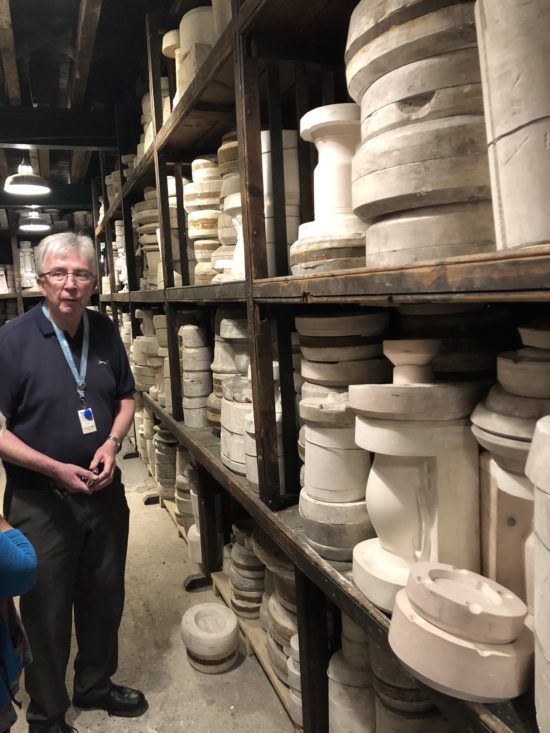
There were an astonishing number of them. Alongside all the plates and pots, there were plenty of elaborate pieces too — this one's a Beefeater from the Tower of London.
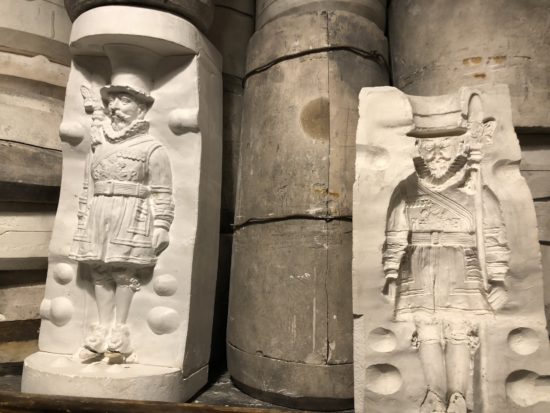
This one marks Queen Elizabeth's coronation.
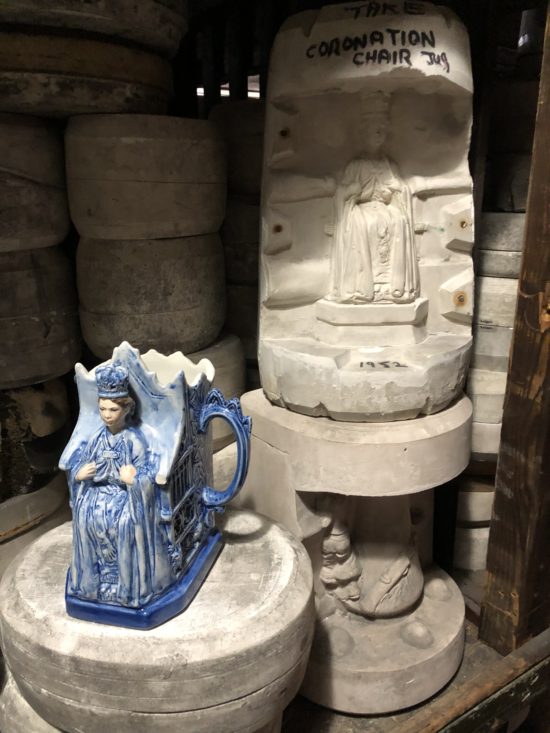
And Prime Minister Churchill.
Finally: A Small Museum
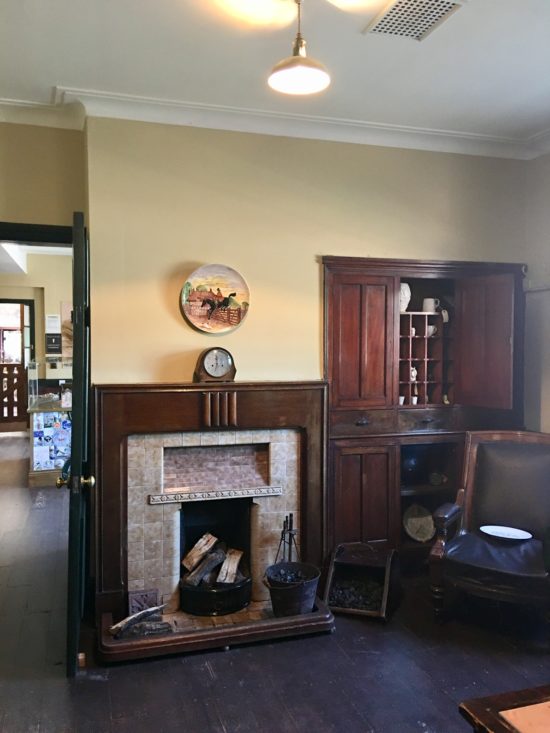
Our last stop was a former office space that's now a small museum, with four rooms in total — the innermost one displaying old Burleigh pieces. There was even a range called "Japonica," inspired by Japanese pottery. This photo shows the typewriter that sat in the Director's Room — the president's own office.
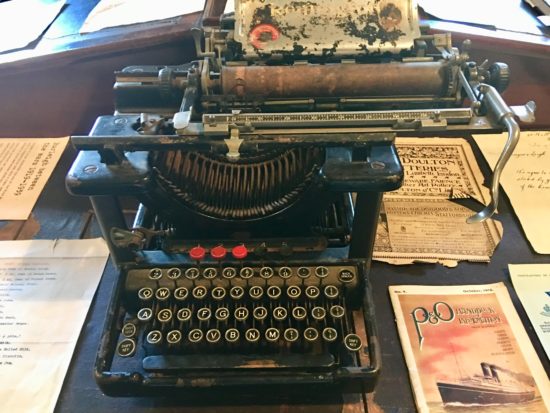
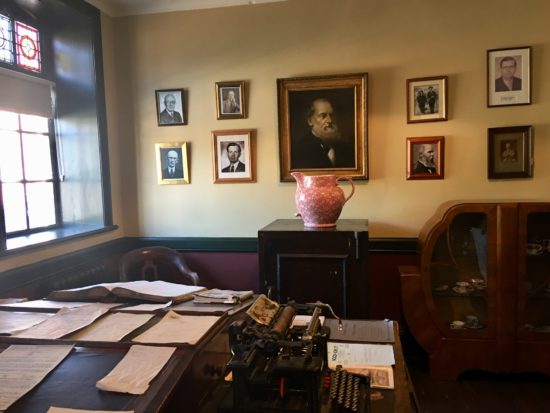
Portraits of past company presidents lined the walls, along with lovely cabinets here and there holding old Burleigh pottery, some of it donated by collectors.
Finally, Burleigh Ware at the Factory Shop!
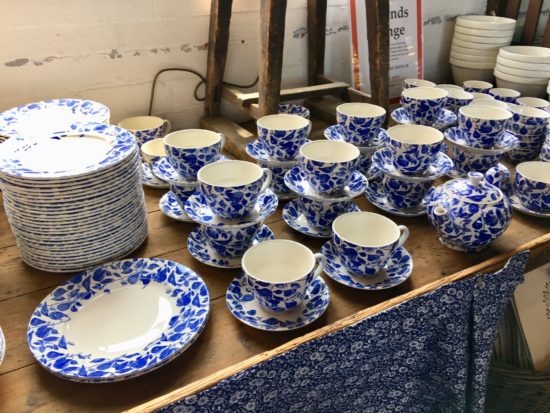
That brought the tour to a close. My legs were a bit tired by then, but it was a genuinely worthwhile few hours. Let me finish with a few of the Burleigh pieces I saw in the factory shop. This one shows Burleigh's signature blue, with birds perched on a branch of pears — part of the Highgrove range, named after Prince Charles's own home in Tetbury, in the Cotswolds.
The Arden pattern, in blue and pale blue, uses hawthorn blossom as its motif.
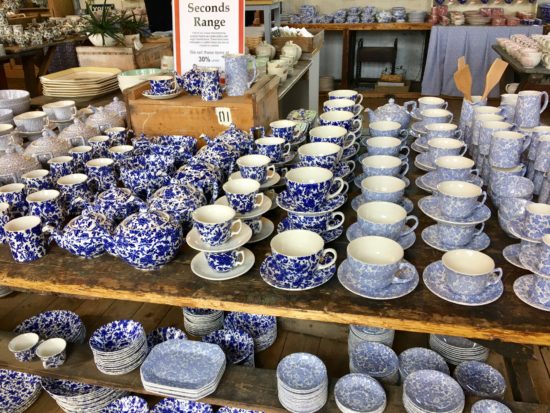
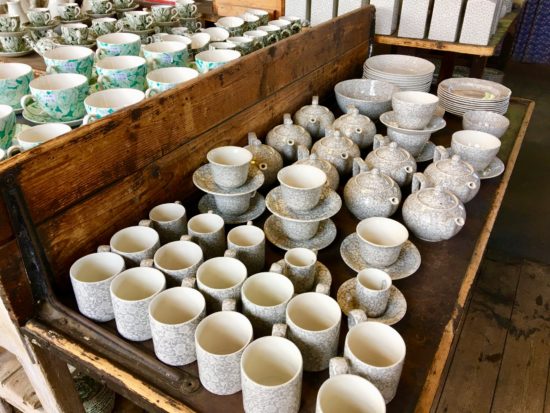
Their most popular Calico pattern, here in grey. Grey is a very fashionable choice for British home interiors right now, so it would suit that kind of home nicely.
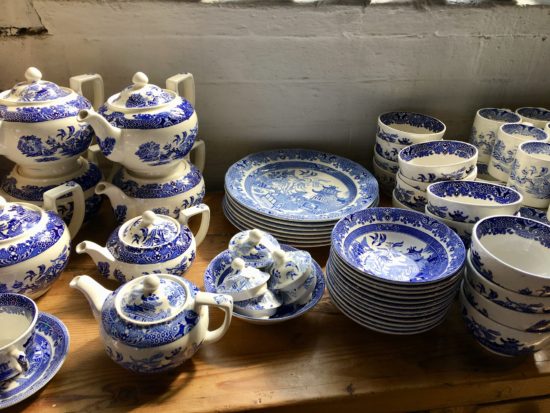
A wonderfully classic Blue Willow pattern — a chinoiserie design that was hugely popular back in the 1860s.
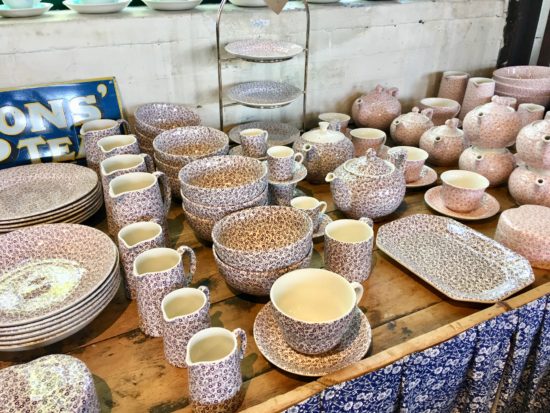
Felicity, with its small floral pattern — this one in purple and pink.
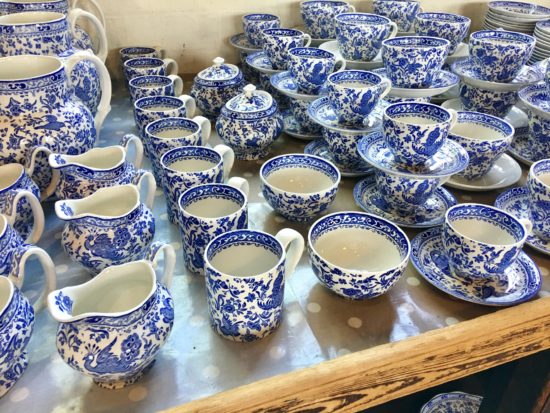
Regal Peacock, with its peacock motif, apparently designed for King George V and Queen Mary — grandson of Queen Victoria and his consort.
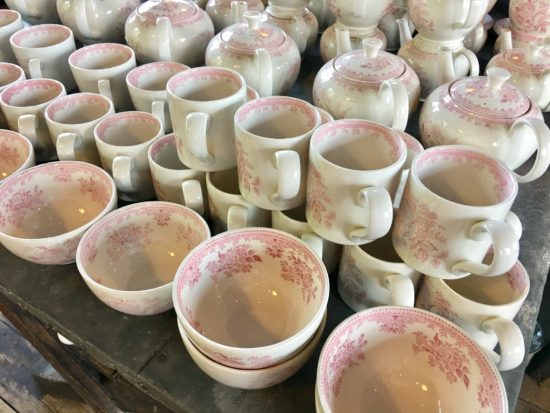
The softly pink Asiatic Pheasants.
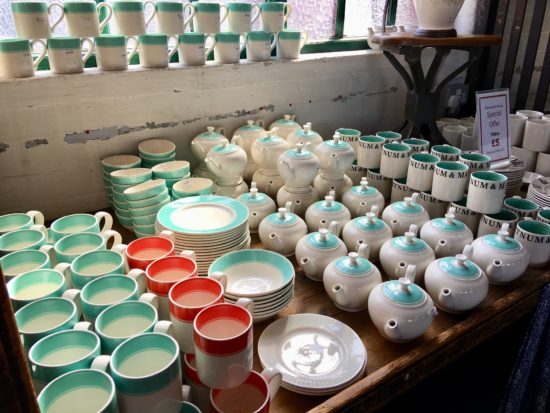
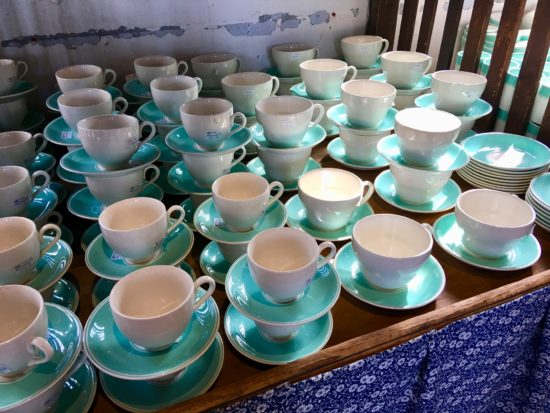
And tableware made for Fortnum & Mason, the royal warrant food store near Piccadilly Circus in London.
Until now, I'd only ever used Burleigh for teacups, teapots, and cake plates, but seeing how well it suited a proper meal at the café made me want more — so I picked up a deep dish, shaped like the one my baked potato came in. I have a feeling it'll get plenty of use. Burleigh: handmade pottery, made by the only company in the world still using copper plate transfer. Do go and visit if you get the chance.
Other books you might like
You're welcome to take a look.
EAST TO WEST: The Heart of Haiku, the Light of Scripture
The warmth held in something made by hand — the kind this collection finds through haiku. This is a book my father-in-law left behind.
View on AmazonCataract Surgery-A Memoir: Double cataract surgery in Osaka, Japan
Another new experience at 66 — an honest account of the cataract surgery I went through.
View on AmazonSushi Business in Britain: the complete four-volume series
A novel series following thirty-five years in the British sushi trade, from apprentice to factory manager to a small sushi school. The complete edition offers all four volumes at a better price.