About the other vegetables & fruits in our garden
I've already written individual logs for tomatoes, cucumbers, and aubergines, but there's plenty more growing in the garden beyond those three. In this post I want to introduce twelve more things, one by one: raspberries, apples and pears, potatoes, Jerusalem artichokes, asparagus, kale, chard, rhubarb, squash and pumpkin, courgettes, sweetcorn and comfrey — the points I try to keep in mind for healthy growth, plus a bit about how each one is actually doing.
Raspberries
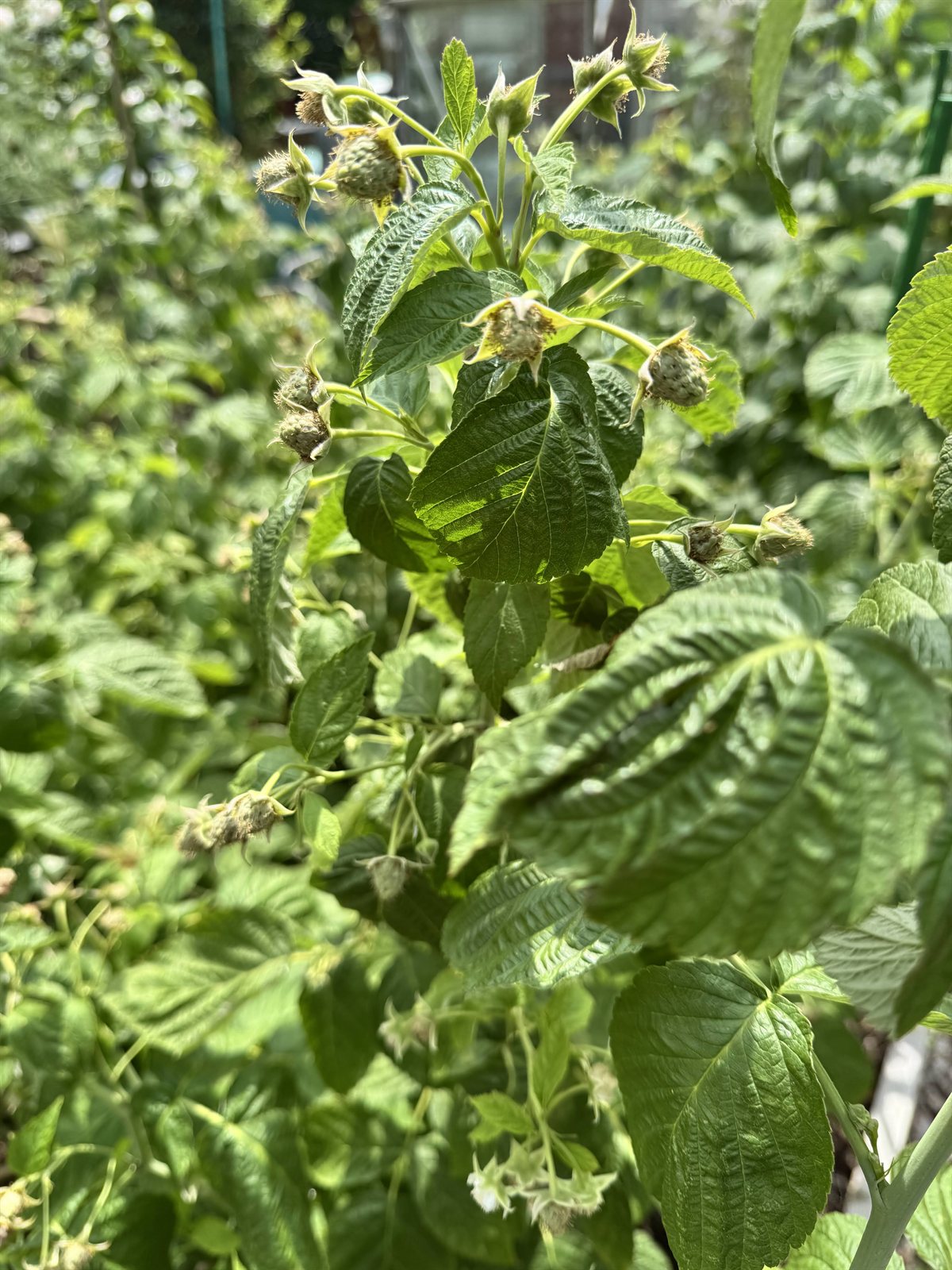
- Give them a spot with good sun and airflow
- Cut spent canes back to the base each year to make room for new growth
- Tie the canes to a support or wire so they don't collapse under the weight of the fruit
I try to keep these three things in mind, but honestly, raspberries are about the lowest-maintenance thing in the whole garden. I've been growing them every year since we moved into this house in 2016, and they keep rewarding me with a generous harvest without asking for much in return.
Apples & pears


- Choose compatible varieties nearby for good cross-pollination
- Keep training and pruning the branches against the wall regularly to maintain the espalier shape
- Thin out the fruit if there's too much, so each one gets enough energy to develop properly
I'm especially careful not to miss the right timing for pruning and training. I've been harvesting apples and pears every year since 2016 — I've got two apple trees and two pear trees planted alternately along the wall, all trained as espaliers.
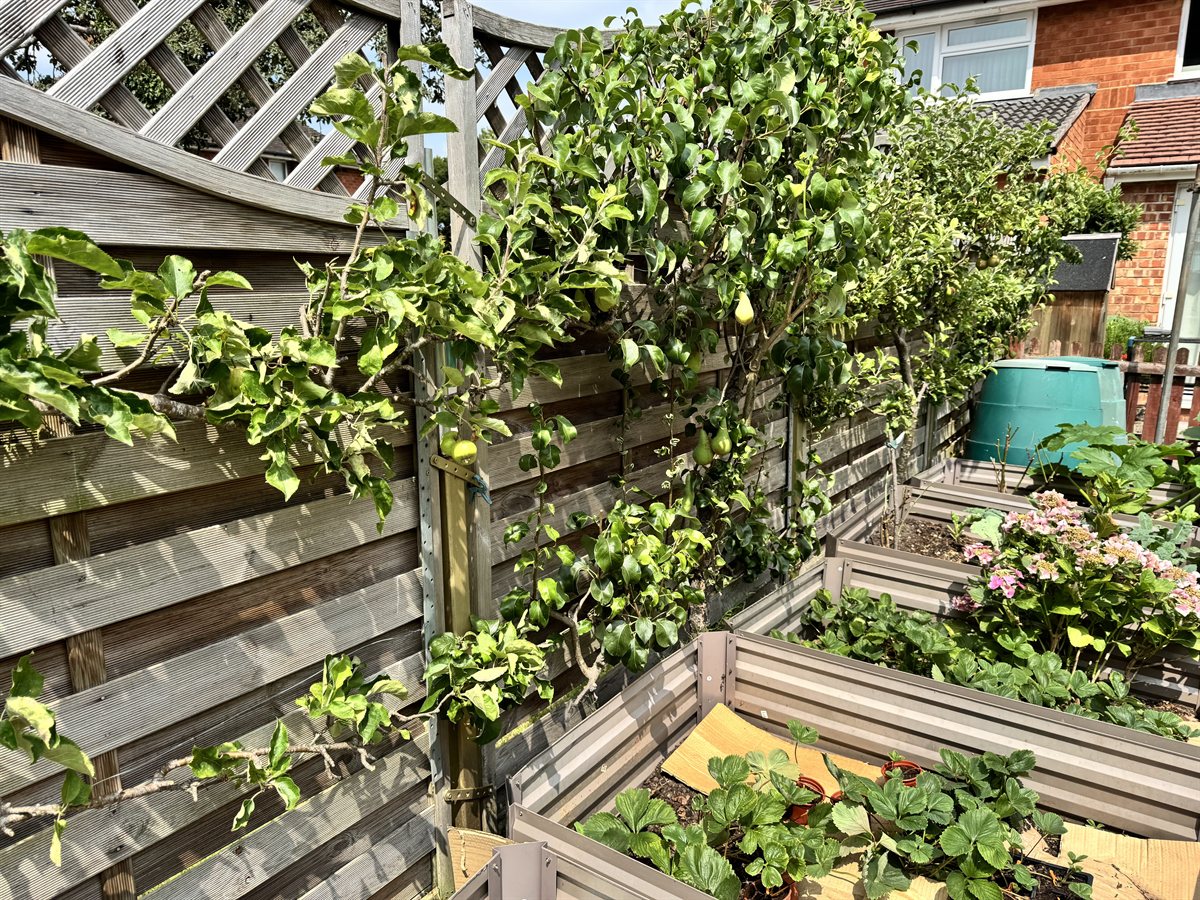
Seeing how the branches now cover the whole wall, I can really feel how it's taken shape gradually, one year at a time.
Potatoes
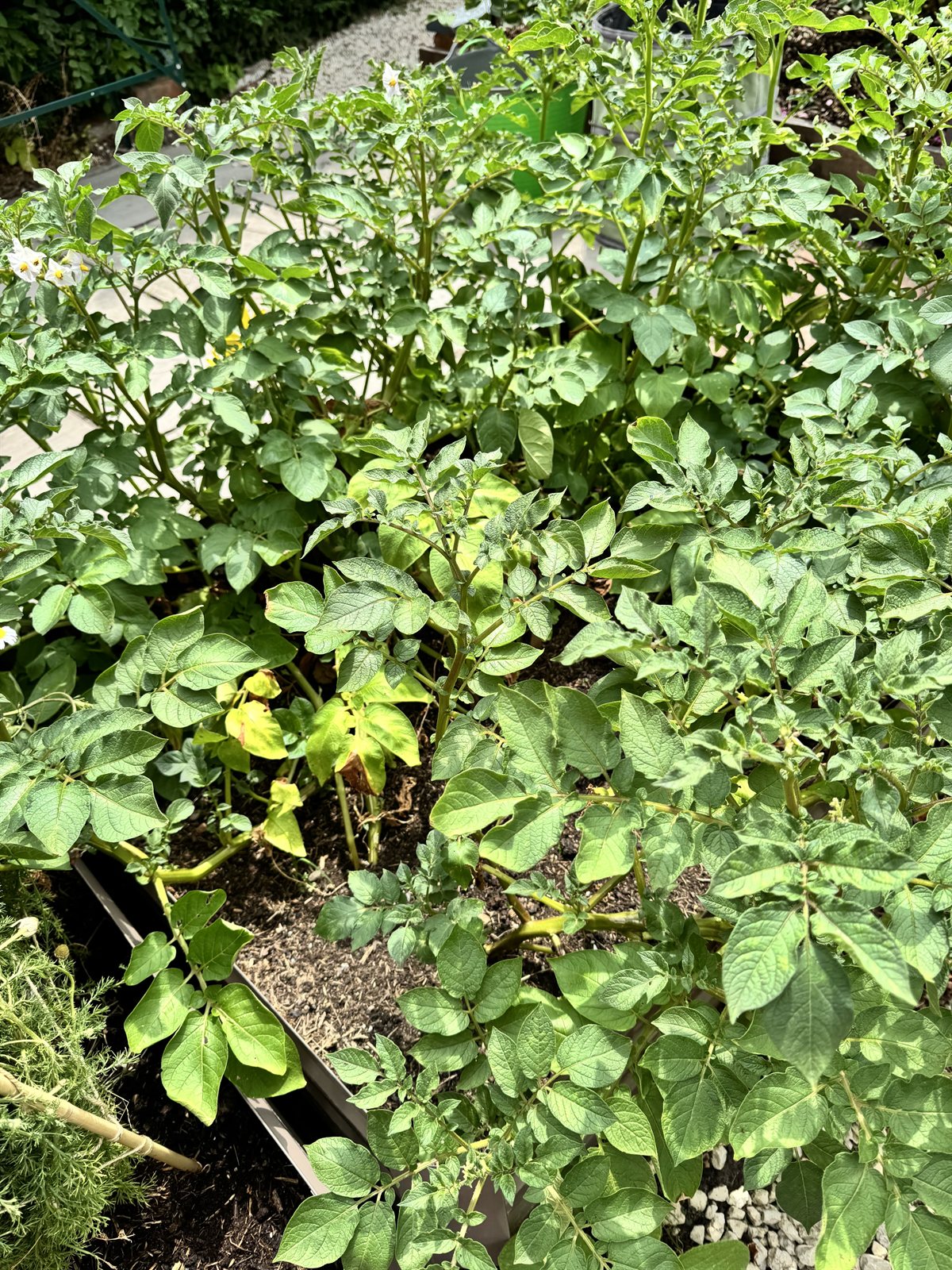
- Earth up regularly so the tubers don't get exposed to light and turn green
- Keep the watering consistent, especially while the tubers are bulking up
- Keep good airflow around the plants and watch for early signs of blight
I keep these three things in mind as I tend them. Right now the Desiree bed is full of plants whose flowers have finished and whose leaves are starting to turn yellow, which means harvest is close. I was born in Hokkaido and have always loved potatoes, and one thing I really appreciate about the UK is just how many varieties there are, each with its own texture and flavour — comparing them has become one of my little pleasures.
Jerusalem artichokes
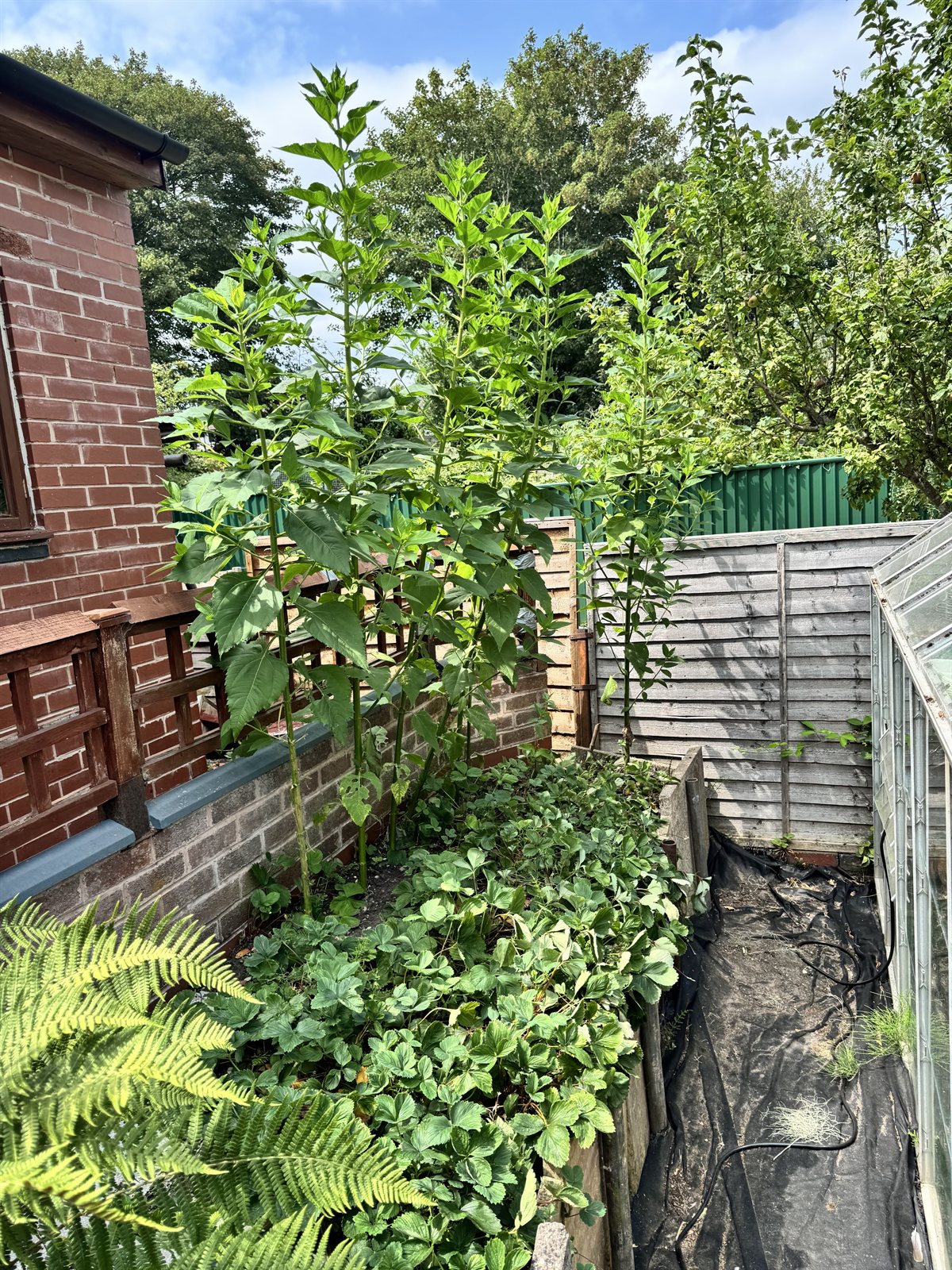
- Give them a sheltered spot or support, since the stalks grow tall and can topple in wind
- Keep them contained, as they spread vigorously and can take over if left unchecked
- Leave two or three tubers in the ground at harvest time so new shoots come up on their own next year
Of these three, it's the last one that keeps saving me effort. Jerusalem artichokes are often said not to raise blood sugar much, and at home I roast them or slice them thin and pickle them in sweetened soy sauce. Just leaving two or three tubers in the ground is enough for them to come back strong the following year. Before long they'll put out yellow, chrysanthemum-like flowers, and watching them sway gracefully even in a strong wind never fails to move me.
Asparagus
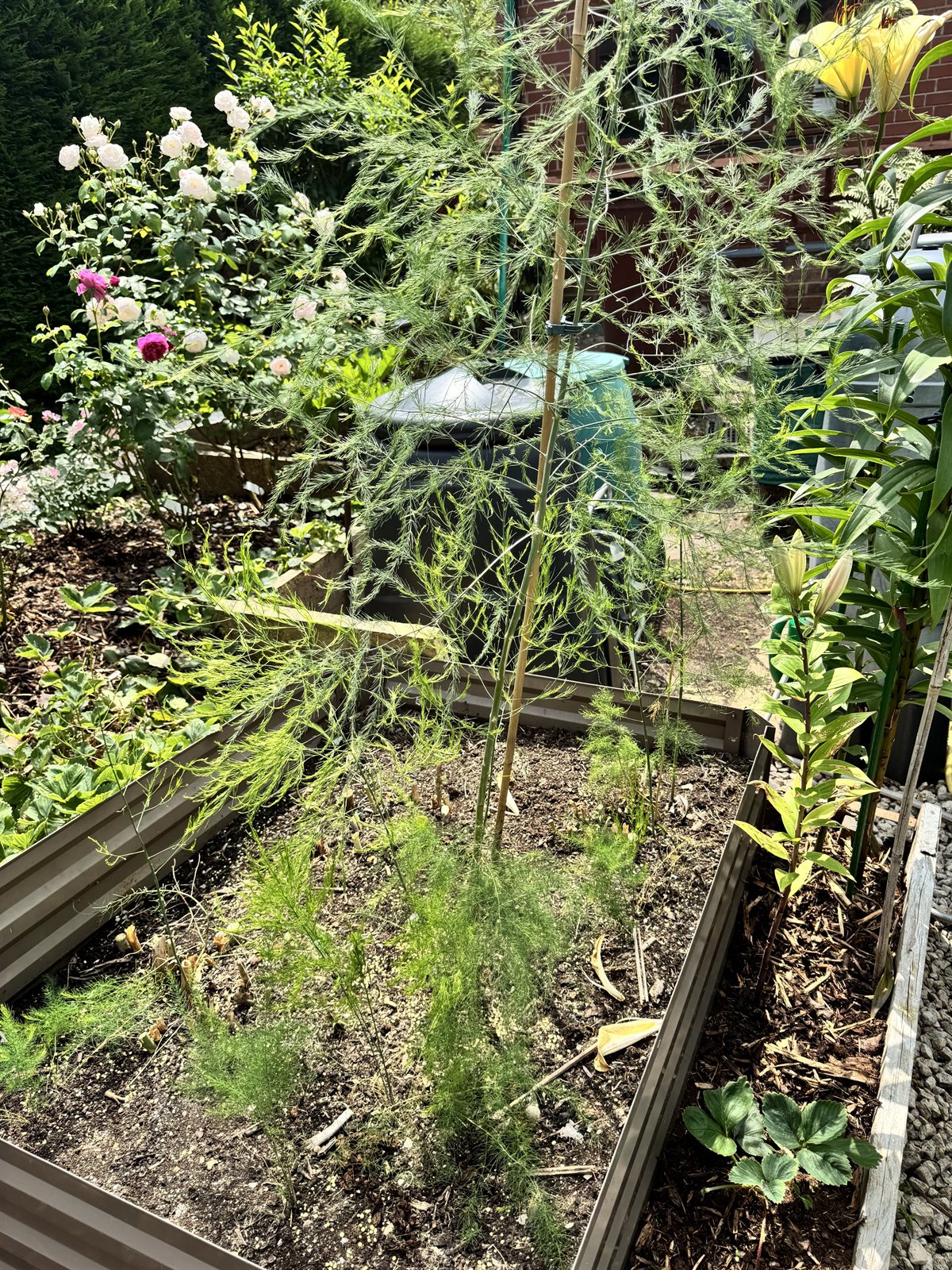
- Give the roots room to spread, ideally in a dedicated, generously deep raised bed
- Resist harvesting for the first two to three years so the crowns can establish properly
- Leave the ferny foliage standing until autumn after harvest, so the plant can store up energy
Of these three, the hardest part is definitely the patience in those first couple of years. I set up a raised bed just for asparagus and planted the crowns four years ago, but it wasn't until two years later that I could actually start harvesting. Every time I cut a spear now, I feel like the wait was worth it.
Kale
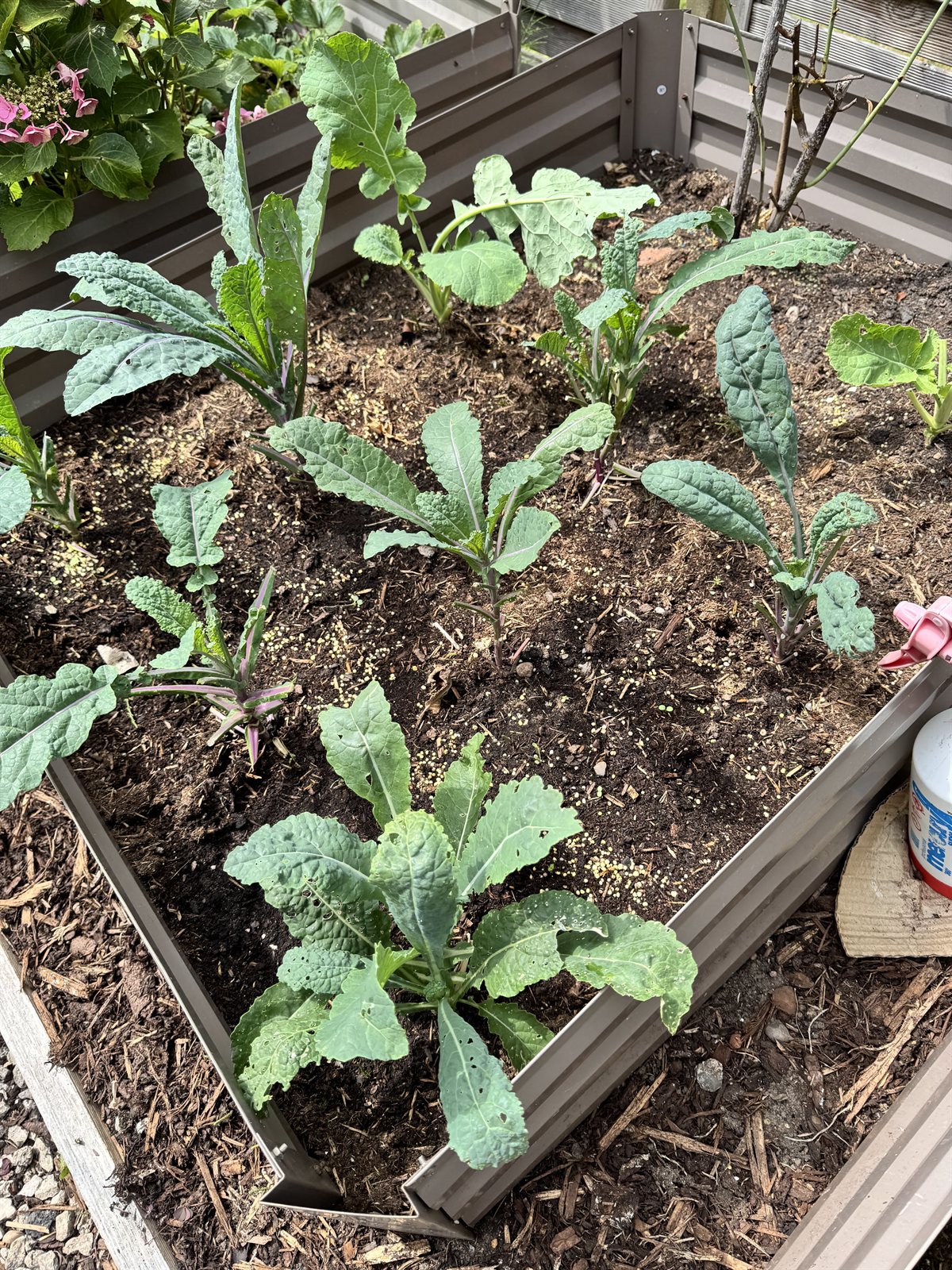
- Cover with insect netting to protect against caterpillars and other pests
- Harvest the outer, lower leaves first so new leaves keep coming
- Keep the soil fertile and reasonably moist
Sticking to these three, kale holds up remarkably well even through the UK climate. I started growing it after hearing it's a good source of iron, and it's become a regular addition to my morning smoothie.
Chard
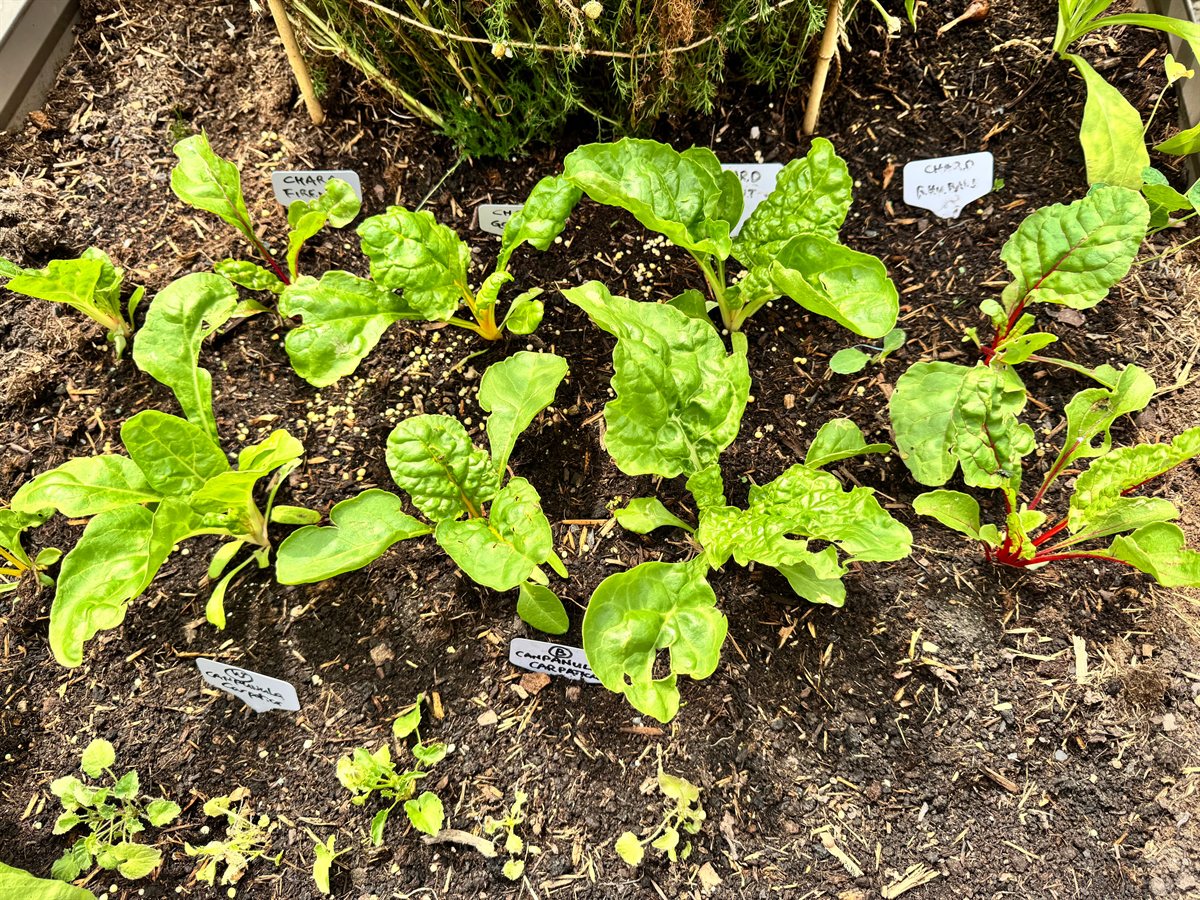
- Harvest the larger outer leaves first, cut-and-come-again style
- Space the plants well to keep the airflow good
- Watch the watering carefully so the soil doesn't dry out
Keep these three in mind, and the leaves just keep coming no matter how many times I harvest. My go-to way to eat it is to pick the bigger leaves and quickly cook them in a pan — it's wonderfully low-effort since there's always more on the way.
Rhubarb
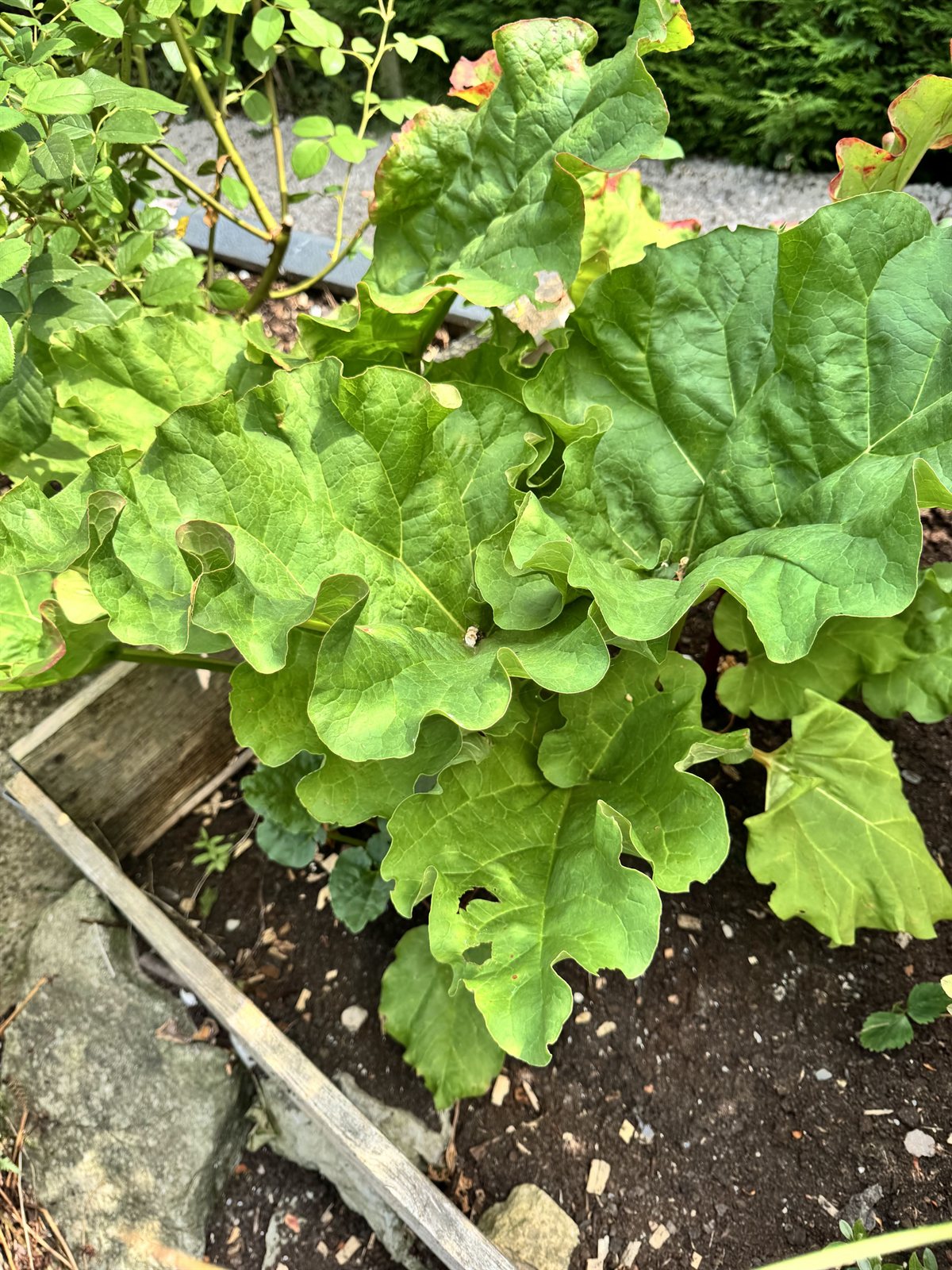
- Once planted, leave it undisturbed for a few years so the crown can settle in — it's a perennial
- Keep the soil rich with compost and don't let it dry out
- Only eat the stalks, never the leaves, since they contain oxalic acid
I try to keep these three things in mind, and the plant I've got growing near the roses has rewarded me with big, wavy leaves that really hold their own in that corner of the bed. A few leaves show some nibbling from insects, but I've come to take that as just another sign of how healthy it is.
Squash / pumpkin
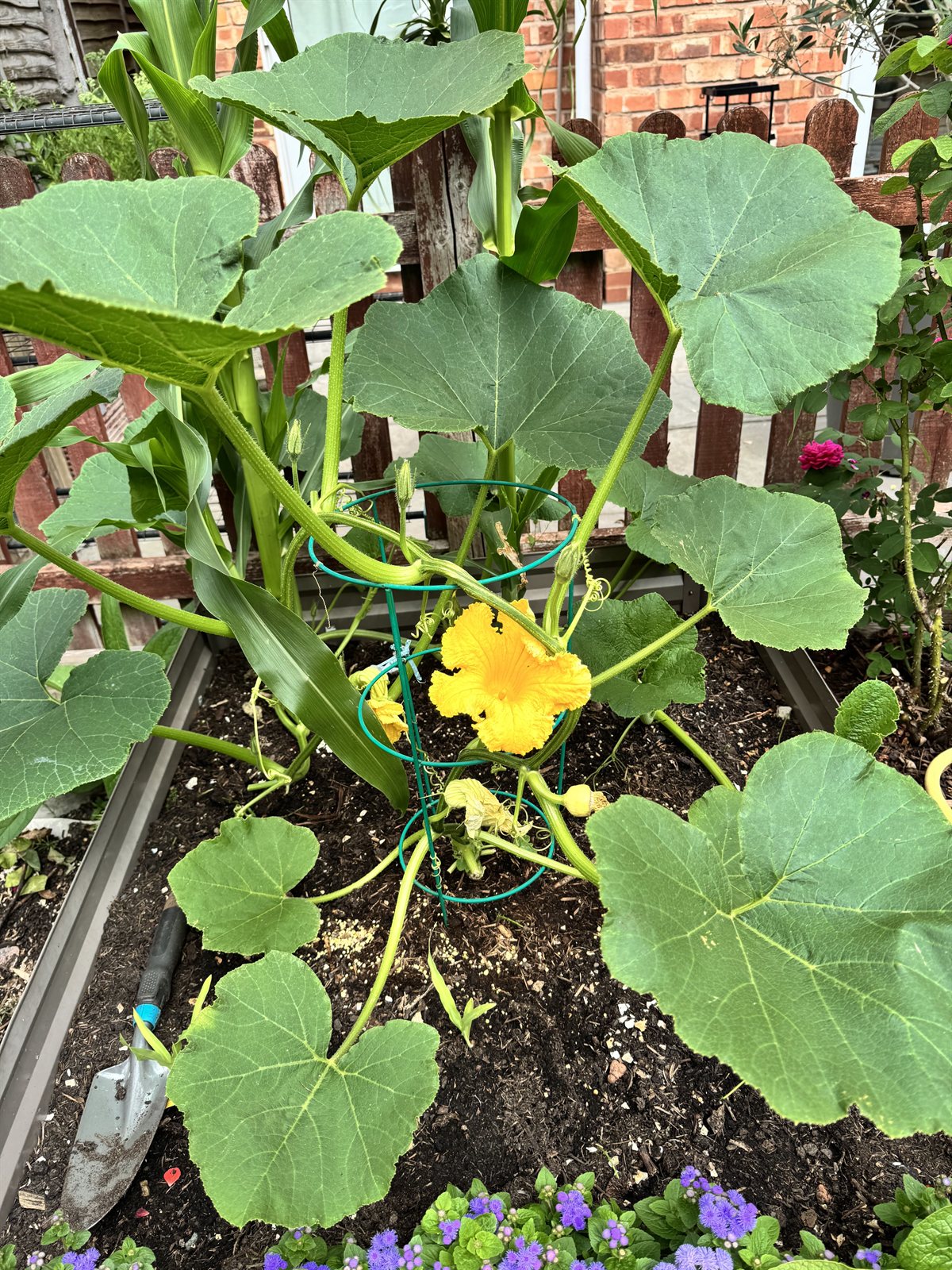
- Give the vines plenty of room to spread, in rich soil
- Hand-pollinate where needed to make sure the fruit sets reliably
- Once fruit forms, put straw or similar underneath to keep it from rotting against the soil
I follow these three, though I'll admit that most pumpkin seed varieties sold in the UK aren't quite to my taste. So these days I get hold of Hokkaido pumpkin seeds instead, and I'm already looking forward to that familiar sweetness.
Courgette
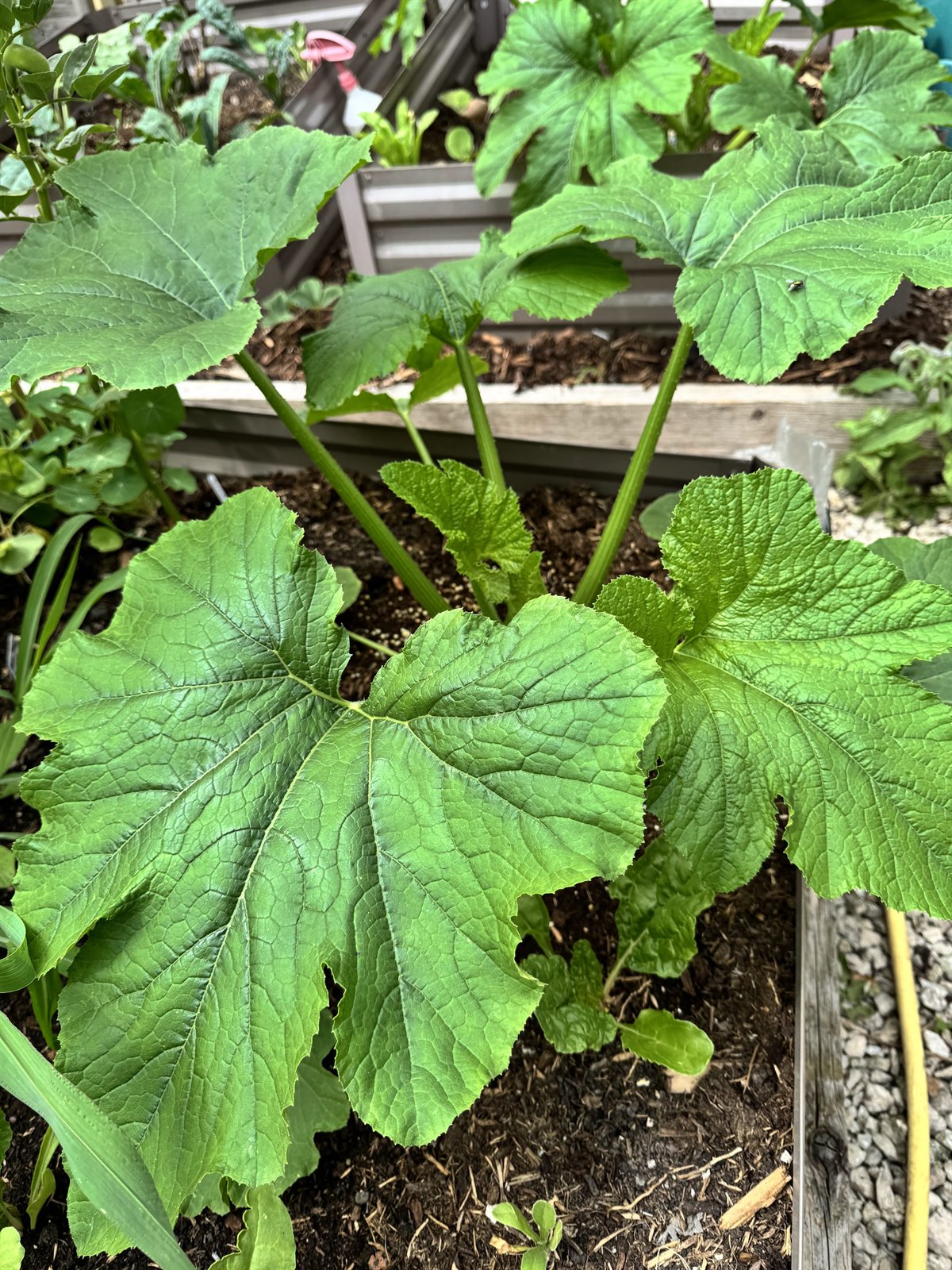
- Give it plenty of space and good sun, since the leaves spread wide
- Mulch around the base to keep moisture in and prevent the soil drying out
- Harvest often to ease the load on the plant and keep new fruit coming
Stick to these three and the rest really takes care of itself. It takes up a fair bit of room, but one plant gives such a generous harvest that it's more than worth the space — and it barely asks for anything in return.
Sweetcorn
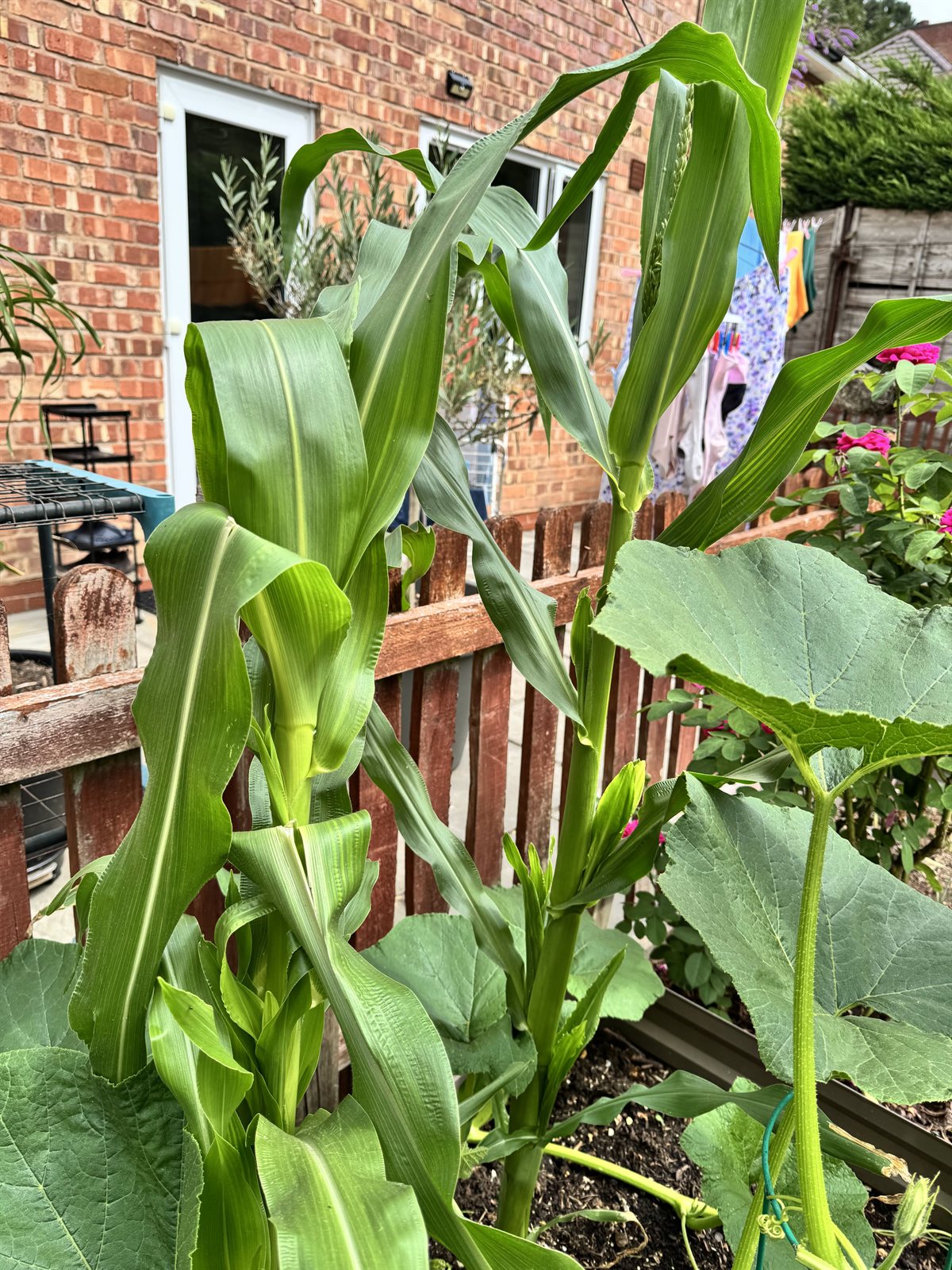
- Plant in a block rather than a single row, since it's wind-pollinated and needs several plants together
- Keep the soil fertile and well-watered, with regular feeding during the growing season
- Earth up around the base to help prevent the stalks toppling over
I've kept these three in mind, and before I knew it the stalks had grown taller than the fence, with the tassels just starting to show at the top. Right alongside, the squash is spreading its leaves too — the two of them sharing a tight space and both growing strong.
Comfrey
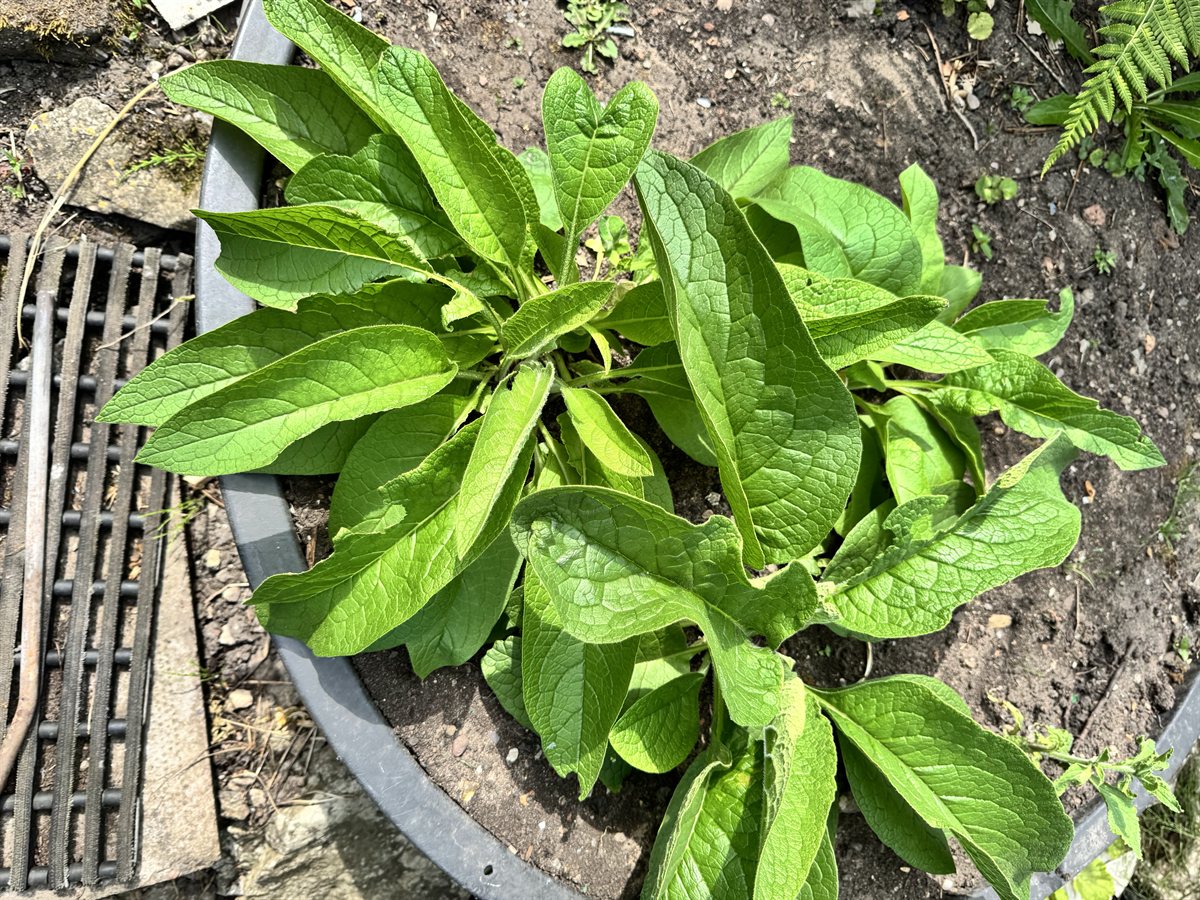
- Give it a dedicated spot away from other plants, since the roots grow deep and wide
- Once established it's extremely tough, so divide or move it carefully
- Cut the leaves and add them to the compost bin to help build good soil
Of these three, choosing the right spot mattered most. I planted it near the compost bin after hearing it helps build good compost, but knowing how deep and wide its roots grow, I deliberately kept it well away from the other plants. So far, that decision has worked out just as I'd hoped.
Other books you might like
You're welcome to take a look.
EAST TO WEST: The Heart of Haiku, the Light of Scripture
A small decision that quietly pays off years later — the kind of satisfaction this collection finds through haiku. This is a book my father-in-law left behind.
View on AmazonCataract Surgery-A Memoir: Double cataract surgery in Osaka, Japan
Another new experience at 66 — an honest account of the cataract surgery I went through.
View on AmazonSushi Business in Britain: the complete four-volume series
A novel series following thirty-five years in the British sushi trade, from apprentice to factory manager to a small sushi school. The complete edition offers all four volumes at a better price.