About this peas and beans log
This is a peas and beans growing log, split out from the seasonal care plan article. This season I'm growing four varieties (Blauwschokker, Mangetout Heraut, Runner Beans Scarlet Emperor, and Climbing French Beans Borlotti di Fuoco) without any fertiliser. I lost my first batch of seedlings in May, but on 12 July I picked my first pods of Blauwschokker, about 20 of them. I'll add monthly updates here on how they're getting on.
Progress report (July 2026): first harvest of Blauwschokker
Today, 12 July, I picked my first pods of Blauwschokker — about 20 of them. It means a lot, because I actually lost my first batch of seedlings entirely along the way. I've been growing everything without any fertiliser at all, and I'm honestly relieved they're fruiting anyway. I'd read that legumes fix their own nitrogen through bacteria in their roots, so I hoped they'd manage without feed, but I'll admit I wasn't fully sure until I saw the pods for myself.
Late May setback — young leaves eaten and the first seedlings wiped out
Towards the end of May, the first batch of pea seedlings I'd sown was almost completely wiped out — something had eaten the young leaves. It seems the small, still-tender plants I'd just transplanted into the bed were the ones targeted. I'll be honest, after they'd finally sprouted, it was pretty disheartening.
But I wasn't ready to give up, so I started again from seed in modules. This time I kept the seedlings in a nursery tray until they were a solid 20cm or more before planting them out, rather than putting them straight into the bed. As soon as I transplanted them, I covered them with insect netting to keep the pests off. That seems to have worked — there's been hardly any damage since, and they've grown well right up to today. It taught me something obvious in hindsight: the smaller the seedling, the more vulnerable it is.
Choosing and sowing the seed
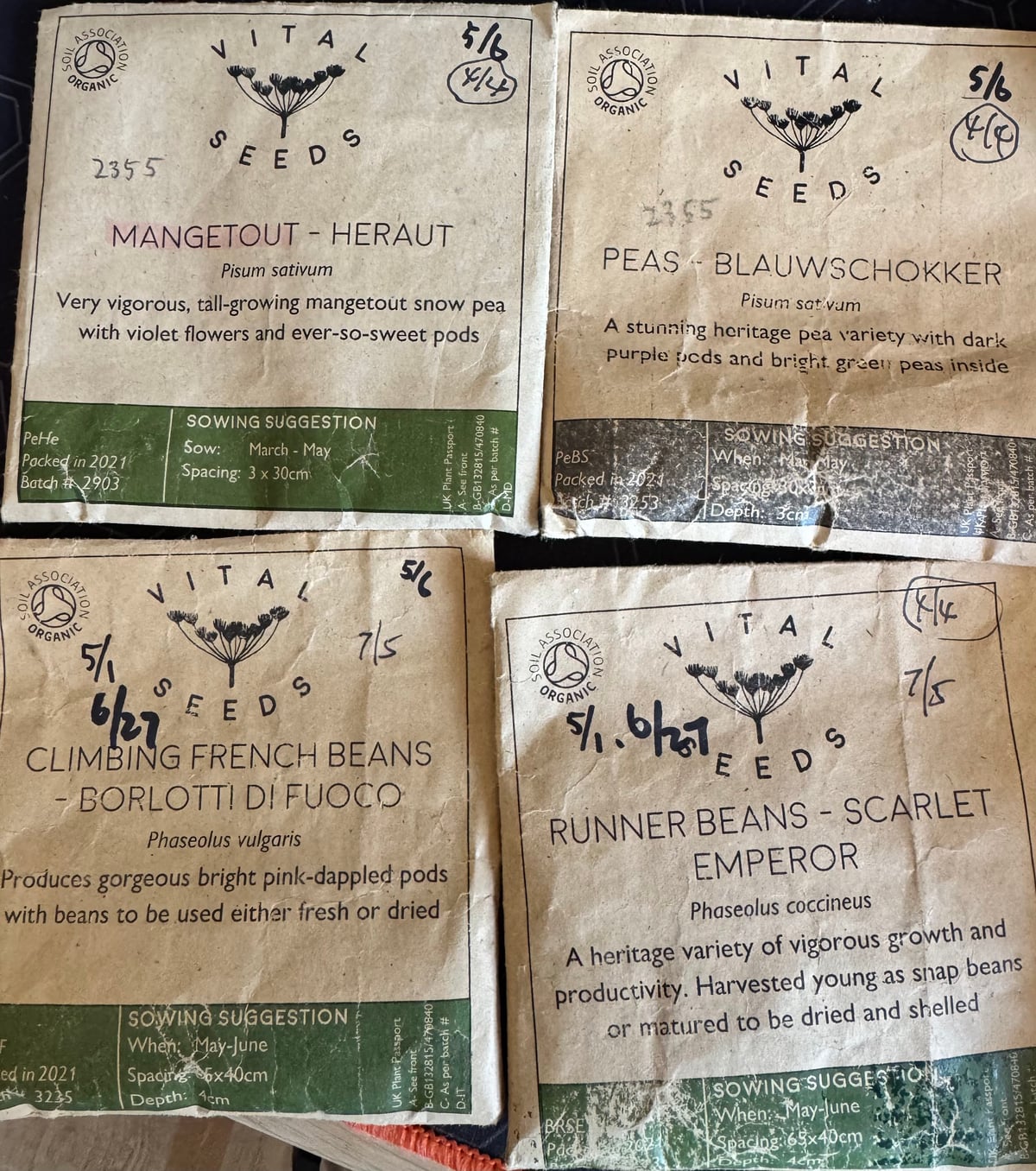
For this season I chose two pea varieties (Blauwschokker, Mangetout Heraut) and two bean varieties (Runner Beans Scarlet Emperor, Climbing French Beans Borlotti di Fuoco). I picked a mix of climbing and non-climbing types, with different pod colours and shapes, so I could enjoy some variety in both the harvest timing and how they look. The batch I resowed after the May setback is in there too — every time I look back at the seed packets, it reminds me of that lesson.
Blauwschokker
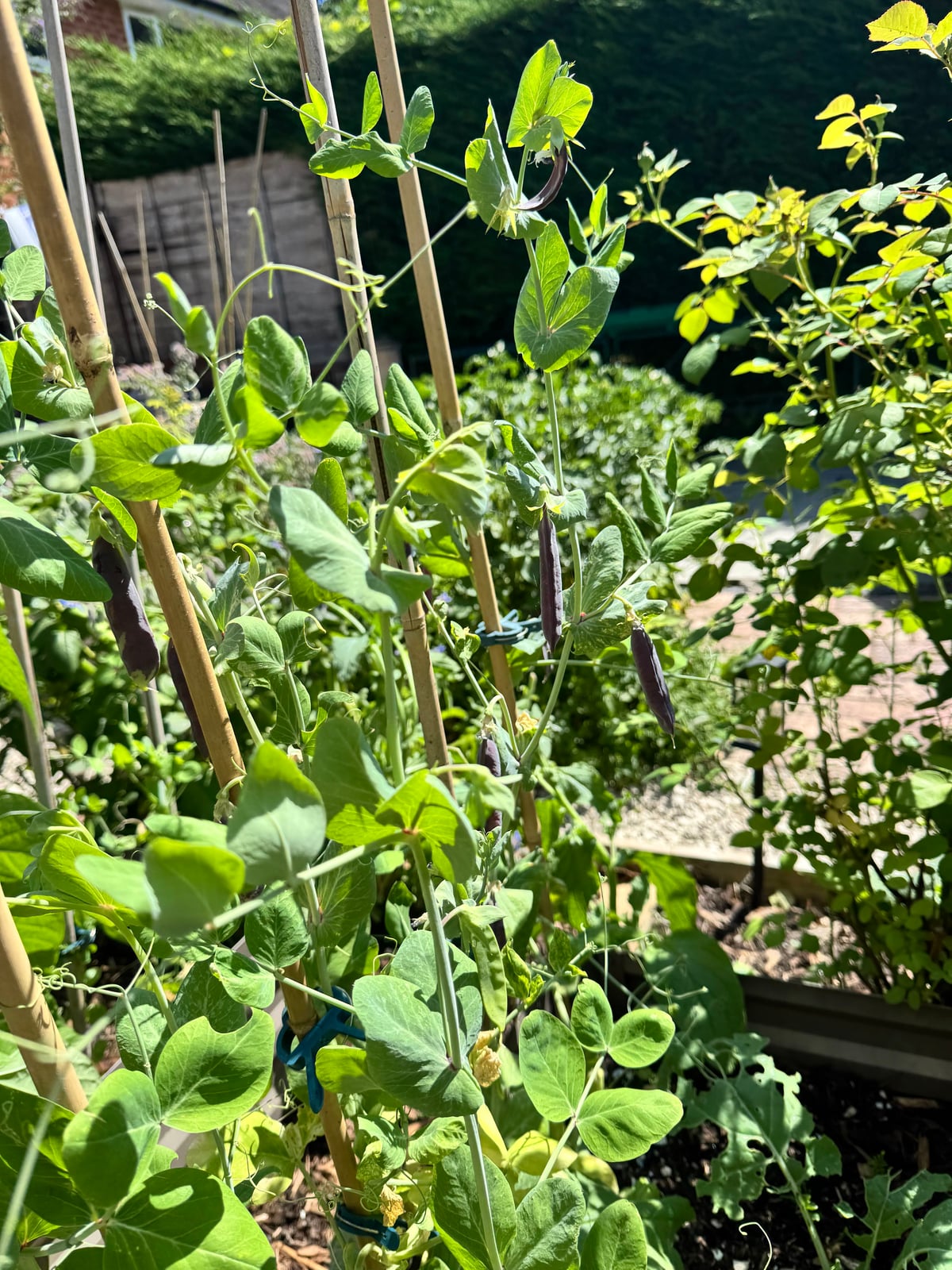
A Dutch heirloom pea with striking purple flowers and deep purple-tinged pods. It's grown the fastest of the four varieties, and it was this Blauwschokker I picked for the first time today. The pods stand out well against the green in the bed, and I find myself smiling every time I spot one. I've read that the purple fades to green once cooked, so I'm looking forward to trying that out.
Mangetout Heraut
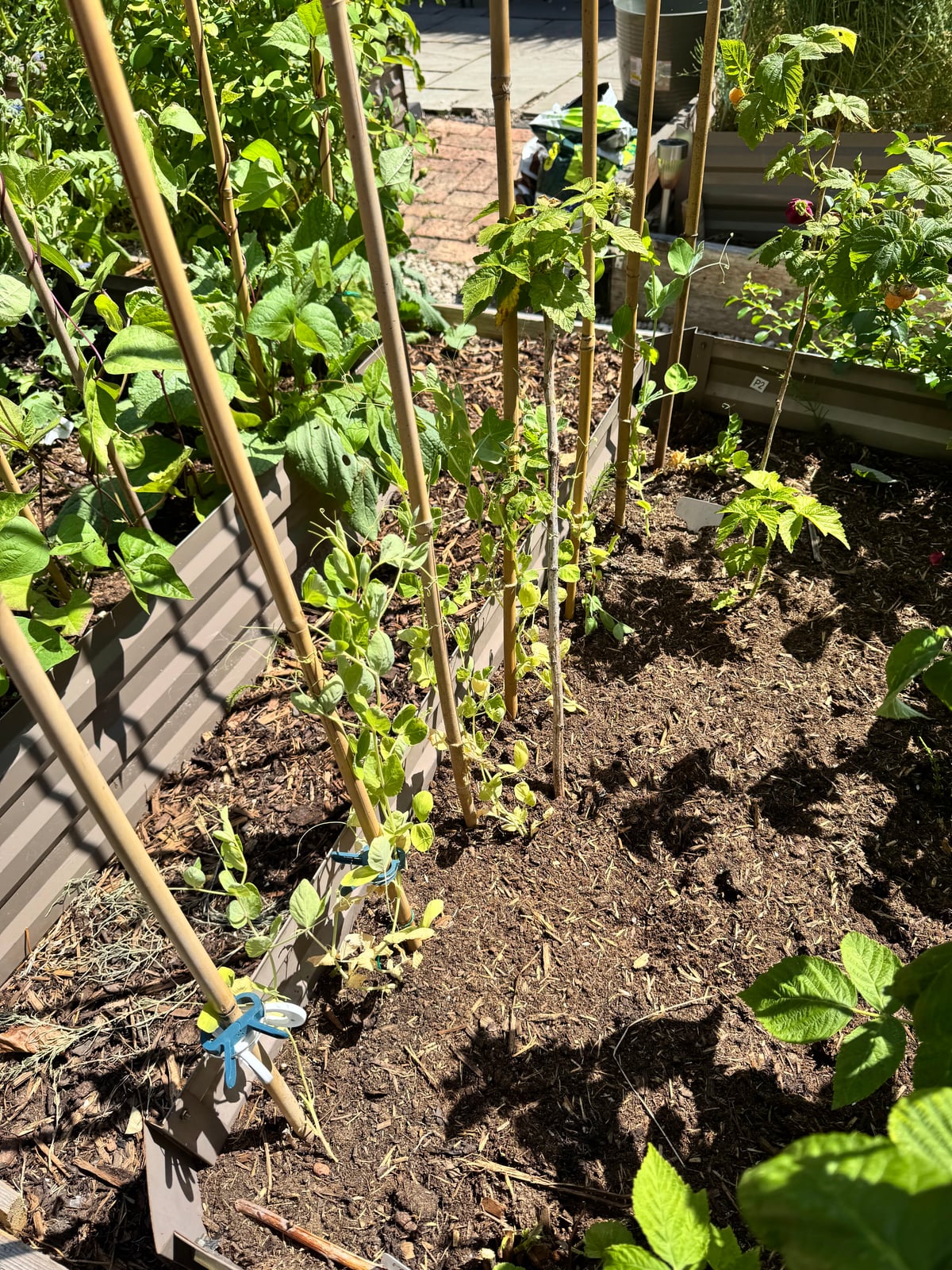
A mangetout variety, meant to be eaten pod and all. It's a little slower than Blauwschokker, but it's already covered in flowers and the pods are starting to fill out. I've heard it has thin skins with little in the way of strings, so once I can pick some I'm looking forward to just giving them a quick stir-fry.
Runner Beans Scarlet Emperor
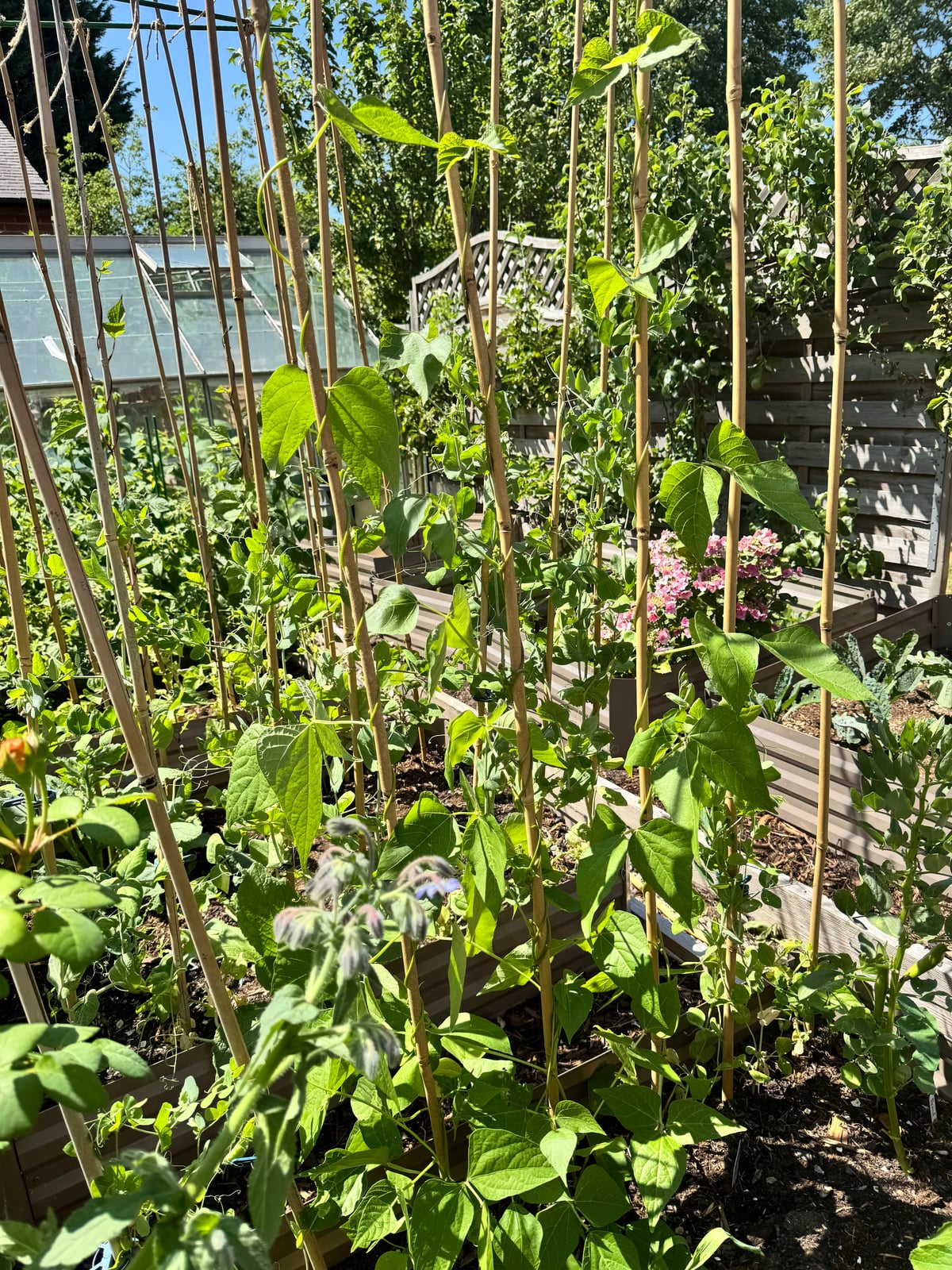
A classic in British allotments and gardens, with unmistakable bright red flowers. The colour is so vivid that it's been brightening up the bed well before any beans appeared. It's a vigorous climber, so I'm glad I got the canes up properly early on. I'd love for every flower to set a pod, but from what I understand that really comes down to pollination.
Climbing French Beans Borlotti di Fuoco
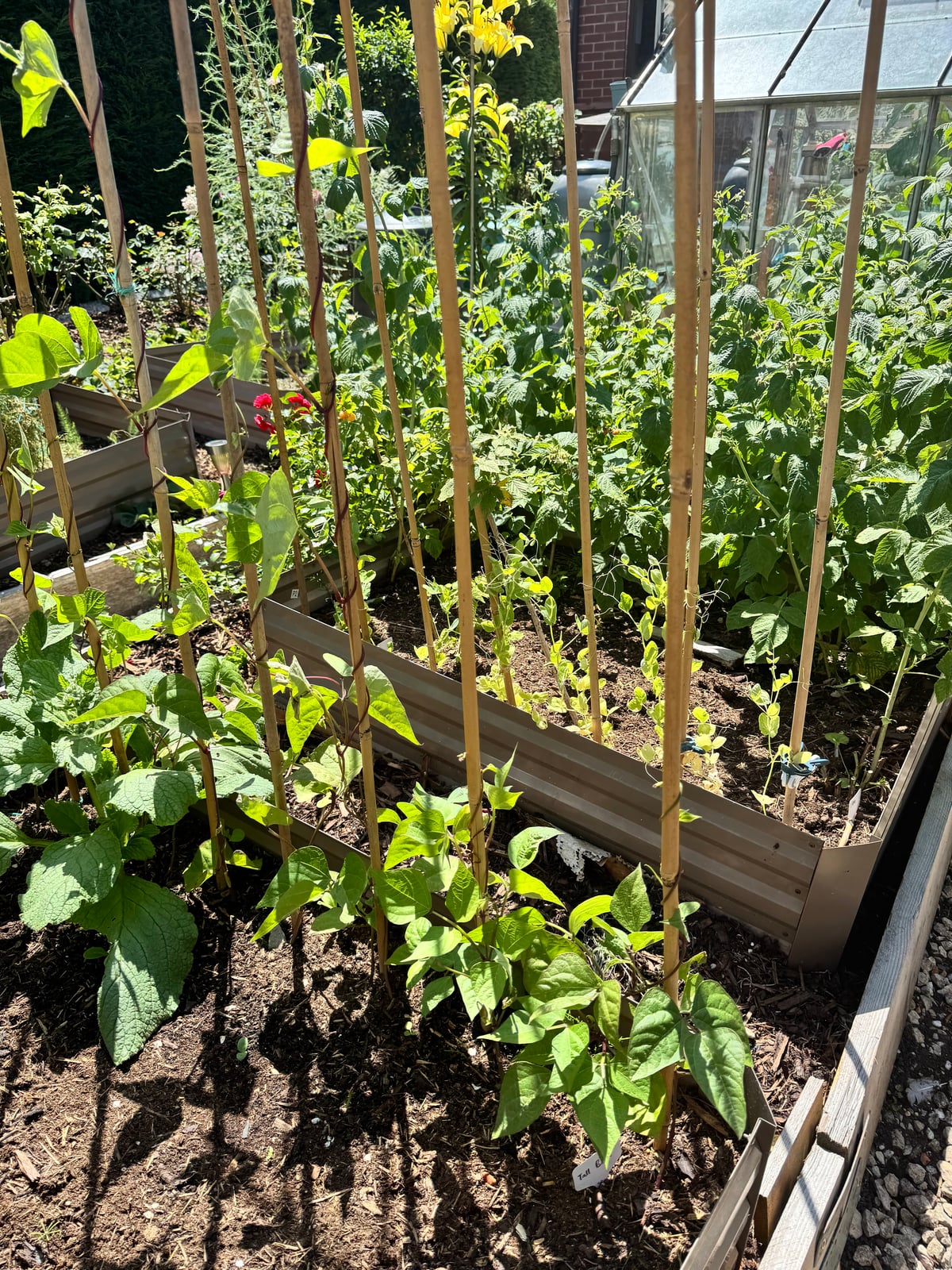
An Italian climbing bean with striking red-mottled pods. True to the name — "di Fuoco" means "of fire" — I gather the pods really do take on a flame-like pattern as they colour up, which I'm looking forward to seeing. It's the slowest of the four to develop, and I haven't spotted any pods on it yet, but the vines are climbing the canes happily.
Staking and how the plants are growing
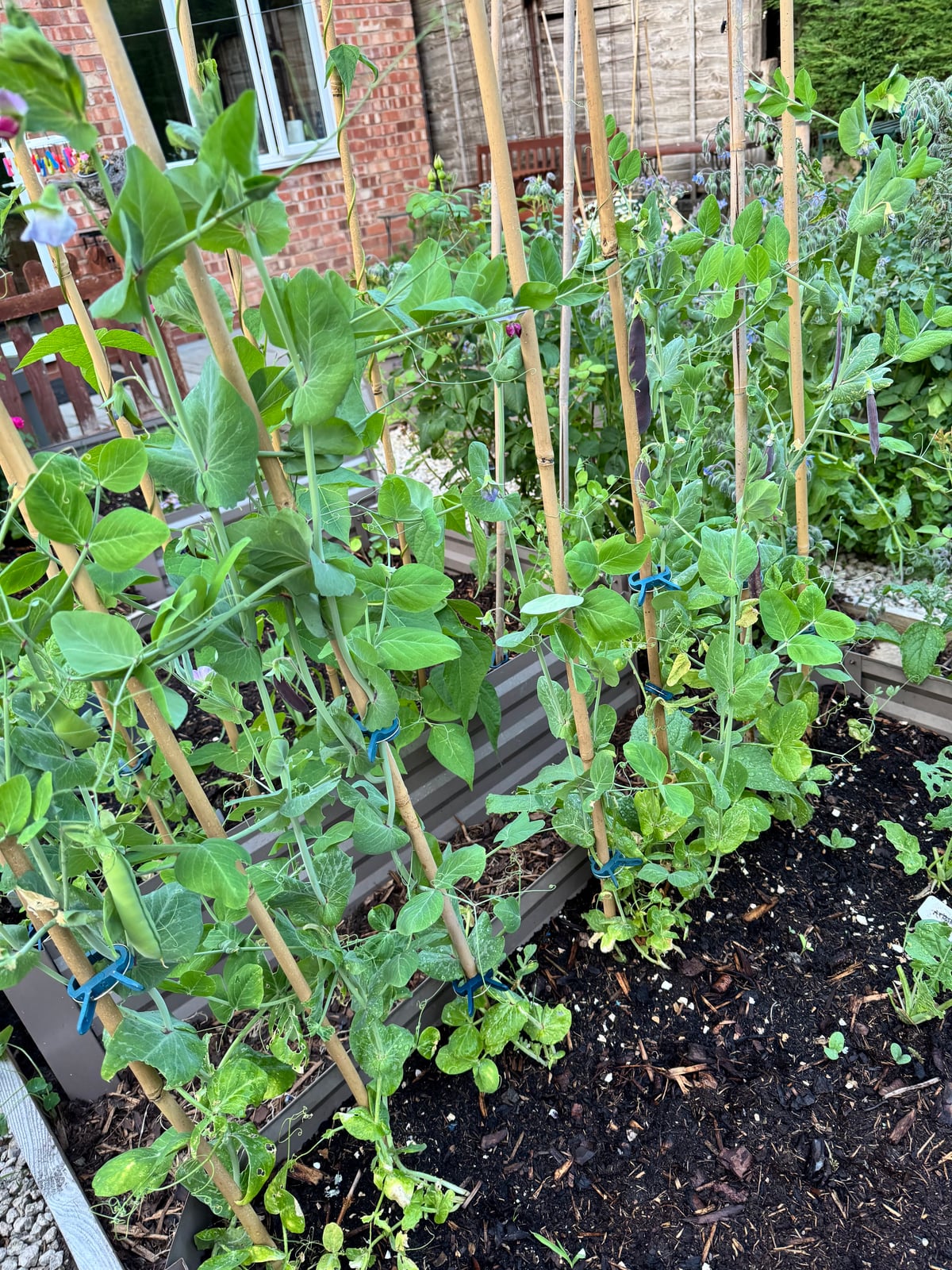
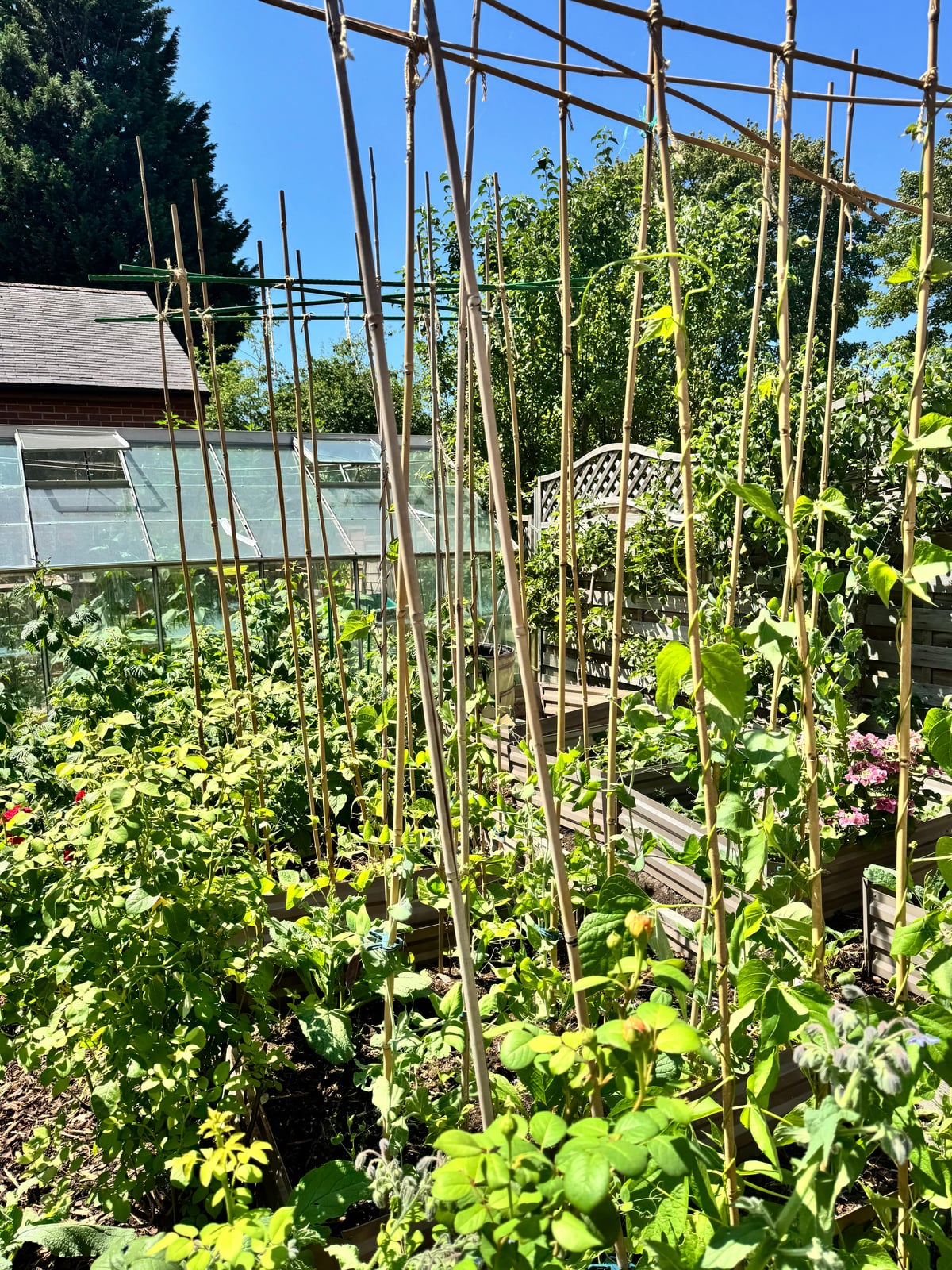
With so many climbing varieties, staking is what I've had to think about most. I put up garden canes and tie the vines in as they grow. Runner Beans and Borlotti di Fuoco in particular grow vigorously, and I've found they'll tangle themselves up in no time if I'm not paying attention, so I check on them often.
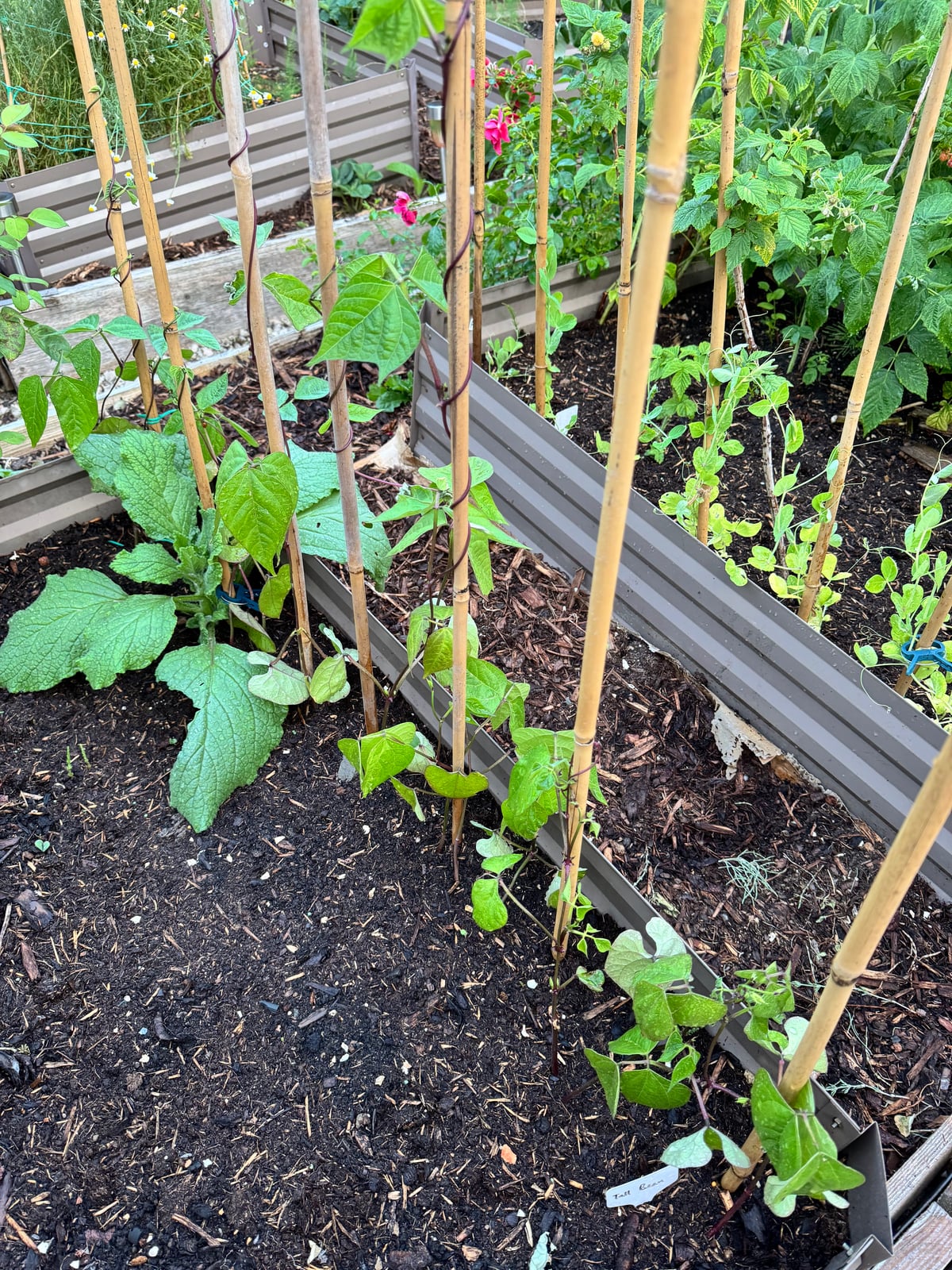
The insect netting has stayed on ever since the May setback. The vines still climb the canes just fine inside it, so it doesn't seem to be holding growth back. Growing without any fertiliser means I don't have to think about feeding schedules, which is one less thing to worry about — watering, training the vines, and checking that nothing's slipped in through a gap in the netting are pretty much my main jobs at the moment.
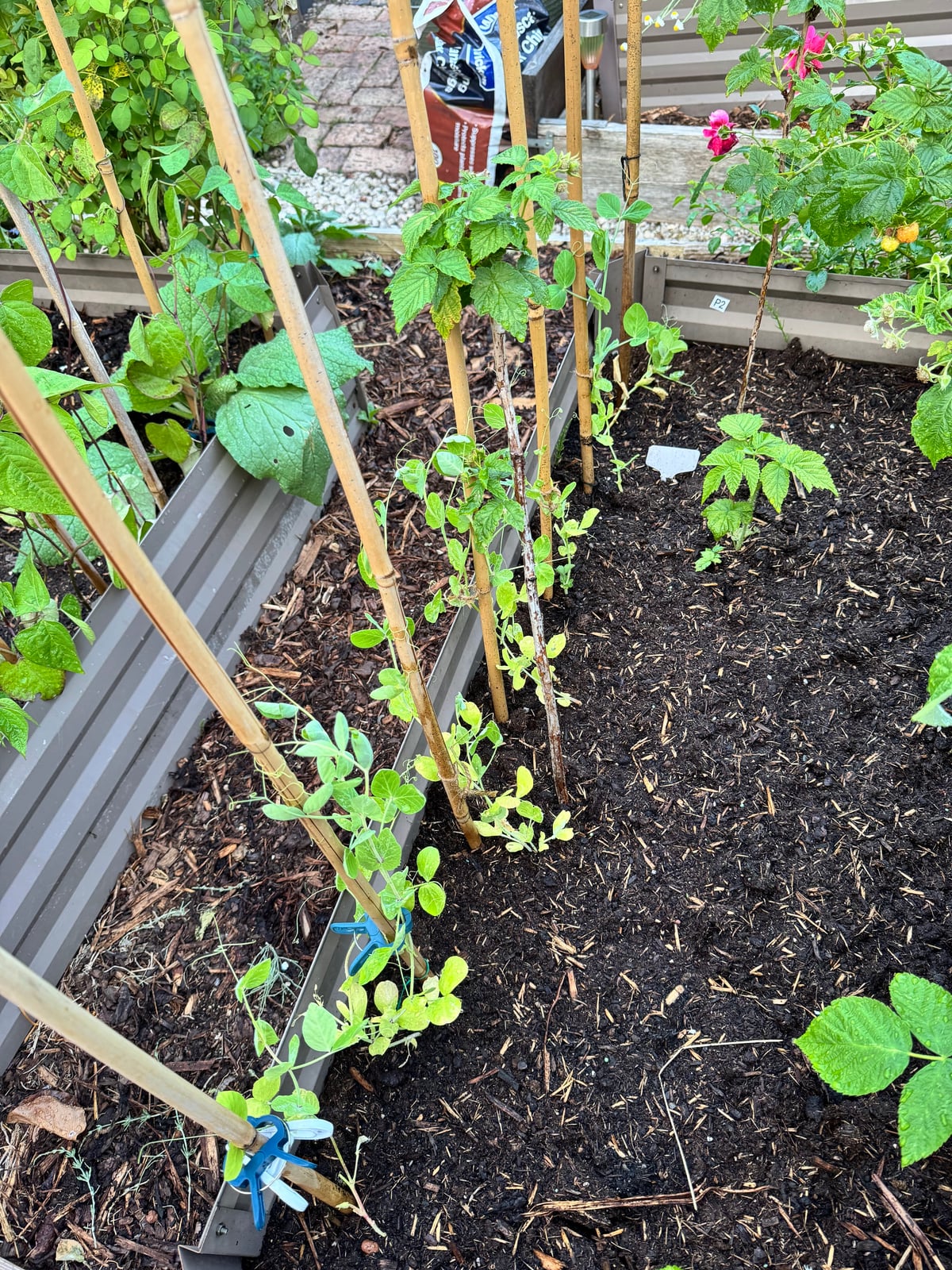
Blauwschokker has led the way, and the other three varieties should follow into their own harvests before long. I'm honestly still finding my way with how far the plants will crop without any feed, but for now I just want to enjoy today's first harvest. I'll write more about the yields and how the other varieties are fruiting in the next update.
Other books you might like
You're welcome to take a look.
EAST TO WEST: The Heart of Haiku, the Light of Scripture
The simple joy of a first harvest, even while still finding your way — the kind of moment this collection finds through haiku. This is a book my father-in-law left behind.
View on AmazonCataract Surgery-A Memoir: Double cataract surgery in Osaka, Japan
Another new experience at 66 — an honest account of the cataract surgery I went through.
View on AmazonSushi Business in Britain: the complete four-volume series
A novel series following thirty-five years in the British sushi trade, from apprentice to factory manager to a small sushi school. The complete edition offers all four volumes at a better price.