About this sweet pepper log
This is a sweet pepper growing log, split out from the seasonal care plan article. This season I'm growing three varieties in our greenhouse raised bed — California Wonder, Yellow Bell and Delirio — two of each, six plants in total. All are sweet (non-hot) peppers. As of July 2026 the leaves look healthy but there are no flowers or fruit yet; like the aubergines, peppers seem to be slow starters, so I'm not worrying. I'll add monthly updates here.
Progress report (July 2026): six plants in growth, flowering still to come
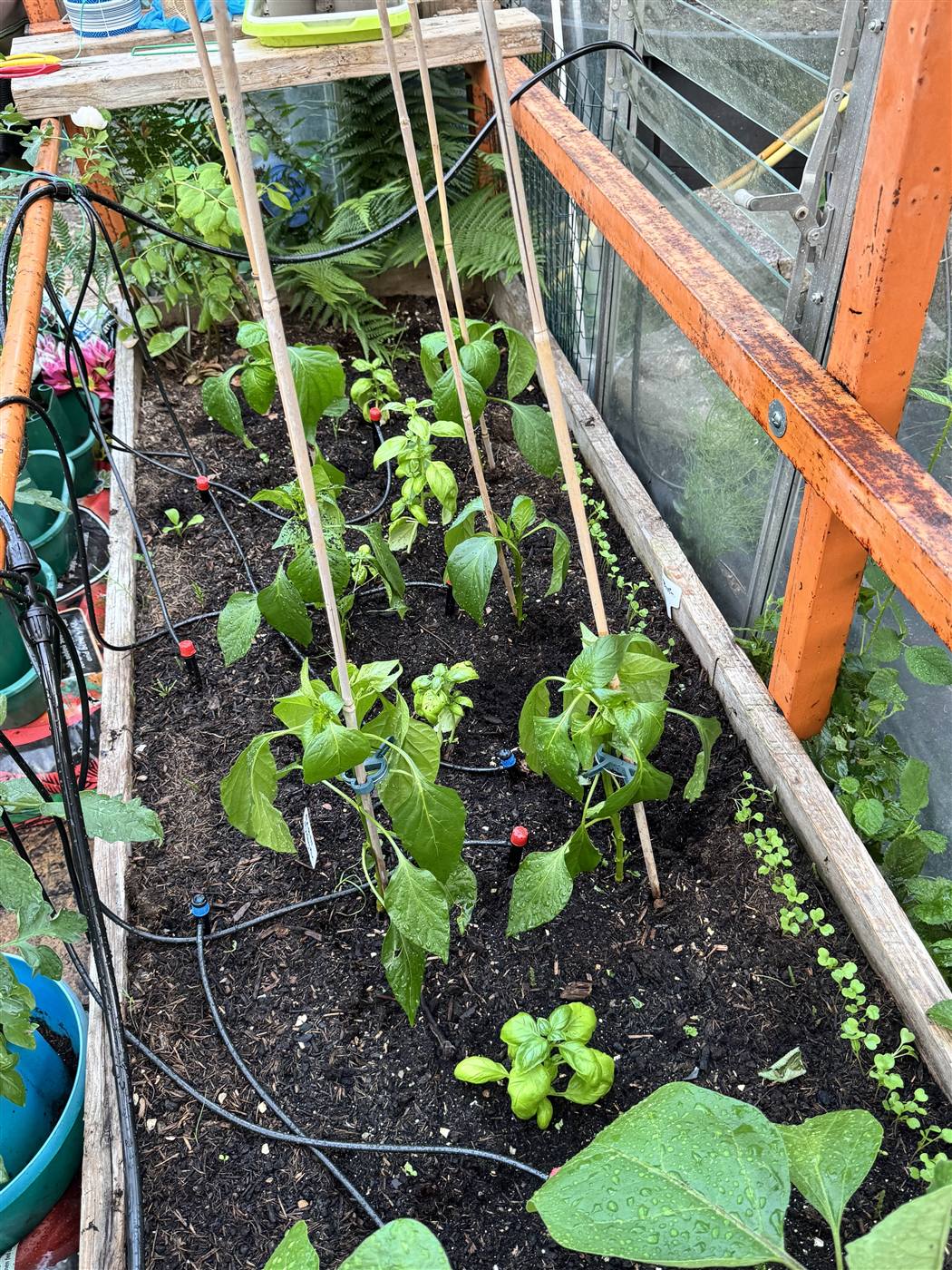
This season's peppers are planted in the greenhouse raised bed, three varieties, six plants. I'm feeding with Tomorite (a high-potassium tomato feed) once a week and removing the shoots and leaves near the ground. I've also started putting in bamboo stakes. As of July, every plant has spread deep-green leaves and is growing healthily for me, but there are no flowers or fruit yet.
Peppers are in the same nightshade family as aubergines and tomatoes, and are slow to get going, so I gather. They build up the plant first, then turn to flowering and fruiting later. Having no flowers or fruit in July in the UK seems to be perfectly normal, just as with the aubergines, so I'm trying not to rush. The leaf colour and firmness are good, so this must be the important period when the plant is building up its roots and foliage. Some variation in growth between plants and varieties is natural too, it seems.
This season's three varieties (all sweet peppers)
This year's peppers are all sweet (non-hot), a mix of bell types and a sweet Italian type.
- California Wonder × 2 — a classic bell pepper. Thick-walled, ripening from green to red
- Yellow Bell × 2 — a bell pepper that ripens to yellow. Good for colour
- Delirio × 2 — an Italian sweet type. A long, slender sweet pepper and, I'm told, an easy-going F1
I'm keeping track of which plant is which variety by their labels. Once the fruit starts to form, the differences in shape and colour should be obvious.
What I'm doing to keep the plants healthy and cropping well
Here's what I'm trying to do to keep all six plants healthy and productive. The care is close to aubergines, with a few pepper-specific points.
Put in stakes. I'm going to put in the rest soon. Pepper stems apparently tip over or snap easily once they carry fruit, so I want to stake them now, before the weight comes on. I'll put a support by each plant and tie in the main stems.
Pinch out to encourage branching. Once a plant reaches about 30cm, pinching out the tip of the main stem is said to make it send out more side branches and grow bushier, which increases fruiting. Peppers apparently crop more the more branches they have, so I want to pinch early.
The first flower (king flower) — two approaches. Peppers produce their first flower at the fork where the main stem first branches, and it seems you can choose here:
- To prioritise the plant and maximise total yield, "remove it". Pinching off the first flower (and fruit) early puts that energy into the plant, which grows larger and then sets plenty of fruit. This is the classic approach for maximising the season's total crop.
- To enjoy your first fruit sooner, "keep it". Letting the first fruit grow and picking it is perfectly fine too. You get to taste that first one early. It puts a little more load on the plant, but for a home garden I think it's well within reason.
Neither seems to be "correct", so I'll just choose by mood — "remove" if I want lots of fruit, "keep" if I want to eat sooner.
Remove low shoots and leaves (ongoing). As I'm already doing, I take off the shoots and leaves near the ground to keep air and light around the base.
Pick green, or wait for full colour. California Wonder and Yellow Bell can be picked green or ripened to red or yellow — either is fine, I gather. Green fruit comes earlier and in greater numbers and is easier on the plant; ripened fruit is sweeter and more nutritious but takes time to colour and sits on the plant longer, so you get fewer overall. It's a trade-off: green and early for numbers, ripened for sweetness and colour. I'm planning to mix both and enjoy the difference.
Never let water or feed run short. Nightshades are thirsty, hungry feeders. Even in a raised bed, I use the drip irrigation to keep the soil from drying out. I'll step Tomorite up to twice a week once the fruit is setting.
Keep them warm. Peppers are heat-loving and UK summers are on the cool side, so the greenhouse is an advantage. I keep them warm through the day to encourage flowering and fruiting, and ventilate in the morning during flowering, which I gather helps pollination. I watch for aphids on the undersides of the leaves.
Monthly care plan, July to October

July is the growth phase — staking, pinching out and clearing low shoots; August is flowering, the king-flower decision and the start of green harvest; September is harvest, the choice of ripening, and getting ready before travel; October is the end of harvest and clearing and renewing the greenhouse. I leave for Osaka around 20 October, so I'd like to have things wrapped up by then.
July (now) The growth phase, building up leaf. I'm putting the stakes in (as planned) and removing the low shoots and leaves. Once a plant reaches about 30cm, I'll pinch it out to encourage branching. I keep them watered and warm and feed Tomorite once a week. There are no flowers or fruit yet, but that's normal, so I'm watching over them without rushing.
For reference, here's the liquid feed I'm using.
- Levington Tomorite Concentrated Tomato Food — the classic UK high-potassium feed, which works for peppers too. I dilute it in water and give it as I water. I'll step up to twice a week once the fruit starts to set.
(As an Amazon Associate I earn from qualifying purchases.)
August Flowering should begin and the king flower should open. I'll choose whether to remove the first flower (to prioritise the plant) or keep it (to harvest sooner) — see above. I'll tie the main stems to the stakes and step the feed up to twice a week. I'll watch for aphids and ventilate during flowering to help pollination. On the earlier plants, the green-fruit harvest may begin.
September Harvest time should arrive. I can pick the green fruit as it comes, or ripen it to red or yellow. Ripening brings more sweetness and colour but fewer fruit overall. I'll keep feeding and watering. Colouring will slow as the nights cool. I'll thin crowded stems and leaves to keep air moving. With my departure for Japan around 20 October coming up, this is when I'll confirm the care arrangements.
October I'll pick all the remaining fruit. Any that haven't fully ripened are still good as green peppers. I'll take the plants out, wash and store the stakes, and refresh the raised-bed soil (to avoid growing the same crop in it). I'll clean and disinfect the greenhouse and overwinter it in a clean state. I'd like to have everything tidied up before I leave for Osaka.
Through the autumn I'll keep reporting on the flowering, fruiting, colouring and harvest.
Other books you might like
You're welcome to take a look.
EAST TO WEST: The Heart of Haiku, the Light of Scripture
Tending something in step with the changing seasons — the kind of quiet rhythm this collection finds through haiku. This is a book my father-in-law left behind.
View on AmazonCataract Surgery-A Memoir: Double cataract surgery in Osaka, Japan
Another new experience at 66 — an honest account of the cataract surgery I went through.
View on AmazonSushi Business in Britain: the complete four-volume series
A novel series following thirty-five years in the British sushi trade, from apprentice to factory manager to a small sushi school. The complete edition offers all four volumes at a better price.