Corresponding episode: September 2026 issue, Part 2, ①②
Whilst listening to the interview with Mr Kitano, there was a moment when I could not help but exclaim, "What? That is ridiculous!" The United States is a country where, simply by writing an amount on a piece of paper, you can buy anything in the world. Even when Japan buys crude oil from Saudi Arabia — a transaction in which the United States plays absolutely no part — for some reason we are obliged to pay in "dollars" rather than "yen".
As a 66-year-old who divides my time between the UK and Japan and spends every day thinking about how to safeguard my assets for retirement, this topic was far from being someone else's problem. Much of the wealth I hold rests, directly or indirectly, on the credibility of the dollar. In this piece, I have deliberately combined two sub-topics from the September issue's dialogue — "The History of the US Dollar as the Reserve Currency" and "Forces Threatening the Dollar System" — into a single article. Rather than focusing on the 75-year rise and fall of the dollar itself, I shall concentrate on what this means for my own life and assets.
The Country Where Paper Becomes Gold — How the Dollar as the Reserve Currency Came into Being
To put it simply, having a "reserve currency" means holding the "right to issue the world's currency". In July 1944, as the end of the war began to come into view, 44 countries gathered at Bretton Woods in the United States and established a system in which one ounce of gold was fixed at 35 dollars, and only the dollar could be exchanged for gold. This was the era when the Japanese yen stood at 360 yen to the dollar. The reason was simple: whilst Japan and Germany were defeated nations, France was under occupation, Britain had emerged victorious but was exhausted, and the Soviet Union had suffered an estimated 20 million war dead, the US mainland alone remained virtually unscathed.
Although this system lost its gold backing with the Nixon Shock of 1971, the 1974 Washington–Riyadh Secret Agreement established a mechanism whereby Saudi Arabia would export crude oil exclusively in dollars, and the United States would guarantee its security; by becoming linked to crude oil, the dollar remained the world's reserve currency.
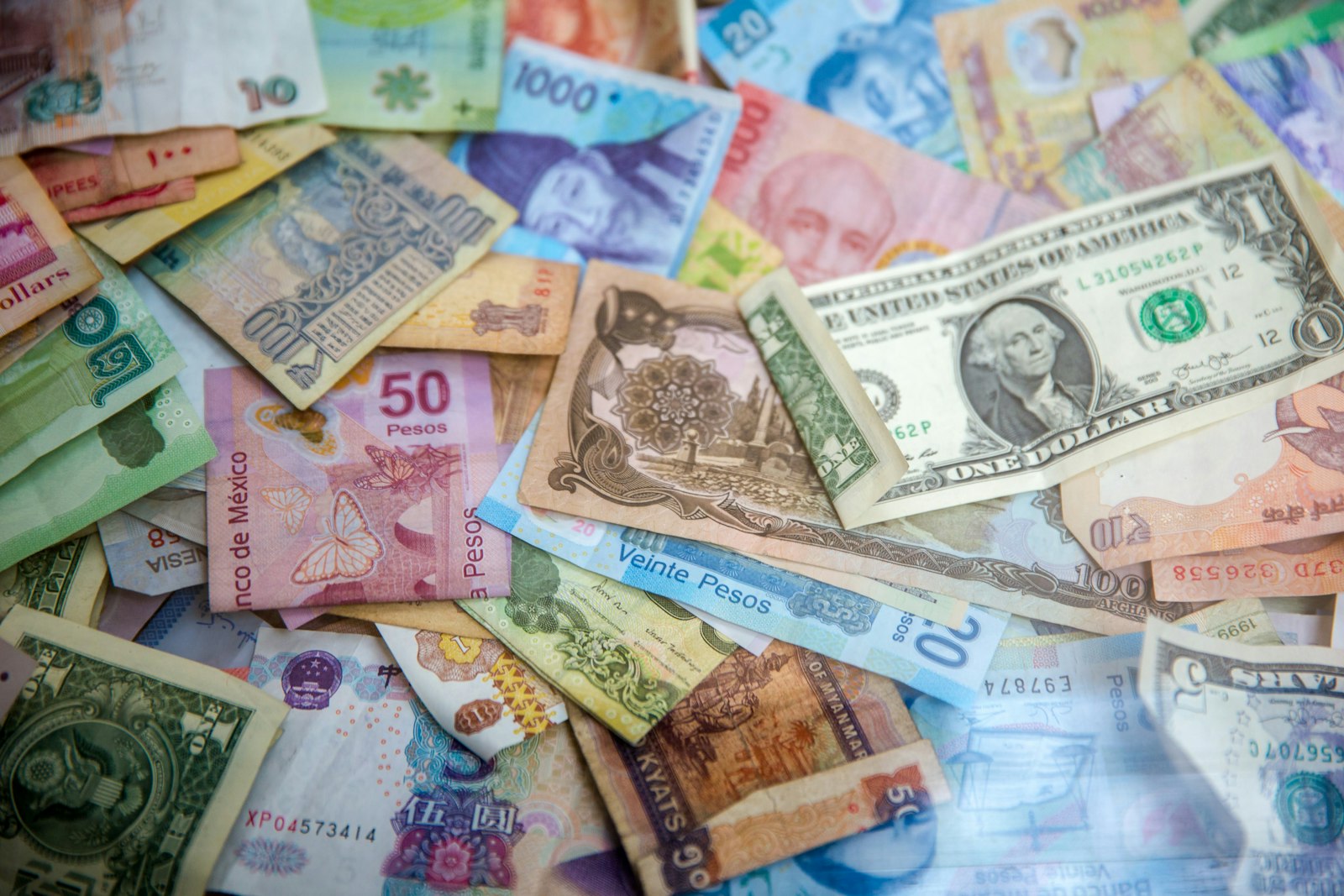
Banknotes from a variety of countries laid out together (Photo: Jason Leung / Unsplash). This story begins with the promise of the "dollar as the world's currency", born at Bretton Woods.
Reflecting on This Asymmetry Through the Lens of My Business Career, Which Has Been at the Mercy of Currency Fluctuations
The first thing that came to mind upon hearing this story was not an expert analysis, but memories of the time when, after founding my own company in 1999, I established Japanese restaurants and food manufacturing plants across the EU, Northern Europe and the Middle East. Back then, currencies varied from country to country: the franc in France, the mark in Germany, and local currencies in the Gulf states of the Middle East, many of which were pegged to the dollar. I recall that whilst business in Europe became considerably easier following the introduction of the euro in 1999, during negotiations with business partners in the Middle East, we often found ourselves having to check the dollar exchange rate at some point.
At the time, I merely had a vague sense of wondering why business deals in the Middle East always seemed to start by converting to dollars. It was only after learning about the origins of the petrodollar system in this interview that I finally felt the dots had been connected. The secret agreement of 1974, in which Saudi Arabia decided to sell crude oil exclusively in dollars, had quietly but surely reached even the very front line of my business operations in the Middle East by 1999, nearly half a century later. I would almost like to tell my younger self that a reserve currency is not some abstract mechanism found in textbooks, but an extremely tangible force that rears its head every time you calculate a price tag on the ground.
Witnessing the Pound's Decline in Today's Britain
Learning about this history whilst living in Britain gives me a sense of déjà vu; it does not feel like someone else's problem. In fact, before the dollar, it was the British pound that served as the world's reserve currency. From the 19th century to the early 20th, backed by the economic might of the British Empire, the pound reigned supreme as the world's settlement currency. However, due to the exhaustion caused by the two World Wars and the dismantling of the British Empire, it quietly but surely ceded its leading role to the dollar.
The country where I now live is one that has already experienced the relinquishment of its reserve currency status. Whilst I, having grown up in Japan, have spent most of my life operating on the premise that the dollar is absolute, here in this country, the old bank buildings and the very institution of the Commonwealth, a union of former colonies that still exists today, quietly illustrate what happens when a currency that was once the world's reserve currency loses its hegemony. Losing its hegemony does not mean the country itself ceases to exist; rather, it survives in a way that suits its circumstances. I feel this is part of what makes Britain such an impressive nation. Without being either pessimistic or optimistic about the future of the dollar, I feel this country is teaching me the perspective that life goes on even after losing the status of reserve currency.
The Story of the Challengers
The challenge to the petrodollar system first came from the euro. Launched in 1999, it is said to have overtaken the dollar in terms of total banknotes in circulation by 2006. As for the causal link between the Iraq War breaking out immediately after the Hussein regime announced its switch to euro settlements, I regard this as merely one interpretation put forward during the discussion. This is because the official reasons for the war were cited as support for Al-Qaeda and the possession of weapons of mass destruction, both of which were later found to be untrue, and any explanation linking currency policy to the outbreak of war is, at best, an interpretation based on circumstantial evidence, rather than a causal relationship officially acknowledged by the government. In reality, it is generally accepted that a combination of factors was at play, including interest in Iraq's abundant oil reserves, the United States' desire to secure its influence in the Middle East following 9/11, and regional strategic considerations such as the removal of Saddam Hussein's regime; currency policy is merely one theory amongst these.
The more pressing challenger at present is China. Following Russia's invasion of Ukraine in 2022, Russian crude oil and natural gas began to flow to China and India in renminbi, whilst Brazil, Argentina and Iran have also been expanding their use of renminbi settlements. Then, in June 2024, the so-called "petrodollar agreement" was widely reported to have expired, with Saudi Arabia choosing not to renew it. That said, no formal agreement explicitly stipulating that crude oil shall be sold only in dollars has ever been confirmed to exist, and the reality appears to be that this development was not as dramatic a shift as initially reported. Whilst there have been individual instances of crude oil sales denominated in renminbi, the latest data shows that approximately 80 per cent of global crude oil trade is still denominated in dollars, and Saudi Arabia's own crude oil exports continue to be settled in dollars by default. That said, I feel that the very emergence of such a wobble in a relationship that for 50 years was regarded as unthinkable without the dollar is a change that cannot be overlooked.
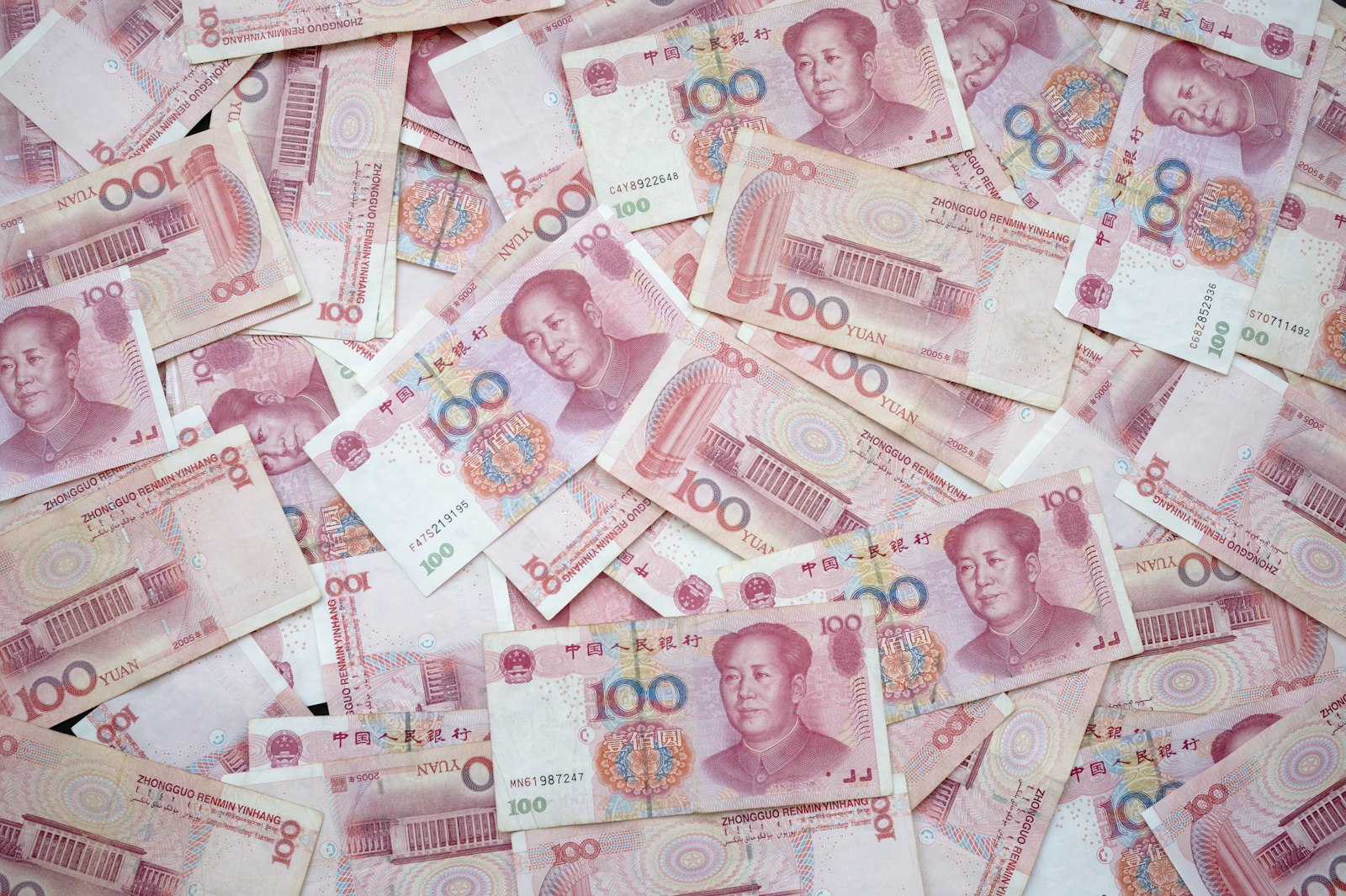
Stacks of Chinese yuan banknotes (Photo: Eric Prouzet / Unsplash). The currencies challenging the dollar are shifting from the euro to, now, the renminbi.
Asset Protection from the Perspective of a 66-Year-Old Dual-Residence Individual Investor
With this history in mind, I shall reflect on how I have allocated my assets. Having conducted my own research into UK-listed ETFs, individual Japanese shares and Philippine shares, I hold assets spanning multiple currency zones: the pound, the yen and the dollar. Up until now, I have done this for the somewhat vague reason that diversification seems safer. However, upon realising that the very premise that the dollar is absolutely safe is merely a relatively recent agreement, dating back only about 80 years from 1944, I feel as though I have subsequently received confirmation that there was a far more solid rationale behind this diversification than I had originally thought.
And there was another unexpected discovery. My dual-base lifestyle, travelling back and forth between the UK and Japan, was initially intended simply as a way of chasing the good weather. Looking back, however, this effectively meant that I had diversified the very foundations of my life across different currency zones, the pound and the yen, and different political and economic systems. Not only my assets, but my way of life itself, had become a kind of geopolitical diversification. This is a realisation I was only able to articulate after studying the history of currency.
Of course, this is not to say that one should sell dollar-denominated assets immediately. During the discussion, Mr Kitano himself recounted his experience of selling all his shares in August 2008, only for the Lehman Shock to occur the very next month. Even as an expert, he had not accurately predicted the crisis; I felt that the lesson was encapsulated in his own words, that he would not go so far as to say there will be a crash, but that it is better to be mentally prepared to sell at any time. What I learnt from this story was that, rather than attempting to predict the future accurately, it is far more important to establish a position, during normal times, where one does not rely too heavily on a single currency, a single asset or a single market. This conversation provided a valuable opportunity to broaden that perspective, shifting the focus from the stock market to currencies themselves.
The Perspective of "the Expiry Date of Promises" — Applying It to My Own Life
What struck me anew on this occasion was the fact that the Bretton Woods system, an international agreement that seemed absolutely immutable at the time, came to an end after just 27 years. Human-made systems and agreements, however solid they may appear, have a shelf life.
Come to think of it, my own life has been a continuous series of such reassessments of commitments. In my twenties, I enrolled at a national university medical school but dropped out; in my thirties, I plunged into the Japanese food business; in my forties, I started an acupuncture, moxibustion and Kampo clinic alongside my other work; in my fifties, I began investing in property and shares; and now, having retired at 65, I lead a dual-residence lifestyle. Each of these turning points has been the result of letting go of plans I believed to be correct up to that point, and rewriting them in line with changes in the world and my own circumstances. Had I told my eighteen-year-old self, who chose to study medicine, that this plan had an expiry date, I am sure I would not have believed it.
Even the colossal system of the US dollar began to show cracks after 27 years, so there is nothing at all surprising about taking stock of, and reviewing, one's personal financial plans or life plans every ten or twenty years. In fact, I now feel able to put into words that this is precisely what I have been doing unconsciously all along, and that it is a perfectly natural habit to continue into retirement.
Closing Thoughts
This article, which began with the story of a country where writing "200 million yen" on a piece of paper is enough to build a house, has ultimately settled on a very personal conclusion: a way of life that does not rely too heavily on a single promise. Accurately predicting the future of a reserve currency is difficult even for experts. However, I believe that simply learning about the history of currency and overlaying it with one's own memories of business and daily life serves as a quiet form of preparation to safeguard one's assets and peace of mind in old age.
Other books you might like
You're welcome to take a look.
EAST TO WEST: The Heart of Haiku, the Light of Scripture
A book I return to for quiet words after thinking about the expiry date on promises written on paper. This was my father-in-law's final work.
View on AmazonCataract Surgery-A Memoir: Double cataract surgery in Osaka, Japan
A record of another kind of trust built slowly over time, between Osaka and the UK, much like currency itself.
View on AmazonSushi Business in Britain: the complete four-volume series
A novel series following thirty-five years in the British sushi trade, from apprentice to factory manager to a small sushi school.
View on AmazonAbout the Source
This post is based on a paid conversation I purchased from "Power Game," a subscription programme run by Direct Publishing, featuring Yoshinori Kitano. It is not a reproduction of that content, but my own personal reflections and thoughts prompted by it. This particular article deliberately combines two topics from the September issue, Part 2: "① The History of the US Dollar as the Reserve Currency" and "② Forces Threatening the Dollar System".
About Yoshinori Kitano Kitano is an international relations analyst. After graduating from the Faculty of International Relations at Siberian Federal University in Russia, he has continued to analyse world affairs through his newsletter, "Russia Political and Economic Journal." Website: rpejournal.com
You can find details of the "Power Game" programme Mr. Kitano teaches here (Japanese language).
More in this series (September)
- Britain Becoming "Japanified" — What Frequent Changes of Prime Minister Taught Me About Trust as Compound Interest(on frequent changes of prime minister, and trust as compound interest, Part 1, ④)