Philippines: Bohol Island Sightseeing — Full Day Tour 2/2
Date: 2020-04-06
Continued from Bohol Island Sightseeing — Full Day Tour 1/2.
Mahogany Forest
Mahogany is well known as a material for fine furniture. Because it fetches a high price, large-scale deforestation has wiped it out across much of the world. The mahogany forest here is protected by the government and logging is prohibited.

We had heard the name and seen it made into furniture, but this was our first time seeing mahogany trees in their natural state. They grow very straight and have few knots, which makes them look very well-suited to timber production.
Loboc Nature & Animal Park
Entrance fee: 150 pesos per person.
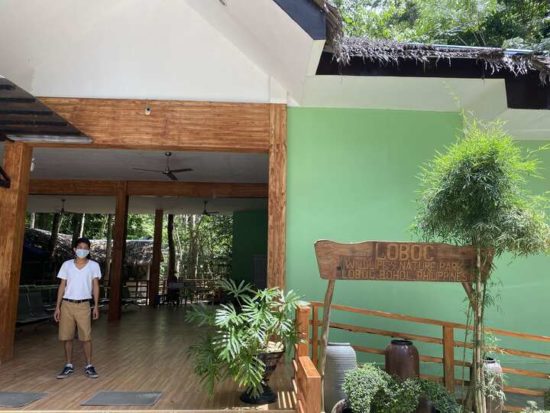
Here you can see animals native to the area up close.
A knowledgeable guide accompanies each group of visitors, so you can ask plenty of questions and learn a great deal about the animals. You can see many of the Philippines' native species all in one place.
Civet Coffee Cat
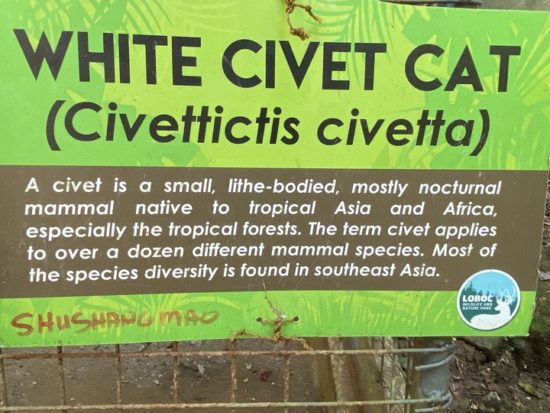
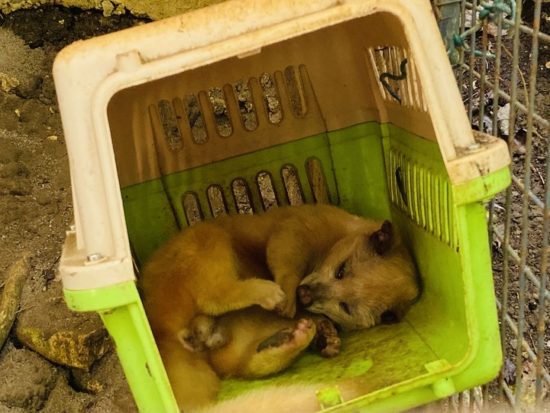
This is the White Civet Cat — the source of the world's most expensive coffee, Kopi Luwak (civet coffee). Civet cats apparently only eat the finest, most fragrant coffee cherries (the red fruit whose seeds are the coffee beans). Since the civet's body produces musk — the base of many perfumes — perhaps it is not so surprising that what passes through them also takes on a wonderful aroma.
The male was kept in a separate adjacent enclosure. Apparently after cubs are born, he becomes jealous of the attention the female gives them and may bite them, so he is kept apart. He did seem rather forlorn (laughs).
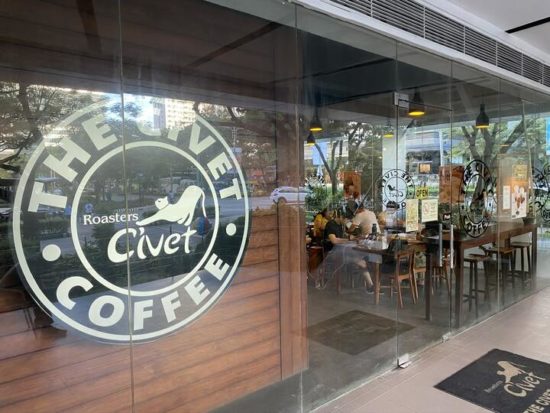
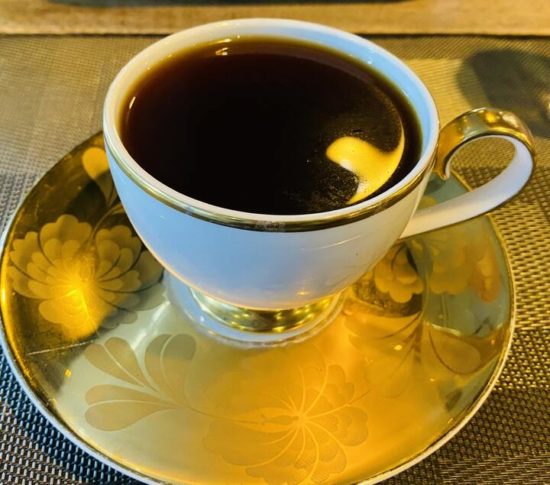
There is a civet coffee café in Cebu. We ordered a cup that contained 30% civet coffee.
One cup was 560 pesos (approximately 1,180 yen / £8.80). Well, at least it makes a good story.
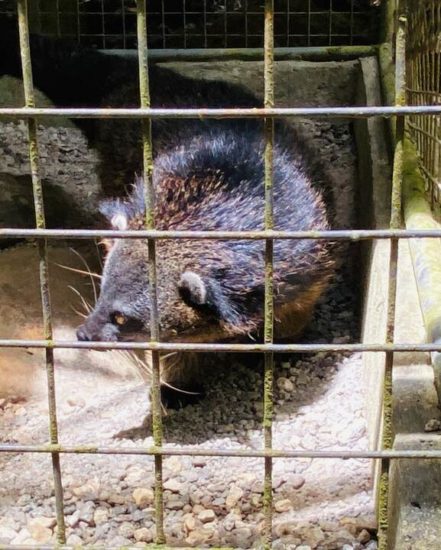
Bear Cat
Despite its name, this creature is actually most closely related to the civet.
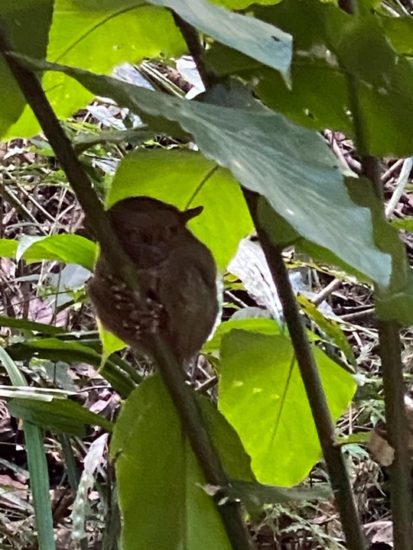
Tarsier
There were also tarsiers here — we were able to see 3 of them. Wild tarsiers apparently come here at night to hunt insects. However, they dislike getting wet and disappear whenever it rains. Their lifespan is around 20–25 years.
We were also able to have souvenir photos taken with reptiles.
There were small chameleons and crocodiles that you could hold for photos.
At the end, next to the gift shop, fresh coconut juice was on sale for 50 pesos each. The coconut is cracked open right in front of you. Each one is enormous — almost impossible to finish. Even in places where tap water is not safe to drink, the liquid inside coconuts and other fruit is perfectly safe. The power of nature is remarkable.
Loboc River Cruise
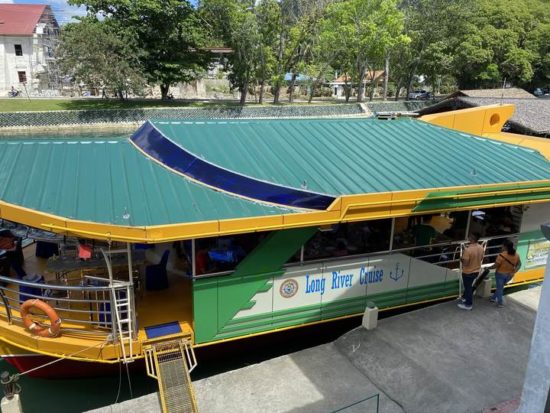
Long River Cruise with lunch included.
650 pesos per person.
When we arrived at the cruise dock, our driver took us straight to the staff at the boat. We paid there, and were then escorted past people waiting to board and onto the boat immediately. Whether it was because there were only two of us and the next boat was about to leave, or because our driver knew the staff and pulled some strings, we'll never know — but we had zero waiting time and boarded with top priority.

We cruised along the Loboc River while enjoying lunch. The trip lasted approximately 1 hour.
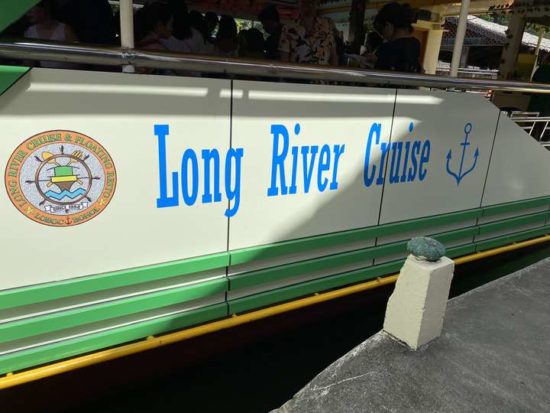
Food was laid out in the centre of the boat, and once seated we went up to serve ourselves on plates.
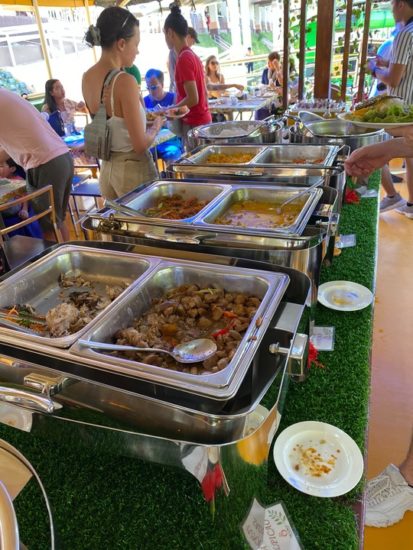
Filipino cuisine — rice, meat, vegetables, noodles, and other easy-to-eat dishes.

There were also simple sweets and fruit. Juice and water were included, while beer was available to purchase separately.
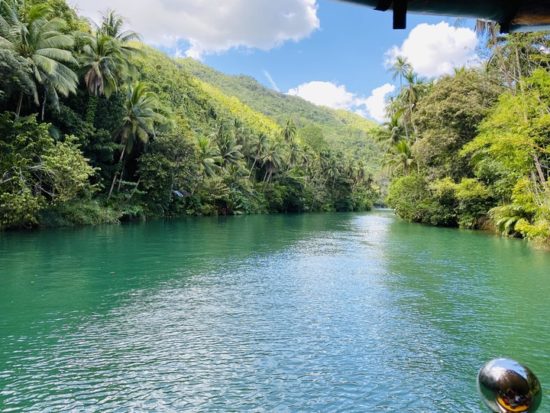
The boat glided slowly over the emerald-green water between tropical rainforests. The riverside coconut palm cottages looked like a wonderfully fun place to stay.
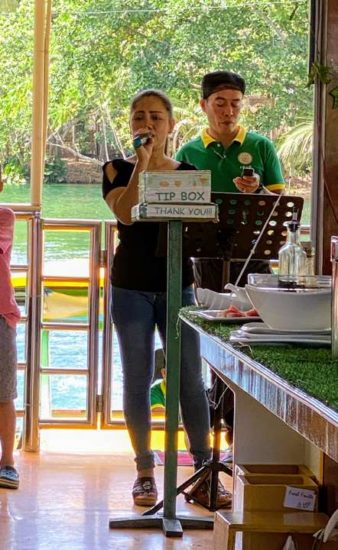
Two musicians — guitar and vocals — were on board playing and singing throughout the journey.
There was a stop along the way where villagers put on a performance.
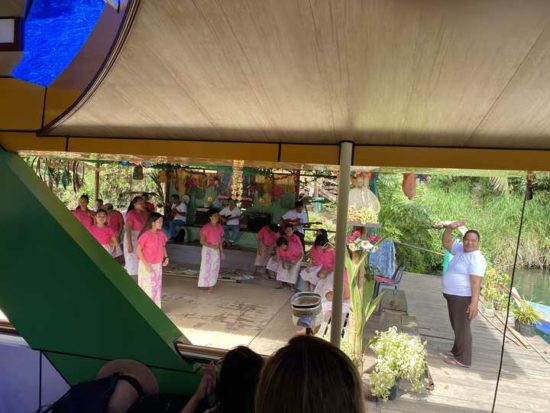
The bamboo dance was a popular highlight. With little industry beyond farming in the area, this performance group must be an important source of income for the village — so we put a little something in the tip box.
For about an hour, we relaxed and took in the scenery. Boats — big and small — move at a gentle pace, and once on board you can't help but feel at ease. Of course, this is only ideal on calm days when the water is smooth.
Simply Butterflies Conservation Centre
This photo was taken by our guide at the display case of butterfly specimens mounted on glass. We were told how to pose, and this was the result.
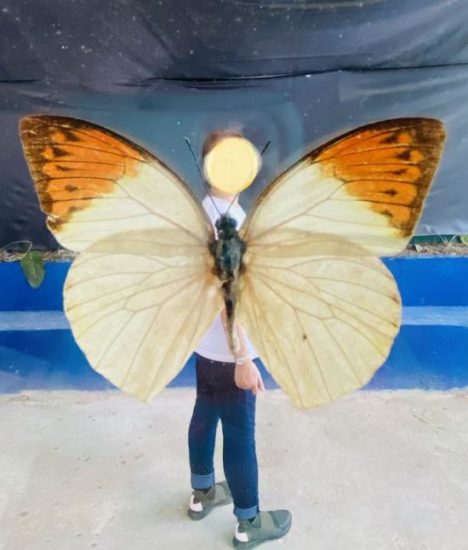
There are exhibits showing the lifecycle from caterpillar to butterfly, as well as a wide variety of specimen displays — all explained by staff as they guide you through. Each group gets its own personal guide, and they are all young people. With such affordable labour costs in a country with an average age of 24, it is impressive how abundantly staffed everything is.
We were told that Bohol was once known mainly for its beautiful coral reefs, attracting the occasional scuba diver, but after the Japanese government funded the construction of proper roads across the island, tourism developed rapidly. Now it is one of the Philippines' most prominent tourist destinations. A new airport was also built on nearby Panglao Island, and many fine hotels of all sizes have sprung up, with the island continuing to thrive as a tourist destination. This has also helped local people find employment and improve their livelihoods.
On the morning we set out, the driver showed us photos of various island attractions, and we chose the Chocolate Hills, tarsiers, the Loboc River cruise, and the animal park — which made for today's itinerary.
There are also more adventurous options, such as the Zip Bike — where you ride a bicycle along a wire 45 metres in the air — as well as adventure parks and go-karts for the more energetic visitor. The tour can be tailored to suit your group perfectly.
We returned to the hotel just after 4:30pm, after nearly 8 full hours out.
Having no other guests along meant we could go at our own pace and visit wherever we liked, which was wonderful. While Bohol Island is best known for its stunning coral reef, the sightseeing tour is excellent fun too. We would highly recommend taking a car tour to see how local people live in their villages as you pass through.
Other books you might like
You're welcome to take a look.
EAST TO WEST: The Heart of Haiku, the Light of Scripture
Village life glimpsed through a car window, briefly held in mind — the kind of quiet attention this collection finds through haiku. This was my father-in-law's final work.
View on AmazonCataract Surgery-A Memoir: Double cataract surgery in Osaka, Japan
Another new experience at 66 — an honest account of the cataract surgery I went through.
View on AmazonSushi Business in Britain: the complete four-volume series
A novel series following thirty-five years in the British sushi trade, from apprentice to factory manager to a small sushi school.
View on Amazon