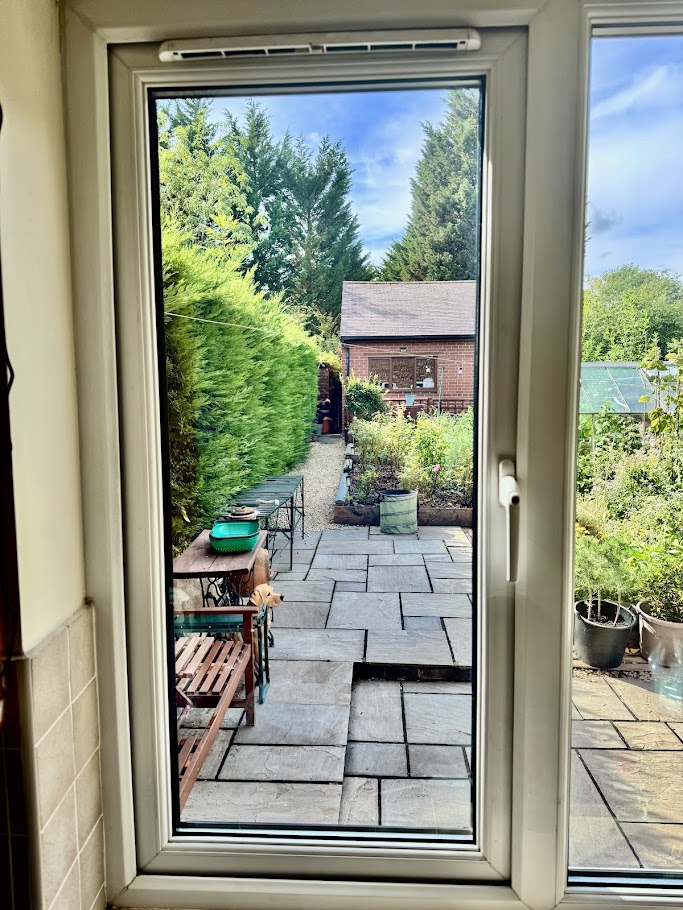
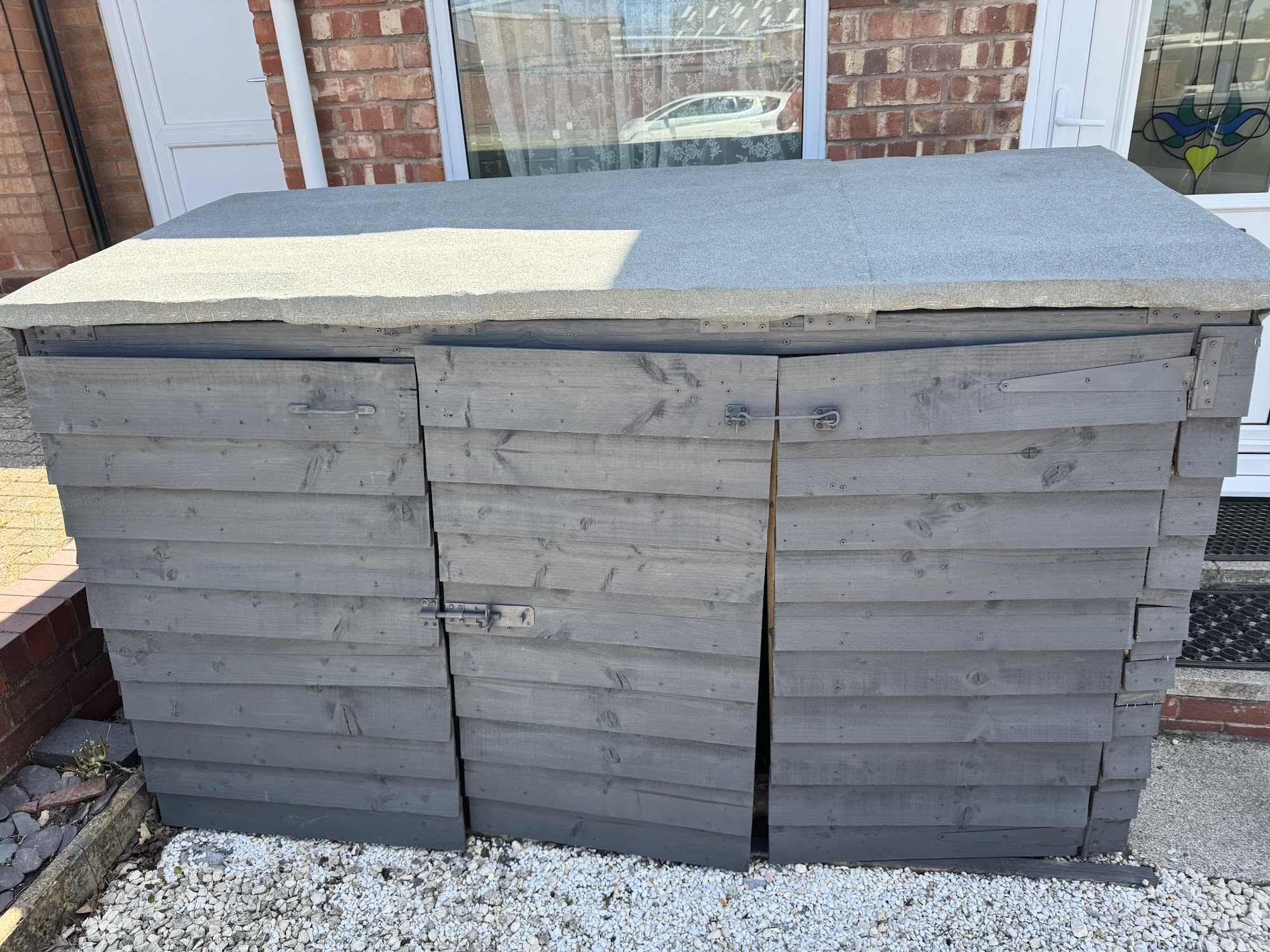
Not long ago, I tackled repainting the garden shed — my first proper DIY project in a while. I enjoyed it far more than I expected, and it gave me a nudge to look around the house with fresh eyes.
That's when I noticed the five pine interior doors. They'd been there since we moved in, looking a little tired and dull. Yesterday, on a lovely sunny day with the windows open for ventilation, I finally gave them the attention they deserved.
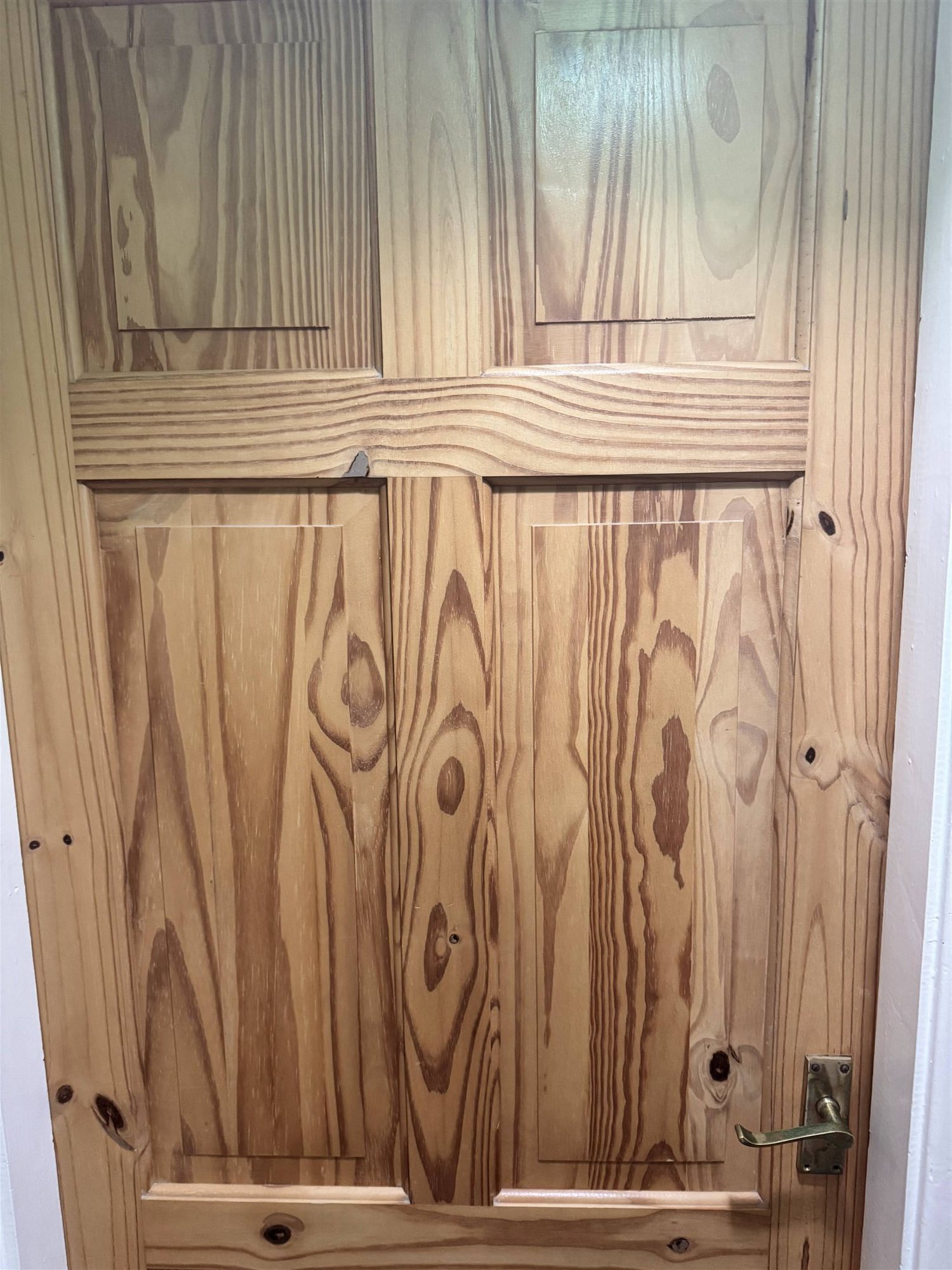
Before: the pine doors had lost their warmth after years of wear.
The Doors Before
As you can see in the photo, the wood grain was still there, but the surface had dried out and looked a bit weary. Around some of the knots, the old varnish had started to lift slightly. Nothing dramatic — but enough to make me want to do something about it.
I wasn't planning a full strip-and-sand job. My goal was simple: clean the surface, then apply a tinted varnish directly on top. No heavy preparation, just a fresh coat to bring them back to life.
What I Used
I kept it simple — just three products:
- Bartoline Ready-to-Use Sugar Soap Spray — for cleaning and degreasing
- Ronseal Interior Varnish in Antique Pine Satin, 750ml — tinted varnish
- Harris Stain & Varnish Brush Set (1", 1.5", 2") — for neat application
The spray Sugar Soap was wonderfully easy to use. A quick spritz, wipe with a cloth, and the surface was clean and ready.
The Antique Pine colour was a great choice for these doors — it enhances the natural warmth of the pine without overpowering the grain.
Having three brush sizes made a real difference. I used the 1" for mouldings and grooves, the 1.5" for panels, and the 2" for the larger stiles and rails.
How I Did It
Clean with Sugar Soap
I sprayed the Sugar Soap over each door and wiped it down with a cloth, then gave it a light wipe with clean water to remove any residue. I left them to dry for an hour or two before picking up a brush. This step really matters — a clean, grease-free surface helps the varnish bond properly.
First coat of varnish
I worked in this order on each door:
- Grooves and mouldings first, using the 1" brush
- The panels, using the 1.5" brush
- The stiles and rails, using the 2" brush
I tried to keep each stroke smooth and follow the grain of the wood.
Let it dry
With the windows open, the varnish dried beautifully in 2–4 hours. I rather enjoyed watching the Antique Pine colour settle in.
Second coat
Once the first coat was fully dry, I repeated the same process. Two coats made a noticeable difference in depth of colour and surface protection.
The Result
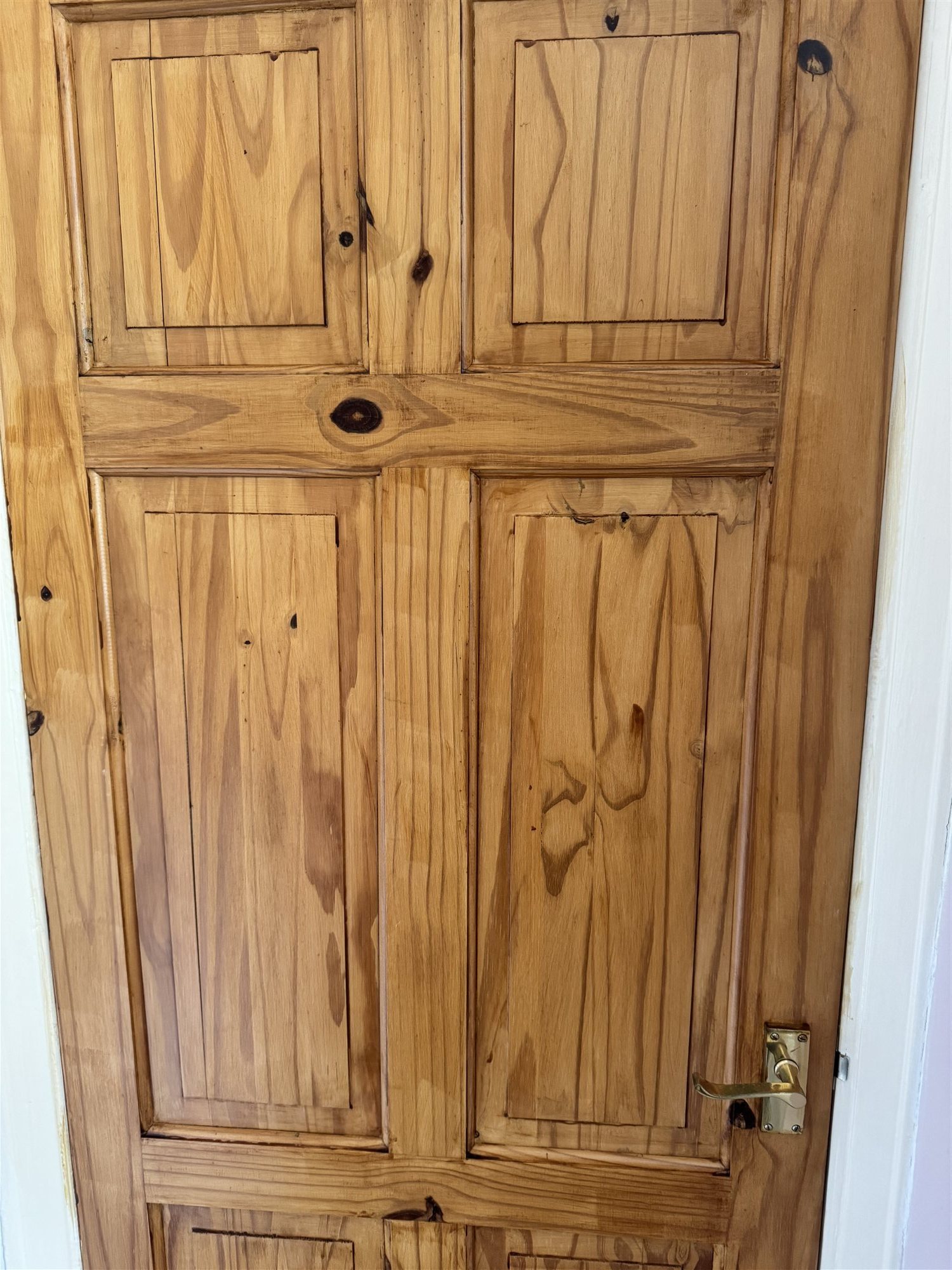
After two coats: the pine grain is alive again, with a warm satin finish.
Looking at the before and after photos, I was genuinely surprised by the difference. It wasn't just the doors — the whole room felt warmer and more cared-for. I know that might sound a little dramatic, but that's honestly how it felt.
Five doors, two coats each: a full day's work, but the satisfaction at the end of it was more than worth it.
Ten Years in This House
We've been here almost ten years now. For most of that time, the day-to-day tasks of keeping a home left little room for anything beyond the basics. DIY projects kept getting pushed to the back of the queue.
But the shed project changed something. I started looking at the house differently — not as a list of things to fix, but as a place worth investing time in.
DIY in my sixties feels different from when I was younger. I'm not in a hurry. One task at a time, on a good day, with the windows open and no pressure to rush. Moving the body, seeing visible results, feeling a quiet sense of achievement — I've come to think of it as one of the small, meaningful habits that supports healthy ageing.
Other books you might like
You're welcome to take a look.
EAST TO WEST: The Heart of Haiku, the Light of Scripture
Taking things one task at a time, without rushing — the kind of unhurried living this collection finds through haiku. This was my father-in-law's final work.
View on AmazonCataract Surgery-A Memoir: Double cataract surgery in Osaka, Japan
Another new experience at 66 — an honest account of the cataract surgery I went through.
View on AmazonSushi Business in Britain: the complete four-volume series
A novel series following thirty-five years in the British sushi trade, from apprentice to factory manager to a small sushi school.
View on AmazonProducts I Used
※ The links below are Amazon affiliate links. If you purchase through them, I receive a small commission at no extra cost to you. I only share products I've actually used and found helpful.
Door Repainting