🎧 Listen to the Discussion(two hosts talk through their thoughts on this article)
This is an AI-generated audio overview of this article, created with Google NotebookLM. Two hosts discuss the article together, sharing their own thoughts and commentary — it is not a reading of the article text.
When I moved into this house eight years ago, there was already a window that simply refused to open. It's one of the double-glazed casement windows looking out onto our garden. Push it, pull it — nothing. The other window wasn't much better: its handle had gone loose, and every time we opened or closed it, it gave us a small dose of frustration. This time, I finally had both windows repaired by a local British specialist. Along the way, I found myself thinking about the different ways Japan and the UK approach home repairs — and, more than that, about what DIY and home repair quietly give back to us in the later chapters of life.
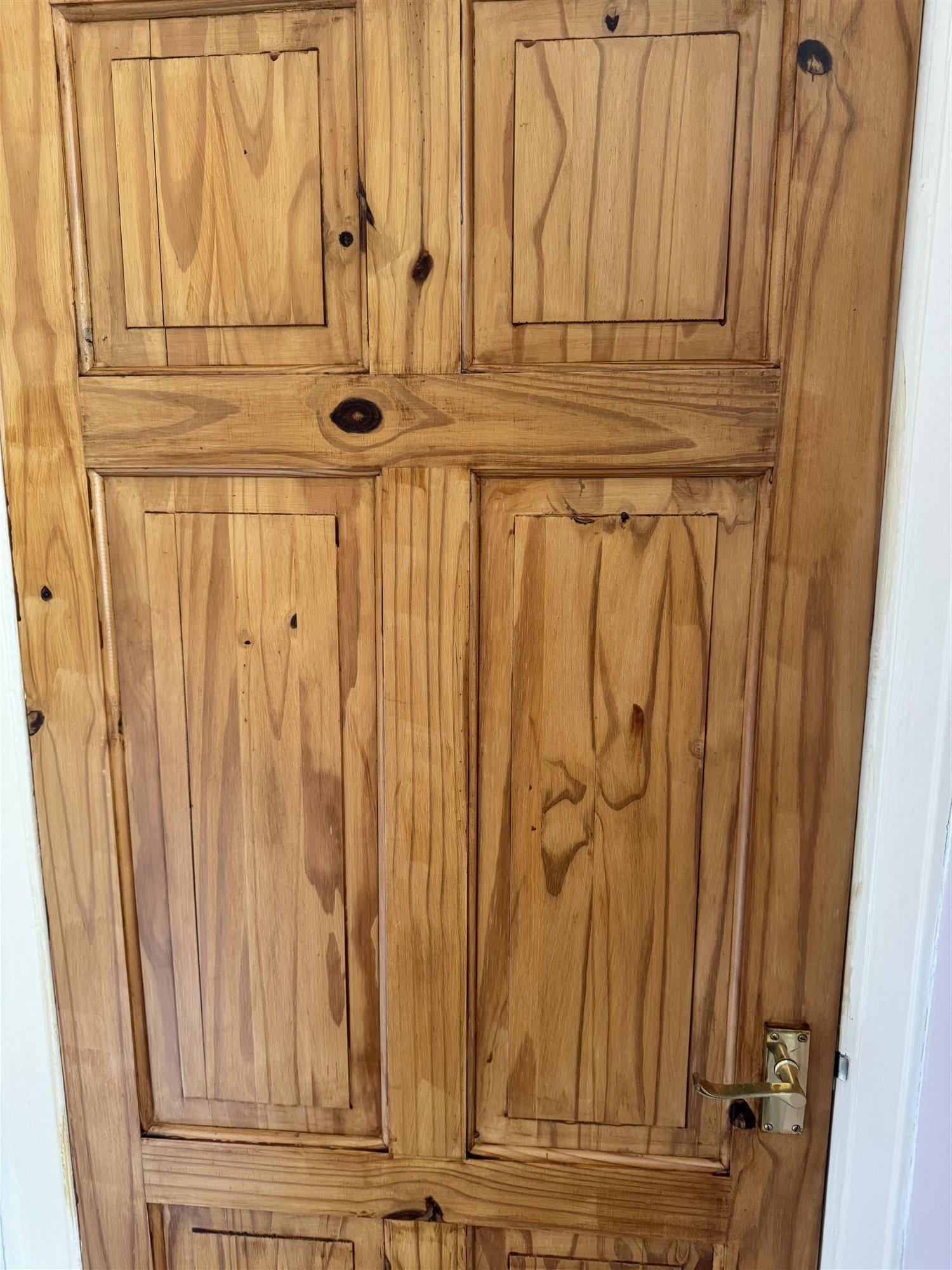
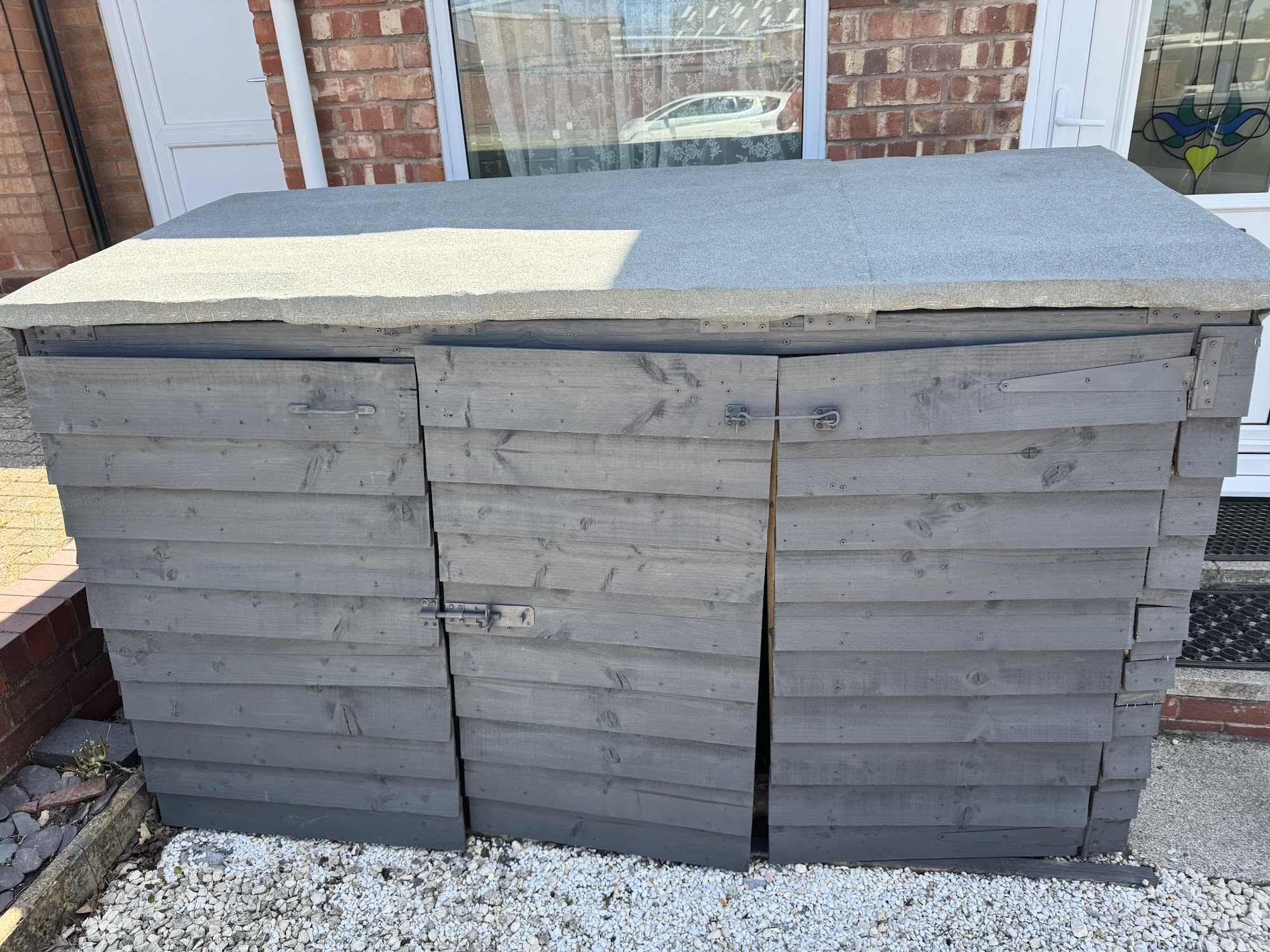
I've written before about repainting the garden shed by our front door (see Bringing a Weathered Shed Back to Life) — living in an old British house means there's always something new to maintain. This time, it was the windows' turn.
Japan vs. the UK: What Happens When Something in the House Breaks?
One thing I find fascinating about living in the UK is how deeply "just try to fix it yourself first" is woven into everyday culture. B&Q and Wickes are packed with families every weekend, and a quick YouTube search for "how to fix a stuck window" turns up an endless stream of British DIYers cheerfully wielding power tools. In a country full of old houses, treating a home as something you continually maintain seems almost second nature.
Looking back at life in Japan, by contrast, the prevalence of rented housing, along with a cultural instinct to "just buy a new one" or "call a specialist straight away," has tended to push DIY culture into the background — for better or worse. Of course, Japan has its own extraordinary tradition of craftsmanship, embodied by miya-daiku, the temple carpenters whose joinery skills border on the miraculous. But that has always felt like the domain of a rare, dedicated professional — not something an ordinary person picks up on a Saturday afternoon.
This time, I recognised early on that this particular job was beyond me, and chose to bring in a professional. Knowing when to hand something to an expert, rather than insisting on doing it yourself, is its own kind of wisdom.
Eight Years On, the "Window That Never Opens" Finally Moves
I called in a local specialist, WindowMend Services. The man who came was Jay — British of Indian heritage, I'd guess in his thirties. It was clear from the moment he arrived that he'd built his own company from scratch while clearly caring deeply for his family, and I warmed to him immediately. His knowledge of window mechanisms, and the experience behind it, was genuinely impressive.
He arrived right on the dot at 8:30am. After inspecting both windows, he confirmed what I suspected: one had a faulty handle, the other simply wouldn't open or close at all. Half doubting him, I asked, "Can you repair it?" His answer came without a moment's hesitation: "Of course." Something in me relaxed the moment he said it.
Watching him work was genuinely satisfying. He lifted the double-glazed sash out of its frame in what felt like no time at all — something I'd never seen done before. The stuck window, he guessed, had something jammed inside the mechanism, and he spent close to an hour patiently working at it. And then — it opened. My wife and I looked at each other and burst out laughing with delight. A window that hadn't moved in eight years, finally moving. I was almost surprised at how much joy such a simple thing could bring.
He then fitted new locking mechanisms and handles to both windows. The whole job, start to finish, took about thirty minutes, and the price was far more reasonable than I'd braced myself for.
Afterwards, I left the following review on Google:
"Jay is a professional specialist for window problems. He is honest and knows what he is doing. Our two window doors had problems for a long time. I was afraid it might need a costly replacement. We are very happy with his job. Strongly recommend contacting him with window problems."
Jay mentioned he'd love to bring his family to Japan someday. Two people from entirely different countries and cultures, brought a little closer by a couple of broken windows — that, too, feels like one of the quiet gifts that home repair offers.
Three Things DIY and Home Repair Teach Us About Growing Older Well
Reflecting on this repair, I found myself thinking that DIY and home repair give us something far greater than simply "fixing what's broken." Here are three angles on what I mean.
1. Repair as a Way of Tending to Mind and Body
In Zen practice, there's a term, samu — the physical work of daily monastic life: sweeping the garden, wiping the floor, splitting firewood. This humble manual labour has long been considered every bit as important a practice as sitting meditation. Time spent moving your hands and body, without overthinking, has a way of quieting the mind and pulling you back into the present moment.
DIY and home repair feel remarkably close to this idea of samu. Tightening a screw, sanding down a board, carefully examining what's actually broken — these small acts ask you to set aside life's complications and focus entirely on the one thing in front of you. As we grow older, many of us notice our concentration and memory aren't quite what they used to be. This kind of "meditation through the hands" seems to gently, but steadily, tend to both mind and body together. Watching Jay work, I found myself absorbed in something with a quiet, wordless focus I hadn't experienced in a while.
2. More Than Money — What Kintsugi Teaches Us About the Meaning of Repair
For those of us living on a pension, the cost of home repairs is never trivial. Hiring a specialist, as I did this time, or even just building up a collection of DIY tools and materials, adds up to a real sum of money. I'll admit the thought crosses my mind occasionally: wouldn't it just be cheaper to replace it?
And yet we still choose to repair, even at real financial cost. Why? This is where I think of the Japanese tradition of kintsugi — mending broken pottery with lacquer mixed with gold dust, deliberately drawing attention to the crack rather than hiding it. A kintsugi-repaired bowl often becomes more valued than it was before it broke, precisely because it now carries time, story, and care within its seams.
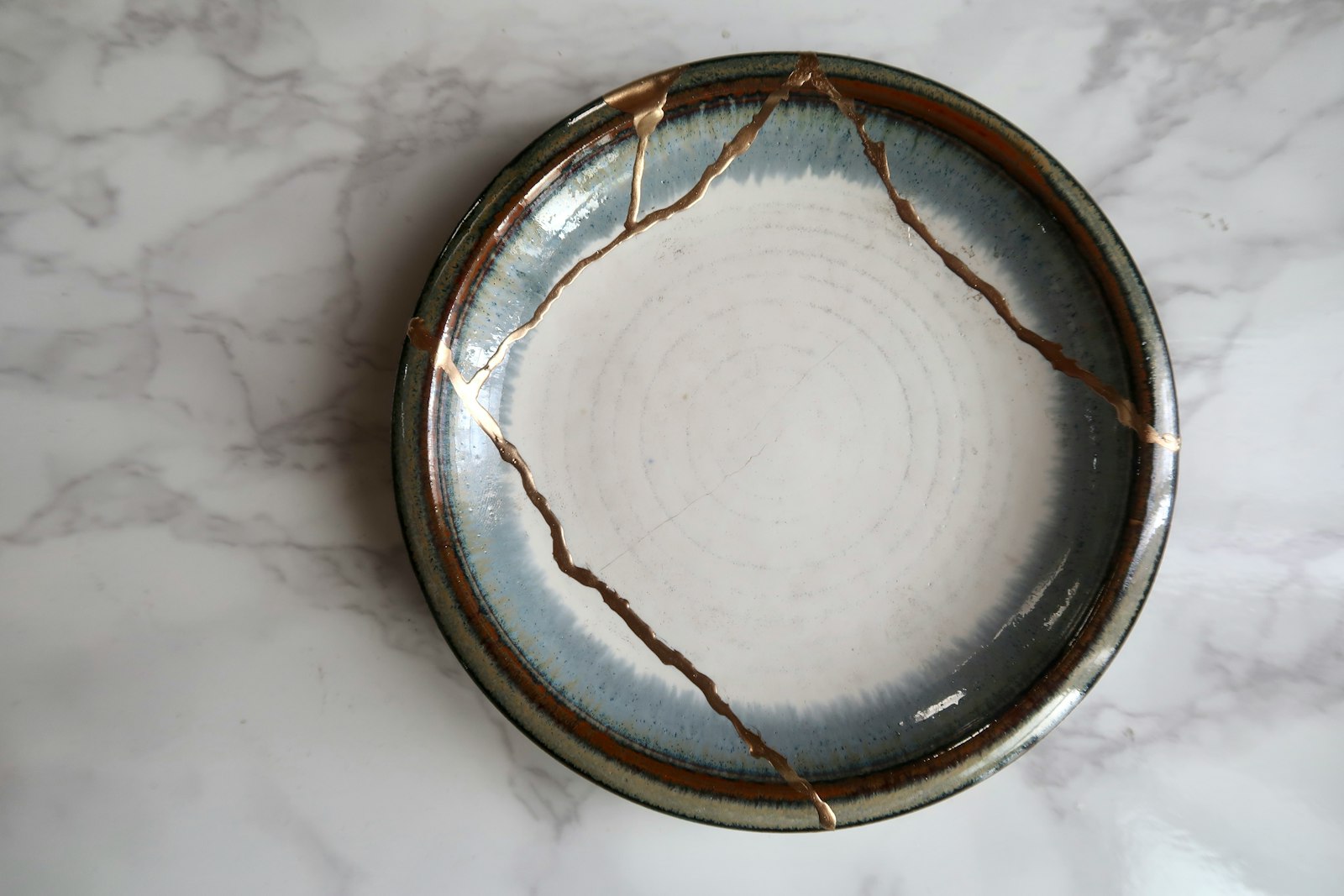
A piece of kintsugi pottery — Japan's tradition of making a mended crack beautiful rather than hiding it. (Photo: Riho Kitagawa / Unsplash)
A window that stayed shut for eight years, finally opening, left our home with something more than "a fixed window." It left behind a quiet form of respect for all the years we've spent in this house. A satisfaction money can't buy, and a renewed sense that this is a home worth continuing to look after. I've come to believe that DIY and home repair, in exchange for their financial cost, hand us back a kind of richness that never shows up on a balance sheet.
3. New Encounters, and the Colour They Bring to Later Life
In rural Japan, there was once a system called yui — a form of mutual aid in which neighbours pooled their labour for tasks too large for one household alone, like rethatching a roof or planting rice. It was never just an exchange of work; it wove real human connection between people.
For those of us today, the tradesperson who arrives to fix something broken plays a role that feels, in a small way, like a modern echo of yui. A stranger, arriving from somewhere unfamiliar, spends a few hours working alongside you on a shared problem. You catch a glimpse of their pride in their work, their love for their family, their hopes for the future. Each of these small exchanges adds a little colour to everyday life.
And through DIY and home repair, I think we also deepen our relationship with the house itself, bit by bit. Every time we come to know a broken corner of it, and share in the moment it's finally fixed, the house shifts from being merely "a box we live in" into something irreplaceable — a place layered with our family's history. Engaging with your home using both your hands and your head may, in the end, also be a quiet way of taking stock of your relationship with yourself, and with your family.
Closing Thoughts
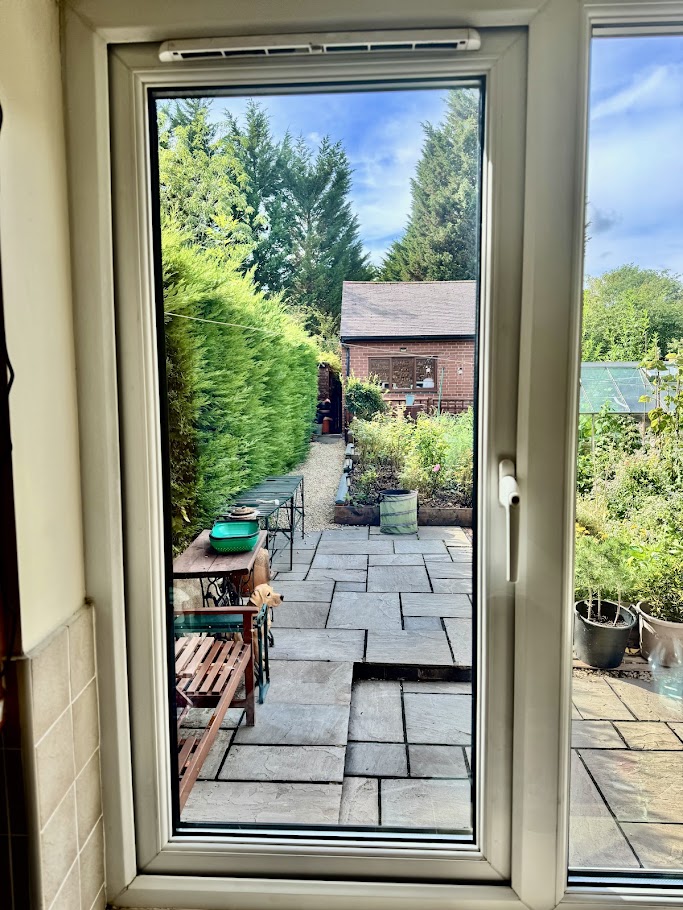
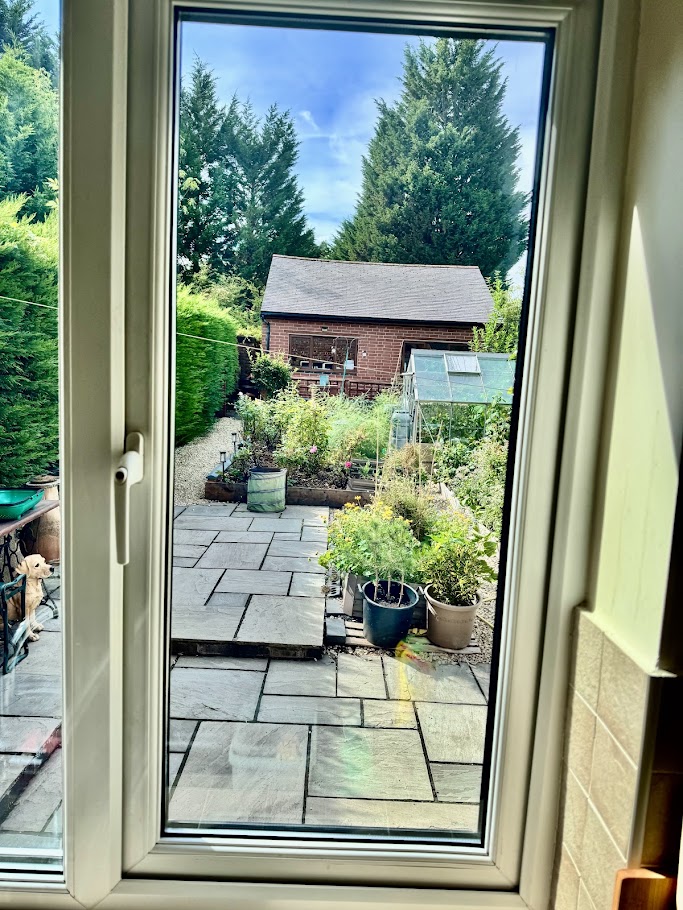
The garden looked through that window, open for the first time in eight years, should have looked exactly the same as always — and yet, somehow, it looked just a little different. We still have plenty of other windows in this house. Whenever the next problem arises, I hope to keep meeting it the same way: carefully, one window at a time, with a little help from the professionals.
And this time, it was actually an AI assistant, Claude, that helped me find WindowMend Services among the many local companies out there. That a little help from technology could lead to such a warm, human encounter with a skilled tradesman feels like a fitting shape for DIY in this new era — and, perhaps, especially fitting for life "after 60."
Other books you might like
You're welcome to take a look.
EAST TO WEST: The Heart of Haiku, the Light of Scripture
Thinking about kintsugi's spirit of making a break beautiful rather than hiding it makes me want to reopen this book of haiku and scripture. This was my father-in-law's final work.
View on AmazonCataract Surgery-A Memoir: Double cataract surgery in Osaka, Japan
Another record of putting something right again with a specialist's help, from when I was 66.
View on AmazonSushi Business in Britain: the complete four-volume series
A novel series following thirty-five years in the British sushi trade, from apprentice to factory manager to a small sushi school.
View on Amazon