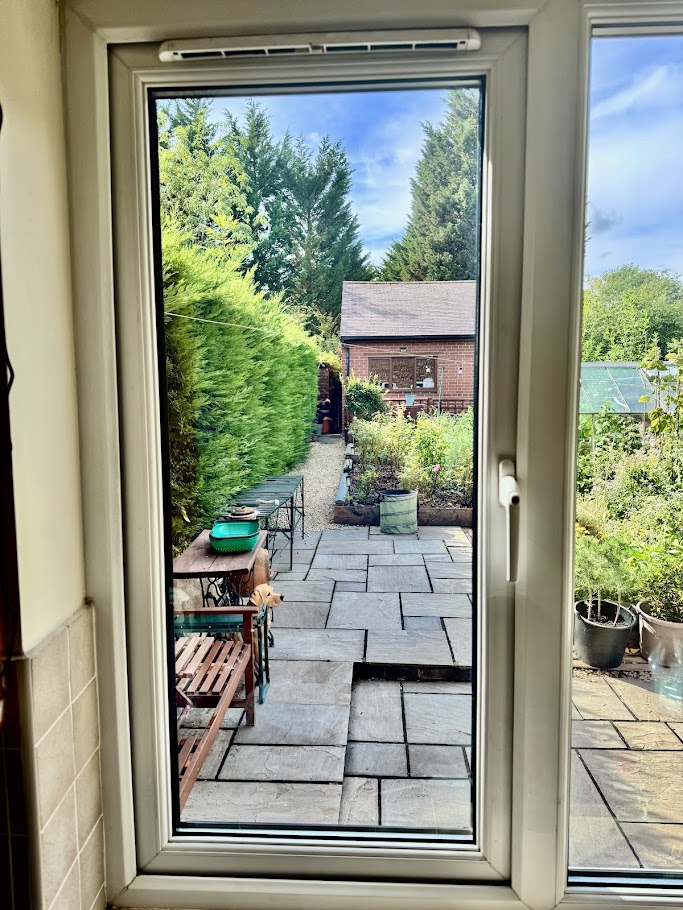
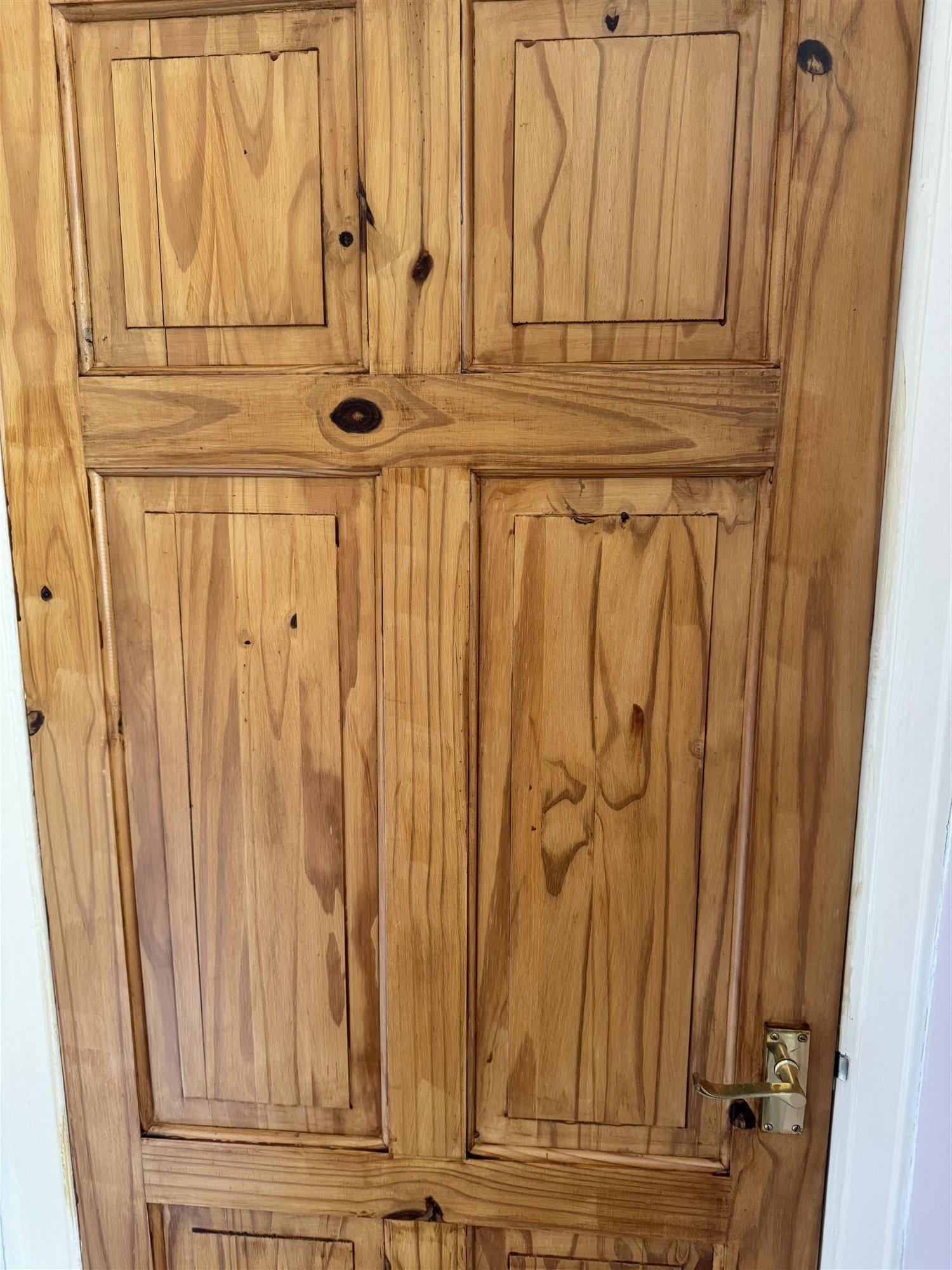
How It Started
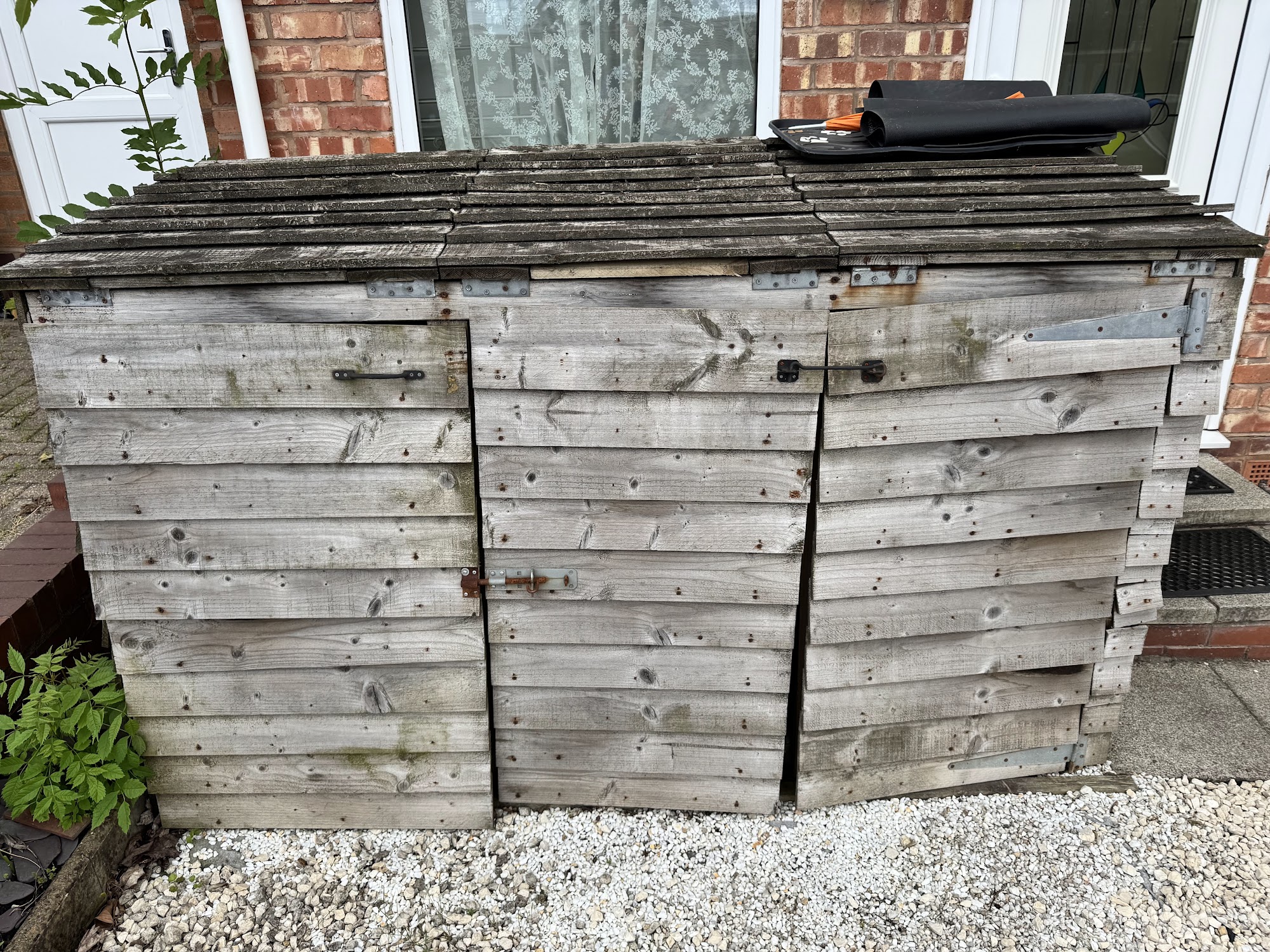
By our front door sits a wooden storage shed — the kind that hides bikes and bins from view. After years of exposure to the British weather, the timber had faded to a dull grey, with green moss and algae spreading across the surface. The structure itself was still sound, which made its tired appearance all the more frustrating.
"It's time to bring this back to life with a fresh coat of paint." That thought was where this whole project began.
Gathering the Tools and Materials
As a DIY beginner, my first challenge was simply deciding what to buy and how to choose. After a fair amount of research and comparison, here's what I settled on.
For cleaning
- Roxil 100 Wood & Patio Cleaner (kills moss, algae and lichen at the root)
- A 9-inch stiff deck brush with PVC bristles and a long handle
For painting
- Ronseal Fence Life Plus+ (5-year protection, Charcoal Grey)
- Harris Exterior Woodwork roller and brush kit
- Harris Trade extension pole (1900–3300mm)
- Standard Grade Shed Roof Felt Green Mineral (the felt sheet used for the roof)
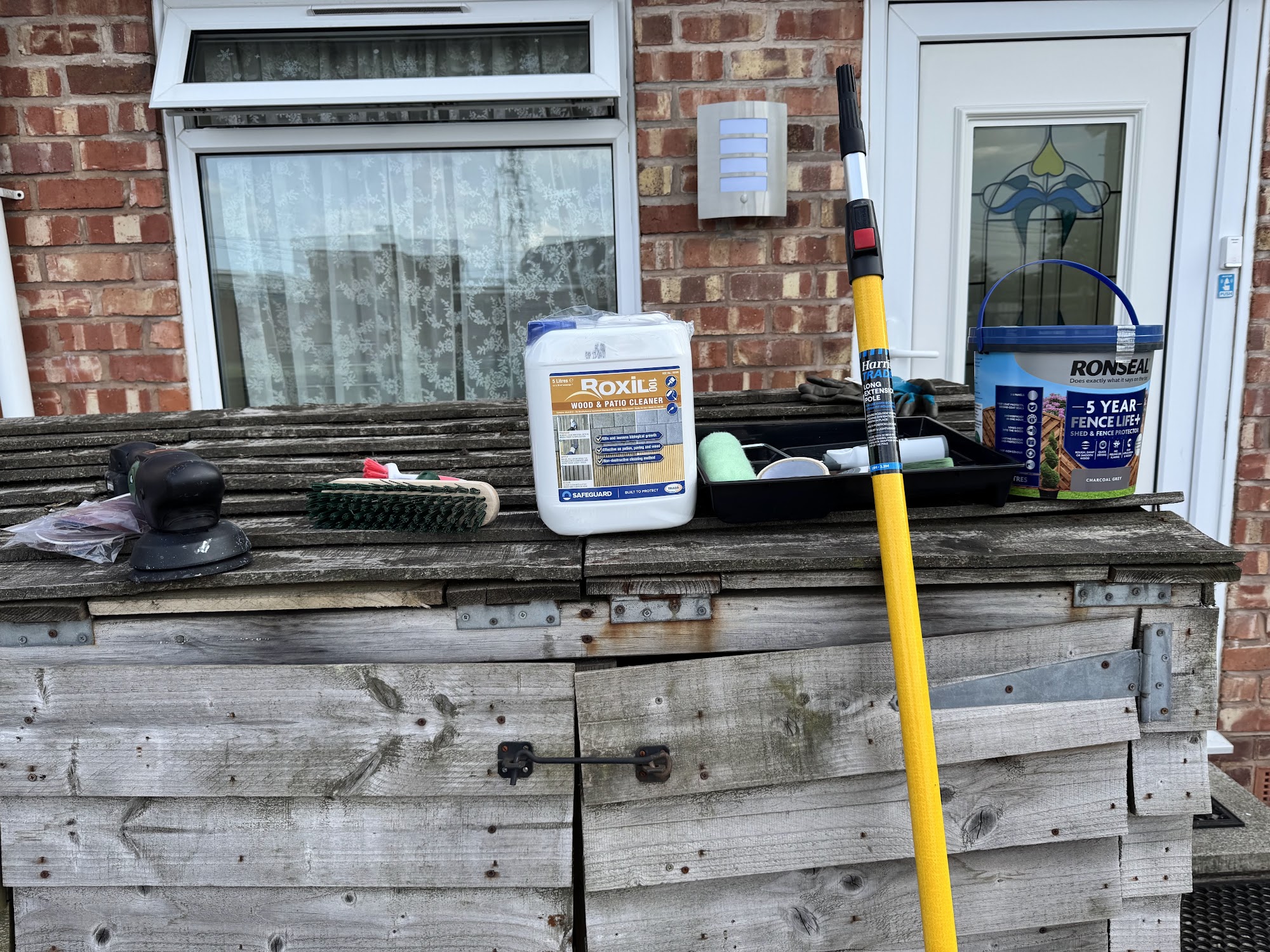
I chose Charcoal Grey because it harmonised with everything around it — the red brick wall, the white window frames, and the white gravel. Against the warm tones of the brick, a calm grey acts as the perfect anchor. That was my reasoning, at least.
One aside on cost: a comparable Cuprinol product runs around £36, while the Ronseal was about £14. Brand and colour range aside, for practical durability the Ronseal was more than enough — and I put the money I saved towards brushes and cleaner instead.
The Process
I worked at a relaxed pace over several days, never overdoing it.
Day 1: Cleaning I first brushed off the loose moss while the wood was dry, then sprayed on Roxil 100 undiluted — two good coats — and let the solution break down the biological growth at the root. Afterwards, the timber looked remarkably brighter and revived.
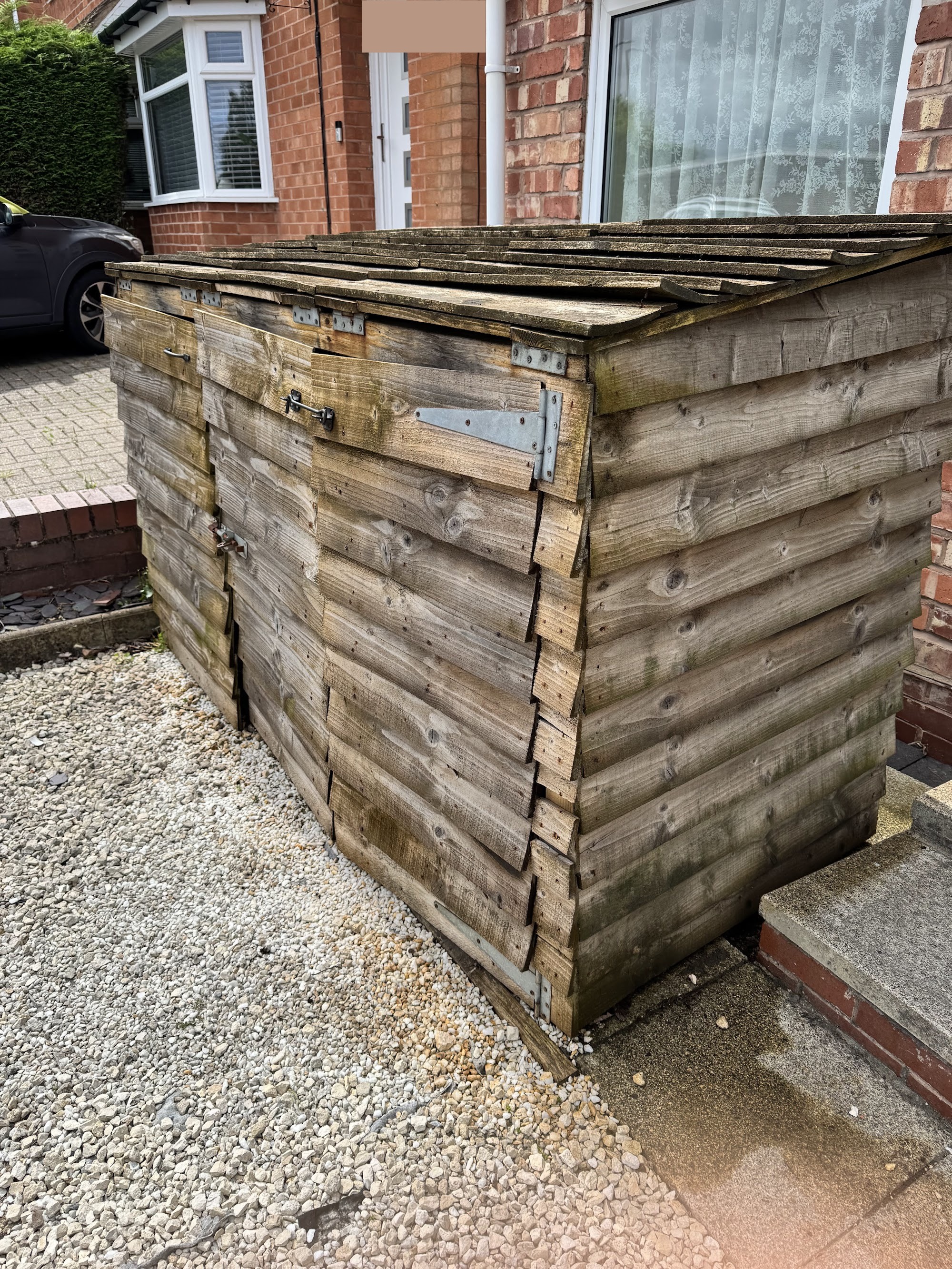
Days 2–3: Drying The forecast promised a rare stretch of dry weather, so I seized the moment and let the wood dry out thoroughly.
Day 4: Painting I used the sprayer and roller for the large flat areas, and a brush for the gaps between boards and around the metal fittings. A useful trick: spraying first, then "back-brushing" straight away, works the paint into the grain and improves both adhesion and finish. The extension pole was a real help too — I could reach the high sections standing upright, without ever climbing a ladder.
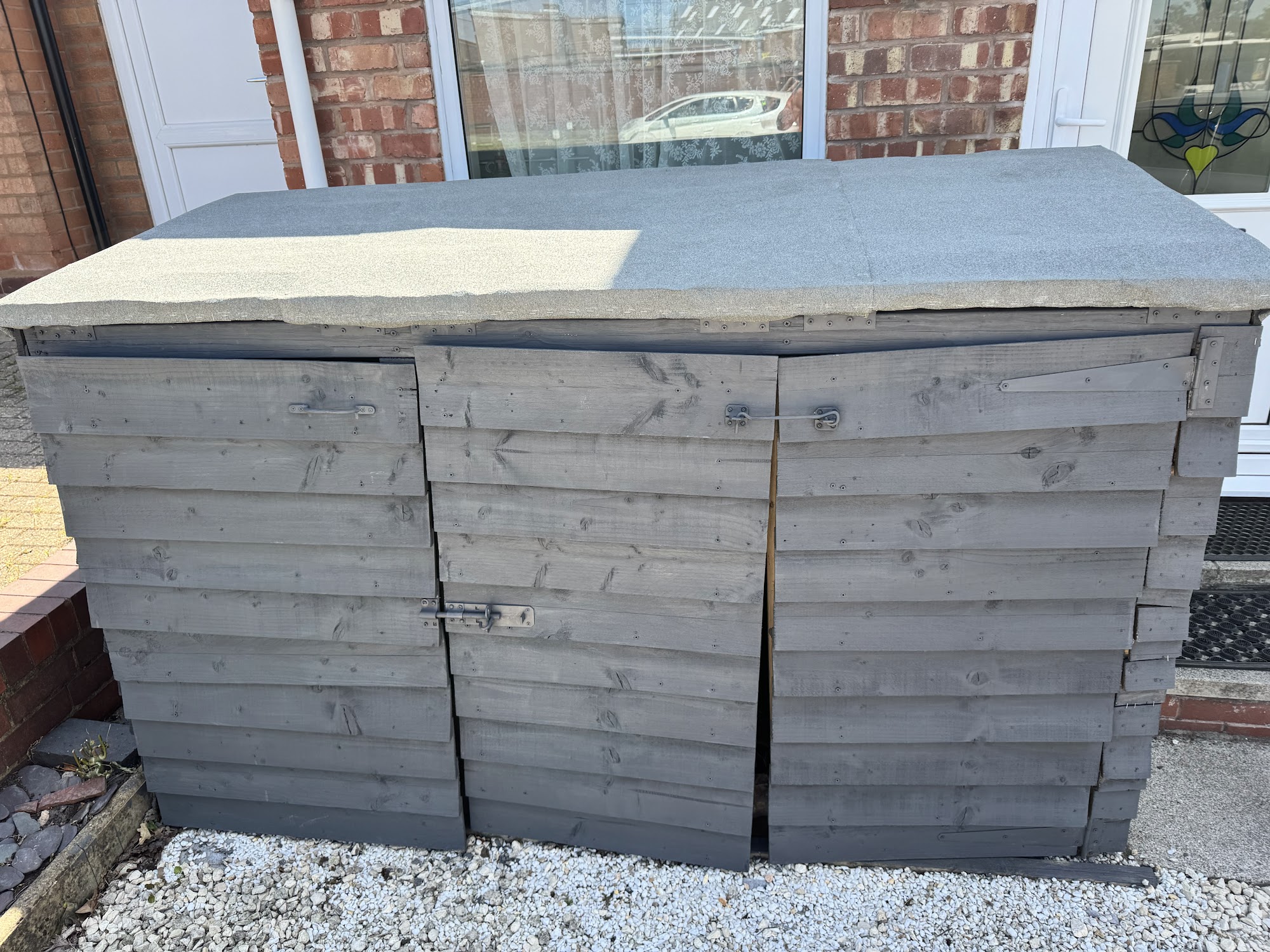
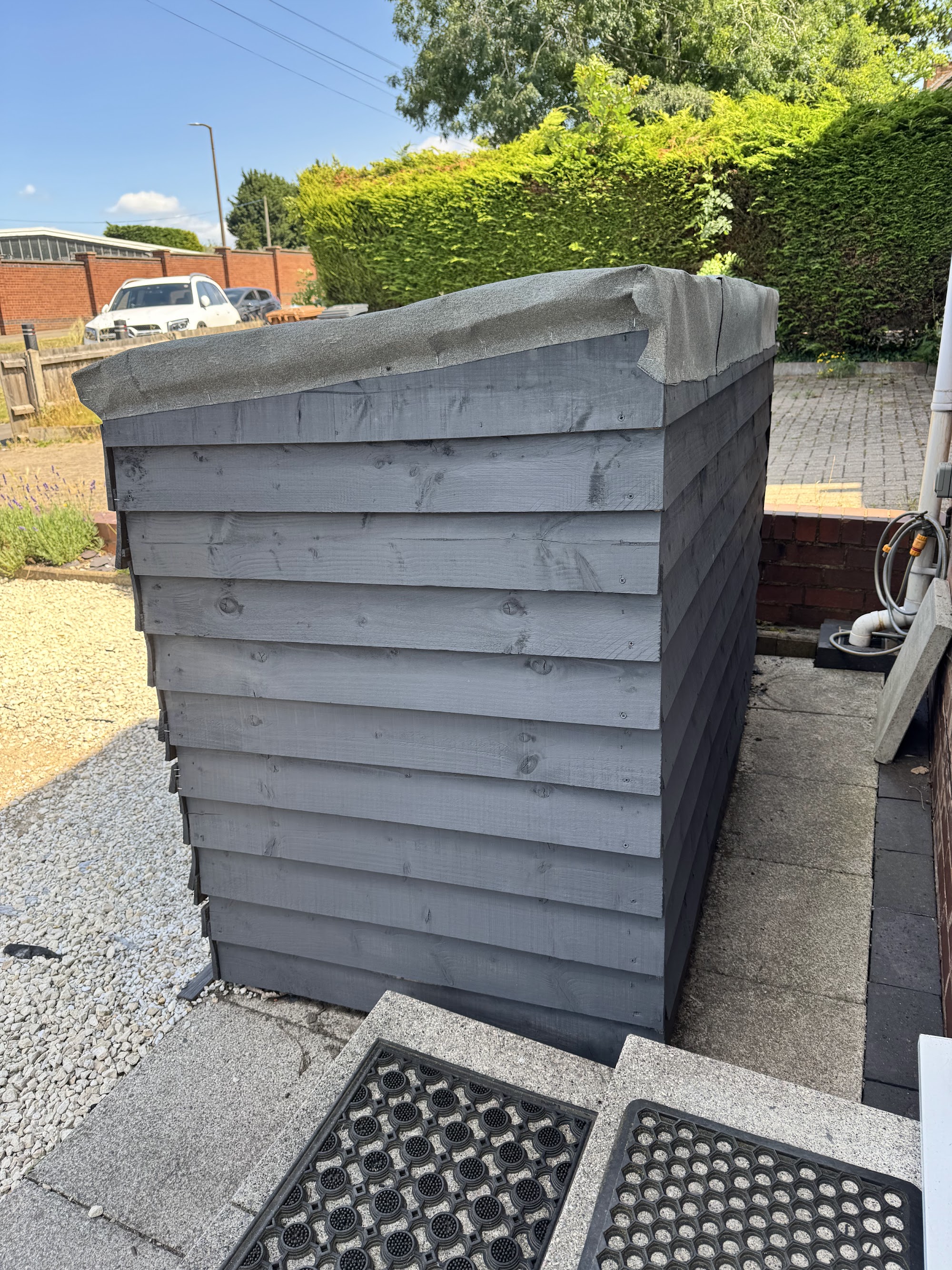
The finishing touch: the roof The boards on the top of the shed were badly weathered — beyond what paint alone could fix. Rather than force more coats onto damaged timber, I covered the top with thin green-grey roofing felt and secured it with a nail gun. This hid the damaged wood, dramatically improved water resistance, and blended naturally with the charcoal body.
Before & After
The faded, lifeless timber has been reborn in a deep charcoal grey. Against our red-brick home, it now looks modern and clean. I get a small hit of satisfaction every time I pass the front door.
Why This Job Was Perfect for Healthy Ageing
This, in truth, is the part I most wanted to write down.
After finishing, I realised something. Painting a shed turns out to be remarkably well-suited to extending one's healthy lifespan — the years we live in good health, not just alive.
1. It's exercise, woven into a purpose
Scrubbing, bending, reaching up, spreading paint — all of it combines light aerobic activity with gentle strength work. No gym required; you move your body naturally, in the service of a goal. That sense of purpose makes it far easier to keep going than "exercise for exercise's sake."
2. A sense of achievement supports the mind
Completing something with your own hands has a real, positive effect on cognition and mental wellbeing. Setting a goal, planning the steps, and seeing it through — that whole process is nourishment for the mind.
3. Time outdoors, time in the sun
Working outside encourages vitamin D production and lifts the mood. In Britain, where daylight can be in short supply, moving your body outdoors on a clear day carries particular value.
4. Planning is first-rate brain training
Which products to choose, in what order to work, how to read the weather — this kind of planning and judgement is genuine cognitive exercise. Spreading the job over several days, at an easy pace, was itself a sensible way to spare the joints and back.
In Closing
"It's only a shed," you might think. But looking back, this was a project full of health, accomplishment, and creative problem-solving — ideally suited to those of us in retirement.
It doesn't have to be anything grand. Take one small spot near you that has been quietly nagging, and tend to it with your own hands, a little at a time. That accumulation — moving the body, using the mind, filling the heart — may be exactly where the secret to healthy ageing quietly lives.
As for what's next: whether to replace those weathered top boards one day, or simply maintain the felt as it is. Turning that over slowly, at my leisure, is a pleasure in itself.
Other books you might like
You're welcome to take a look.
EAST TO WEST: The Heart of Haiku, the Light of Scripture
Tending to one small, nagging thing nearby, a little at a time — the kind of quiet accumulation this collection finds through haiku. This was my father-in-law's final work.
View on AmazonCataract Surgery-A Memoir: Double cataract surgery in Osaka, Japan
Another new experience at 66 — an honest account of the cataract surgery I went through.
View on AmazonSushi Business in Britain: the complete four-volume series
A novel series following thirty-five years in the British sushi trade, from apprentice to factory manager to a small sushi school.
View on Amazon