Blue Star Dive & Resort — Complete Guide (Part 1)
Date: 2020-03-29
A Different Kind of Philippines Resort
Blue Star Dive & Resort is a 12-room dive resort on the eastern tip of Bohol Island, in the village of Anda. Three nights here in March 2020.

Why it stands out:
- Genuine escape from daily life — sea breeze, natural sounds, no urban noise
- Significantly cheaper than Mactan Island resorts, allowing longer stays
- Small-scale and quiet: 12 rooms only, no large groups
- World-class coral reef diving and snorkelling accessible directly from the property
- Guest profile: primarily older European couples — French, Italian, German, British

The Resort
Owners: German husband, Filipino wife. Managed by a British manager.
Address: Blue Star Dive & Resort, Ipo Kandabong Anda, Bohol 6311, Philippines. Tel: +63 947 946 5386

Rate: £60/night (~¥8,600) for two, booked via Hotels.com, including breakfast.
Getting There: Cebu to Bohol
From Cebu City's Pier 1, a fast ferry crosses to Tagbilaran Port on Bohol Island. Journey: approximately 2 hours.
At Tagbilaran, a driver from the hotel meets arriving guests — a pre-arranged hotel transfer. Contact the hotel by email in advance to book. The driver holds a hotel placard at the pier exit.
Hotel transfer from Tagbilaran to Anda: approximately 2 hours. Cost: 2,500 pesos one way per vehicle (up to 4 passengers, same rate).

The road follows the coastline much of the way — banana palms and coconut trees lining both sides. The resort is at the end of this road.

Alternatives: Local taxis from the ferry pier quote 2,500–3,000 pesos (negotiable). Public bus with one transfer takes 3 hours and has no air conditioning — the option for local residents. We used the hotel transfer.
The Property
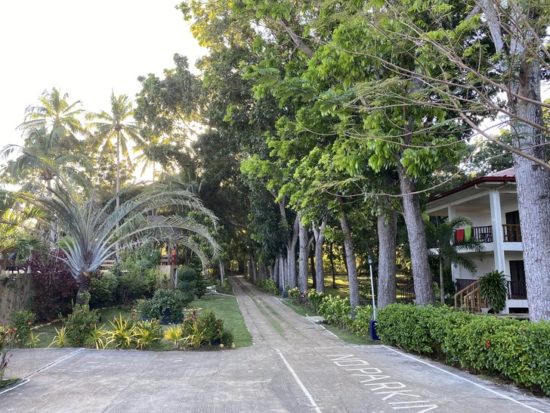
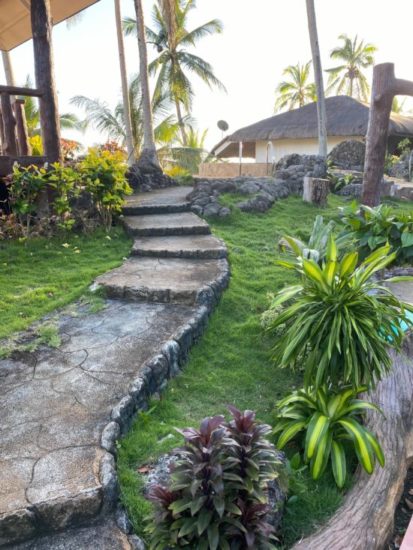
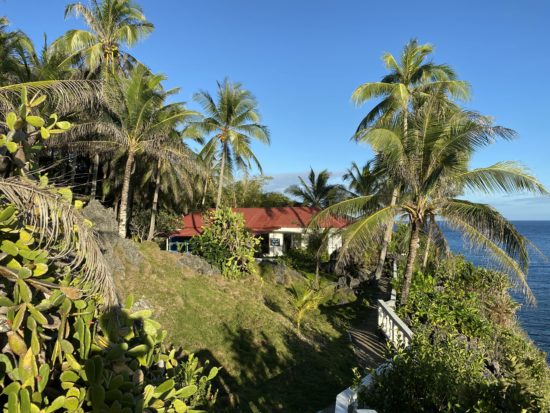
The resort sits on a clifftop above the sea, at the eastern end of Bohol. The grounds are enclosed by a gate with a security guard — reassuring for a remote location. Coconut palms and banana trees create continuous shade between buildings scattered across the property.
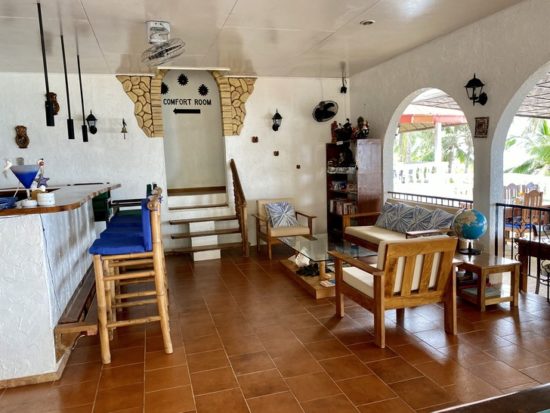
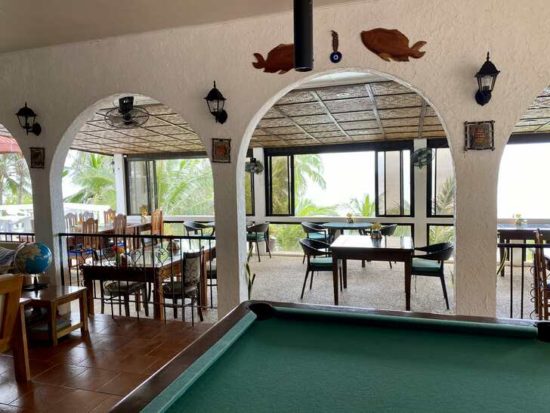
Common areas: The main reception building contains the restaurant, bar, and lounge-style seating with sofas. A billiard table stands beside the reception counter.

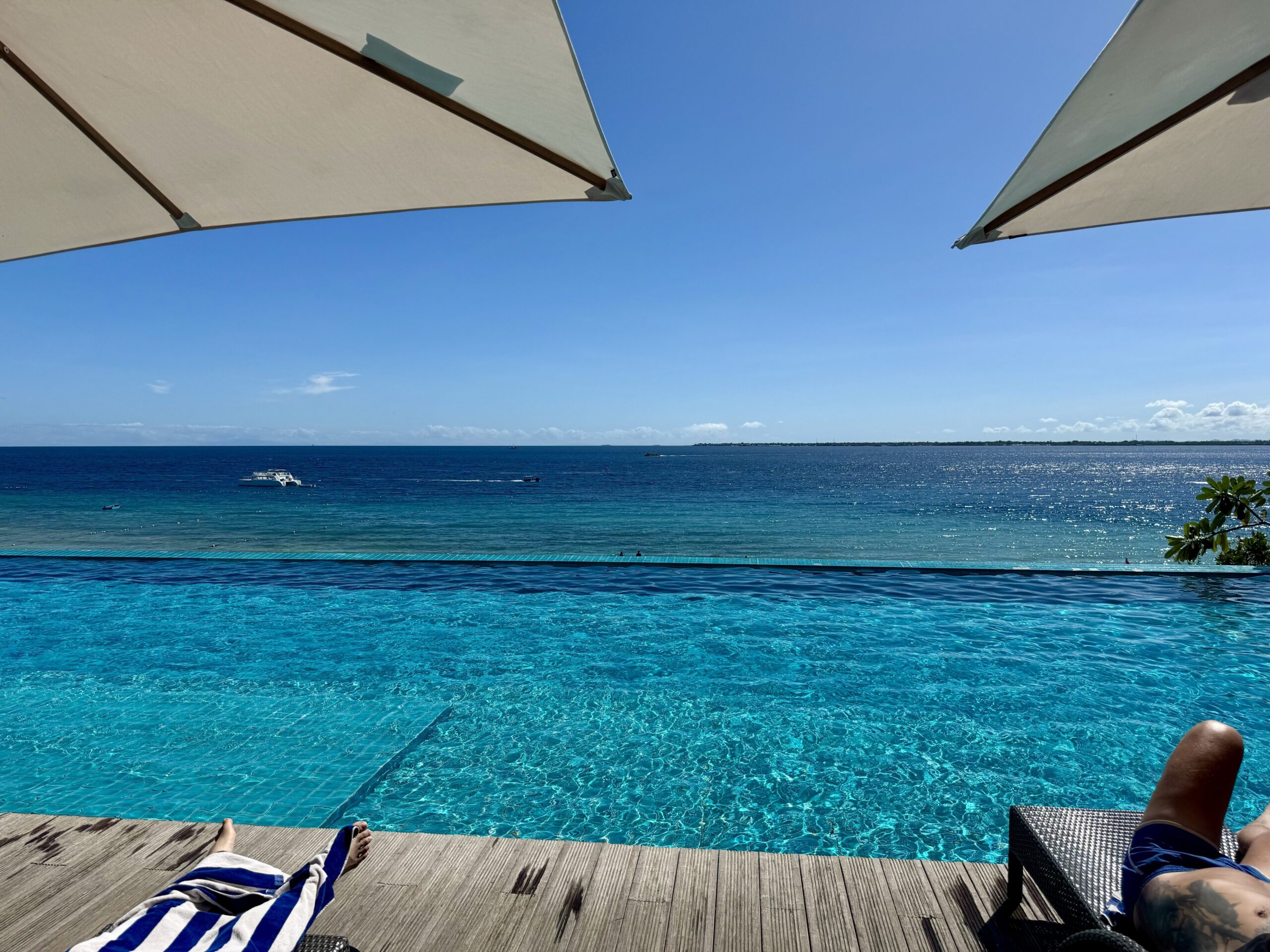
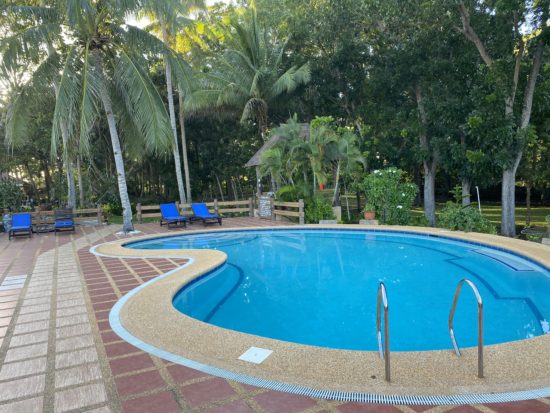
Pool and jacuzzi: A small pool beside the reception building — sufficient for a relaxed soak or a few lengths. A separate jacuzzi at a slightly higher elevation overlooks the sea.
Diving centre: Below the restaurant, accessible by stairs down the cliff face. The resort's bancarboat (Filipino outrigger boat with bamboo stabiliser arms on both sides) is moored at the bottom, used for diving and snorkelling excursions.


The Room (Bungalow No. 3)
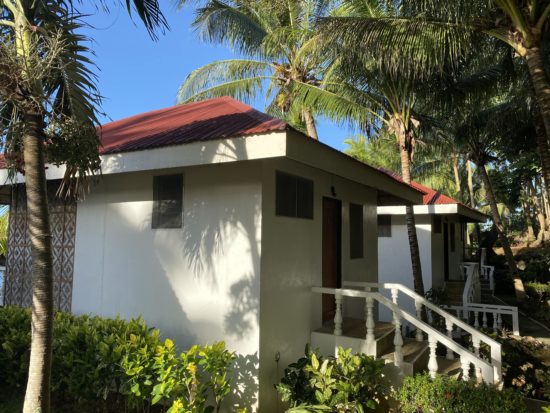
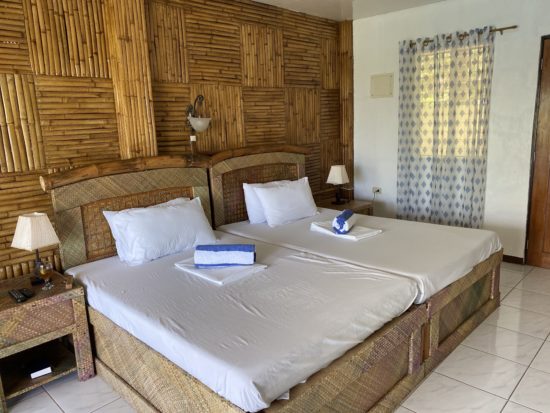
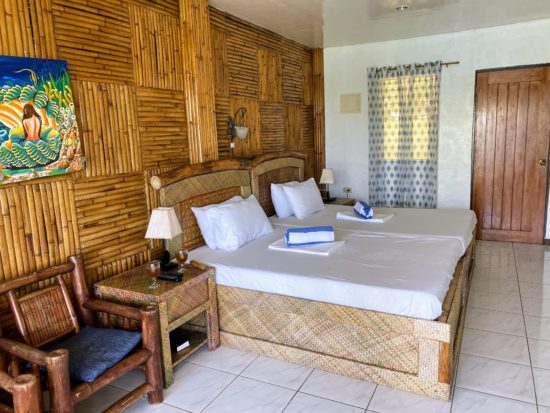
The bungalows are built in traditional Filipino style: walls of woven bamboo and palm-fibre panels. Brown bamboo (not the green bamboo of Japan) — the local variety used throughout the area for construction, furniture, and interior fittings.
No air conditioning. The bungalow design relies on natural ventilation: double-layered walls with gaps between them allow constant airflow. With sea breezes from the shore and the coastal position maintaining temperatures between 25–30°C year-round, air conditioning is simply not necessary.

Lying in bed with the windows open: the sound of wind moving through the coconut fronds above. Early morning and late afternoon: tropical squalls on the corrugated roof — a specific and deeply restful sound. Birds, insects, the sea. Like sleeping in a well-constructed tent in a tropical forest.

All windows and doors have full mosquito screens.
Bed: Bamboo-framed, with woven bamboo accents. Two double beds. The tropical sheet — a single lightweight cotton layer rather than a duvet — is the correct sleeping solution. More than enough.
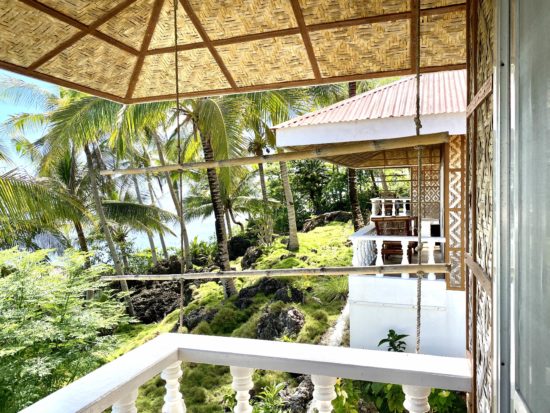
Balcony: Bamboo furniture (chairs and table). A bamboo clothes drying rack at one end.

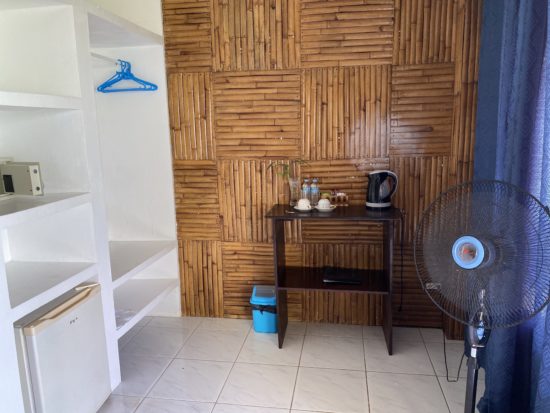
Storage: Closet, safe, mini-fridge, and a side table with kettle, instant coffee, and green tea. Two small water bottles replenished daily.

Bathroom: Shower (no bathtub). Water pressure is low — expected for a remote island without mains water infrastructure — but hot water is available. Clean throughout. Amenities: large and small towels, soap, shampoo, toothbrush, razor, hairdryer.

Snorkelling
Price: 500 pesos per person — includes full equipment hire (mask, snorkel, fins) and a 10-minute bancarboat ride to the reef.

Duration: approximately 1 hour in the water.
The bancarboat crosses to the snorkelling point with the divers on board. The Filipino outrigger design — bamboo float arms extending from each side of a narrow hull — provides lateral stability that makes it the ideal craft for reef access in these conditions. You cannot reach the best coral without one.

The reef at Anda: Bohol's waters are consistently rated among the clearest and most biologically diverse in the Philippines. Snorkelling conditions on the day: perfect weather, completely calm water, exceptional visibility. Coral formations and fish variety that take an hour to properly explore.
The diving staff are experienced and attentive — suitable for beginners and reassuring for first-time open-water snorkellers. At 500 pesos per person (~¥1,000, ~£7.50), this is exceptional value.
Access to the water: Stone steps built into the cliff face lead from the diving centre down to the shoreline. The area shows evidence of past volcanic activity — flecks of volcanic ash embedded in the rock face.

Day Trips
The hotel offers a Bohol Island day tour from 9am to 5pm: 5,000 pesos for a private car. Destinations include the famous Chocolate Hills and the Loboc River, both approximately 90 minutes by car.

Details are covered in a separate article.
WiFi
Available in common areas (free) and in rooms. Speed: slow. Email with text only. For a resort on a remote island: expected and entirely appropriate. The point of being here is not to be connected.

Other books you might like
You're welcome to take a look.
EAST TO WEST: The Heart of Haiku, the Light of Scripture
Stepping away from being constantly connected, if only for a while — the kind of stillness this collection finds through haiku. This was my father-in-law's final work.
View on AmazonCataract Surgery-A Memoir: Double cataract surgery in Osaka, Japan
Another new experience at 66 — an honest account of the cataract surgery I went through.
View on AmazonSushi Business in Britain: the complete four-volume series
A novel series following thirty-five years in the British sushi trade, from apprentice to factory manager to a small sushi school.
View on AmazonContinues in Part 2: Restaurant food and the Wednesday Pizza Night.