🎧 Listen to the Discussion(two hosts talk through their thoughts on this article)
This is an AI-generated audio overview of this article, created with Google NotebookLM. Two hosts discuss the article together, sharing their own thoughts and commentary — it is not a reading of the article text.
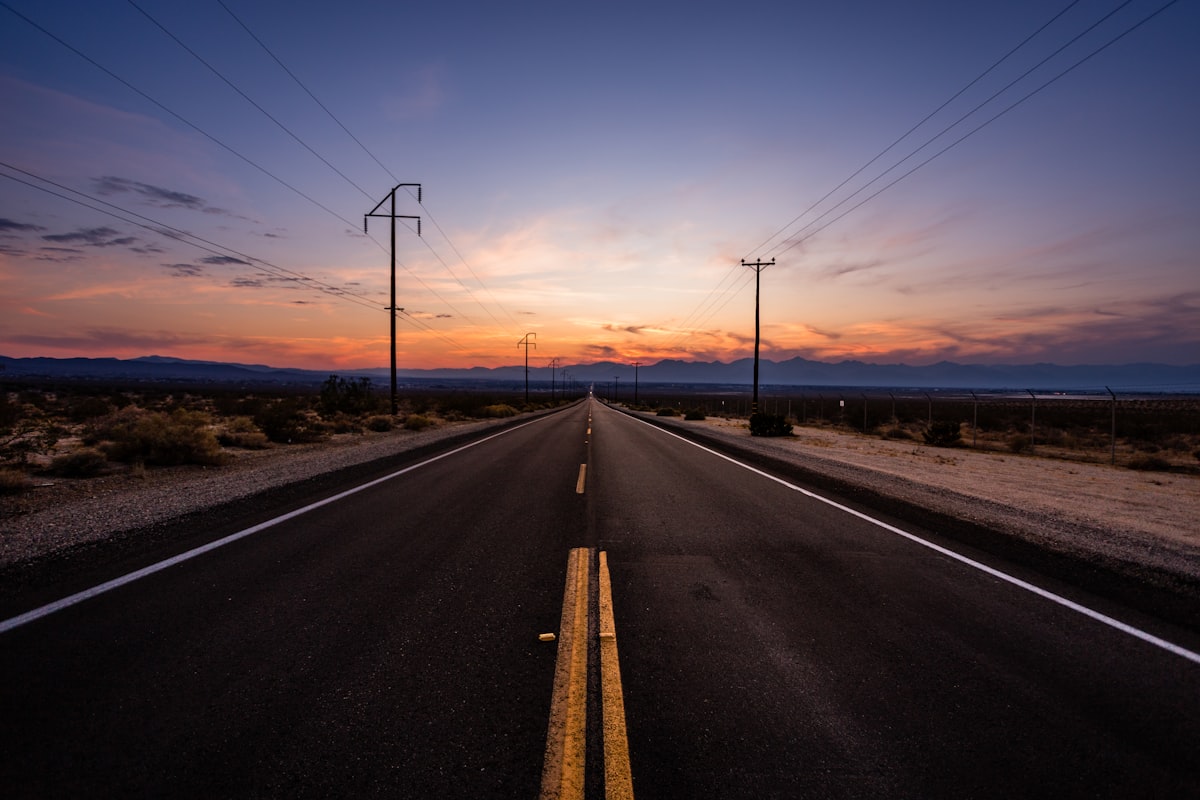
Photo by Gilberto Parada on Unsplash
Meeting the Song
The very first song in this series, the Beatles' "When I'm Sixty-Four," turns out to have a direct connection here: Paul McCartney has said that when he wrote it, he thought he was writing a song for Sinatra. Frank Sinatra was the singer the teenage McCartney dreamed of writing for. Once I learned that, I found myself listening again, with fresh ears, to Sinatra's signature song, "My Way." A quiet, resolute declaration of having walked one's own road, looking back over a whole life — I used to hum this song often in my forties, in the middle of the ups and downs of running a business abroad.
An Idea I Couldn't Have Held in My Twenties
In my twenties, being able to say, with my head held high, that I'd truly lived life my own way felt like something reserved for a distant future. Having made a major decision about the direction of my life and moved to London to build things up from nothing, I had no way of knowing, back then, what I'd end up choosing or regretting. Looking back now, I think the place "My Way" sings from isn't a goal you aim for in youth — it's a destination you can only reach after a long stretch of years.
A Small Question About Living
Of the "four sufferings" in Buddhist thought — birth, aging, sickness, and death — death was the one I did my best not to think about in my twenties. "My Way" opens right there: at the moment the final curtain is drawing near. At twenty-something, I doubt I could have connected emotionally with a song that opens like that. At sixty-six, I find a quiet resolve in that very opening line. It's precisely because you're aware the end is coming that you can choose, deliberately, how to live this moment, so as to leave as few regrets as possible. Keeping death not at a distance, but somewhere in the corner of your vision — every time I hear this song, I'm reminded that this is exactly what helps you cherish the present.
What I Hear Now, at Sixty-Six
I built Japanese food businesses across several countries, worked in acupuncture and herbal medicine, gained experience investing in property and stocks, and in 2025, at sixty-five, I retired. In my fifties, health check-ups started to come back with more items flagged for "monitoring," and there were stretches when I felt caught between the urge to believe I could still become something more and the sense that it might be time to let that go. Still, I think there's value in putting all this uncertainty into words rather than hiding it. Not so much a message aimed at anyone in particular, but simply the fact of having written it down — I hope it might serve as a small signpost for someone else caught in the same uncertainty.
Having lived in the UK for a long time, I've come to know a culture where clearly stating that you've chosen your own path — even asserting yourself when needed — is considered a virtue. Raised in Japan, though, I carry, deep in my bones, a sense that valuing harmony and not asserting oneself too strongly is itself a virtue. Listening to "My Way," about as individualistic a declaration as a song can be, from a place shaped by both of these cultures, it no longer sounds to me like simple self-assertion. It sounds more like a quieter kind of confirmation: that even so, I've made my own choices along the way. There's no need to shout it. It's enough to say it quietly to yourself. I've come to think that's a valid way to hear this song, too.
One more thing I find personally fascinating about this song: the words aren't really Sinatra's own. They were written by Paul Anka, who imagined what Sinatra himself might say if he were the one writing the lyrics. This declaration — "this is my way," as individualistic as a song gets, almost a summation of a life — turns out to have been shaped through someone else's imagination. Perhaps the stories we tell about ourselves are, more than we'd like to admit, shaped by how the people around us see us. What feels like a story that belongs entirely to us may, in fact, have been born out of a kind of dialogue with someone else. Thinking about it that way, the song carries a slightly different weight for me now.
For anyone curious about the life behind the song, Pete Hamill's biography "Why Sinatra Matters" is a rewarding read on the world this song came out of. Paperback
(As an Amazon Associate I earn from qualifying purchases.)
Closing
In my twenties, I couldn't have imagined declaring, without fear of regret, that I'd lived my own way. At sixty-six, I can't honestly say I have no regrets at all. And yet learning to carry even those regrets as part of the road I chose — that, I think, is exactly what it feels like to have lived this long. Every time I hear "My Way," it reminds me of this. Life is worth living. That, I suspect, is exactly why this one song has been sung around the world for more than half a century.
Reference Links
- Frank Sinatra Official Site (Frank Sinatra Enterprises)
- "My Way" (Official audio provided by Universal Music Group, on YouTube)
Read the Lyrics (Utaten): https://utaten.com/lyric/ea00000248/Note: Uta-Net did not have a standalone page for this song, so we've linked to Utaten, another major Japanese lyrics database, instead. Please enjoy the full lyrics on the external site linked above — they are not reproduced here.
Other books you might like
You're welcome to take a look.
EAST TO WEST: The Heart of Haiku, the Light of Scripture
Now that I can say I've made my own choices along the road, these haiku read differently too. This was my father-in-law's final work.
View on AmazonCataract Surgery-A Memoir: Double cataract surgery in Osaka, Japan
Another new experience at 66 — an honest account of the cataract surgery I went through.
View on AmazonSushi Business in Britain: the complete four-volume series
A novel series following thirty-five years in the British sushi trade, from apprentice to factory manager to a small sushi school.
View on AmazonAbout Frank Sinatra
Frank Sinatra was born on December 12, 1915, in Hoboken, New Jersey. He began his career as a band singer in the late 1930s, rose to fame as a vocalist with the Tommy Dorsey Orchestra in the 1940s, and soon went solo, quickly becoming an idol who captivated a young generation. After a lull in popularity in the early 1950s, he won the Academy Award for Best Supporting Actor for "From Here to Eternity," establishing himself as an accomplished actor as well. During his years at Capitol Records, he recorded numerous classics, including "Come Fly with Me" and "Fly Me to the Moon," cementing his place as one of the defining singers of the 20th century. In the 1960s, he founded his own label, Reprise Records. "My Way," released in March 1969, was an English-language adaptation by his close friend and collaborator Paul Anka of the French song "Comme d'habitude." While it reached only a modest No. 27 on the US charts, it set a still-unbroken record in the UK, spending 75 weeks in the Top 40. It went on to become his standard closing number in concert, a song widely seen as mirroring Sinatra's own life, beloved around the world ever since. He passed away on May 14, 1998, at the age of 82. Across a career spanning film, television, and music, he received numerous honours, including the Presidential Medal of Freedom, and remains an enduring symbol of 20th-century American music.