🎧 Listen to the Discussion(two hosts talk through their thoughts on this article)
This is an AI-generated audio overview of this article, created with Google NotebookLM. Two hosts discuss the article together, sharing their own thoughts and commentary — it is not a reading of the article text.
What the flow of a river has taught me
I'm watching the evening light in my garden here in the UK, and sometimes I can hear the Japanese song "Kawa no Nagare no Yoni" ("Like the Flow of a River") in my head. I try to hum the words, but I can't remember them exactly. I can still clearly remember the feeling of the melody — that it's not a struggle, but a gentle flow.
Why does this song feel so powerful to me now, at 66? I think it's because I'm finally starting to understand, in my body rather than my head, what it means to let yourself go with the flow.
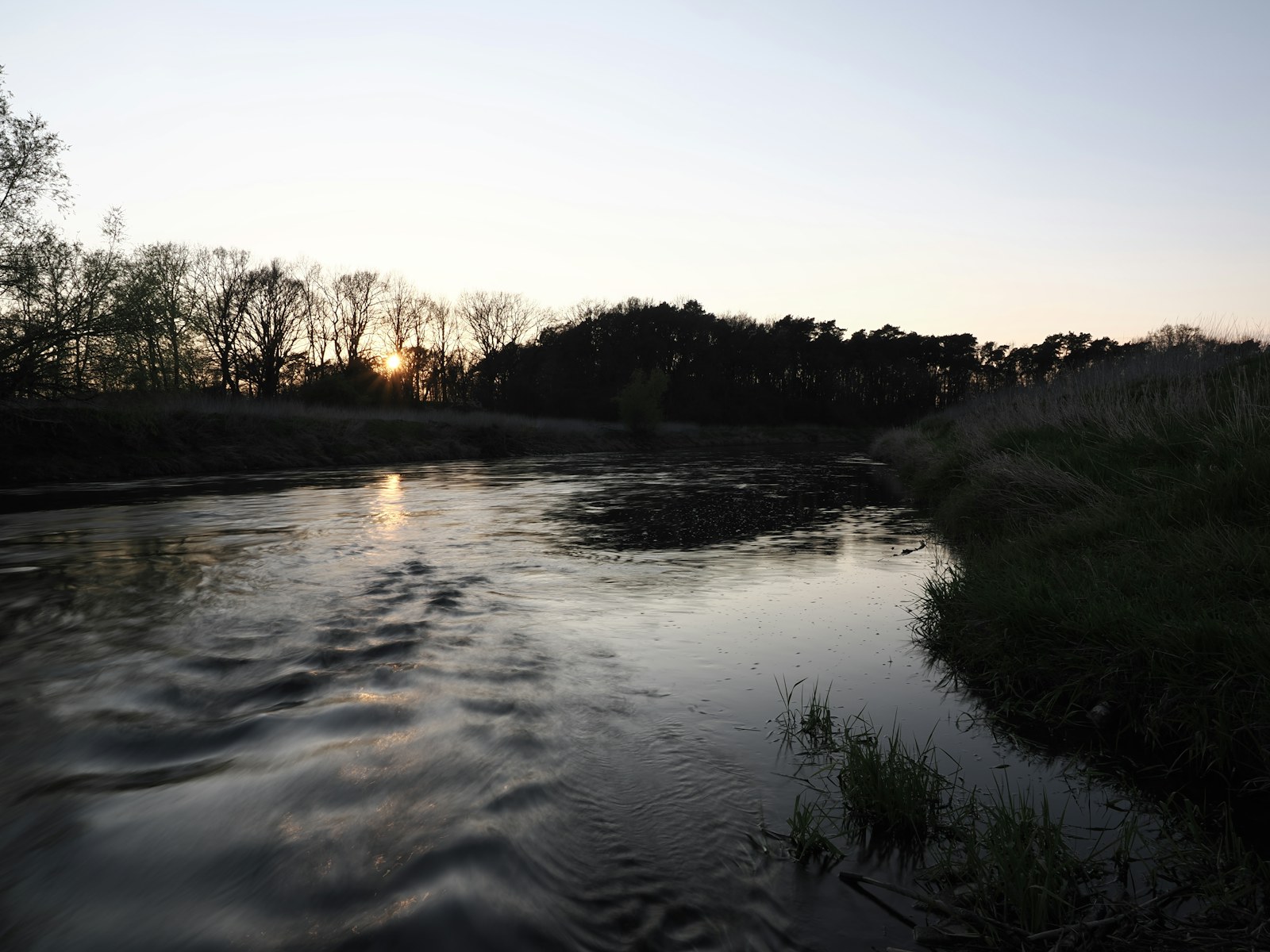
A river at dusk. The current never stops, and never returns to the same shape twice.
Photo by [Thomas Nolte](https://unsplash.com/@fotografie_thomas_nolte?utm_source=adventures-after60&utm_medium=referral) on [Unsplash](https://unsplash.com/?utm_source=adventures-after60&utm_medium=referral)
1989, the year I came to Britain
1989 was the year Hibari Misora died, and it was also the year I started working at a Japanese restaurant in London. I was 29, and had just started working in the uncertain world of Japanese food.
I remember hearing "Kawa no Nagare no Yoni" on TV as I packed my bags to leave Japan. At the time, I didn't understand the meaning of the lyrics. I simply left, carrying a jumble of anxiety and anticipation about a new life ahead.
At that time, I hadn't learned the lesson that it's not useful to wish for something you can't have. There are things in life we want but cannot have, things we must let go of. In Buddhism, these are known as "gufutokku", which translates as "the suffering of unfulfilled desire". I gave up a stable path in Japan for one in Britain that promised nothing at all. Looking back now, I think that was my way of accepting that kind of suffering.
The Showa era Shiba Ryōtarō saw, and the one I saw
When I read Ryōtarō Shiba's travel essays again, I'm surprised at how full of contradictions the Showa era was – a nation rushing to become rich while, perhaps, leaving something important behind.
Hibari's final years were almost exactly when the bubble economy was at its peak. Her voice seems even more meaningful when you think about her singing even though she was sick, while everyone else in the country was out enjoying themselves. She was the only one facing the end of her life in a way that was not connected to the era's excitement.
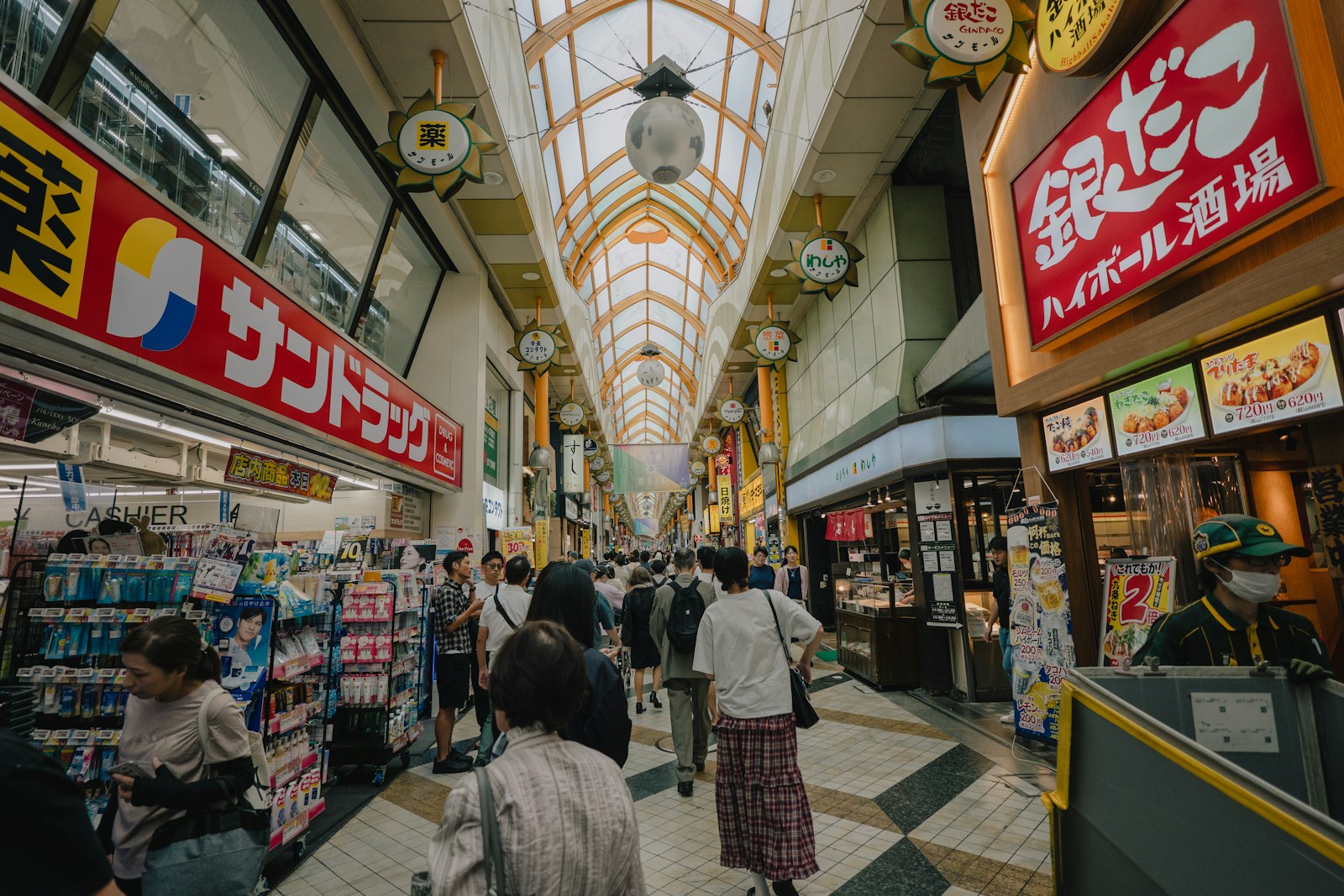
A shopping arcade with echoes of the Showa era. Eras pass, but the memory of such places lingers.
Photo by [Vinicius Brasil](https://unsplash.com/@vinib?utm_source=adventures-after60&utm_medium=referral) on [Unsplash](https://unsplash.com/?utm_source=adventures-after60&utm_medium=referral)
Light therapy, and care that doesn't resist
From my experience with Oriental medicine, I know that the most important thing is to "not fight the flow". This is also the most important thing to do to look after yourself in a way that prevents problems. That's true of the light therapy I use. Instead of just dealing with the symptoms, it helps the body's own circulation, which releases what has been stuck.
At 66, my body is clearly not what it was in my twenties. Instead of going at the same speed as before, I change my methods to match how my body moves now. That's not a defeat when you accept getting older. It's like a river changing shape to fit the land, but still reaching the sea.
Retirement, and "every day is Sunday"
I was retired for more than a year, and I'll admit there was a time when I lost my daily routine because every day felt like Sunday. In the Japanese food business, I lived by deadlines and numbers. When that tension suddenly disappeared, I no longer knew what should mark the start and end of the day.
The vegetable garden helped. The asparagus I'm growing this year in a raised bed is a crop that takes a long time to grow – you have to wait years before you can pick it. Checking the new shoots each morning has become a quiet way to start my day. Just as a river has its own rhythm, I've realised that I need my own rhythm too.
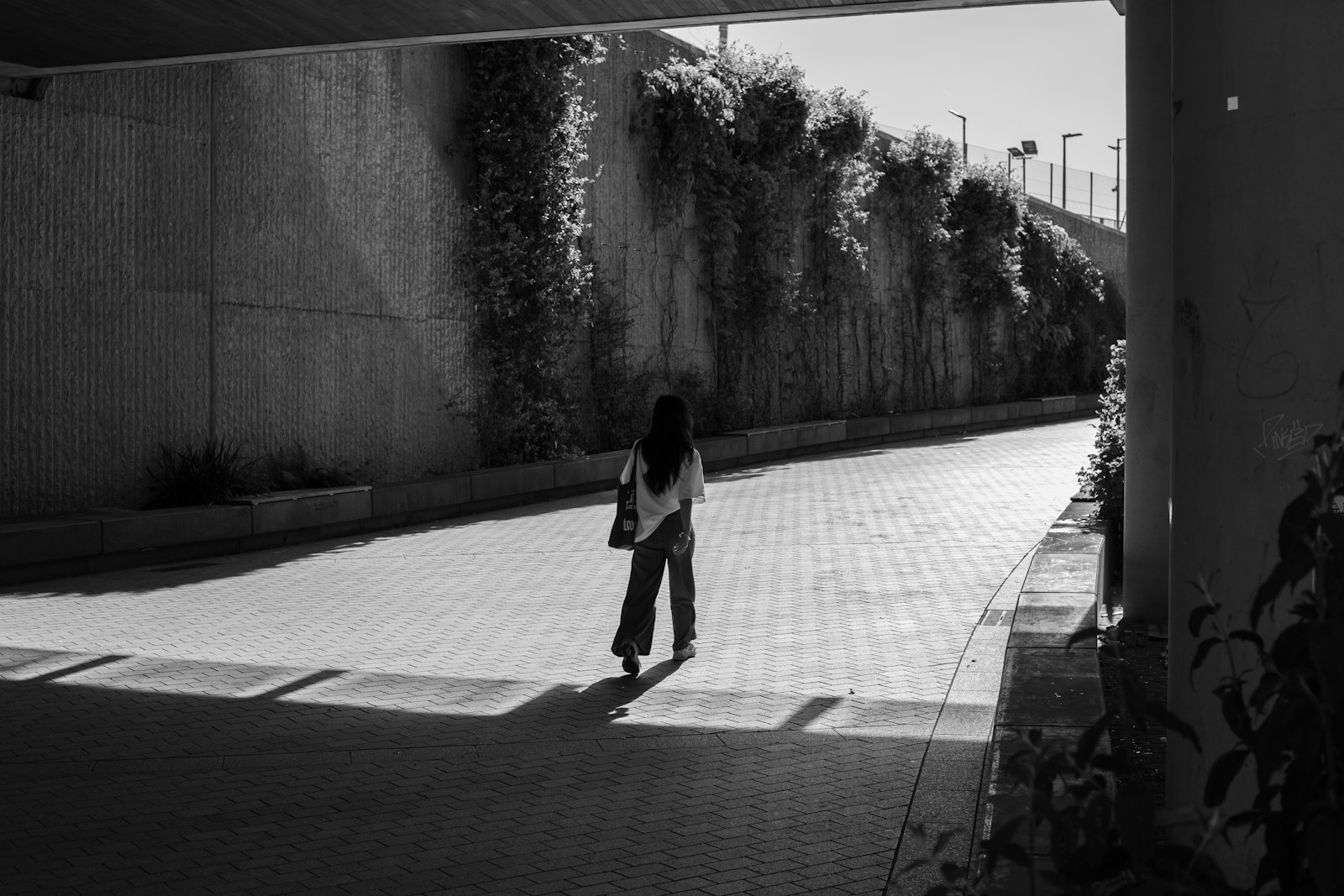
Walking a path alone, toward the light. Not resisting the current, but never stopping either.
Photo by [atelierbyvineeth](https://unsplash.com/@atelierbyvineeth?utm_source=adventures-after60&utm_medium=referral) on [Unsplash](https://unsplash.com/?utm_source=adventures-after60&utm_medium=referral)
Three perspectives on a rich retirement
Keeping mind and body in balance — Listening to "Kawa no Nagare no Yoni" works as a kind of reminder for me. The harder you fight the current, the more exhausted you become. Letting yourself be carried, while still moving forward, is what keeps an ageing body and mind in balance without strain.
Something beyond money — There's no real cost to listening to this song. But the time spent writing this piece, reflecting on the Showa era and my own life, is itself a luxury for someone living on a pension. Perhaps having time that isn't demanded to be efficient or productive is the greatest asset of retirement.
New encounters — Writing this piece made me think about Shiba Ryōtarō and Hibari Misora's lives. I found myself researching the time they lived in again. After listening to the song, I felt like I got to know the Showa era better. I had only had a vague idea of what it was like before.
A few reflections
On reinterpreting old age: when I was in my twenties, I would have said that "letting yourself be carried by the current" meant resignation, or even defeat. At 66, I think this is the best way to live.
I think this is related to the idea of river engineering. If a river is forced to flow through a levee, the levee will eventually be breached. But when a river is about to overflow, engineers sometimes deliberately set aside a nearby basin to let the extra water spill into it. This approach, letting the flow pass through rather than blocking it, looks weak but is in fact the strongest defence. Life may work the same way — if you try to stop getting older by trying too hard, you will not succeed. You will have to accept getting older and changing as time goes by.
I'm not writing this to expect a reply. I hope that the record, on its own, might help someone.
Related reading
For an English-language perspective on the world Hibari Misora sang in, I'd recommend Christine R. Yano's academic study of enka:
Christine R. Yano, Tears of Longing: Nostalgia and the Nation in Japanese Popular Song
(As an Amazon Associate I earn from qualifying purchases.)
Other books you might like
You're welcome to take a look.
EAST TO WEST: The Heart of Haiku, the Light of Scripture
A book about the quiet light that words can carry, echoing the same spirit of letting the current carry you that runs through this piece. This was my father-in-law's final work.
View on AmazonCataract Surgery-A Memoir: Double cataract surgery in Osaka, Japan
My own record of accepting the changes that come with age, and learning to live alongside them rather than resist them.
View on AmazonSushi Business in Britain: the complete four-volume series
A novel series following thirty-five years in the British sushi trade, from apprentice to factory manager to a small sushi school.
View on AmazonThe woman who sang it
Hibari Misora was born in Yokohama in 1937 as Kazue Katō. She first appeared during a time when the country was still recovering from war, and quickly became a huge star while she was still a teenager. After the war, Japan was in desperate need of hope, and her powerful voice met this need.
Her life was never easy. She survived a bus accident, was attacked with hydrochloric acid during a concert, and was criticised by the public after her brother behaved badly. But she kept going back on stage because for her, singing and living were the same thing.
In 1987, she collapsed on stage in Fukuoka and was later diagnosed with a condition that causes the bone in the leg to die. This was due to long-term liver disease. After being in hospital for a long time, she gave a concert at the Tokyo Dome in April 1988. The song "Kawa no Nagare no Yoni" was released the following January (1989), and she died in June that same year at the age of 52. It became, in effect, the song that closed her own life's story. After her death, she was the first woman to be given Japan's People's Honour Award.
The Showa era was a time of big changes. It was a time of defeat, reconstruction, and the economy grew quickly. Then there was the bubble economy. During all of these changes, Hibari's voice was a symbol to many Japanese people that things didn't change.