🎧 Listen to the Discussion(two hosts talk through their thoughts on this article)
This is an AI-generated audio overview of this article, created with Google NotebookLM. Two hosts discuss the article together, sharing their own thoughts and commentary — it is not a reading of the article text.
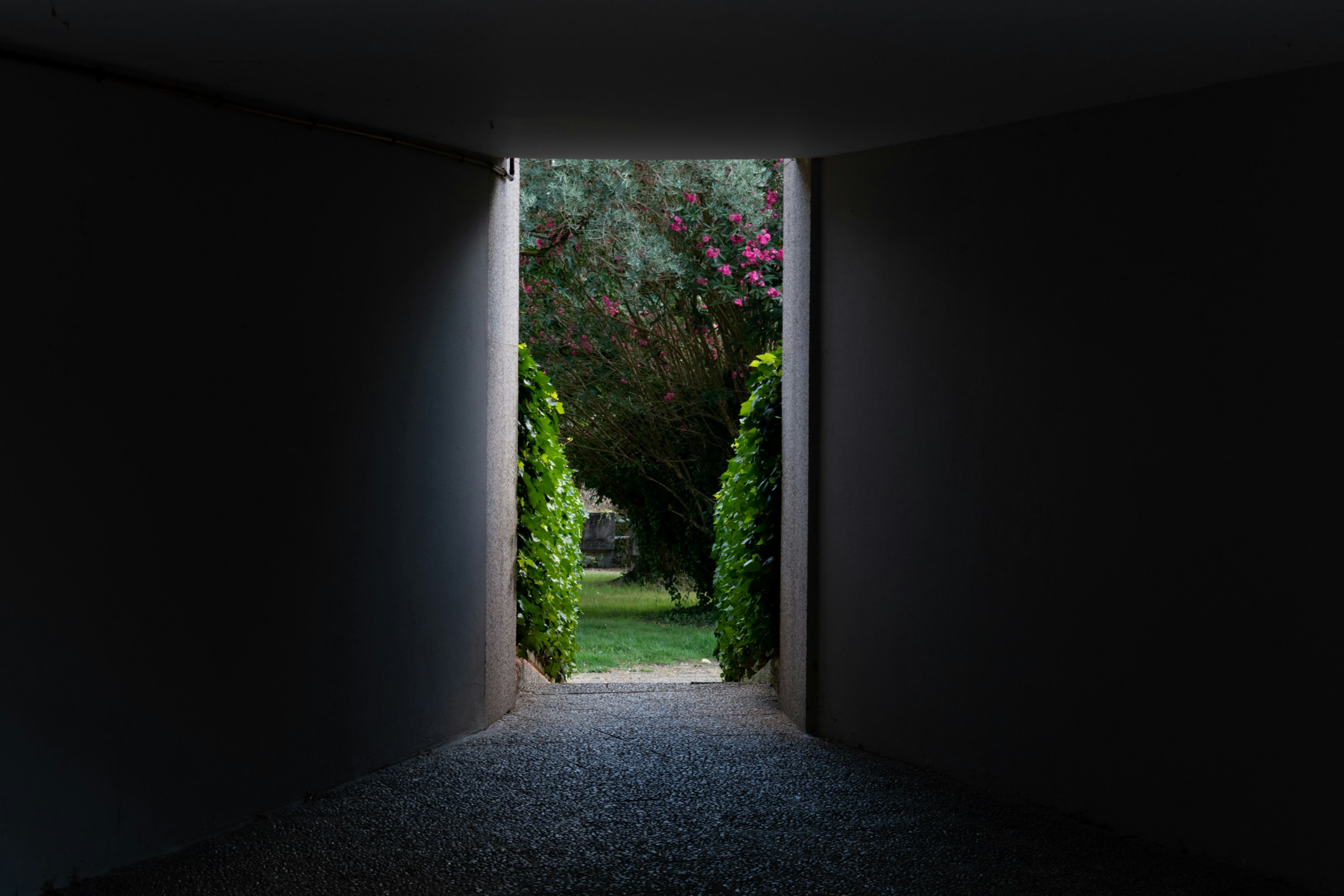
Photo by Javier Gómez on Unsplash
Meeting the Song
I'll admit it — I only really started paying attention to Mariya Takeuchi's "Jinsei no Tobira" (The Door of Life) quite recently. Learning that it was released in 2007, around the time Takeuchi herself turned fifty, made it all the more interesting to me. If I'd heard this song in my twenties, I doubt I would have understood even half of what it was saying. In the song, Takeuchi speaks in turn to people in their twenties, thirties, forties, all the way through their eighties and beyond, as if addressing each decade from within it — each stage of life carrying its own particular worth. That way of thinking simply wasn't available to me back then.
An Idea I Couldn't Have Held in My Twenties
Back then, I had stepped away from the path toward becoming a doctor, and I felt nothing but restlessness, with no clear answer for how to live going forward. Growing older seemed, to me at the time, like nothing more than a narrowing of options, one by one. I didn't have the room to imagine what might lie ahead as those years accumulated.
A Small Question About Living
Of the "four sufferings" in Buddhist thought — birth, aging, sickness, and death — the one I kept furthest at arm's length in my twenties was death itself. In youth, I knew intellectually that I would one day be gone, but it never felt real. Now, at sixty-six, every time I see the cherry blossoms or autumn leaves, I find myself wondering how many more times I'll get to see this. Oddly, that isn't quite sadness — it's closer to a feeling that I can now savour each season far more carefully than before. Keeping death from a distance, rather than pushing it away entirely, has turned out to be exactly what helps me hold onto the present. It's a truth I've only come to understand, in a felt sense, at this age.
What I Hear Now, at Sixty-Six
I built Japanese food businesses across several countries, moved into acupuncture and herbal medicine, gained experience investing in property and stocks, and retired in 2025 at sixty-five. Extending healthy life expectancy is, for me, an ongoing daily practice. There's no magic remedy — sleep, food, staying active, and simply choosing to be in good spirits seem to matter most. I didn't start out with perfect knowledge about investing either; learning gradually, step by step, is what's brought me the peace of mind I have today.
Moving between the UK and Japan, I've noticed a difference in how each culture relates to the seasons. In Japan, there's a deep-rooted tradition of savouring fleeting moments — cherry blossoms, autumn leaves — as they pass. In the UK, many people seem to relate to the seasons differently, spending months tending roses or vegetables in the garden, almost "cultivating" the season itself rather than simply watching it go by. Appreciating by observing, and appreciating by working the soil — both, I think, are forms of wisdom born from an awareness that time is limited.
Since entering my sixties, I've noticed more day-to-day awareness of changes in my eyesight and hearing. Every so often I feel a quiet gap between who I was and who I am now. Still, rather than hiding these changes, I think there's value in simply putting them into words. Even without a real conversation, if someone reading this feels that "there's someone else looking at the same view," that feels like connection enough to me.
One more thing I find fascinating about this song: Takeuchi wrote it while still in her fifties, addressing decades — her sixties, seventies, eighties — that she herself hadn't yet lived through. Unlike a song written by a teenager imagining old age, this is someone standing at the midpoint of life, stretching her imagination forward into years still unlived. It quietly proves something, I think: the capacity to imagine and care for a future not yet experienced isn't reserved for the young — it can extend from wherever we happen to be standing.
Closing
There may be moments when life feels meaningless. And yet, it's still worth living. That's the message Takeuchi wove into this song, and it echoes, quietly, everything I've been writing throughout this series. Every time I hear "Jinsei no Tobira," it reminds me of exactly that.
Reference Links
Read the Lyrics (Uta-Net): https://www.uta-net.com/song/53041/Note: please enjoy the full Japanese lyrics on the external lyrics database site linked above — they are not reproduced here.
Other books you might like
You're welcome to take a look.
EAST TO WEST: The Heart of Haiku, the Light of Scripture
Each stage of life has its own worth — and the words of haiku, too, show a different light each time you read them. This was my father-in-law's final work.
View on AmazonCataract Surgery-A Memoir: Double cataract surgery in Osaka, Japan
This is another book of things I've come to see only now, at sixty-six.
View on AmazonSushi Business in Britain: the complete four-volume series
Moved to London at twenty-nine and spent thirty-five years devoted to sushi — a novel series following the journey from apprentice to factory manager to running a sushi school.
View on AmazonAbout Mariya Takeuchi
Mariya Takeuchi was born on March 20, 1955, in Izumo, Shimane Prefecture, and made her debut as a singer in 1978 at the age of 23. Though she initially felt out of place being marketed as an idol, her third single, "September" (1979), won the Japan Record Award for Best New Artist and established her as a serious singer-songwriter. She announced a hiatus from music in 1981 and married fellow musician Tatsuro Yamashita, with whom she had long been close, the following year. She returned in 1984 with her first album on the Moon label, VARIETY, on which she wrote and composed every song herself, with Yamashita producing and arranging — the album reached number one on the Oricon weekly album chart. Describing herself as a "singer-songwriting housewife," Takeuchi has kept up a steady rhythm of releasing an album every few years while raising her children, performing live only rarely, yet still commanding devoted support across generations — her greatest-hits album has sold more than 3.5 million copies. Released in 2007, "Jinsei no Tobira" reflects Takeuchi's own experience of turning fifty, and has become one of her signature songs, sung and cherished across generations ever since.