🎧 Listen to the Discussion(two hosts talk through their thoughts on this article)
This is an AI-generated audio overview of this article, created with Google NotebookLM. Two hosts discuss the article together, sharing their own thoughts and commentary — it is not a reading of the article text.
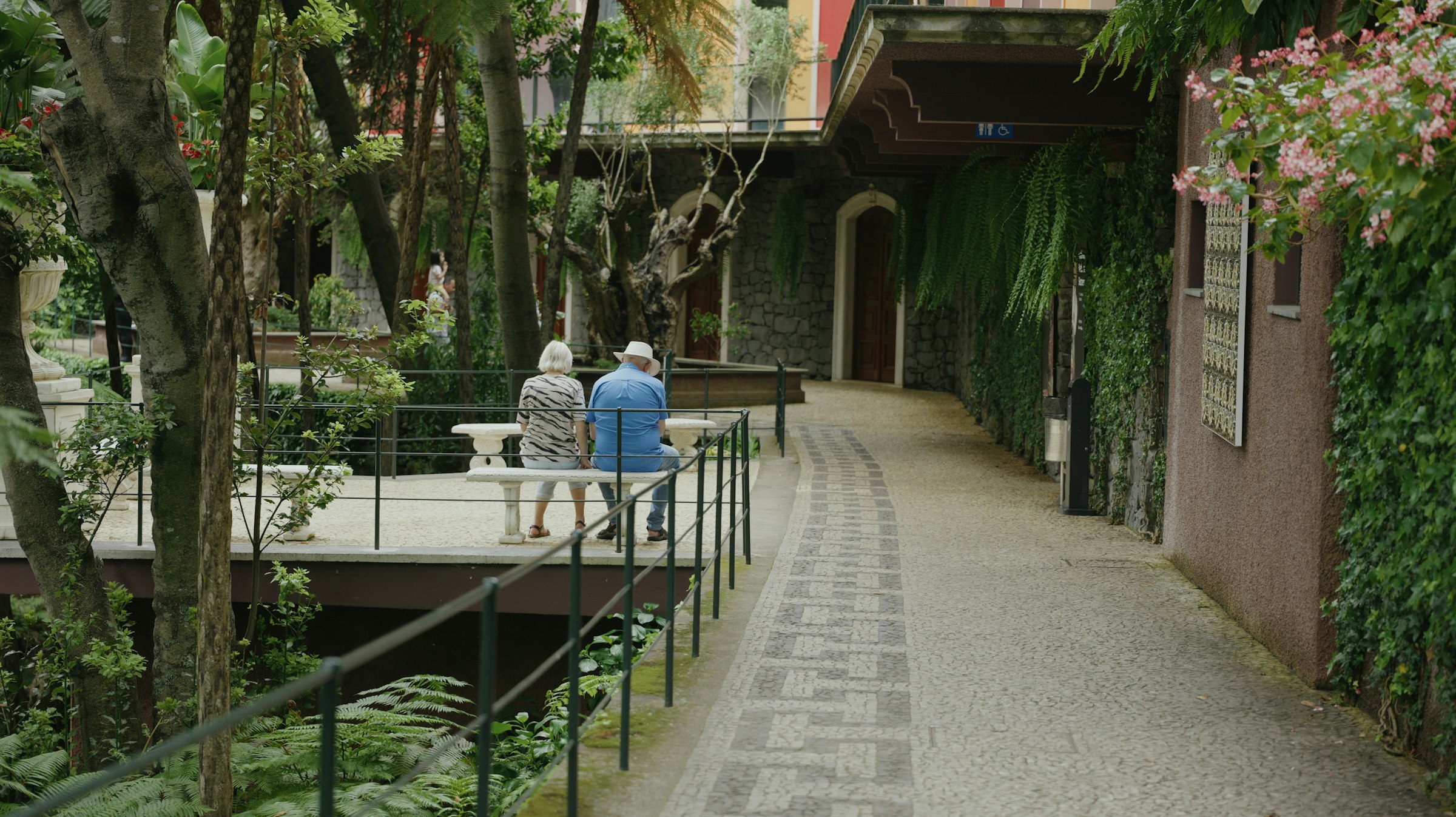
Photo by Marcin Kolodziejczak on Unsplash
Meeting the Song
During my student years, a friend once lent me a Beatles record, and among the tracks was a curious little song with a light clarinet trio running through it: "When I'm Sixty-Four." Working through the lyrics with a dictionary, I found a simple, warm message underneath: a plea to a loved one to stay together as the years go by. Paul McCartney reportedly wrote the seed of this melody around age 14, in a household where his father once led a jazz band as a hobby. That a boy not yet halfway through his own life could imagine old age with such tenderness struck me, even then, as remarkable. Sixty-four felt, to me at the time, like a number from somewhere off the map.
My Twenties
In 1989, I made a major decision and moved to London, working at a Japanese restaurant and building a new life from nothing in a country I barely understood. There was little room to think seriously about growing old amid the daily scramble of those years. The song still felt like someone else's story — a gently comic vision of the future. The image of sitting quietly by the fireside felt as unreal to me then as a page from a picture book.
A Small Question About Living
Growing older, when you get down to it, keeps circling back to a simple question: what does it mean to live? I don't claim to have a grand answer to where we come from or where we're headed. But what I've come to feel, at least, is that happiness isn't found in extraordinary events — it's found in how carefully we manage to live an ordinary day. Working the soil in the garden, spending quiet time with the cat, having an unremarkable conversation with someone — it's in the accumulation of these small things that a real, steady joy seems to live. It's taken me this long to truly understand that.
My Sixty-Six Years
Nearly forty years have passed, and I've long since crossed — and passed — the "sixty-four" of the song. I'm sixty-six now, splitting my time between the UK and Japan. In the greenhouse at my UK home I grow cucumbers, aubergines, peppers, and tomatoes; in the raised beds outside, raspberries, asparagus, courgettes, strawberries, herbs, and potatoes; and I also tend more than ten varieties of David Austin roses.
Honestly, since entering my sixties I've noticed more moments of change — forgetting names more often, hearing more frequently about a friend's illness. But I've come to hold these changes not simply as decline, but as evidence of the time I've accumulated — a way of seeing I only seem to have gained at this age. In Buddhist thought, the "old age" within the "four sufferings" of birth, aging, sickness, and death was once, for me, purely something to fear. Now I find that old age carries a quietness and depth that youth simply cannot offer.
Extending healthy life expectancy is a daily, practical project of mine. I try applying the basics of Western medicine I studied as a student, alongside what I later learned properly in acupuncture and herbal medicine, to my own body through ongoing trial and error. There's no magic remedy — sleep, food, movement, and simply choosing to be in good spirits about the day ahead turn out to be the most reliable medicine. As for money worries, I only started investing seriously in my mid-fifties; rather than aiming for perfection early on, learning gradually within what I could actually understand has, in the end, been the approach I could sustain.
Moving between the UK and Japan, I notice differences in how each culture regards ageing. In Japan, mandatory retirement still marks a sharp, clearly felt line in life; in the UK, many people seem to stay loosely connected to society well past retirement, through gardening, volunteering, or local clubs. There may be a shared wisdom between the economy of words in Japanese haiku and the way this song wraps a deep theme in such a light melody — both are arts of conveying the essential without saying too much.
One more thing I find personally fascinating about this song: how could a teenage boy capture old age so precisely, and with such warmth rather than fear? Perhaps the imagination of youth has a particular power — to meet an unlived future with curiosity rather than dread. If those of us who've actually arrived there can tell our younger selves, "you were more right than you knew," that quiet act of bridging might be exactly what music, as an art form, is for.
Some of you reading this, further along in years yourselves, may be noticing similar changes in body or mind. I don't mean to offer encouragement so much as simply to put the same worries into words — hoping that, in doing so, someone's loneliness might feel a little lighter.
As a side note, a few years ago I actually visited the house in the Liverpool suburbs where Paul McCartney spent his boyhood, on a National Trust tour — the house at 20 Forthlin Road, believed to be where "When I'm Sixty-Four" was written. Standing in the small, preserved bedroom, it was a strange and moving feeling to think this was where the song was born.
Closing
The "sixty-four" that once felt like a distant joke in my twenties is an age I've now lived — and gone well beyond. Growing older isn't only about loss; it's also about savoring a quieter kind of happiness, built up over the years we've lived. Life is worth living. The message the Beatles carried in that light, playful melody over half a century ago feels, to me now, more true than ever.
Reference Links
Read the Lyrics (Utaten): https://utaten.com/lyric/ea00000905/Note: Uta-Net did not have a standalone page for this English-language song, so we've linked to Utaten, another major Japanese lyrics database, instead. Please enjoy the full lyrics on the external site linked above — they are not reproduced here.
Other books you might like
You're welcome to take a look.
EAST TO WEST: The Heart of Haiku, the Light of Scripture
Now that I'm actually living the age that once felt like a distant joke, these haiku read differently too. This was my father-in-law's final work.
View on AmazonCataract Surgery-A Memoir: Double cataract surgery in Osaka, Japan
Another new experience at 66 — an honest account of the cataract surgery I went through.
View on AmazonSushi Business in Britain: the complete four-volume series
A novel series following thirty-five years in the British sushi trade, from apprentice to factory manager to a small sushi school.
View on AmazonAbout The Beatles
The Beatles formed in Liverpool, England, in 1960, and the four members — John Lennon, Paul McCartney, George Harrison, and Ringo Starr — revolutionised the music scene of the 1960s. "When I'm Sixty-Four" appeared on the 1967 album Sgt. Pepper's Lonely Hearts Club Band, built from a melody Paul McCartney wrote around age 14 (likely 1956) on the family piano in Liverpool. McCartney grew up before rock and roll fully took hold, immersed instead in the jazz and standards his father's generation loved. His father Jim had once led his own group, the "Jim Mac Jazz Band," and the song is often seen as an affectionate homage to him. In 1966, when equipment trouble kept the Beatles from performing live, they reportedly played this then-unfinished melody. The formal recording took place in December 1966, early in the Sgt. Pepper sessions, with McCartney on bass, Lennon on guitar, and Starr on drums. Notably, in 1967 — the year the song was released — Jim McCartney turned exactly 64. Critics have called it a "sophisticated, affectionate parody," and its music-hall style, distinct from rock and roll, came to symbolise the album's stylistic range. Paul McCartney remains active in music today, and the theme he captured as a teenager — the happiness of growing older — continues to resonate with listeners worldwide across the decades.