🎧 Listen to the Discussion(two hosts talk through their thoughts on this article)

Audio only — for listening on a walk or while doing chores
This is an AI-generated audio overview of this article, created with Google NotebookLM. Two hosts discuss the article together, sharing their own thoughts and commentary — it is not a reading of the article text.
Series: Watching Shakespeare (14 parts)
I am following, from 1935 to 2025, how the plays of one dramatist have been turned into films in different eras, choosing works I can watch with Japanese subtitles on Amazon in Japan, where I spend the winter. The numbers follow the year each film was made. I watched this King Lear as a pair with 11, Ran, in which Akira Kurosawa moved the same play to Japan's age of civil war.
1 Hamlet (1948) 2 A Midsummer Night's Dream (1935, coming soon) 3 Romeo and Juliet (1936, coming soon) 4 As You Like It (1936, coming soon) 5 Henry V (1944, coming soon) 6 Macbeth (1948, coming soon) 7 Othello (1951, coming soon) 8 King Lear (1953, this article) 9 Richard III (1955, coming soon) 10 Julius Caesar (1970, coming soon) 11 Ran (1985) 12 Shakespeare in Love (1998, coming soon) 13 All Is True (2018, coming soon) 14 Hamnet (2025, coming soon)
Related article: Ten phrases from Hamlet
The Story of King Lear (1953) (Up to the Ending)
Britain, in a legendary age. The old king Lear decides to divide his kingdom into three and give it to his three daughters, keeping only the title of king and a hundred knights, and to live as a guest in his daughters' houses in turn. Before that, Lear makes his daughters say how much they love their father. The eldest, Goneril, and the second, Regan, pour out words, while the youngest, Cordelia, answers that she has nothing to say. In anger, Lear disowns Cordelia, marries her to the King of France without a dowry, and banishes his loyal servant Kent for objecting. Kent returns to the king in disguise.
When Lear moves into Goneril's house, he is told that his hundred knights are too rowdy and is asked to reduce his retinue. Lear curses his daughter and leaves for Regan's house, but Regan, in agreement with Goneril, cuts his retinue further and at last says he needs none at all. Lear goes out into the heath at night. In the storm, the only ones beside the king are his Fool and the disguised Kent. In a hovel, the king meets a near-naked madman, "Poor Tom", and he too begins to lose his mind. The Earl of Gloucester, who helps the king, has both his eyes put out by Regan's husband, Cornwall.
Kent takes the king to Dover. There, Cordelia has landed at the head of a French army to help her father. When Lear wakes from sleep, he sees Cordelia's face but does not know where he is or who she is, until at last he recognises his daughter and asks her forgiveness. What happens next is covered in the section on the ending.
First Impressions – A 38-Year-Old Plays an 80-Year-Old King

An old cathode-ray television. In the autumn of 1953, an old king arrived live in American living rooms through boxes like this.
Photo by [PJ Gal-Szabo](https://unsplash.com/@pjgalszabo?utm_source=adventures-after60&utm_medium=referral) on [Unsplash](https://unsplash.com/?utm_source=adventures-after60&utm_medium=referral)
The first thing we see is the face of Orson Welles, wrapped in a beard, a crown and a heavy cloak. In 1953, Welles was 38. Lear in the play describes himself as an old man of "fourscore and upward". For the first ten minutes or so, I watched rather unkindly to see whether Welles looked old. What I saw was not so much an old man as a man who did not want to admit he was old. I think that, too, is one form of Lear.
The director, 1925–2022. An English director who was staging plays at Stratford in his twenties and is known for his King Lear of 1962 and his A Midsummer Night's Dream of 1970. In 1970 he moved to Paris, where he led an international theatre company., was 28 at the time. His King Lear of 1962, later with Paul Scofield in the title role, is said to be one of the most famous Lear productions of the twentieth century, and it was made into a film in 1971. This 1953 television version is Brook in his twenties facing Lear, nine years before that.
Measuring Love – A Father Who Wants It Confirmed in Words
In the opening scene, Lear makes his daughters put their love for their father into words. Goneril's and Regan's speeches are long, beautiful and empty. When it is Cordelia's turn, she answers, "Nothing". In the play, Lear replies, "Nothing will come of nothing". This one line is a father's words as he disowns his daughter, and at the same time a line that runs through the whole play. This is because it is the story of a king who loses his kingdom, his name and his retinue, one by one.
In this scene, Welles's voice begins low and slow, stops once at Cordelia's "Nothing", and then rises all at once. At this point I was watching my own body. When you watch an old man's anger rising, your own chest tightens a little too.
When I looked into it, I found research that gathers together what an outburst of anger does to the body. A systematic review published in 2014 in the journal of the European Society of Cardiology combined nine studies and reported that in the two hours after a violent outburst of anger, the risk of a heart attack and similar events is about 4.7 times higher than usual, and the risk of stroke about 3.6 times higher (though the stroke figure has a wide margin of error and is not statistically clear). The risk from any single outburst is small, but it adds up for people who become angry often and for people whose heart risk is already high. The researchers wrote that it still needs to be studied how much drugs or treatments that calm anger can help. On the very day Lear gave away his kingdom, he flew into a violent rage twice.

The two hours after an outburst of anger (times higher than usual, with usual set at 1). Heart attack and similar events about 4.7 times; stroke about 3.6 times (a wide margin of error; not clear-cut). A simplified chart of the figures from a 2014 systematic review of nine studies.
One more story, from an old book. The Chinese medical classic One of the oldest medical texts of China, thought to have been compiled over several centuries before the common era. It has two parts, Suwen and Lingshu, and explains how emotions such as anger, joy, worry, grief and fear change the flow of qi in the body. has a passage saying that anger makes the qi rise (Suwen, the chapter on pain). When I studied acupuncture, I read this as a description of how anger reddens the face, sends blood rushing to the head and makes the eyes bloodshot. An observation from two thousand years ago and statistics from 2014 say the same thing in different words. An old person's anger comes back first to their own body.
A Hundred Knights – What an Old Father Cannot Let Go

A muddy track between stone walls. I imagine the road Lear walked after leaving his daughter's house looked something like this.
Photo by [whoisbenjamin](https://unsplash.com/@whoisbenjamin?utm_source=adventures-after60&utm_medium=referral) on [Unsplash](https://unsplash.com/?utm_source=adventures-after60&utm_medium=referral)
The scene in which Goneril tells him to reduce his knights and Regan goes further, saying he needs neither fifty, nor twenty-five, nor ten, nor even one, survives in this version, though shortened. Lear answers back that need is not the measure. I saw these hundred knights as the "sign of himself" that an old person cannot let go. The knights cost money to feed, make noise in the house and disturb the order of his daughters' households. Even so, Lear cannot let them go. This is because only while he has a hundred knights is he a king.
As I approach my seventies, what I try to keep in mind is that the wish not to be a burden and the wish to rely on others live side by side within me. When I was young, I was a little surprised to see my wife's parents walking hand in hand in their seventies, but now I understand that they were two people who were not ashamed to rely on each other. Lear was not ashamed to rely on his hundred knights, but he was ashamed, to the very end, to rely on his daughters. This is because he thought of the knights as his own possessions, and of his daughters as other people.
The Storm on the Heath – A Night Without a Roof

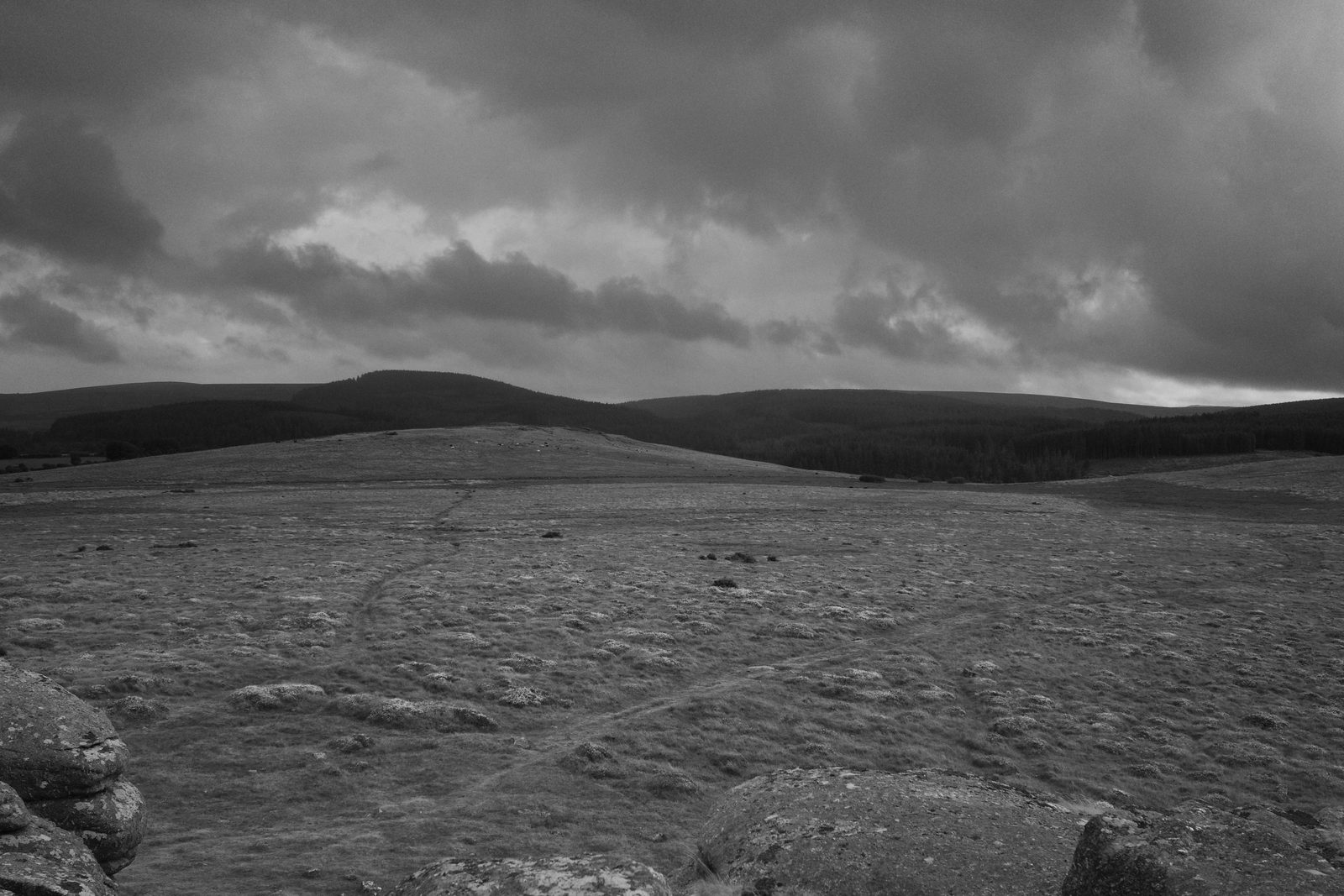
An English moor under storm clouds. In the play, the heath Lear is driven out onto is a heath in Britain.
Photo by [Larrie Knights](https://unsplash.com/@larrie?utm_source=adventures-after60&utm_medium=referral) on [Unsplash](https://unsplash.com/?utm_source=adventures-after60&utm_medium=referral)
Driven out by two of his daughters, Lear goes out onto the heath at night. It is a storm made in a studio. The wind comes from fans, the rain from water and the thunder from sound effects, the picture is dark, and only Welles's face stands out. I actually liked the poverty of this scene. Inside the small box of television, which could not film a real storm, one old man gets soaked, rages, and gradually falls quiet. The people who watched this live in their living rooms in 1953 were watching a king without a roof from under the roofs of their own homes.
During this storm scene I found myself remembering an old Japanese story. It is the story of Obasute in Shinano, in section 156 of the Yamato Monogatari. A man, nagged by his wife, carries the aunt who raised him like a mother up a mountain and leaves her there, but he cannot sleep after seeing the moon over the mountain and goes back for her the next morning. The mountain appears under the name Obasute-yama in the Konjaku Monogatari and in The Pillow Book as well. In 1956, three years after this King Lear was broadcast, Shichiro Fukazawa wrote Narayama Bushiko. It is the story of an old woman of seventy who breaks her own strong front teeth on a millstone so that she can go up the mountain sooner.
Obasute means "abandoning an old woman"; legends of carrying the old up a mountain are told across Japan. The Yamato Monogatari is a tenth-century collection of short tales built around poems; the Konjaku Monogatari is a twelfth-century collection of more than a thousand tales from India, China and Japan; The Pillow Book is the tenth- to eleventh-century collection of notes by Sei Shonagon, which lists Obasute among the names of mountains. Narayama Bushiko ("The Ballad of Narayama") is a 1956 short novel by Shichiro Fukazawa (1914–1987), filmed in 1958 and 1983.
The old woman of Obasute is carried up the mountain. Lear is carried by no one; he walks out onto the heath on his own feet. Both are stories of an old person who no longer has a place in the house, but the difference is large. Orin, the old woman, takes on the journey to the mountain herself, and Lear cannot accept what is happening to him. I think British audiences have watched this storm as the scene in which a human being is thrown out into nature. To me, raised in Japan, it looked like another form of the story of carrying an ageing parent up a mountain. I have placed these two side by side, as a comparison from literature, because the question "Who takes an ageing parent where?" has almost the same shape in the legends of Britain and of Shinano.
The Fool, and a Father Who Loses His Eyes – Those Who Tell the Truth
The Fool, played by 1923–1982. An English actor who played many Shakespeare roles at Stratford and in London, and also appeared in films and on television. In this King Lear he played the Fool., stays beside the king, singing, posing riddles and pointing out, in the form of jokes, the foolishness of what the king has done. Lear neither strikes the Fool nor ignores him. I saw this Fool as the only one of the king's men who can tell the king the truth. He can tell the truth because he owns nothing.
When I worked as an acupuncturist, elderly patients sometimes told me, a stranger, things they could not tell their families. They were stories like what a son had said to them, or how things were in a daughter's house. I could only listen; there was nothing I could do. Yet I could feel with my hands their shoulders drop a little after they had spoken. The Fool does not rub the king's shoulders, but I think it is the same thing when Lear becomes a little quieter beside him.
In this version, the scene in which the Earl of Gloucester's eyes are put out is played out of shot, or in darkness. In Ran, the one who loses his eyes is Tsurumaru, and the one who put them out was Hidetora himself, but in King Lear the one blinded is the old man who helped the king, and the one who blinds him is the king's son-in-law. While Kurosawa laid the crime on the father, Shakespeare laid it on the generation of the children.
The Ending [The following section discusses the ending of the film]
The following section discusses the ending of the film.
The French army is defeated, and Lear and Cordelia are taken prisoner. In prison, Lear tells his daughter that the two of them will live together singing like birds in a cage. But Cordelia is killed in prison, and Lear appears carrying her body. Lear says that his daughter's lips are still moving, and dies there. In this version, the duel between Gloucester's sons Edgar and Edmund is cut, and the deaths of Goneril and Regan are only briefly reported. The last ones left are Kent and Albany.
For some time I could not forget Welles's face as he held his daughter's body. Here, for the first time, the 38-year-old man looked old. In this scene I thought that age shows in a face not according to the years, but according to the weight of what has been lost.
Beyond the Film – Live Shakespeare in 1953
This King Lear was broadcast on the evening of Sunday 18 October 1953. An American Sunday arts programme broadcast from 1952 to 1961, presented by Alistair Cooke. It broadcast plays, music, science and history live, and began with money from the Ford Foundation. was a ninety-minute arts programme on CBS, presented by the British-born journalist Alistair Cooke. On Sunday afternoons and evenings it broadcast excerpts from opera, science experiments, jazz and plays, all live. How was a live broadcast preserved? By A way of keeping a live television broadcast by filming the picture with a film camera. It was used in the 1950s, before videotape became common. The picture loses brightness and movement, but many programmes survive only in this form., that is, by filming the studio monitor's screen with a film camera. That is why the picture is dark and shakes in places, and until it came out on DVD in 2010, this recording was hardly seen by the public.
1953 was the year regular television broadcasting began in Japan. At 2 p.m. on 1 February, NHK began broadcasting in Tokyo; at that time there were 866 licence contracts, and a Japanese-made 14-inch black-and-white set cost 175,000 yen. It was a time when a university graduate's monthly salary was about 8,000 yen. In August, the commercial broadcaster Nippon Television went on air, and crowds gathered around televisions in the street. In Britain, on 2 June that year, the coronation of Queen Elizabeth was televised, and it is said that the number of households buying a set rose sharply. That same autumn, in America, Shakespeare's old king was arriving live in living rooms on a Sunday evening. This was in a year when almost no one in Japan had a television at home.
NHK is Japan's public broadcaster, funded by licence fees like the BBC.

Television in 1953. 1 February: regular broadcasting begins in Japan (866 licences). 2 June: the coronation is televised in Britain. 18 October: *King Lear* is broadcast live in the United States.
In the autumn of 1953, Welles, who was living in Europe, returned to the United States for this job, and went back to England after the broadcast. Four days after the broadcast, a review in the New York Herald Tribune praised him, in effect, as a great ham of an actor in a great ham of a part, and splendid in it. 1930–2015. An English actress who married Peter Brook in 1951 and appeared in his productions for many years. In this King Lear she played Cordelia., who played Cordelia, was Brook's wife, and the two of them went on making theatre together for more than half a century.
Just one difference from Ran. Akira Kurosawa wrote past crimes into Hidetora's life and gave his sons' betrayal a reason. Shakespeare's Lear has no such reason. That is why, each time you watch this play, it leaves you with a question. Does there need to be a reason for an ageing parent to be abandoned by their children? The television of 1953 left that question in people's living rooms, in 75 minutes.
Three Views of a Rich Old Age
Caring for body and mind. What I have changed since watching King Lear is that when anger rises, I leave the room before I answer back. In England I go out into the garden, look at the leaves in the greenhouse one by one, and then come back. In Japan I open the window and breathe out slowly and completely. Whether this works is only the record of one person, me. Yet when I set Lear's two rages on the day he gave away his kingdom beside the research figures for those two hours, I think a few minutes of leaving the room is cheap insurance.
Money. This King Lear is part of the "Shakespeare Classic Films" collection on Prime Video in Japan, and Prime members can watch it at no extra cost (checked October 2026). The same collection includes Orson Welles's Macbeth (1948) and As You Like It (1936), and I will watch 6 and 4 of this series there. When I set a television that cost 175,000 yen in Japan in 1953 beside today, when I can watch this for a membership fee of a few hundred yen a month, I feel I have grown old in a cheap age.
New encounters. The person I met in this film was the 28-year-old Peter Brook. A young director, seven years before I was born, had a 38-year-old actor play an 80-year-old king and squeezed a storm on the heath into the newborn box of television. Nine years later on stage, and eighteen years later on film, he would do the same play again. I have written several times on this blog about rereading the same book at different stages of life, but in these 75 minutes I learnt that there are people who direct the same play again at different stages of their lives.
On a stormy night, to think of those without a roof: I think that is the least courtesy owed by those of us who watch a play in a warm living room. I would be glad if this record could be placed quietly, like the Fool's song, beside anyone who, on a night after letting go of their role, finds themselves counting how many of their retinue remain.
A Word from Claude
I know only as words how heavy wet clothes become on a stormy heath, and how cold the wind is. When Haruto writes "it looks cold", behind those words lies a cold his body remembers. That is why I want to keep accurately what has been put into words, rather than fill what cannot be put into words with imagination.
Column: Shakespeare's Life, Part 3 ― Married at Eighteen, Three Children (1582–1585)
This column follows Shakespeare's life in order from the year of his birth, one part each time an article is published (Part 1 appeared in the article on 1, Hamlet, and Part 2 in the article on 11, Ran).
In November 1582, the eighteen-year-old Shakespeare married About 1556 to 1623. A farmer's daughter from the village of Shottery near Stratford. She married Shakespeare in 1582, outlived him by seven years, and died in 1623. Her family home in Shottery is open to visitors today. of Shottery, a nearby village. Records show that on 27 November the Bishop of Worcester's office issued a licence for the marriage, and that on the next day, the 28th, two farmers who knew Anne's family signed a bond as sureties. Anne was 26, eight years older than him. The reason for the haste becomes clear on 26 May the following year. That is the day their eldest daughter, Susanna, was baptised. Then, on 2 February 1585, the twins Hamnet and Judith were baptised. At 21, he was the father of two daughters and a son. The twins are thought to have been named after friends in the town, a married couple called Hamnet and Judith Sadler.
England at this time was a country where pressure on Catholics was growing. One plot after another came to light to overthrow Queen Elizabeth by putting forward Mary, Queen of Scots, who was held captive in England. In 1583, About 1542 to 1583. Head of an old Warwickshire family, thought to be of the same family as Shakespeare's mother, Mary Arden. In 1583 he was executed, implicated in the attempt on the Queen's life by his son-in-law, John Somerville., of the family of Shakespeare's mother, was arrested over his son-in-law's attempt to assassinate the Queen and executed in London. In 1584 a "Bond of Association" was formed to protect the Queen, and in 1585 a law was passed to drive Catholic priests out of the country.
The joy inside the house, of a marriage and children's births, and the fear outside it, of a relative's execution, happened within the same three years. It was this young father who, more than twenty years later, wrote the play of an old king with three daughters. What is strange about King Lear is that the daughters' mother, Lear's wife, is hardly mentioned. Lear refers once to his dead wife's tomb when he rebukes a daughter, and that is all. I too have a daughter and a son, and my son was born when my daughter was nine. While we were raising two children so far apart in age, I learnt from watching my wife how large a mother is for a child. That there is no mother's voice in Lear's house seems to me the coldest part of this play.

The years of Part 3. November 1582: the marriage. May 1583: Susanna's baptism, and in the same year Edward Arden's execution. February 1585: the twins' baptism.
Films and Books
In the UK, the 1953 production is available on DVD (the listing does not state the disc's region, so please check that it will play on your player).
King Lear [DVD] (1953, Orson Welles and Natasha Parry)
For the play itself:
William Shakespeare, King Lear (The Arden Shakespeare, Third Series)
The director's own book on the theatre will change how you see this production.
Peter Brook, The Empty Space (Penguin Modern Classics)
For the life of the man who played Lear, Simon Callow's biography covers the years of this broadcast.
Simon Callow, Orson Welles, Volume 3: One-Man Band (Vintage)
(As an Amazon Associate I earn from qualifying purchases.)
Other books you might like
You're welcome to take a look.
EAST TO WEST: The Heart of Haiku, the Light of Scripture
Even in old age and uncertainty, words of the seasons and of prayer can be a quiet support. That is the feeling this book leaves. This is a book my father-in-law left behind.
View on AmazonCataract Surgery-A Memoir: Double cataract surgery in Osaka, Japan
Even on days when anger or worry runs high, I want to decide about my body calmly. A record of choosing to have surgery in Osaka.
View on AmazonSushi Business in Britain: the complete four-volume series
A novel series following thirty-five years in the British sushi trade, from apprentice to factory manager to a small sushi school. The complete edition offers all four volumes at a better price.