Corresponding episode: September 2026 issue, Part 3, ③
🎧 Listen to the Discussion(two hosts talk through their thoughts on this article)
This is an AI-generated audio overview of this article, created with Google NotebookLM. Two hosts discuss the article together, sharing their own thoughts and commentary — it is not a reading of the article text.
I always listen to the monthly Power Game interviews as a way of studying world affairs. This time, however, what came up in the Q&A corner was not the manoeuvring of great powers but the daily life of one old friend. After listening, I sat still for a while. There is a man who keeps paying monthly rent on a flat that nobody lives in. When I learned his reason, I felt this was a story about preparation in later life that I wanted to write down.
As I listened, I came to wonder whether this rent is not a wasteful expense at all, but the premium on an insurance that may never pay out. Allow a non-refundable premium only for what could not be rebuilt if it happened, and meet everything else from savings. That is the yardstick I took home for my own retirement budgeting.
A Summer Island Story from the Interview
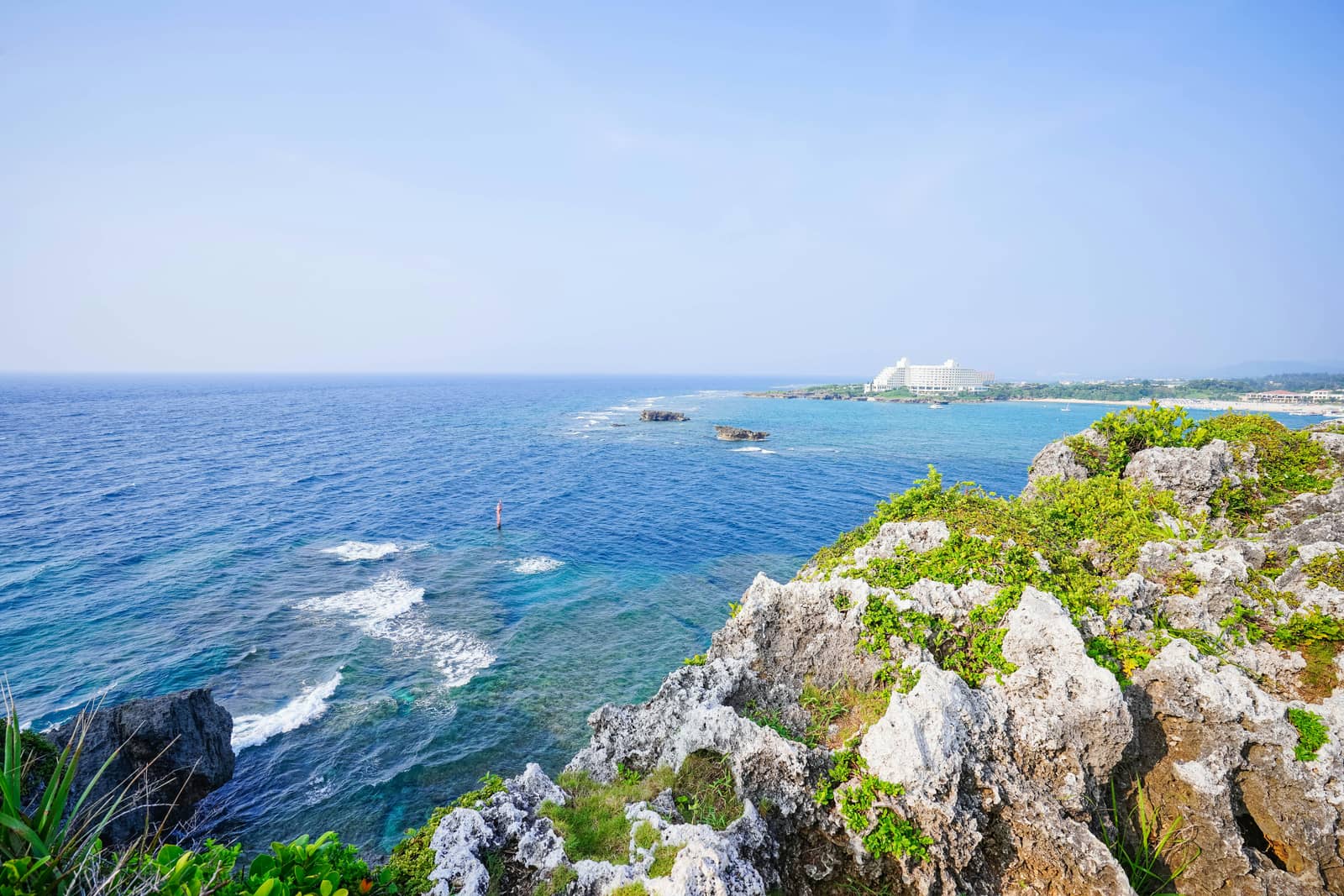
This episode began with a listener asking, 'Please share on Power Game the Ishigaki and Iriomote story you wrote about in your newsletter.' Mr Kitano travelled to Ishigaki Island and Iriomote Island from 22 to 30 July this year. The sea was endlessly beautiful, there were mountains, and nature was everywhere. Yet what he kept sensing throughout the trip, he said, was the islanders' growing wariness of China.

Kabira Bay, Ishigaki Island. Boats are how the islands move, for sightseeing and for daily life alike. Mr Kitano's old friend's readiness to 'leave at any time' is an extension of this everyday boat life.
Photo by Roméo A. on Unsplash
Memories of Reversion, and the Mood on the Islands Today
It started with the reminiscences of an elderly driver. Under American administration, Ishigaki was not treated with much care, and even the roads were left largely unmade. That is why the islanders all longed for reversion to Japan. When reversion came, the roads were transformed, and cars changed from American-style right-hand traffic to Japanese-style left-hand traffic. On the day of the changeover, he said, large numbers of police officers came from the mainland to help islanders who were not yet used to it.
When I checked later, reversion took place in May 1972, while the traffic changeover came six years afterwards, on 30 July 1978. It was a huge operation known as 'Nana-San-Maru'. In the driver's memory, two events half a century old survive as a single continuous joy. I cannot bring myself to fault him. After all, when I talk about my own life, I happily join together events that were years apart. Memory compresses time, and I believe the way it is compressed shows how much those events meant to that person. Nana-San-Maru, literally 'seven-three-zero', is the name given to 30 July 1978, the day Okinawa switched from right-hand to left-hand traffic, six years after the islands were returned to Japan.
The driver then went on to say this: 'We finally got back from America to Japan, and now China has its eye on the island. I only hope it does not come to war.' Mr Kitano said he heard the same kind of anxious voices in many places on the islands afterwards. The Japanese government also recognises the growing threat, and in March 2023 the Ground Self-Defence Force opened its Ishigaki garrison. Even from a park overlooking the town, he was told, the garrison lies in the hills just behind.
A Family Split across Three Places, and a Flat in Fukuoka
Iriomote is the second-largest island in Okinawa Prefecture, after the main island of Okinawa. Yet eighty to ninety per cent of the island is forest, and only one main road runs through it. It is a jungle island, inscribed as a World Natural Heritage site and home to the Iriomote wildcat. This is in sharp contrast to neighbouring Ishigaki, a lively island of about fifty thousand people with supermarkets and convenience stores.

A river threading its way through mangrove forest. Forest like this covers most of Iriomote, and only a single main road crosses the island.
Photo by Dan Roizer on Unsplash
On this island of Iriomote lives an old friend of Mr Kitano's. They met at a university in Moscow in 1990, and on this trip they were reunited for the first time in twenty-seven years. The friend's story was full of the realities of raising children on the island. Iriomote has no secondary school for the older years. So each time a child moves on to the next school, someone in the family leaves the island to accompany them. When his daughter went on to school, his wife rented a flat in Fukuoka and lived there with her. Even after the daughter finished school and went to university in another prefecture, his wife had built working ties during her three years in Fukuoka, and she ended up staying there. Today, this family lives split across three places.
What the couple are now discussing is this: 'Even if nobody lives there any more, let us keep renting the Fukuoka flat.' When I heard the reason, I caught my breath. It is to secure an escape destination in case China invades Ishigaki and Iriomote.
Mr Kitano's old friend says this having also looked into the Japanese government's plans. On 27 March 2025, the Cabinet Secretariat published an initial plan for evacuating residents from Okinawa's remote islands. According to press reports, it would move about 110,000 residents and about 10,000 tourists — roughly 120,000 people in all — from the five Sakishima municipalities of Ishigaki, Miyakojima, Taketomi, Yonaguni and Tarama, at a rate of 20,000 a day over about six days, to 32 cities and towns across the eight prefectures of Kyushu and Yamaguchi. He read it this way: 'Evacuating everyone takes six days. If the islands are seized in that time, we can no longer cross the sea. So I am ready to leave at any moment, without waiting for the government.' The Sakishima Islands are the south-westernmost island groups of Okinawa Prefecture — including Ishigaki, Iriomote, Miyako and Yonaguni — lying between Okinawa's main island and Taiwan.
He has a boat. Most people on Iriomote own boats, and because his home lies away from the villages, even a shopping trip means crossing by boat to the other shore and switching to the car he keeps there. It is not a special boat for escape but a boat for daily life. And that, just as it is, doubles as his preparation for the unthinkable.
Rent on an Empty Flat, Read as Insurance

Keys to an unused room. Rent on a flat nobody lives in resembles the premium on a term insurance policy: keys you keep holding while hoping never to need them.
Photo by Filip Szalbot on Unsplash
To be honest, the first word that came to mind was 'wasteful'. Rent on a flat nobody lives in is exactly the item that gets cut first from a pensioner's household ledger. Yet as I thought about it, I realised this is not rent but an insurance premium. Insurance, after all, is something you take out only against events that are unlikely to happen but impossible to recover from if they do. An invasion of the islands is precisely such an event. And the best outcome for a premium is that it is simply used up. A future in which the tenancy ends with the flat still empty is surely the ending the couple are hoping for.
People have used money in this same shape since ancient times. What came to my mind was the giso. It was a communal granary into which grain was paid at each harvest against famine; the system was formalised in Sui-dynasty China and continued in Japan from the Nara period. The best outcome for the rice paid in was that the granary never needed opening. I doubt anyone ever lamented, 'We did not open the granary again this year — what a waste of rice.' Money whose best ending is to be wasted: the rent on that empty flat is, I believe, a modern giso. A giso was a communal relief granary in East Asia: households contributed grain each year so that stores would be there in a famine, hoping all the while that the doors would never need to be opened.
This way of seeing gives one useful measure for household finances in later life too. At our age, we are often urged to review our insurance and fixed costs. When in doubt, we can ask ourselves this: 'Is this something I could not rebuild from if it happened?' Allow premiums only for what cannot be rebuilt, and answer what can be rebuilt with savings. The old friend's empty-flat rent looked to me like a model of where to draw that line.
An Escape Route Is Made of Ties, Not Places
There was one more thing in this story that made me sit up. Why Fukuoka? If all you want is a spot that looks safe on the map, there are plenty of others. Yet what the couple chose was the place where his wife had lived for three years, held a job, and built ties with people. Keys alone will not sustain a refugee life in a place where you have no ties. The true condition for a refuge, I believe, is that you can picture 'life from tomorrow' there — down to the next morning's shopping and the visits to a doctor.
By coincidence, press reports say Fukuoka Prefecture is also set to receive a large share under the government's plan — about 47,000 people. The state's plan and one family's preparation pointed, for different reasons, to the same place. Perhaps a region's capacity to receive people lies not only in its number of hotel rooms but in how readily newcomers can begin a life there.
I thought about my own case as well. In an earlier article, I wrote that my life across Japan and Britain had, without my intending it, become a kind of geopolitical diversification. The old friend's story took that thought one step further. What makes an escape route work is not owning a house there but having the substance of a life there. In Britain I have my garden, my doctor and my working ties, and in Osaka I have a place to live, with a food supermarket and a hospital within walking distance. Being able to 'live normally from tomorrow' in either place — that, in the end, is what preparation really consists of.
Memories of Evacuation — Britain and Japan
Both Britain and Japan have experienced, on a national scale, the kind of preparation that means moving home itself. In Britain, in September 1939, just after the Second World War broke out, the government evacuated children from the cities to the countryside. In this evacuation, named Operation Pied Piper, well over a million people are said to have moved within the first few days of the war. British bookshops still carry memoirs by the generation who spent their boyhood years in evacuation billets.
In Japan, from 1944, ahead of the Battle of Okinawa, Okinawans were evacuated from the islands in what was called sokai. The plan spoke of 100,000 people, but only about 80,000 are said to have actually left. The reluctance to leave a familiar home, the hesitation about families being separated, and the danger of the sea crossing itself. The dilemma those people faced eighty years ago comes down, I think, to a single line: evacuate too early and you destroy daily life; evacuate too late and you can no longer cross the sea. Sokai is the Japanese word for the wartime evacuation of civilians, especially children, from areas expected to come under attack.
The old friend's reading that 'six days may be too slow' is, I suppose, his own answer to that dilemma. Rely on the state's plan, but do not leave the final judgement to the state. The flat in Fukuoka and his own boat are his tools for exactly that.
Thinking about 'Six Days' with 66-Year-Old Legs
I tried thinking this story through again with my own legs. What if I were a resident of those islands? At sixty-six, I could still pack a bag and queue at the harbour. But at seventy-five, or eighty? Could I step across from a swaying jetty into a boat, and keep standing in queues in an unfamiliar place of refuge? The 'six days' of an evacuation plan mean utterly different lengths of time to the young and to the old.
When I was young, preparation ultimately meant physical strength. If it came to it, I could run, carry, start again. In later life, I believe, preparation means creating options in advance. The account called physical strength loses a little every year, so we make up the difference by deciding things beforehand. Nor is this only about armed conflict. It is the same for a power cut, a water outage or a sudden hospital stay. Before packing an emergency bag, decide where you would go and whom you would turn to. The old friend's flat in Fukuoka was the most concrete form of that idea I have ever heard.
Preparation Exists So That Daily Life Can Go On
Let me be clear about one thing: Mr Kitano's old friend does not live in fear. He goes shopping by boat, lives on the island with his son, and looks out every day at some of the most beautiful sea in the world. It is precisely because his preparation is done, I believe, that he can carry on with that daily life in peace. The order is not the other way round. We do not prepare because we are anxious; we prepare because there is a daily life we want to continue.
When the episode ended, I found myself thinking of winter preparations in my English garden. I move the pots under the eaves before the frost comes not because I fear the winter, but because I want the garden to continue into spring. The rent on the old friend's empty flat is, I suppose, a monthly winter preparation for continuing life on the island. With the same hands, I intend to go through my own 'what ifs', one by one.
If you would like to be notified of new articles in this Looking Out at the World series, please use the newsletter sign-up on our contact page.
Other books you might like
You're welcome to take a look.
EAST TO WEST: The Heart of Haiku, the Light of Scripture
My father-in-law experienced, a step ahead of me, what it means to live while moving one's home from place to place. This is a book my father-in-law left behind.
View on AmazonCataract Surgery-A Memoir: Double cataract surgery in Osaka, Japan
A record of how I researched, prepared for and faced surgery when confronted with my own 'what if' — the fear of losing my sight. Preparing first made the operation half as frightening.
View on AmazonSushi Business in Britain: the complete four-volume series
A novel series following thirty-five years in the British sushi trade, from apprentice to factory manager to a small sushi school. The complete edition offers all four volumes at a better price.
About the Source
Speaker: Mr Yoshinori Kitano; Navigator: Sanyutei Rakusho Source: 'Power Game' by Direct Publishing (Japanese language) Original interview: September 2026 issue, Part 3 Q&A Corner, '(3) An Old Friend's Unexpected Preparation' (released on the 1st of the month)
For details of Power Game, please see the summary page (Japanese language) and the table of contents (Japanese language).
About Yoshinori Kitano Kitano is an international relations analyst and the first Japanese graduate, with a master's degree in political science, of the Moscow State Institute of International Relations (MGIMO), attached to the Russian Ministry of Foreign Affairs. He has continued to analyse world affairs through his newsletter, "Russia Political and Economic Journal." Website: rpejournal.com
The evacuation-plan figures are based on press reports of the material published by Japan's Cabinet Secretariat on 27 March 2025. The material is available on the Cabinet Secretariat's civil-protection portal (Japanese language).
More in this series (September)
- [Power Game Sep, Part 1 ①] The US–Iran Memorandum Has Collapsed — What a Broken Promise Taught Me About Reading the Other Side's Justice(on the collapsed memorandum and the grammar of retribution, Part 1, ①)
- [Power Game Sep, Part 1 ②] When Saudi Arabia Calls, Fourteen Countries Answer — What a Maritime Coalition Taught Me About Being Relied Upon(on Saudi Arabia's maritime defence coalition and the power to be relied upon, Part 1, ②)
- [Power Game Sep, Part 1 ③] Kazakhstan's President Rebuked Putin to His Face — On Backing, and the Freedom to Speak(on President Tokayev's rebuke and the question of backing, Part 1, ③)
- [Power Game Sep, Part 1 ④] Britain Becoming "Japanified" — What Frequent Changes of Prime Minister Taught Me About Trust as Compound Interest(on frequent changes of prime minister, and trust as compound interest, Part 1, ④)
- [Power Game Sep, Part 1 ⑤] When Success Gets Seized — Xi Follows Putin's Mistake(on states that seize successful companies, and the fence of property rights, Part 1, ⑤)
- [Power Game Sep, Part 2 ①②] A Country Where You Can Buy "a Whole House" Simply by Writing the Amount on a Piece of Paper — Protecting Your Retirement Assets Through the 75-Year History of the US Dollar's Rise and Fall(a read on the dollar's history and the challengers that followed, Part 2, ①②)
- [Power Game Sep, Part 3 ①②] Iran's Bomb and Putin's Successor — Trusting an Honest 30%(on Iran's nuclear question and the post-Putin succession, Part 3, ①②)