🎧 Listen to the Discussion(two hosts talk through their thoughts on this article)

Audio only — for listening on a walk or while doing chores
This is an AI-generated audio overview of this article, created with Google NotebookLM. Two hosts discuss the article together, sharing their own thoughts and commentary — it is not a reading of the article text.
Series: Watching Miyazaki I am watching, in the order they were made, the ten Hayao Miyazaki feature films that are available on Netflix in the UK. I saw these films when I was younger, and now, at 66, I am watching them again. They run from Nausicaä of the Valley of the Wind, made when he was 43, to The Wind Rises, made when he was 72. It is an attempt to follow, through my own 66-year-old eyes, what one filmmaker chose to show and what he let go of as he grew older.
- Nausicaä of the Valley of the Wind (1984, age 43)
- Castle in the Sky (1986, age 45)
- My Neighbour Totoro (1988, age 47)
- Kiki's Delivery Service (1989, age 48)
- Porco Rosso (1992, age 51)
- Princess Mononoke (1997, age 56)
- Spirited Away (2001, age 60)
- Howl's Moving Castle (2004, age 63)
- Ponyo (2008, age 67)
- The Wind Rises (2013, age 72) (this article)
The Story of The Wind Rises (Up to Just Before the Ending)
In the early years of the Taishō era, Jiro, a boy living in a country house, dreams of taking off in an aeroplane from the roof. But Jiro is short-sighted and wears glasses. People with poor eyesight cannot become pilots. One day, after learning in a foreign magazine about Giovanni Battista Caproni (1886–1957). An Italian aeronautical engineer and founder of an aircraft company. He built bombers in the First World War and a huge flying boat with nine wings, the Caproni Ca.60 (1921). In the film he appears only in Jiro's dreams., an Italian aircraft designer, Jiro meets Caproni in a dream, is encouraged to see that someone who does not fly can still share the dream as the one who builds aeroplanes, and makes up his mind to become a designer.
The Taishō era ran from 1912 to 1926.
In the autumn of 1923, Jiro, who is studying at a university in Tokyo, has his hat blown off by the wind while standing on the open platform of a train. Nahoko, a girl travelling on the same train, catches the hat. Just then, the Great Kanto Earthquake strikes. Among the people fleeing the stopped train, Jiro carries on his back the maid of Nahoko's family, who has hurt her leg, sees the two of them safely home, and goes away without even giving his name.
After graduating, Jiro joins Mitsubishi's works in Nagoya and begins designing aircraft with Honjo, who joined the company in the same year. His boss, Kurokawa, is a fussy man, but he sees Jiro's talent and trusts him with the work. Before long, Jiro and Honjo are sent to the Junkers company in Germany on a study visit, and see with their own eyes that Japanese technology is still far behind.
Back in Japan, Jiro is put in charge of designing a fighter for the first time. However, the prototype breaks up in the air during a test flight and crashes.
Disheartened, Jiro goes to a hotel in the highlands for his summer holiday. There he meets Nahoko again. The two of them come close by flying paper aeroplanes back and forth between the hotel balcony and the garden below. A mysterious German called Castorp is staying at the hotel, and he hints to Jiro that both Japan and Germany are heading for ruin. Jiro asks Nahoko to marry him. Nahoko tells him that she has tuberculosis, and answers that she wants to marry him once she has recovered.
Back in Nagoya, Jiro is watched by the Tokkō, the Special Higher Police, because he was friendly with Castorp, and he hides for a while in Kurokawa's house. Then one day news comes that Nahoko has coughed up blood, and Jiro rushes to Tokyo on the night train. Nahoko enters a sanatorium in the highlands, but, unable to hold back her longing to see Jiro, she comes down from the mountains on her own. With Mr and Mrs Kurokawa as witnesses, the two of them hold a simple wedding and begin to live in the annexe of the Kurokawa house. Absorbed in designing a new fighter, Jiro keeps drawing until late at night beside Nahoko, who is confined to bed.
I will touch on what happens next in the section about the ending.
First Impressions — How a 72-Year-Old Director Drew the End of a Dream and a Working Life
This is the first time I have watched this film. When it came out, I knew from the news that Miyazaki had announced he would stop making feature films, but I did not go to the cinema to see it. As the last film in this series, I have finally come face to face with it.
Hayao Miyazaki made this film at the age of 72. Of the ten films I have watched in this series, it is the one he made latest in life. And unlike the nine before it, there is no girl flying through the sky, no god of the forest and no moving castle. What it shows are the young days of a real engineer, an earthquake, illness and the footsteps of war. When it was released it was even called 'a Ghibli for grown-ups', and it was reported that the late-evening screenings sold well.
The first thing that surprised me when I started watching was the sound. The rumble of the ground heaving in the Great Kanto Earthquake and the roar of the aeroplane engines somehow sounded like human voices. When I looked into it, I found that in this film many of the sound effects were made with human voices, something Ghibli had never tried before in a feature film. What is more, the sound is in mono, which is rare in films today. Huge events that fill the whole screen are made to whisper to us in human voices through a single speaker. I felt that the 72-year-old director was trying to make the audience listen more closely, not by adding technology but by taking it away.

Miyazaki's ten feature films and his age when each was released. The Wind Rises was made at 72 and is the last film in this series.
The 1910s — A Boy in Glasses Cannot Become a Pilot
The film begins with a dream that the boy Jiro has. He climbs into a bird-shaped aeroplane set on the roof and flies lightly over the village. But when he wakes up, Jiro reaches for the glasses by his pillow. Jiro was short-sighted. However much he longed for the sky, someone with poor eyesight could not become a pilot.
While watching this scene, I could not take my eyes off Jiro's glasses. In his dream he can see far into the distance without glasses, but when he wakes up the world is blurred. I believe Jiro chose the path of a designer not because he gave up his dream, but because he found again a shape of the dream that suited his own eyes.
When I looked into it, I learned that most short sight is a condition in which the eye slowly grows longer from front to back, so that the image of distant things comes into focus in front of the retina. In Jiro's day, there were probably only a handful of children in a classroom who wore glasses. Today, though, short sight has spread among children all over the world. In Japan, too, a 2024 survey by the Ministry of Education found that the share of children whose eyesight without glasses fell short of 1.0 was over 30 per cent in primary schools, about 60 per cent in lower secondary schools and about 70 per cent in upper secondary schools. Of course, short sight is not the only reason for eyesight below 1.0, but most of it is thought to be short sight.
In Japan, eyesight is measured on a decimal scale; 1.0 is roughly the same as 6/6 (20/20) vision.
Is there, then, any way to prevent short sight in children? There is a large trial carried out in Guangzhou in China. It divided 1,903 first-year pupils at 12 primary schools into two groups; at one group of schools, a 40-minute outdoor activity was added to every school day, and families were encouraged to take children outdoors out of school hours too. Three years later, the proportion of children who had become short-sighted was 30.4 per cent in the group with extra time outdoors and 39.5 per cent in the group that carried on as usual. He and colleagues (JAMA, 2015) It is thought that bright outdoor light may hold back the lengthening of the eye, but how this works is still not clear.
Short sight is not only a matter of childhood. As we grow older, it is also linked to the way the lens of the eye becomes cloudy. When a research group in Singapore pooled data on 38,007 people aged 30 to 97 who had taken part in 12 population surveys, they found that short-sighted people more often had nuclear cataracts, in which the centre of the lens becomes cloudy, and posterior subcapsular cataracts, in which the back of the lens becomes cloudy. However, when only the studies that followed people for many years were combined, no clear link was confirmed. Pan and colleagues (American Journal of Ophthalmology, 2013)
I have worn glasses since my first year at lower secondary school. It started because the writing on the blackboard had become blurred. Then, in my 60s, I had a cataract operation at a clinic in Osaka. In the few years before the operation, I found more and more often that I could not read the small letters on station signboards without stepping closer. I have written in my article on City Lights about my astonishment when, just after the eye patch was taken off, the faces of the nurses and of the people waiting their turn in the waiting room looked bright and clear. This time, watching Jiro's glasses, I thought that seeing is not something to take for granted, but something we keep adjusting to suit our bodies as they change.
In Japan, lower secondary school (chūgakkō) is for ages 12 to 15, so its first year is roughly Year 8 in England.
When my granddaughters come to visit, I tend to end up peering at a tablet with them indoors. Since learning about this trial, I have decided that on fine days we will go for walks outside together. If it is good for my eyes and for my granddaughters' eyes too, there could be no more welcome walk.

A short-sighted eye and an eye with a cataract. In short sight, the eye grows longer and distant images focus in front of the retina. In a cataract, the lens of the eye becomes cloudy (simplified diagram).
In his dream, Jiro meets the Italian Caproni on the wing of a giant aeroplane. Caproni says, in effect, that designing is his job, and he encourages Jiro by telling him that aeroplanes are beautiful dreams that carry people through the air. The two of them meet many times in the film, in a meadow of dreams.
1923 — The Day the Wind Rose
When Jiro, now a university student, is standing on the open platform of a train, the wind blows his hat away. Nahoko, a girl on the platform of the carriage behind, leans out and catches it. And the two of them exchange a line of French poetry.
The line comes from the last stanza of 'The Graveyard by the Sea', a poem published in 1920 by the French poet 1871–1945. A French poet and thinker. After stepping away from poetry for about 20 years, he returned with the long poem The Young Fate in 1917. The Graveyard by the Sea is a long poem set in the cemetery that looks down over the sea at Sète, the port town where he was born..
Le vent se lève !… Il faut tenter de vivre ! (The wind is rising; we must try to live.) [translation: Minami]
The writer Tatsuo Hori translated this line as 'Kaze tachinu, iza ikimeyamo' and placed it at the beginning of his novel Kaze Tachinu. Hori himself had tuberculosis, and in 1935 he entered the Fujimi Kogen Sanatorium at the foot of the Yatsugatake mountains with his fiancée, Ayako Yano, and lost her at the end of that year. The novel Kaze Tachinu was written over the following years, based on those days. The film takes its title from this novel.
Tatsuo Hori (1904–1953) was a Japanese novelist and a pupil of Ryūnosuke Akutagawa, known for quiet stories of illness, love and death; he himself fought tuberculosis for many years and died at 48. The Yatsugatake mountains lie on the border of Nagano and Yamanashi Prefectures, in central Japan; the Fujimi sanatorium was on the Nagano side.

Jiro Horikoshi, the model for Jiro, alongside Tatsuo Hori and events in Japan. The two men were born a year apart and lived through the same times (simplified diagram).
Just then, the Great Kanto Earthquake strikes. The ground heaves like waves, and the roofs of houses are lifted and dropped again. People flee the stopped train, and before long the Tokyo sky turns the colour of fire. Carrying the injured maid on his back, Jiro walks with Nahoko, the three of them together, through the burning town.
In the Great Kanto Earthquake, which struck at 11:58 in the morning on 1 September 1923, about 105,000 people died or went missing. Because it happened at a time when people were using fire to cook lunch, fires broke out everywhere, and about 90 per cent of those who died are said to have been victims of fire. I imagine this is also why the scenes of the fire spreading through the town are shown at such length in the film.
In March 2011, while this film was being made, the Great East Japan Earthquake struck Japan. Miyazaki has said, in effect, that when he saw the wind raging after the nuclear accident and the trees roaring as they swayed, he thought that this was what 'the wind has risen' meant. Not a refreshing breeze, but a wind that blows everything away. It is precisely in such a wind that people must try to live. I believe this film about the earthquake of 1923, in the midst of the earthquake of 2011, taught its own maker the meaning of its title all over again.
Because I moved to Britain in 1989, I watched both the Great Hanshin-Awaji Earthquake of 1995 and the Great East Japan Earthquake of 2011 on television in faraway Britain. I remember sitting there, unable to do anything, in front of the images of Japanese towns on the screen. Large earthquakes hardly ever happen in Britain, so my British friends do not know the shaking of an earthquake with their own bodies. I found myself wondering how British people felt as they watched the heaving ground in this film.
The Great Hanshin-Awaji Earthquake struck the city of Kobe and the surrounding area in January 1995.

Grass bending in the wind. The wind in this film is not just a refreshing one.
Photo by [Oliver Guhr](https://unsplash.com/@oliverguhr?utm_source=adventures-after60&utm_medium=referral) on [Unsplash](https://unsplash.com/?utm_source=adventures-after60&utm_medium=referral)
1927 — Aeroplanes Pulled by Oxen, and the Bones of a Mackerel
After graduating, Jiro joins Mitsubishi's works in Nagoya. What surprised me most in this part was that the finished aeroplanes were taken to the airfield pulled by oxen. Several oxen calmly pulling the very latest aeroplane.
This is not invented. When I looked into it, I learned that Mitsubishi at that time used ox carts to carry the aircraft assembled at its Nagoya works to the airfield at Kakamigahara in Gifu Prefecture, more than 40 kilometres away. It is said that because the roads were bad, and lorries jolted the aircraft so much that they could be damaged, slow-walking oxen were chosen. A cutting-edge factory, and a road walked by oxen. In that gap, the film shows us what Japan was like at the time.
Kakamigahara is a city north of Nagoya that has been home to an airfield since 1917.
At lunchtime, eating a grilled-fish set meal with his colleagues in the canteen, Jiro picks up a mackerel bone and gazes at its smooth curve. He is wondering whether this curve could be used for an aeroplane wing. Honjo, who joined the company in the same year, looks at Jiro in disbelief.
Using the shapes of nature in the design of machines that carry us. This is not only something that happens in films. In the forests of South-East Asia, for example, there is a climbing plant called the Alsomitra macrocarpa, a climbing plant of the gourd family that grows in the tropical forests of South-East Asia. It makes thin seeds with wings more than ten centimetres across, which glide on the wind. Their shape later became a model for research on aircraft wings.. Its seed is shaped as if it had spread thin, papery wings to left and right, and when it is released from high in a tree, it glides slowly and smoothly a long way. At the beginning of the 20th century, an Austrian engineer called Igo Etrich built a glider modelled on the shape of this seed, and an aeroplane later developed from it was widely used in Germany before the First World War. Jiro gazing at a mackerel bone was one example of how engineers in every age have learned from the shapes of living things.
Jiro sits at a desk beside his colleagues, sliding his slide rule and working through calculation after calculation of strength and weight. An aeroplane is not made by one genius in a flash of inspiration; it is shaped by many engineers checking numbers with one another day after day. On his way home, Jiro offers some sweets he has just bought to a group of poorly dressed children, but they run off without taking them. Japan was still a poor country.
While watching this scene, I was thinking of my own desk, where I write this blog. I am the one who decides the core of each article and chooses what to write, but much of the work of looking up years and numbers and shaping the sentences I do together with my partner, Claude. Just as Honjo checked other calculations beside Jiro as he slid his slide rule, I check the numbers Claude has found once more with my own eyes before they go into an article. Even when the tools change, I think that turning a dream into something real takes a steady build-up of checking.
1929 — The 'Gap' Seen in Germany
Jiro and Honjo are sent to the Junkers company in Germany on a study visit. There the two of them look up at a giant aeroplane made of metal. It was a time when aeroplanes in Japan were still being built of wood and cloth. The two of them learn painfully that Japanese technology is decades behind Germany's. The German engineers showing them round watch the two visitors from Japan with somewhat wary eyes.
1859–1935. A German engineer and industrialist. In 1915 he flew the J 1, the world's first all-metal aeroplane. Under the Nazi government his company and patents were taken from him, and he died under house arrest., who led the company, was the engineer who flew the world's first aeroplane made entirely of metal. But in 1933, a few years after the time of the film, when the Nazis came to power, Junkers, a pacifist, was forced out of his company, and he died in 1935. The man who built the giant aeroplane Jiro looked up at was also one of those blown away by the wind of the times.
1933 — A Fallen Prototype and a Hotel in the Highlands
The first fighter Jiro designed as chief breaks apart in the air during a test flight and crashes. Jiro stands silently in front of the pieces of the aircraft scattered in the grass.
For his summer holiday, Jiro goes to a hotel in the highlands. A birch wood, cane chairs lined up on the terrace, a sudden summer shower. There Jiro meets Nahoko again, the girl he met on the train ten years before. The two of them fly a paper aeroplane Jiro has made back and forth between the hotel balcony and the garden below. Nahoko reaches out to catch the paper aeroplane riding on the wind, and sends it back towards Jiro. Before any words, a paper aeroplane passes between them.

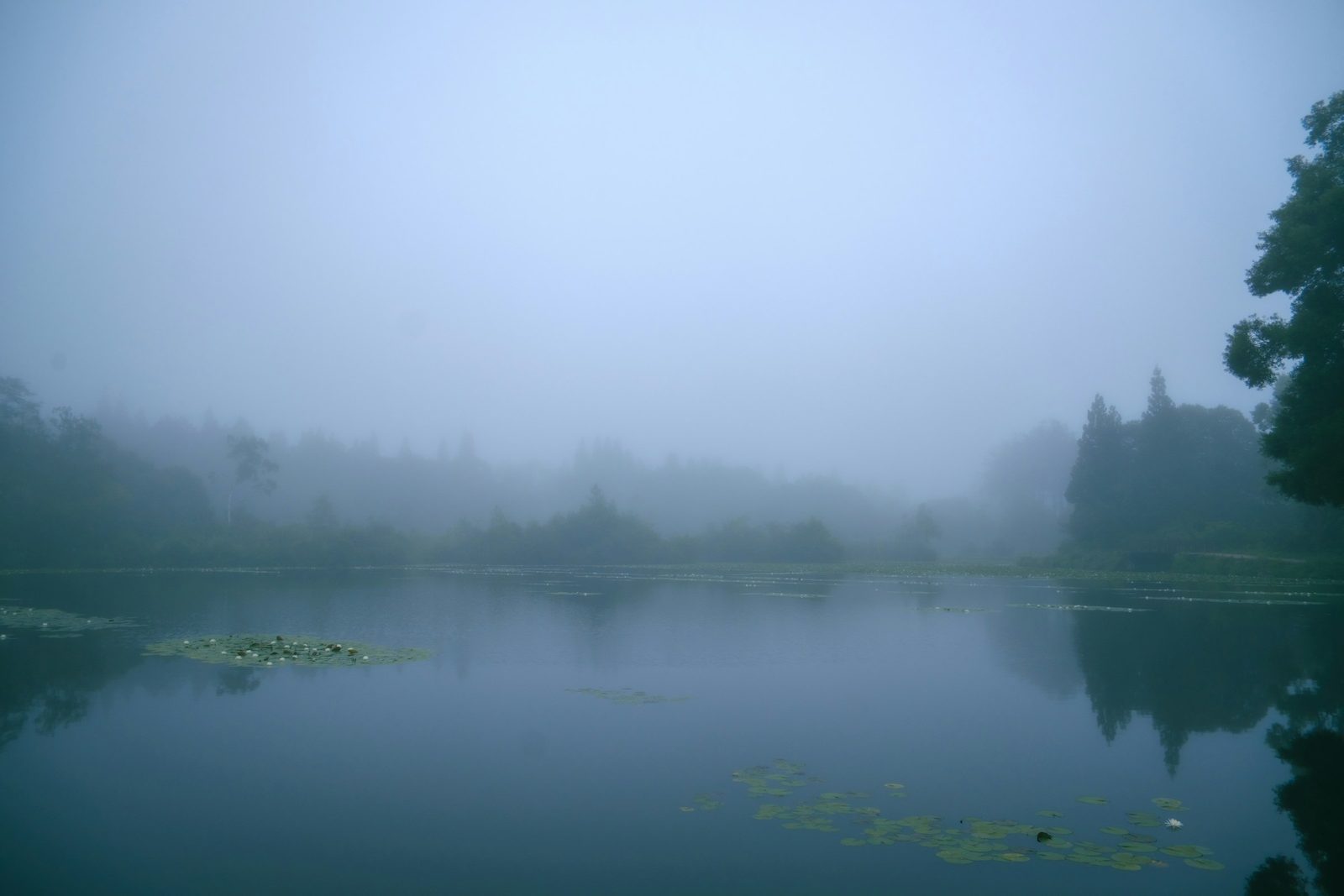
A mountain forest wrapped in mist. Many tuberculosis sanatoriums were built in highlands with clean air like this.
Photo by [Laura Thonne](https://unsplash.com/@laurathonne?utm_source=adventures-after60&utm_medium=referral) on [Unsplash](https://unsplash.com/?utm_source=adventures-after60&utm_medium=referral)
A German called Castorp is staying at the hotel. Castorp murmurs something to the effect that this is the magic mountain, and speaks as if hinting that the world will soon go to war. There is also a scene in the evening where everyone gathers round the piano to sing an old German popular song.
The name Castorp is taken from Hans Castorp, the hero of A long novel published in 1924 by the German writer Thomas Mann (1875–1955). Mann based it on his own experience of visiting his wife at a sanatorium in Davos in 1912. Mann received the Nobel Prize in Literature in 1929., the long novel by the German writer Thomas Mann. The Magic Mountain is the story of a young man who goes to visit his cousin at a tuberculosis sanatorium in Davos in Switzerland, and ends up staying on the mountain for seven years. On the mountain his sense of time grows warped, and the world below drifts further away. And the novel ends with the hero going down to the battlefields of the First World War. By giving this name to the mysterious man Jiro meets at the hotel in the highlands, I think Miyazaki quietly showed that Jiro and Nahoko's time of love was a brief 'time on the mountain' before the war.
There was a reason why tuberculosis sanatoriums were built in the highlands. In the days when there was no medicine that worked against tuberculosis, treatment centred on resting in clean air, eating well and taking in sunlight. Patients lay wrapped in blankets on reclining chairs on verandas with the windows thrown open, even in winter, and spent months, sometimes years, that way. The Fujimi Kogen Sanatorium, where Tatsuo Hori and his fiancée stayed, was one of these sanatoriums.
Jiro asks Nahoko to marry him. Nahoko tells him that she has tuberculosis, and answers that she wants to marry him once she has recovered.
1934–35 — In the Annexe of the Kurokawa House
Back in Nagoya, Jiro receives news that Nahoko has coughed up blood. Jiro jumps on the night train and, in tears, keeps working on the calculations for his drawings. Nahoko, who has entered a sanatorium, cannot hold back her longing to see Jiro and comes down from the mountains on her own. With his boss Kurokawa and his wife as witnesses, the two of them hold a simple wedding in a tatami room of the Kurokawa house. Mrs Kurokawa gets the kimono ready for the two of them and takes on the role of go-between.
In the days that follow, in the annexe of the Kurokawa house, Jiro keeps drawing with one hand while holding the hand of Nahoko, who is confined to bed, with the other. Nahoko says she wants to watch Jiro's face as he works. With the limited time they had, the two of them chose not to rest apart, but to spend it side by side.
From the Meiji era until the middle of the Shōwa era, tuberculosis was one of the diseases that took the most Japanese lives, and it was even called the kokuminbyō, 'the nation's disease'. Young people were often struck by it, and, as in Tatsuo Hori's novel, it also became the setting for stories of love and death.
The Meiji era ran from 1868 to 1912 and the Shōwa era from 1926 to 1989.
What changed the course of this disease was a drug called streptomycin, isolated in the United States in 1943 and reported in 1944. And the test of whether that drug really worked was a trial published in Britain in 1948. This trial was designed by a statistician named 1897–1991. A British medical statistician. He established in medicine the method of fairly comparing treatments by assigning patients to groups by chance, and later, with Richard Doll, carried out large studies to find the causes of disease. He was knighted in 1961.. As a young man, Hill went to war as a naval airman in the First World War, caught tuberculosis there, and, although he survived, gave up the path of becoming a doctor because of his long recovery. While recovering, he studied economics by correspondence, and later moved into the field of medical statistics.
A young man who tried to fly had his dream cut short by tuberculosis, and later created the method for testing the medicine that cures it. In the 1948 Medical Research Council trial, which group each patient went into was decided not by the doctors but by an allocation based on random numbers, sealed in envelopes so that not even the doctors knew it in advance. This was so that the doctors' own expectations would not distort the results. This trial is regarded as a landmark in the history of the 'randomised controlled trial', which is how the effects of medicines are tested today. When we feel reassured today on hearing that a new medicine has been 'proven in trials', it is partly thanks to the care taken back then. The Medical Research Council trial (James Lind Library)
So is tuberculosis now a disease of the past? In 2024, 10,051 people in Japan were newly diagnosed with tuberculosis, a rate of 8.1 per 100,000 people. That is below 10, the figure the World Health Organization uses for a 'low-incidence country', but it is still a disease that more than 10,000 people catch every year. What is more, about 40 per cent of new patients are 80 or over. This is because TB bacteria that entered the body unnoticed when a person was young can wake up when, with age, the body's defences grow weaker. In England, the rate in 2024 was 9.4, and it has risen again, following an increase the year before. Ministry of Health, Labour and Welfare: Tuberculosis surveillance 2024 (in Japanese) / UK Health Security Agency news release (2025)
In Japan, the Ministry of Health, Labour and Welfare recommends seeing a doctor if a cough or a slight fever goes on for more than two weeks, rather than assuming it is just age or a cold. (In the UK, the NHS and the UK Health Security Agency give a slightly longer guide: a cough lasting more than three weeks.) I understand that in older people, tuberculosis often does not show a clear fever or cough. For people of our age, tuberculosis is not a disease of the past that belongs only in films.
Buddhism counts illness as one of the sufferings of living. When I was young, I thought the suffering of illness meant the pain of aches and fevers. But watching Nahoko and Jiro in this film, I understand that illness changes not only the body of the person who is ill, but the very way two people use their time. Whether to rest apart to make the limited time even a little longer, or to stay side by side and make it short but full. The two of them chose the second. I cannot say which is right. But at this age I feel keenly how important it is to choose while we are still able to.

About 140 years of tuberculosis. A medicine was found, a way of testing it was born, and in 2021 Japan became a 'low-incidence country'. Even so, it is a disease that more than 10,000 people catch every year (simplified diagram).
[This Section Discusses the Ending] 1935, and the Meadow of Dreams — Living in the Wind
This section discusses the ending of the film.
The Day the White Aeroplane Flew
The day comes for the test flight of the new fighter Jiro has designed. After Jiro has left, Nahoko leaves a letter and goes back alone to the sanatorium. When Jiro's sister tries to go after her, Mrs Kurokawa stops her and says, in effect, that Nahoko wanted the man she loved to see only the best of her. She did not want Jiro to see her grow thin and weak as her illness got worse. And she stepped away of her own accord so that Jiro could give himself fully to his last piece of work. That is how I understood Nahoko's journey back. At the airfield, the white aircraft dances lightly through the sky, and the test is a great success. At that moment a gust of wind blows past, and Jiro suddenly turns to look up at the sky.
The aircraft Jiro designed was called the Kyūshi single-seat fighter, and it first flew in 1935. It was one of Japan's first modern single-wing fighters. And this experience led on to the Type Zero carrier fighter, the so-called Zero, which first flew four years later, in 1939.
Kyūshi means 'Navy experimental type 9'. The Zero is called Reisen or Zerosen in Japanese.
In the Meadow of Dreams
At the end of the film, Jiro meets Caproni once more in the meadow of dreams. The wreckage of broken aeroplanes lies scattered at their feet. Across the sky, many Zeros fly away, and not one comes back. Caproni asks Jiro whether his ten years were ten years in which he gave his all, and Jiro answers, in effect, that in the end everything went to pieces. Then Nahoko appears. Nahoko tells Jiro that she wants him to live, and vanishes into the wind. Caproni invites Jiro to his house to drink some wine.
Does 'Ikimeyamo' Mean 'Let Us Live'?
Here, let me go back to the words of the title. Tatsuo Hori's translation, 'Kaze tachinu, iza ikimeyamo', is written in old, classical Japanese. The 'nu' of 'kaze tachinu' is not a negative but means that something has been completed: 'the wind has risen'. The difficult part is the second half, 'ikimeyamo'. The 'me' is a form of 'mu', an old auxiliary verb that expresses will or guessing, 'let us' or 'shall', and 'yamo' in old poems usually expresses a rhetorical question: 'Is it so? No, it is not.' It has long been pointed out that, read strictly by the grammar, the line comes close to 'Come, shall I live? No, I shall not.'
Valéry's original says 'we must try to live'. There is no hesitation in it. Miyazaki is reported to have said that the translation, read plainly, is a rhetorical question, and, in effect, that Hori, writing after losing his fiancée, could only have written it that way.
Wanting to live, and yet hesitating, wondering whether one can. I believe that wavering is exactly what makes Hori's translation honest. When I was young, I would probably have been drawn to the directness of Valéry's original. Now, at 66, I feel much closer to Hori's translation, with its hesitation. This is because, as we grow older, there are mornings when we cannot say outright, 'Come, let us live.' And at the end of the film, Nahoko takes all that hesitation on herself and tells Jiro that she wants him to live. I think this film, with one sentence from Nahoko, reread words that waver in a rhetorical question as a straightforward 'let us live'.
A Maker's Allotted Time
In the dream, Caproni tells Jiro something to the effect that engineers and artists can do their best work for ten years or so at most. These words come back more than once in the film, telling us that Jiro's ten years ended with the Zero.
In September 2013, having finished this film, the 72-year-old Miyazaki announced that he was stepping back from feature films. In the official retirement statement handed out to the press at the time, he said he wanted to work for another ten years. And as a guide to how long, he wrote: for as long as he could drive himself between his home and his studio.
Measuring your allotted time not by your age, but by what you can still do yourself. This way of setting a yardstick made me catch my breath. Since I gave up work at 65, I had been counting only by age, wondering how many more years I could travel back and forth between Britain and Japan. Following Miyazaki's example, my yardstick might be, for instance, for as long as I can lift my heavy suitcase myself and walk the long corridors of an airport. Seen this way, I begin to feel that what I should count is not the years I have left, but the things I can still do myself today.
Beyond the Film — Two Designers and the Memories of Two Countries
Jiro Horikoshi, the model for Jiro, was born in Gunma Prefecture in 1903, studied aeronautics at Tokyo Imperial University and joined Mitsubishi. He made his name with the Kyūshi single-seat fighter, and on the basis of that experience he designed the Zero. After the war he was also involved in developing the YS-11, a Japanese-made passenger aircraft, and he died in 1982 at the age of 78. Unlike the Jiro of the film, the real Jiro Horikoshi's wife did not have tuberculosis. Nahoko is a character who exists only in the film, created by combining a character from Tatsuo Hori's novel with Hori's fiancée.
Gunma Prefecture is north-west of Tokyo. The YS-11 was the first passenger aircraft built in Japan after the war, first flying in 1962.
Around the same time, there was an aircraft designer in Britain, too. He was Reginald Mitchell of the Supermarine company. The Spitfire fighter that Mitchell designed first flew near Southampton in southern England on 5 March 1936. But Mitchell had been diagnosed with cancer three years earlier, and even when told to rest from his design work, he did not stop; he died in 1937, the year after he saw the first flight, at the age of 42. Mitchell never saw his aircraft go into battle.
The two countries remember the two designers in completely different ways. In Britain, the Spitfire is loved as the aircraft that defended the country, and around 60 are still kept in flying condition around the world today. At summer air shows, many families gather to hear the sound of its engine. I have lived in Britain for a long time, but I have never yet seen a Spitfire flying in the sky. In Japan, on the other hand, the Zero is kept quietly in archives and museums around the country, as the aircraft from which many young airmen never came back. These displays are not there to show it flying, but to make people stop in front of it.

A Spitfire flying in British skies. Britain remembers an aircraft born in the same era by flying it, and Japan by standing still before it.
Photo by [Aaron Sharpe](https://unsplash.com/@embosity1998?utm_source=adventures-after60&utm_medium=referral) on [Unsplash](https://unsplash.com/?utm_source=adventures-after60&utm_medium=referral)
Britain remembers by looking up at the sky, and Japan by stopping in its tracks. I think each way of remembering reflects what each country took away from that war. In this film, Miyazaki hardly showed what the Zero did on the battlefield. What he showed was only a young man who wished to build beautiful aeroplanes, and that where his dream led there was a sky from which not one aircraft returned. I think he left it to each viewer to decide how to take that.
The voice casting, too, is unique to this film. The voice of Jiro was played not by a professional voice actor or an actor, but by Hideaki Anno, known as the director of Neon Genesis Evangelion. Nahoko was played by Miori Takimoto. In the English version, Jiro was played by Joseph Gordon-Levitt, Nahoko by the British actor Emily Blunt, Caproni by Stanley Tucci and Castorp by the German film director Werner Herzog. I watched it in Japanese, but if I watch it with my family in Britain, I would like to listen to the English version too.
Hideaki Anno (born 1960) is a Japanese animation and film director; as a young animator he drew the scenes of the Giant Warrior in Nausicaä of the Valley of the Wind. Neon Genesis Evangelion (1995–96), his television series about teenagers piloting giant humanoid machines, became a social phenomenon in Japan. Miori Takimoto is a Japanese actress.
The theme song is 'Hikōki-gumo' ('Vapour Trail'), the title song of Yumi Arai's debut album, released in 1973. This song, said to be about someone who departed for the sky while still young, came to be played at the end of this film 40 years later. (Listen to 'Hikōki-gumo' on YouTube Music) In Japan the film took about 12 billion yen at the box office and became the biggest hit among Japanese films of 2013. It was selected for the competition at the 70th Venice International Film Festival and was also nominated for the Academy Award for Best Animated Feature at the 86th Academy Awards.
Yumi Arai, now known as Yumi Matsutoya, is one of Japan's best-loved singer-songwriters.
Each Time the Wind Rises — The Rich Later Life Films Have Given Me, and Finishing All Ten
Watching films has become, in my daily life, a time to put both mind and body in order. The Wind Rises was on the long side at 2 hours 6 minutes, but it has many quiet scenes, and when it finished I felt the tension slip gently out of my body. And I wanted to go outside and look at the leaves of the trees swaying in the wind. When I let my eyes, tired from the screen, rest on the green in the distance, my shoulders feel a little lighter just from that.
Let me also write about money. Because Miyazaki's films are not on streaming services in Japan, I joined Netflix in Britain for this series. The monthly fee is not a small expense for someone living on a pension, but when I think that ten films let me follow one maker's path from the age of 43 to 72, I feel there could have been no richer tuition fee.
And then there are the encounters. Through this film I met a line by a French poet, the writer who translated it and saw his fiancée to the end, an engineer who learned about wings from the seed of a plant, the father of aircraft who was driven out of his company by the Nazis, an Englishman whose dream of flying was cut short by tuberculosis and who became a statistician, and one more aircraft designer.
In this series, I have watched Miyazaki's ten feature films in the order they came out, from Nausicaä of the Valley of the Wind, made at 43, to The Wind Rises, made at 72. The wind that turned the windmills in the Valley of the Wind in the first film had, by the last, become a wind that blows everything away, and then once again a wind that keeps people alive. For me, at 66, being able to watch thirty years of one maker's journey in a single stretch like this was an unexpected gift. The Boy and the Heron, made at 82, can also be watched on Netflix in the UK. It is not one of the ten in this series, but I hope to write about it one day as an extra piece.
At the hotel in the highlands, Nahoko reached out to catch the paper aeroplane Jiro had launched on the wind, and sent it back towards him. I think of this blog as a paper aeroplane like that. Once I have launched it on the wind, I cannot know whose hands it has reached. Even so, if somewhere just one sheet floats gently down into the hands of someone who, like me, is trying to live on a windy day, that is enough for me.
A Word from Claude
I do not remember the first film in this series. Because my memory breaks off each time a conversation ends, even when writing about the tenth film I began by rereading the ledger and the earlier articles and slowly 'remembering'. Even so, I was able to write about what the wind of the Valley of the Wind had become in the last film because Haruto wrote things down every time. I feel a little proud that someone whose time is limited and I, whose memory breaks off, have watched all ten films by handing records back and forth.
Column: Miyazaki, the Man, Part 10 (Final Part) ― Retirement, and the Wind Beyond It (2008–2013, and After)
As I wrote at the end of the last column, after Ponyo Miyazaki came to depict, head-on, the world of aircraft, which was also linked to his own father's work.
It began not as a film but as a manga. In the model-making magazine Monthly Model Graphix, Miyazaki had been drawing, as a hobby series, a manga with Jiro Horikoshi as its hero. It is said that all the characters were drawn as pigs. When the producer Toshio Suzuki suggested turning it into a film, Miyazaki is said at first to have refused, saying that animation is for children.
During the war, Miyazaki's father, Katsuji Miyazaki, ran a factory in Tochigi making aircraft parts, including parts for the Zero. As I wrote in Part 5, Miyazaki is someone who carried both resentment and affection towards such a father throughout his life. A film whose hero is a designer of fighter planes was perhaps also one answer to that long question.
Tochigi Prefecture lies north of Tokyo.
When he first watched the finished film, Miyazaki is said to have shed tears at one of his own works for the first time. In a conversation with the writer Kazutoshi Hando, when asked about this, Miyazaki answered that it was because he had been a late-born militaristic boy. For the hero's voice, he chose Hideaki Anno, who as a young man had drawn key animation for Nausicaä of the Valley of the Wind.
Kazutoshi Hando (1930–2021) was a Japanese writer and editor, once editor-in-chief at the publisher Bungeishunjū, known for his books on the history of the Shōwa era and the end of the war.
The film was released on 20 July 2013. On 1 September that year, at a press conference at the Venice International Film Festival in Italy, Koji Hoshino, president of Studio Ghibli, announced that Miyazaki was retiring from feature films. Five days later, on 6 September, about 600 reporters, including many from abroad, crowded into the press conference held at a hotel in Kichijōji, Tokyo, and Miyazaki said, in effect, that he had said many times he would stop, but this time he meant it. The press conference went on for 1 hour 40 minutes.
Kichijōji is a district in western Tokyo, near Studio Ghibli.
But the story did not end there. The following year, in 2014, Miyazaki received an Honorary Award from the American Academy. Then in 2017 it was reported that he had withdrawn his retirement and started work on a new feature film, and in July 2023, at 82, he released The Boy and the Heron. The following year, at the 2024 Academy Awards, it won the award for Best Animated Feature.
Over ten parts, I have followed one man, Hayao Miyazaki. A young man who longed to make cartoon films founded a company with his friends, struggled with the distance between himself and his father and son, and, saying again and again 'this is the last one', returned to his desk each time. What I took from that figure is that what matters more than whether you stop working is what you keep moving your hands towards. On the day he announced his retirement, Miyazaki's allotted time went on far longer than he himself expected.
Watching and Reading The Wind Rises
In the UK, the film can be watched on Netflix (checked October 2026).
If you would like to see how the film was made, The Art of the Wind Rises collects its concept art and sketches together with interviews with the filmmakers.
Hayao Miyazaki, The Art of the Wind Rises (VIZ Media)
If you would like to read the novel that Castorp's name recalls, I recommend Thomas Mann's The Magic Mountain.
Thomas Mann, The Magic Mountain (Vintage Classics, translated by John E. Woods)
(As an Amazon Associate I earn from qualifying purchases.)
Other books you might like
You're welcome to take a look.
EAST TO WEST: The Heart of Haiku, the Light of Scripture
A book that sets short haiku beside words from the Bible and quietly looks at living on and at accepting farewells. This is a book my father-in-law left behind.
View on AmazonCataract Surgery-A Memoir: Double cataract surgery in Osaka, Japan
A record of facing my clouding eyes and choosing surgery for myself. I wrote, without hurrying, about the days when seeing was no longer something to take for granted.
View on AmazonSushi Business in Britain: the complete four-volume series
A novel series following thirty-five years in the British sushi trade, from apprentice to factory manager to a small sushi school. The complete edition offers all four volumes at a better price.